



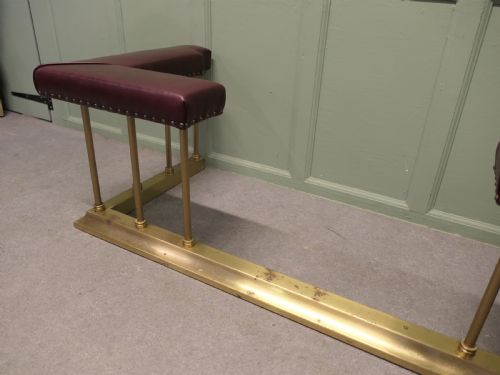


Leather Padded Bench
A leather padded bench brings solid timber and aged hides together, offering firm fireside seating or a sturdy dressing stool.
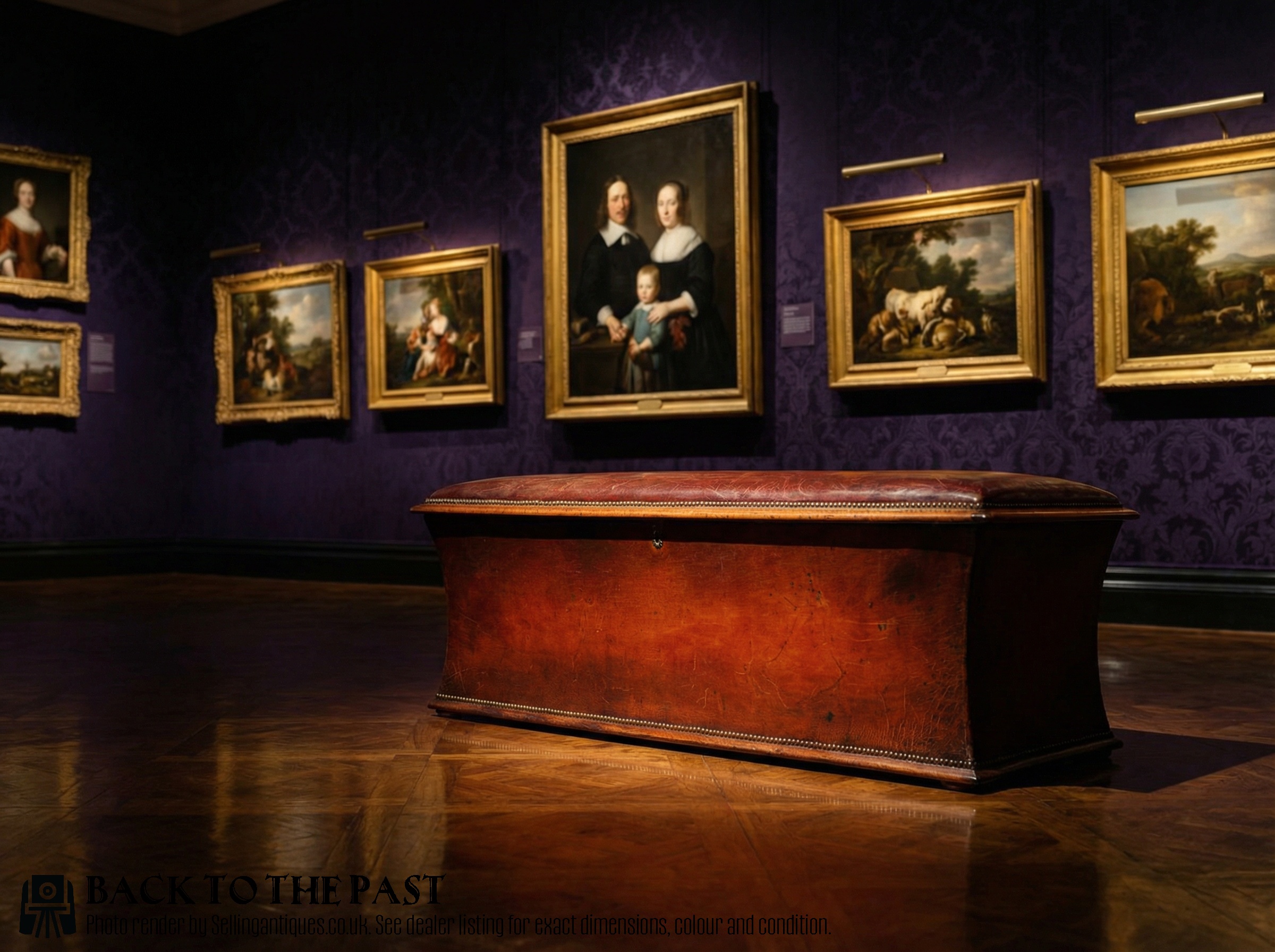
Leather Padded Bench
A leather padded bench encompasses robust club fenders, long footstools, ottomans, and dressing table stools drawn from nineteenth and twentieth-century traditions.
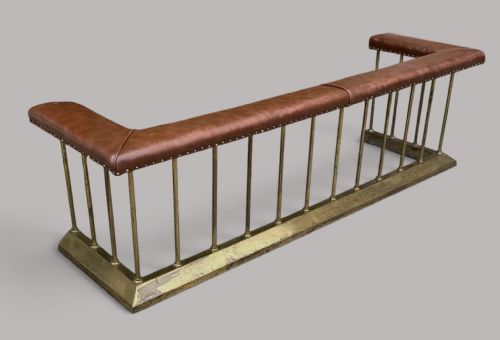
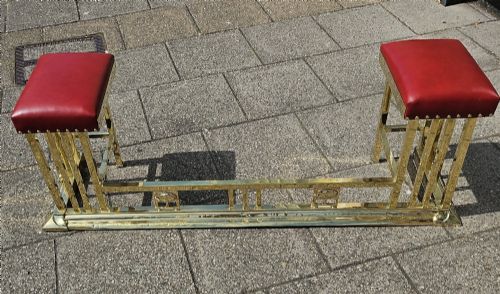
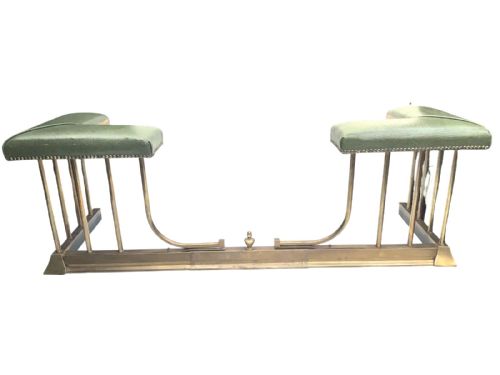
The most common form met here is the club fender, combining a metal frame with cushioned seats designed to sit around a hearth.
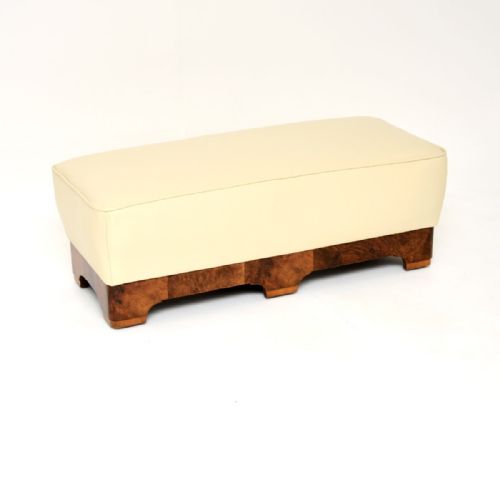
Stools and ottomans also populate the selection, ranging from Victorian mahogany frames to Art Deco burr walnut and cream leather designs.
Assessing quality
Quality rests in the weight and integrity of the foundational materials, distinguishing heavy brass or cast steel frames and dense hardwoods from lighter alternatives.
The finish of the hide and the precision of the padding determine the refinement of the piece, separating utilitarian items from finely decorative examples.
At least one heavy steel club fender comes directly from the historic In & Out Club.
The Leather Padded Bench Glossary
- Club Fender
- A low fireside seat with an open metal frame and padded leather top designed to enclose a fireplace hearth. These pieces originated in gentlemen's clubs.
- Ottoman
- A low, upholstered seat or box without a back or arms, often utilising hinged lids for storage. They appear in mahogany, birch, and rosewood.
- Joint Stool
- An early form of wooden stool constructed with mortise and tenon joints using pegs rather than glue. Oak examples demonstrate this traditional technique.
- Burr Walnut
- Timber taken from the warted growths on walnut trees, yielding complex swirling grain patterns. It is frequently applied as a veneer on Art Deco stools.
Leather Padded Bench: Frequently Asked Questions
What is a club fender?
A club fender is a low metal and leather seat built to surround a fireplace opening.
They provided extra warmth and seating close to the fire in traditional British interiors.
How do I use an ottoman?
Ottomons serve as flexible seating, footrests, or blanket boxes depending on their internal depth.
Their sturdy leather tops make them suitable as low occasional tables in a hallway or living room.
Are piano stools adjustable?
Some Edwardian and Art Deco piano stools include mechanisms to alter the seat height for the player.
Others rely on fixed wooden frames with padded leather tops similar to dressing table seats.
How do I date these pieces?
Stylistic markers such as Art Deco geometric lines or Victorian mahogany carving help place pieces in their era.
Materials like brass, cast steel, and burr walnut also indicate whether a piece belongs to the nineteenth or early twentieth century.