

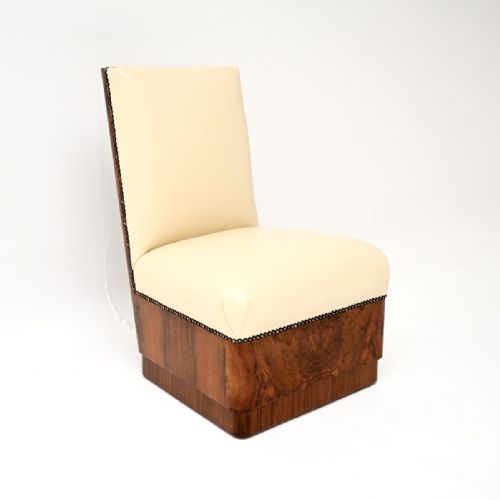
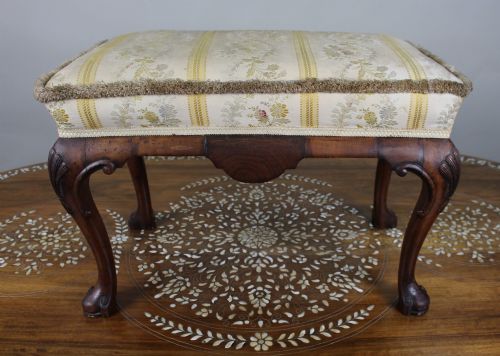
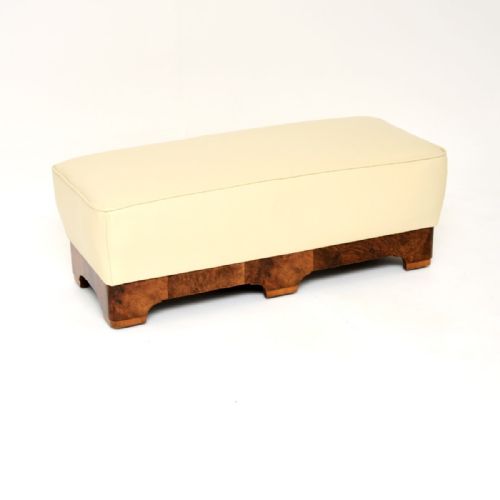
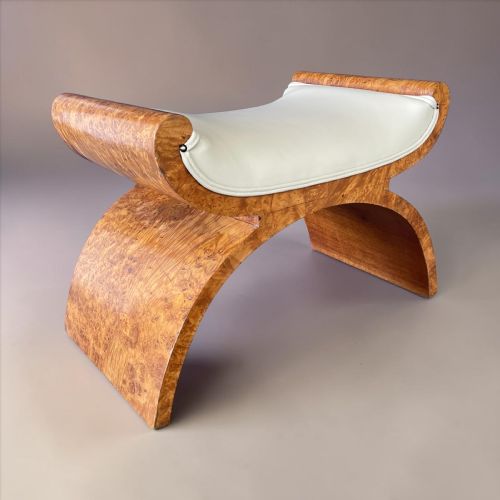


1930s Walnut Stool
A 1930s walnut stool brings distinctive Art Deco or Cotswold School character to a dressing room or piano space.
1930s Walnut Stool
A 1930s walnut stool is a utilitarian seating form shaped by the distinct design movements of the interwar period. These pieces most commonly appear as dressing table stools, piano stools, or low footstools designed for domestic interiors.
Makers of the period utilised rich timbers to create compact seating that often doubled as practical storage units. Buyers searching this phrase encounter rectangular frames built to accompany matching dressing chests and tables.
How they were made
Makers built these frames using solid walnut and striking burr walnut veneers selected for their decorative grain patterns. Oak also appears in structural elements, particularly within pieces following the Cotswold School tradition.
Upholstery techniques combined traditional padding with durable coverings of leather, cream leather, or woven fabric. Metal fixtures and inset mirrors occasionally supplement the primary timber and hide construction.
1930s Walnut Stool Retail Price Guide 2026
Typical asking prices for 1930s walnut stool among the pieces listed under this phrase on Sellingantiques today, from the lower quarter to the upper quarter. They describe what is for sale here now, not the wider market.
The furniture styles represented across the inventory are strictly limited to Art Deco and the Cotswold School.
What varies in quality
Quality in a 1930s walnut stool rests upon the selection and matching of the burr walnut veneer across the seat and frame. Finer examples display symmetrical grain patterns that demonstrate considerable forethought by the cabinetmaker.
The distinction between standard commercial production and superior workshop output is visible in the joinery and the execution of Art Deco curves. Named makers and Cotswold School origins elevate the standard of construction significantly.
Harry and Lou Epstein
The 1930s Walnut Stool Glossary
- Burr walnut
- A figured timber veneer taken from the wart-like growths on walnut trees, prized for its swirling grain patterns. It defines the decorative surface of many Art Deco pieces.
- Art Deco
- A design style of the 1930s characterised by sleek geometric lines and streamlined elegance. It heavily influences the profile of dressing stools from this decade.
- Cotswold School
- An English craft movement emphasising traditional woodworking techniques and visible construction. Pieces from this tradition prioritize honest material expression over ornate veneer work.
- Dressing table stool
- A low, backless seat designed to sit beneath a vanity or dressing chest. These often feature upholstered tops in leather or fabric.
1930s Walnut Stool: Frequently Asked Questions
What rooms suit a 1930s walnut stool?
These low stools function naturally in bedrooms positioned beside a dressing table or vanity chest. Their compact dimensions also allow them to serve as piano seating in music rooms or studies.
They integrate easily into modern interiors that incorporate mid-century or vintage furnishings. The rich timber tones provide a warm accent against neutral walls.
Did these stools serve other purposes?
Many examples from this decade incorporate hidden storage beneath the upholstered seat top. This practical compartment held cosmetics, sheet music, or small dressing accessories.
Such dual-function pieces suited the compact urban apartments popular during the interwar period.
What is the Cotswold School style?
The Cotswold School represents an English tradition focusing on solid timber construction and artisanal methods. Pieces from this movement display honest joinery rather than applied decorative veneers.
Oak and walnut are common materials in these workshop pieces, which prioritize structural integrity and tactile surfaces.