






Burr Walnut Music Stand
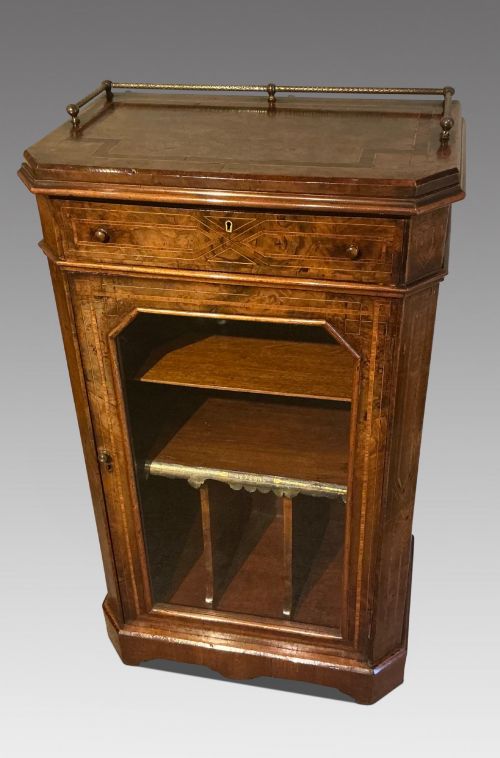
A burr walnut music stand offers figured timber and practical tiered storage for sheet music and books in nineteenth-century interiors.
Burr Walnut Music Stand
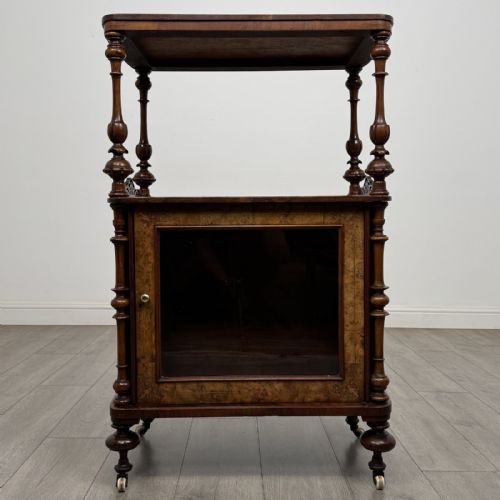
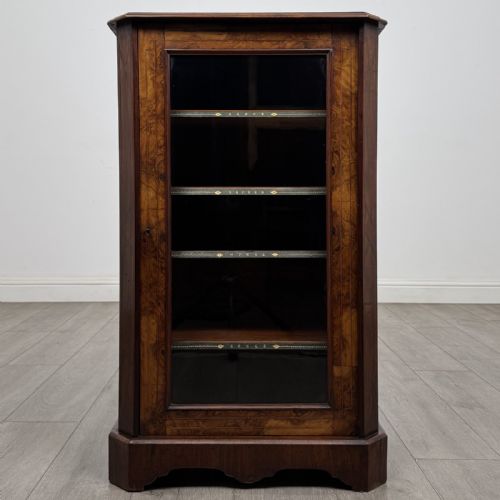
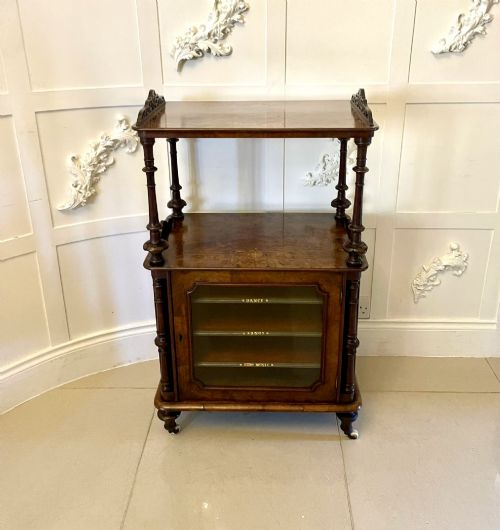
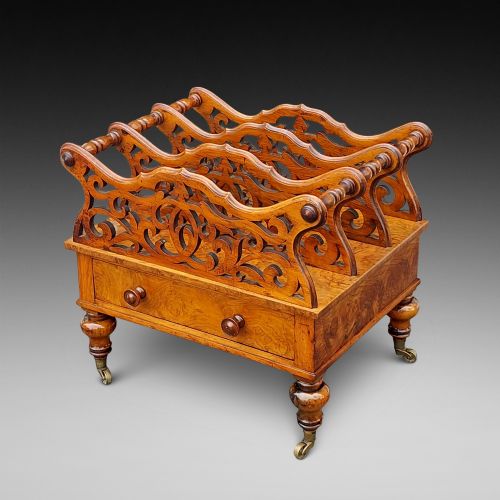
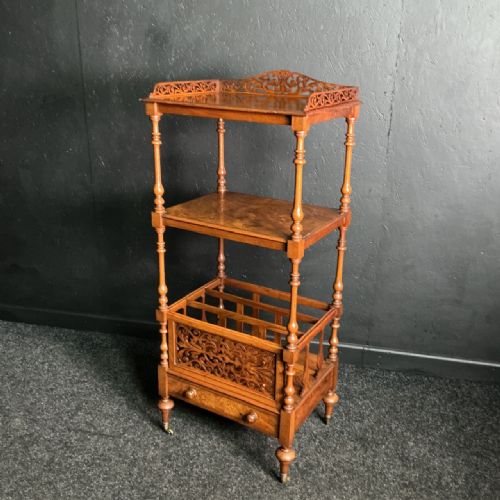
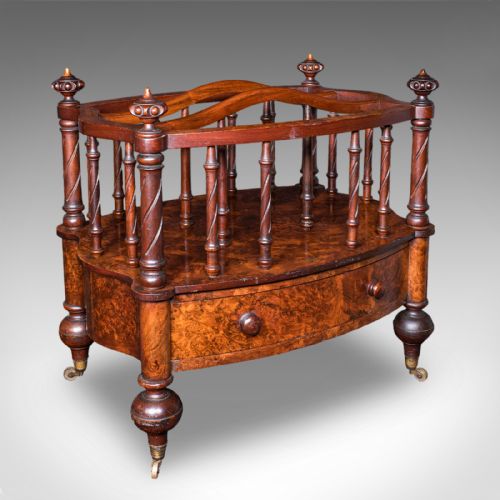
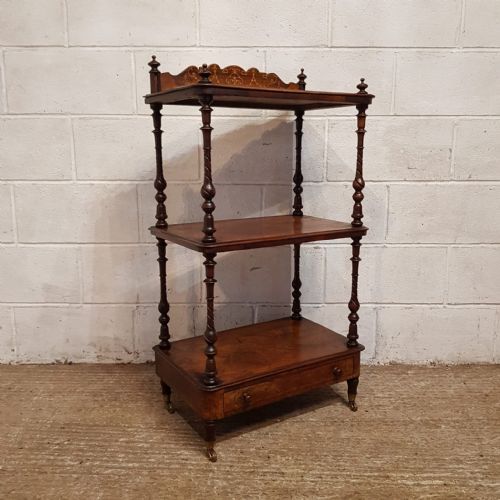
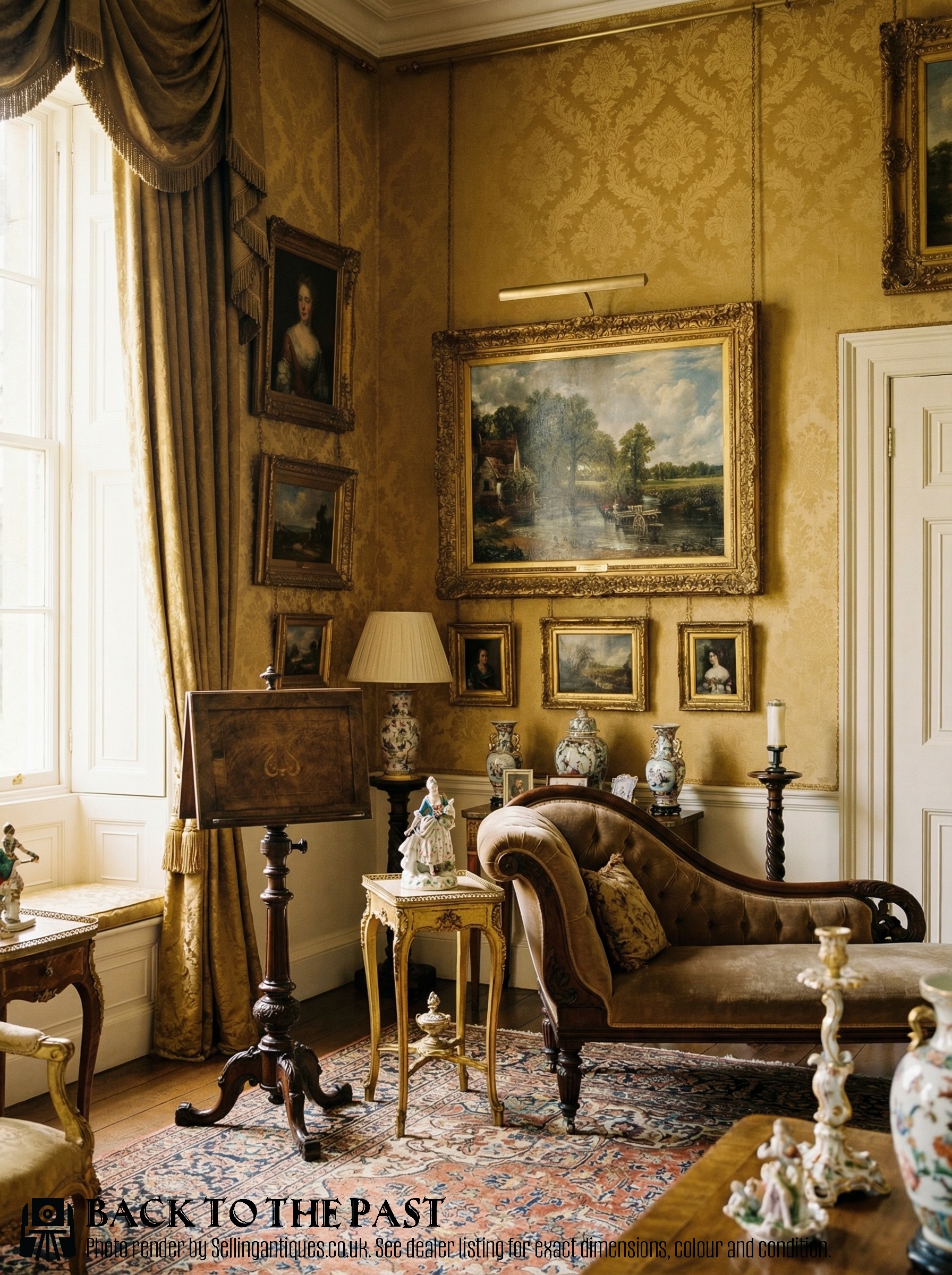
A burr walnut music stand combines musical utility with decorative display, appearing mostly as Victorian canterburys, music cabinets, and multi-tiered whatnots. These pieces served nineteenth-century drawing rooms by holding scores, books, and periodicals near pianos or seating areas.
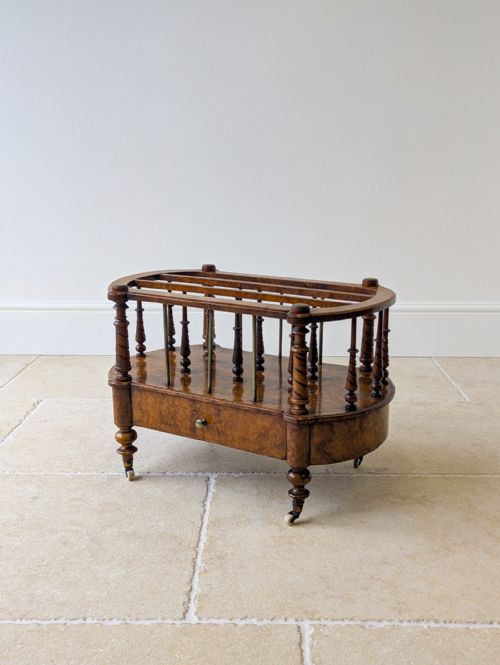
The pieces on this page lean heavily into Victorian production from the middle and latter half of the nineteenth century, with occasional Regency and Edwardian examples. Makers frequently combined the open partitions of a canterburys with enclosed cabinets, drawers, or upper display shelves.
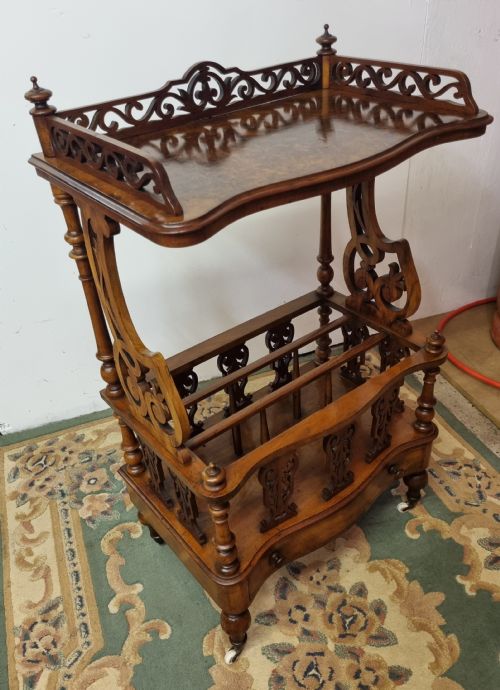
Buyers encounter serpentine shapes, oval table tops, and freestanding formats designed to occupy prominent spots in period reception rooms. Walnut and burr walnut dominate the forms, frequently enriched with boxwood inlay, marquetry, and brass fittings.
How they were made
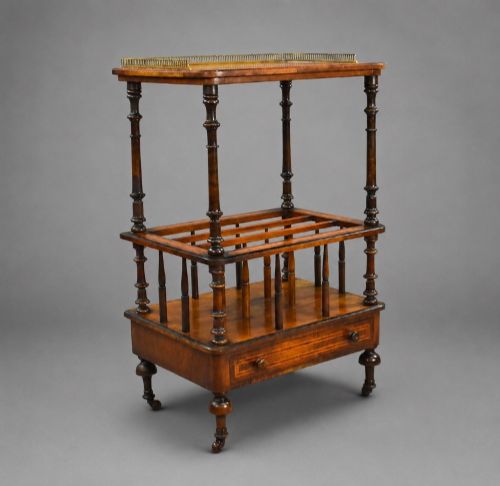
Cabinetmakers constructed these pieces using solid walnut frameworks overlaid with highly figured burr walnut veneers to create rich, swirling grain patterns on primary surfaces. Selected sections received contrasting boxwood stringing and delicate marquetry panels for added visual depth.
Internal divisions, such as the vertical slats in canterburys or the tiers of whatnots, often incorporated turned wooden supports, brass castors, and ceramic elements. Pierced fretwork and shaped galleries appeared on upper shelves, requiring precise joinery by period artisans.
Burr Walnut Music Stand Retail Price Guide 2026
Typical asking prices for burr walnut music stand among the pieces listed under this phrase on Sellingantiques today, from the lower quarter to the upper quarter. They describe what is for sale here now, not the wider market.
Dating spans the nineteenth century, encompassing Regency, Victorian, and Edwardian production periods.
What varies in quality
Quality rests primarily on the choice of burr veneer, where tightly swirled, symmetrical figuring commands greater visual presence than plain or patchy grain. The crispness of inlaid boxwood details and the intricacy of pierced fretwork distinguish standard production from exceptional workshop output.
Structural complexity also separates pieces, with multi-functional designs combining drawers, shelves, and music compartments requiring superior joinery to remain stable. The retention of original brass castors, turned supports, and working hardware preserves the integrity of the piece.
Shoolbred
The Burr Walnut Music Stand Glossary
- Canterbury
- A low piece of furniture featuring vertical partitions designed for holding sheet music, folios, or periodicals. It typically includes a low drawer beneath the partitions.
- Whatnot
- An open set of multi-tiered shelves used for displaying ornaments and books, frequently combined with canterburys or music cabinets in Victorian drawing rooms.
- Marquetry
- The art of applying decorative pieces of veneer to a structural surface to form pictorial or geometric patterns. Makers utilised contrasting timbers like boxwood against walnut.
- Serpentine
- A furniture shape characterised by a undulating front line curving outward and inward. This contour adds movement and refinement to cabinet pieces.
- Etagere
- A set of open shelves for displaying small objects, similar in function to a whatnot and often integrated into music stands.
Burr Walnut Music Stand: Frequently Asked Questions
What is a burr walnut music stand?
A burr walnut music stand is a nineteenth-century furniture piece designed to hold sheet music and scores, often incorporating shelves or partitions.
These items combined practical storage with decorative display for period drawing rooms.
How were music stands used originally?
Victorian households placed them near pianos and seating areas to keep sheet music, books, and periodicals organised and accessible.
Many designs doubled as lamp tables or display surfaces for ornaments.
How do I identify a Victorian piece?
Victorian pieces feature characteristic timber choices like burr walnut, combined with boxwood inlay, brass castors, and turned supports.
Forms lean towards heavily figured veneers, serpentine shapes, and multi-functional combinations like canterburys and whatnots.
Where should I place a music stand at home?
These versatile pieces fit well in living rooms, studies, or hallways as side tables, magazine racks, or display stands.
Their compact footprints allow them to sit beside sofas or against panelled walls.