
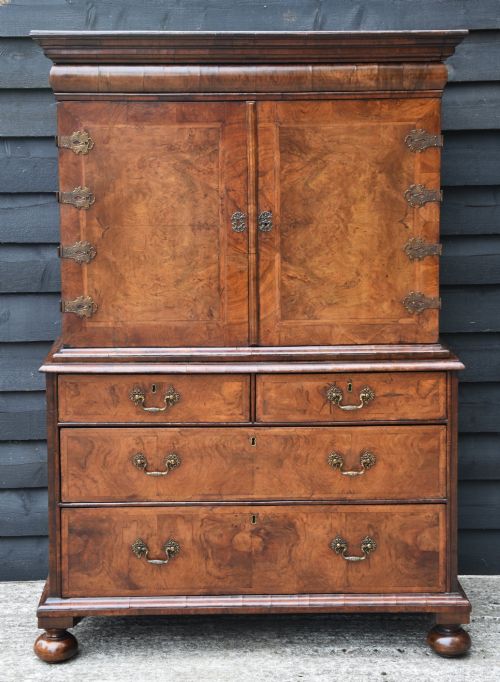
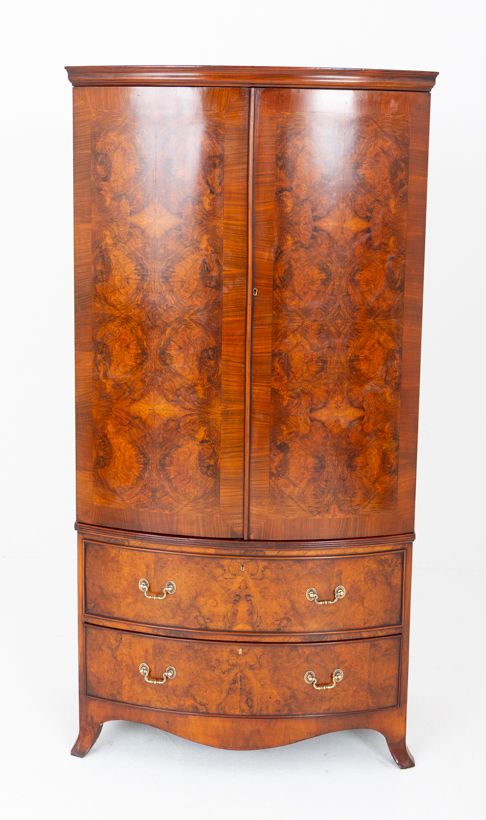
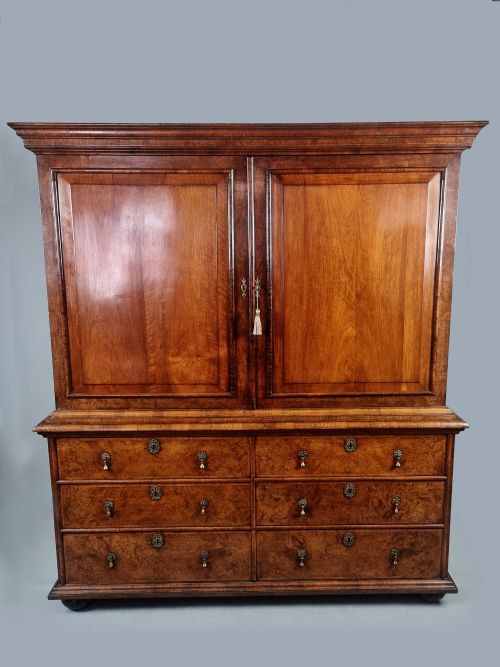
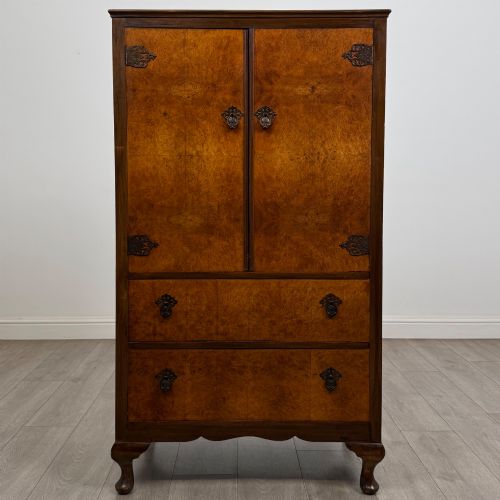


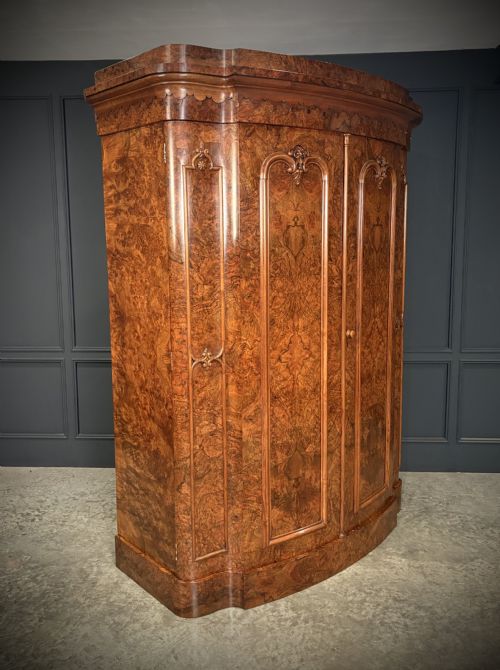

Burr Walnut Linen Press
These burr walnut linen press pieces bring warmth and striking grain patterns to any room.
What a burr walnut linen press is
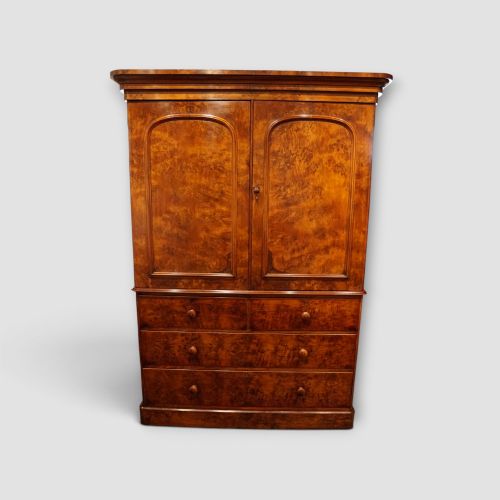
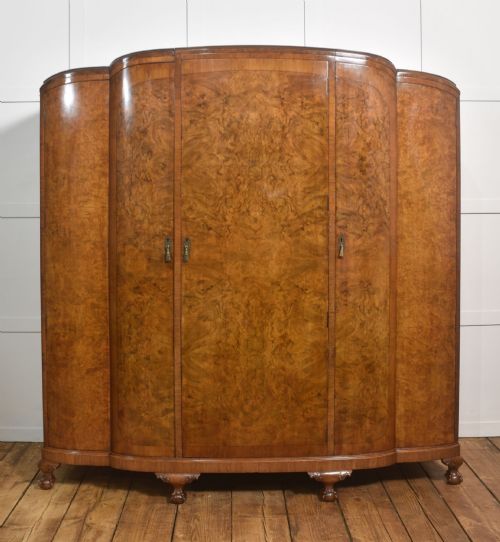
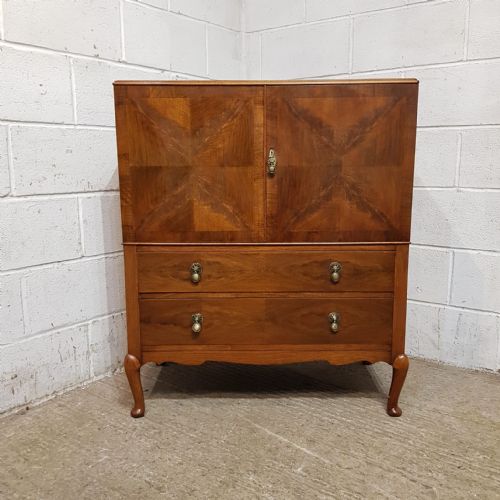
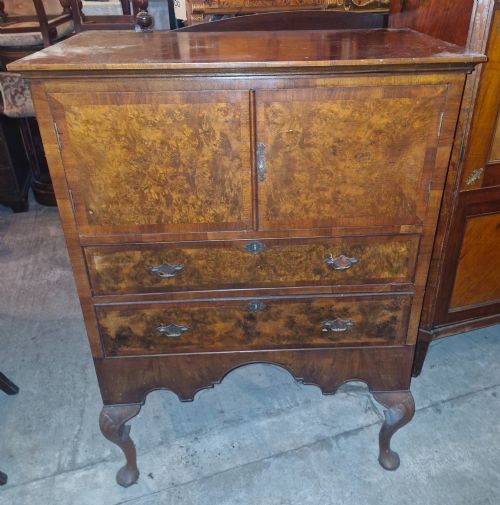
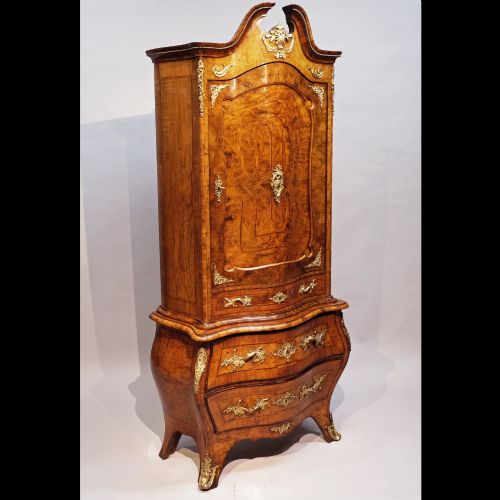
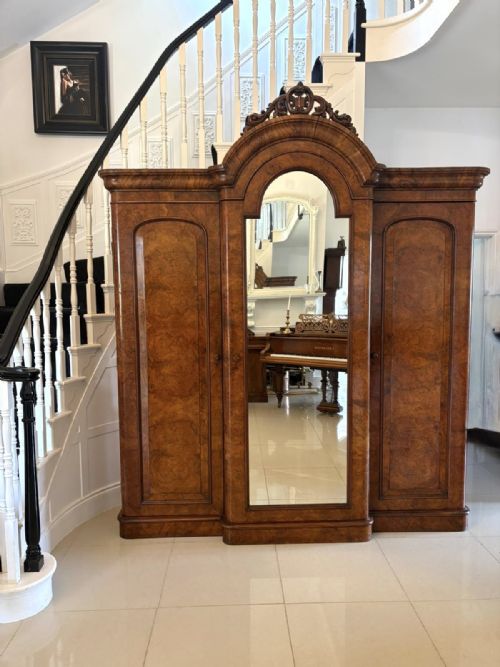
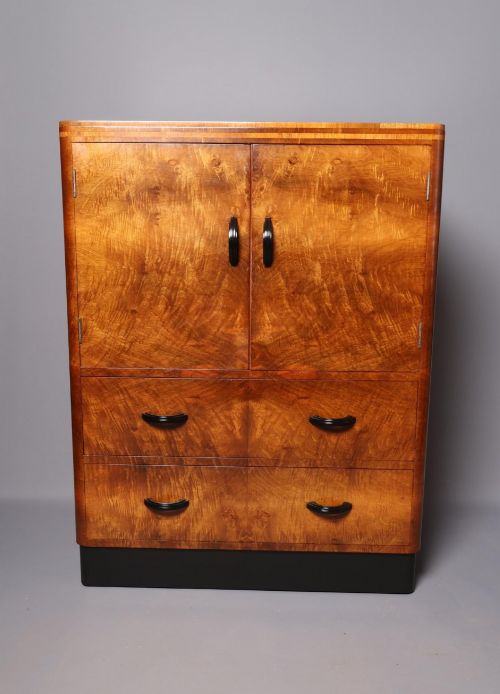
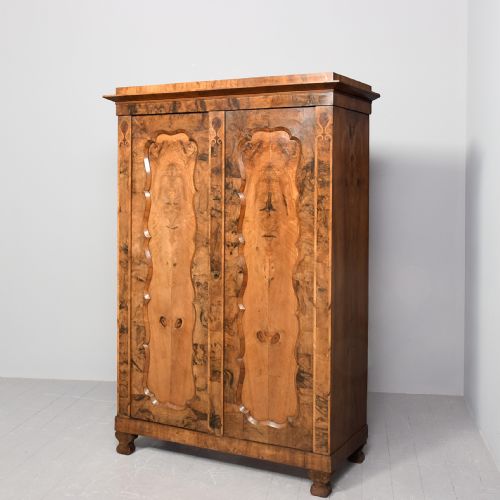
A burr walnut linen press is a substantial storage piece designed originally for linens and clothes, combining hanging space or sliding trays behind double doors with lower drawers. Buyers looking at this phrase will encounter forms spanning several centuries, from early eighteenth-century Queen Anne and Dutch Baroque styles through to Victorian examples and later 1940 Art Deco compactums.
The versions most commonly met on this page range from compact nineteenth-century Victorian cabinets to earlier eighteenth-century press cupboards and mid-century interpretations in walnut and ebonised wood. Alongside standard linen presses and wardrobes, the selection incorporates related storage forms such as tallboys and cabinets featuring brass hardware.
Materials and construction
Construction relies heavily on oak and walnut carcasses finished with highly decorative burr and figured walnut veneers that create rich, swirling patterns across the primary surfaces. Cabinetmakers utilised supplementary materials including brass for handles and escutcheons, alongside occasional details in satinwood, ebonised wood and twentieth-century bakelite.
Joinery techniques evolved across the periods represented, moving from early pegged frames and solid timber construction to later veneered carcase work designed to showcase the figuring of the burr walnut. Interiors typically feature sliding linen slides or shelves above sets of graduated drawers built into the lower section.
Retail Price Guide 2026
Typical UK retail prices for burr walnut linen press, calculated from the Sellingantiques database of over a million retail prices indexed since 2003. This retail price guide relies exclusively on Sellingantiques data; no external sources or auction records are used, so the figures do not describe the wider market.
Listings span four distinct periods: the 18th Century, the 19th Century, Victorian, and 1940.
Distinctions in quality
Quality in these pieces is dictated by the selection and matching of the burr walnut veneer, where symmetrical figuring and continuous grain across doors and drawers elevate the visual impact. The handling of proportions also separates standard examples from exceptional ones, particularly in smaller-scale pieces that maintain balanced dimensions.
Fine craftsmanship is further evident in the integration of secondary timbers such as oak, the crispness of any carved detailing, and the retention of original brass hardware. Pieces originating from notable workshops or bearing specific stylistic flourishes command attention for their construction integrity.
Waring and Gillow·Heal and Sons
The Burr Walnut Linen Press Glossary
- Burr walnut
- A veneer taken from the warted growth on a walnut tree, yielding complex, swirling grain patterns that are highly prized in cabinetmaking. This decorative wood defines the visual character of the pieces.
- Linen press
- A tall storage cabinet traditionally used to store folded sheets and garments on interior sliding trays or shelves above drawers. Later variations often incorporated hanging space.
- Compactum
- A multi-functional wardrobe and storage cabinet combining drawers, cupboards, and hanging space in a single footprint. These often appear in twentieth-century Art Deco designs.
- Tallboy
- A tall chest of drawers standing on a base section or combining a press cupboard top with a chest base. It offers considerable vertical storage capacity.
- Queen Anne
- A style spanning the late seventeenth and early eighteenth centuries, characterised by graceful curves and understated elegance. Pieces from this period often display rich walnut surfaces.
Frequently Asked Questions
How do I date a burr walnut linen press?
Dating relies on examining the structural timbers, construction methods, and stylistic cues such as hardware and feet. Eighteenth-century examples often feature different internal configurations compared to Victorian or Art Deco pieces.
Secondary woods like oak help confirm earlier periods, while twentieth-century pieces utilise modern internal fittings and alternative finishing techniques.
What is the difference between a linen press and a wardrobe?
A traditional linen press incorporates internal sliding trays or shelves behind the upper doors for storing folded textiles. Wardrobes are specifically designed with hanging space for garments.
Many antique examples bridge both categories by combining upper shelf storage with lower drawers or adapted hanging sections.
How do I care for burr walnut veneer?
Burr walnut veneer requires stable environmental conditions away from direct sunlight and excessive heat sources. Keeping room humidity consistent prevents the wood from drying out.
Gentle dusting with a dry cloth maintains the finish without risking moisture damage to the delicate grain layers.
Are these cabinets suitable for modern bedrooms?
These pieces provide substantial storage capacity that suits contemporary interiors needing characterful freestanding furniture. Their internal drawer and shelf layouts accommodate modern clothing and linen storage.
Smaller proportioned models integrate easily into rooms without dominating the floor space.