
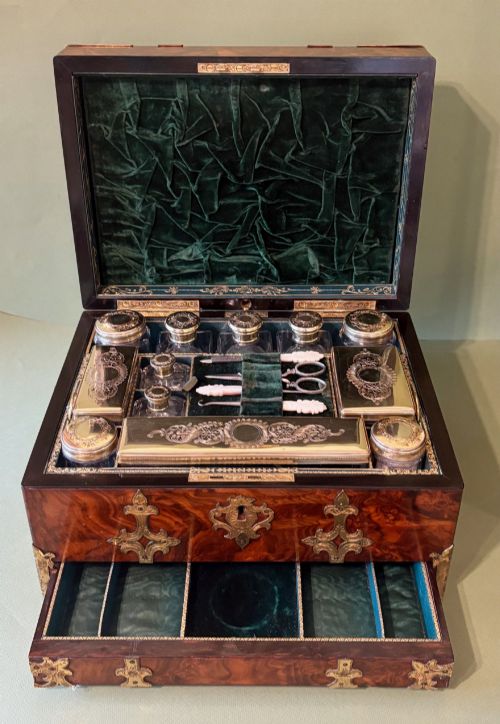
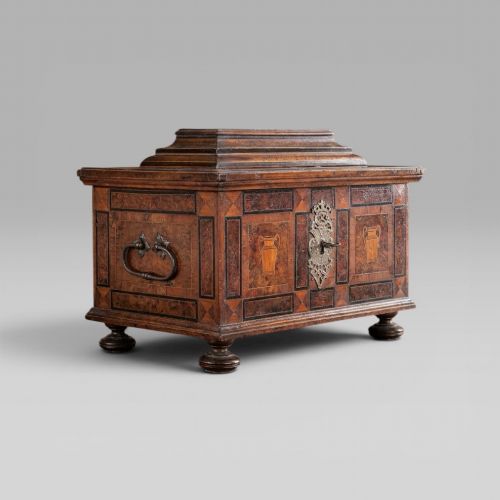
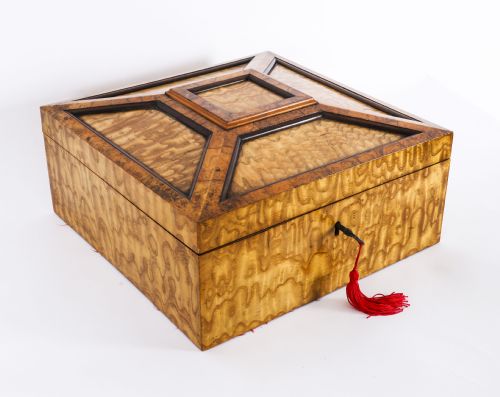
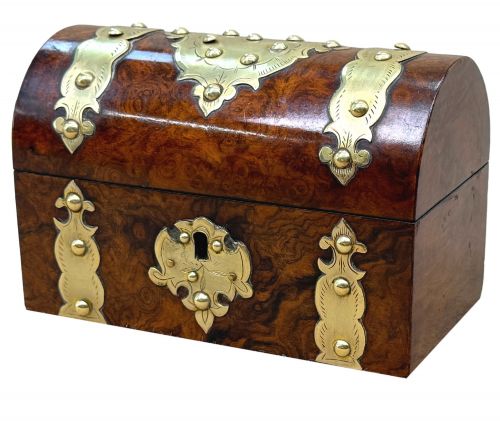


Burr Walnut Jewellery Casket
A burr walnut jewellery casket is a lined wooden box chosen for its rich grain, housing precious trinkets safely upon a dressing table.

Burr Walnut Jewellery Casket
A burr walnut jewellery casket combines rich, swirling timber with functional storage for keepsakes. These boxes emerge across the Victorian era alongside earlier Georgian and seventeenth-century examples, taking forms from domed caskets to miniature chests of drawers.
The pieces listed on this page span several decades, featuring Victorian dressing cases, stationery boxes, and table caskets alongside continental and Georgian variants. Buyers encounter fitted interiors with mirrors, velvet linings, and occasional compartments designed for vanity accessories.
Makers and retailers such as Parkins & Grotto and Trussell Brighton supplied these items to prosperous households. The form serves as both a decorative centrepiece and a practical container for personal valuables.
How they were made
Craftsmen applied thin veneers of burr walnut, walnut, and burr maple over solid secondary woods to display complex, knotty grain patterns. Carpenters reinforced these timber carcasses with brass mounts, strapwork, and hinges to secure the lids and corners.
Interiors required meticulous hand-fitting of velvet, glass, and fruitwood to create dedicated sections for rings and necklaces. Specialised techniques such as Tunbridge ware inlay and marquetry added geometric or floral detail to the exterior surfaces.
Some nineteenth-century makers hid secret drawers inside these caskets, requiring the owner to press a concealed spring to access them.
What varies in quality
The selection of timber grain largely dictates the visual appeal of each casket, with tightly clustered burr patterns commanding attention. Superior boxes exhibit precise marquetry or Tunbridge ware inlay that integrates smoothly into the walnut carcass without warping.
Internal appointments differentiate standard containers from luxury pieces, particularly when fitted with bevelled mirrors, malachite accents, or signed maker's plaques. The robustness of the brass hardware and the neatness of the velvet lining indicate the skill of the original workshop.
Trussell Brighton·Parkins And Grotto·Aspreys
The Burr Walnut Jewellery Casket Glossary
- Burr walnut
- A wood veneer taken from the warted excrescences of walnut trees, prized for its swirling, highly figured grain. Cabinet makers selected these decorative sections for the primary facades of high-status boxes.
- Tunbridge ware
- A form of mosaic woodwork originating in Kent, utilising thousands of tiny dyed wood blocks to create pictorial or geometric designs. Artisans inlaid these panels directly into the walnut lids of Victorian work boxes.
- Marquetry
- The art of applying veneers of different woods to a structure to form decorative patterns or pictures. Craftsmen cut thin sheets of walnut, fruitwood, and other timbers to assemble intricate surface designs.
- Dressing case
- A fitted box containing compartments for cosmetics, brushes, and jewellery, often equipped with a folding mirror. These portable containers accommodated the grooming needs of Victorian travellers and residents alike.
- Tambour top
- A sliding lid constructed from narrow strips of wood glued to a fabric backing, allowing it to curve smoothly around a track. This mechanism provides concealed access to the interior compartments of a desk or casket.
Burr Walnut Jewellery Casket: Frequently Asked Questions
What is a burr walnut jewellery casket?
A burr walnut jewellery casket is a lidded wooden box covered in decorative burr veneer and lined inside for storing precious items. These containers range from simple table boxes to elaborate Victorian dressing cases with mirrors.
Craftsmen utilised the knotty growth of walnut trees to create swirling patterns on the exterior surfaces. They often added brass mounts, velvet linings, and internal trays to keep trinkets organised.
How do I date a burr walnut casket?
Dating relies on examining the construction methods, hardware styles, and internal fittings of the box. Victorian pieces often feature plush velvet interiors and brass strapping, while earlier Georgian or seventeenth-century examples display different joinery and simpler proportions.
Maker's marks or retailer signatures stamped on the locks or leather linings also help establish an approximate decade. The presence of specific decorative techniques like Tunbridge ware points toward mid-nineteenth-century production.
Were these caskets used only for jewellery?
While many boxes served to hold rings and necklaces, others accommodated writing stationery, sewing supplies, or games. Manufacturers adapted the internal compartments to suit the specific requirements of the owner.
Stationery boxes and workboxes shared similar exterior appearances in burr walnut but featured dividers sized for letters, threads, or playing cards rather than personal adornments.
How should I care for antique walnut?
Antique walnut requires stable indoor humidity and protection from direct sunlight to prevent the timber and veneer from drying out. Gentle dusting with a dry cloth maintains the finish without harming the historic surface.
Avoid placing these boxes near heat sources or damp areas, as fluctuations in temperature can cause the delicate burr veneers to lift from their carcasses.