


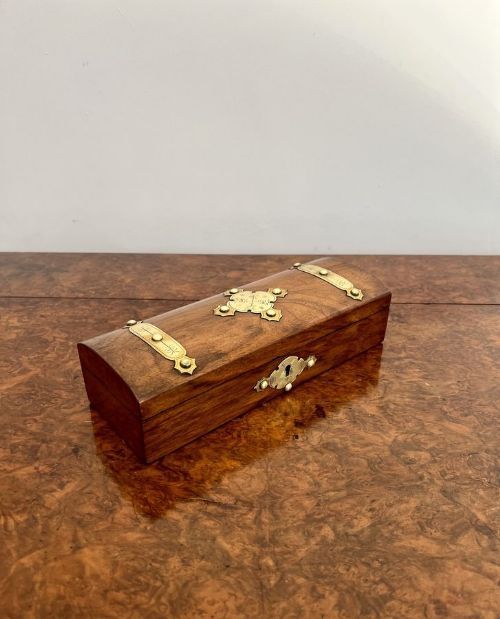


Victorian Burr Walnut Casket
A Victorian burr walnut casket is a timber box of figured grain designed to hold letters, jewels or games, offering tactile warmth and period utility.
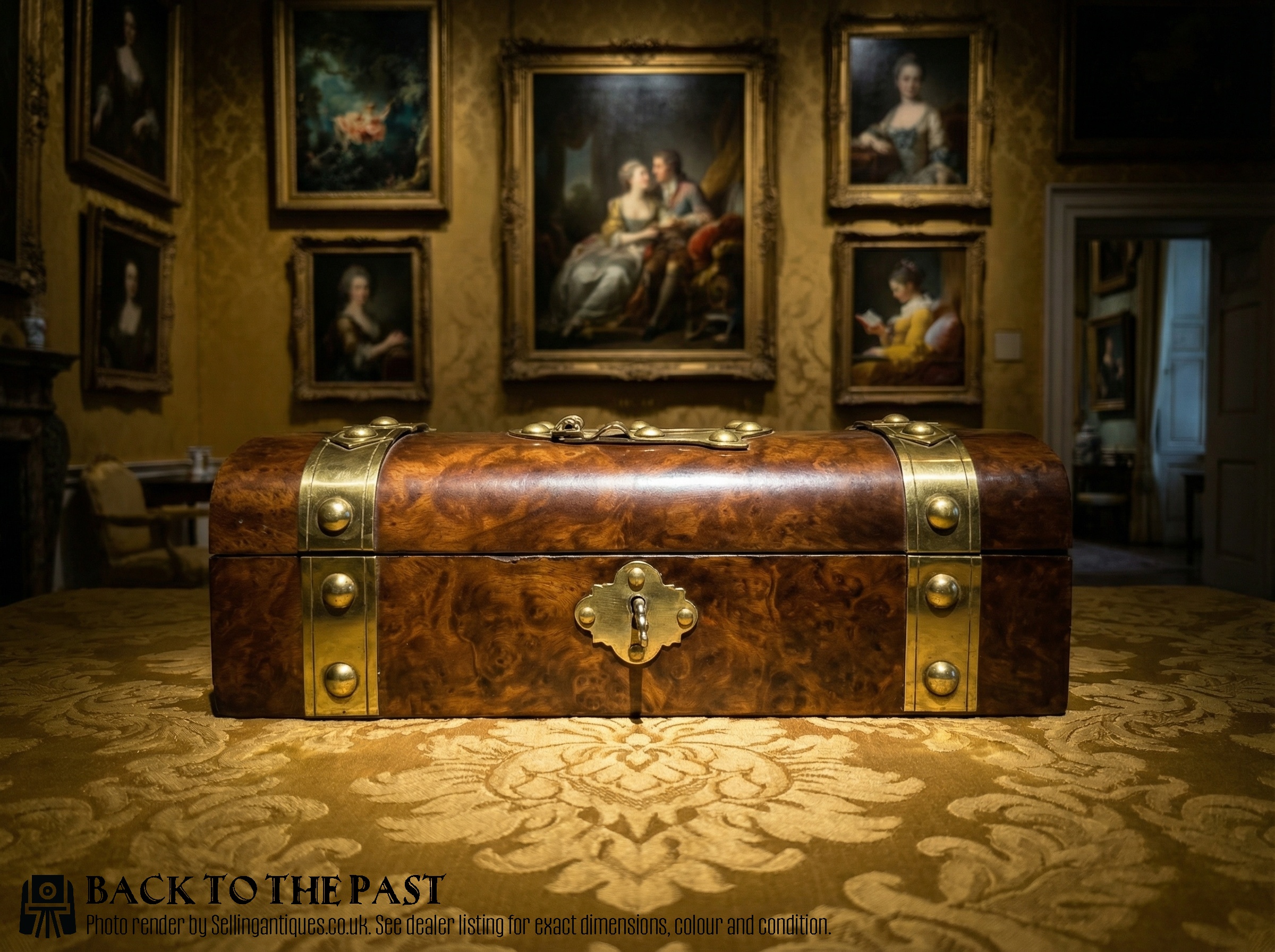
Victorian Burr Walnut Casket
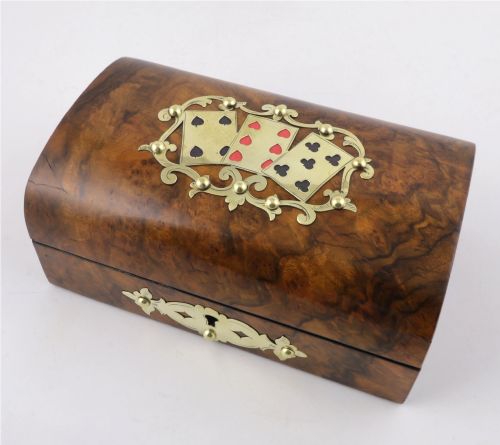
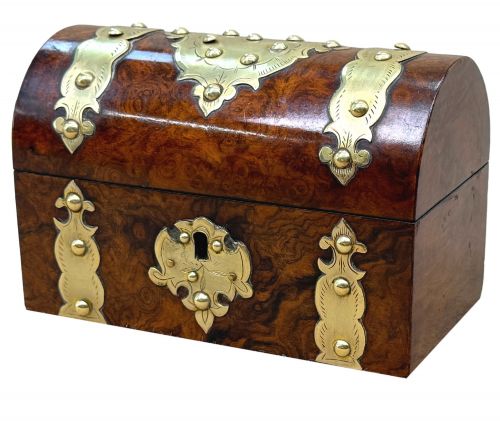
A Victorian burr walnut casket presents a richly patterned timber surface, often highlighted by brass banding, mounts or inlays. These lidded containers were built to serve specific domestic tasks on writing desks and dressing tables.
The selections gathered here span stationery boxes, jewellery cabinets, games compendiums and vanity boxes. Most pieces originate from the nineteenth century, with specific dates clustering around the middle and late Victorian decades.
While many examples follow standard English cabinet-making traditions of the period, occasional French table boxes and Tunbridge ware inlaid workboxes appear in the collection. The interior fittings often survive intact, featuring velvet linings, mirrors and partitioned compartments.

How they were made
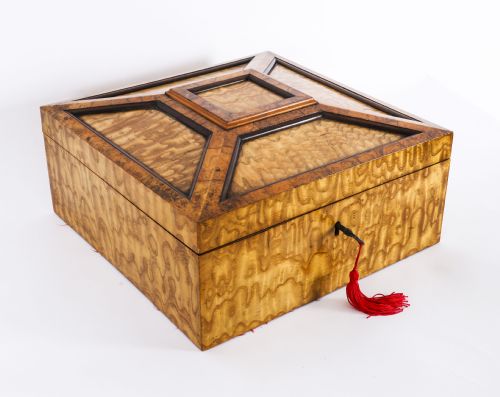
Cabinet makers utilised burr walnut and burr maple veneers applied over solid secondary timbers to achieve swirling, highly figured exterior patterns. This sliced veneer technique allowed workshops to display the most decorative growths of the walnut tree across flat and domed lids.
Metal mounts in brass, ormolu, and occasionally malachite or mother-of-pearl reinforced the corners and edges of the timber frames. Hand-painted porcelain plaques and marquetry inlays were also set into the lids of finer boxes.
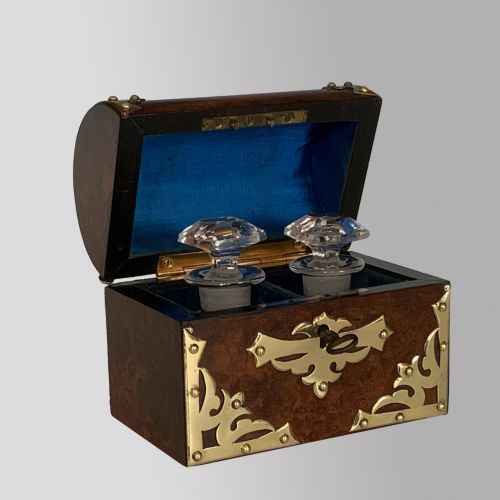
Interiors were lined with silk, velvet or paper, and fitted with glass bottles, mirrors, or removable trays for stationery and sewing implements.
Victorian Burr Walnut Casket Retail Price Guide 2026
Typical asking prices for victorian burr walnut casket among the pieces listed under this phrase on Sellingantiques today, from the lower quarter to the upper quarter. They describe what is for sale here now, not the wider market.
The listings on this page span the Victorian era, the nineteenth century, and the Georgian period, executed in burr walnut, brass, porcelain and mother-of-pearl.
What varies in quality
The intricacy and preservation of the burr walnut grain set the visual standard for each box, alongside the precision of the cabinet work. Strong symmetry in the veneer patterns and tight joints across domed or rectangular lids separate standard utility boxes from superior pieces.
Hardware and secondary materials dictate the grade of a casket, from plain brass hinges to heavy brass binding, fitted locks, and integrated side handles. The survival of original interior trays, silk linings and fitted glass or porcelain elements further elevates a piece.
Attribution to known makers or retailers adds distinction, particularly when stamped brass locks or maker plates remain fixed to the timber.
Aspreys·Parkins & Grotto·Trussell Brighton
The Victorian Burr Walnut Casket Glossary
- Burr walnut
- A timber veneer taken from the wart-like growth on a walnut tree, prized for its swirling, knotted grain patterns. It provides the primary decorative surface for nineteenth-century luxury boxes.
- Stationery box
- A desk accessory designed with tiered or compartmentalised interiors to hold writing paper and envelopes. These often feature sloping or domed lids.
- Ormolu
- Gilded bronze mounts applied to furniture and boxes during the nineteenth century. This technique adds metallic contrast to the dark timber surfaces.
- Tunbridge ware
- A form of woodworking involving small mosaic tiles built from contrasting coloured woods to create geometric or pictorial designs. It appears on inlaid work boxes from the period.
- Marquetry
- The art of applying decorative pieces of veneer to a structural structure to form pictorial or geometric patterns. It distinguishes finer decorative boxes from plain timber examples.
Victorian Burr Walnut Casket: Frequently Asked Questions
What were Victorian burr walnut caskets used for?
These boxes served domestic roles in Victorian parlours and bedrooms, holding jewellery, writing paper, playing cards or sewing implements. They kept valuable or easily misplaced items organised on dressing tables and writing desks.
Larger stationery boxes and games compendiums catered to household entertainment and correspondence, while smaller caskets protected personal trinkets under lock and key.
How do I care for burr walnut wood?
Protect the timber by keeping the casket away from direct sunlight and sudden changes in central heating or humidity, which can cause veneer to lift. Dust gently with a dry, soft cloth.
Avoid using modern liquid polishes or silicone sprays, as these can damage the historic French polish or wax finish on the walnut surface.
How can I tell the date of a casket?
Examine the construction methods, secondary timbers, lock mechanisms and interior fittings. Pieces marked with specific decades often display distinctive hardware styles, such as heavy brass bands or recessed campaign handles.
Makers' stamps on locks or paper labels inside the lid can also help narrow down the period of manufacture.
Are interior fittings usually original?
Many caskets retain their original velvet linings, silk pockets, fitted mirrors and removable stationery trays. Original compartments often show matching wear consistent with the age of the exterior timber.
Some boxes have undergone professional relining over the years to preserve their utility for modern use.