
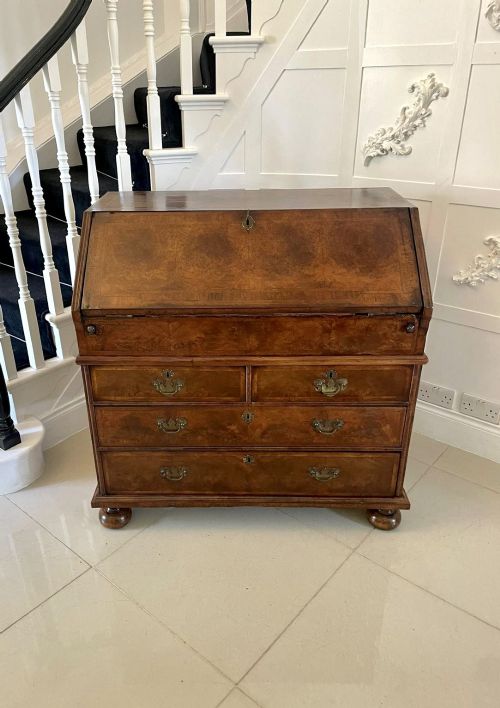
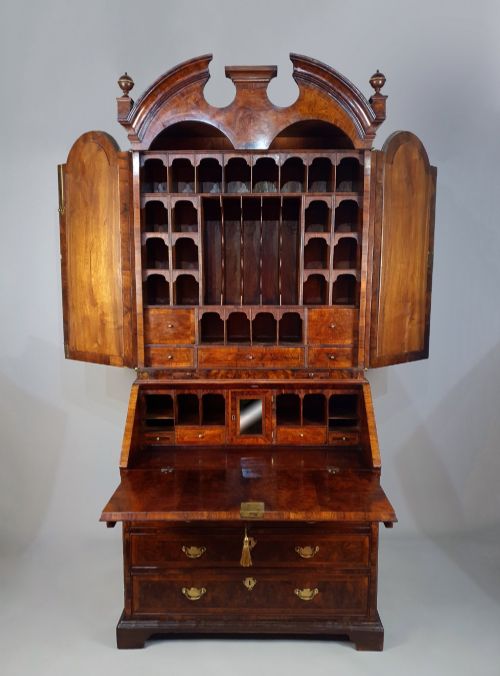
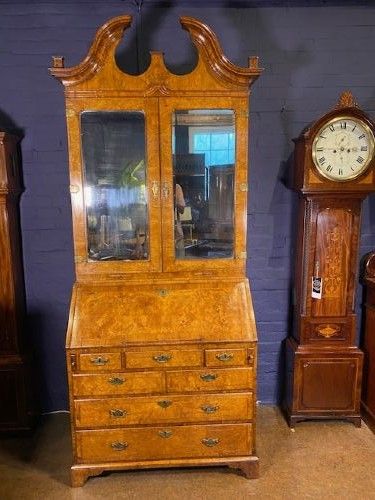
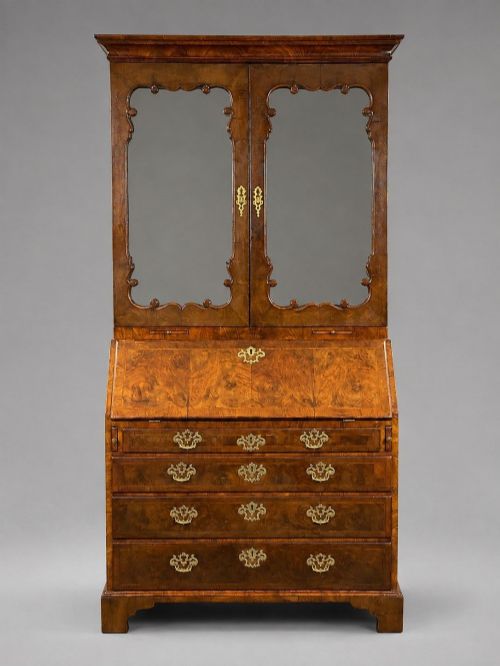
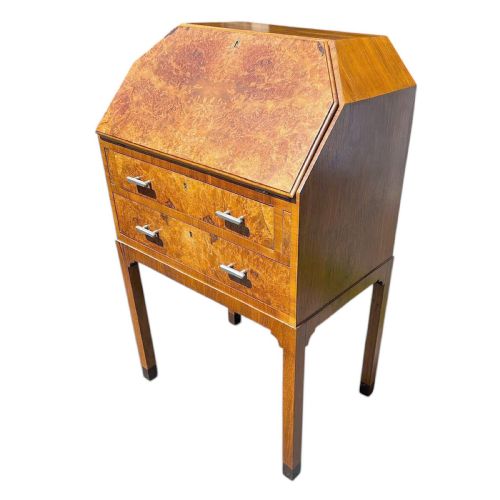
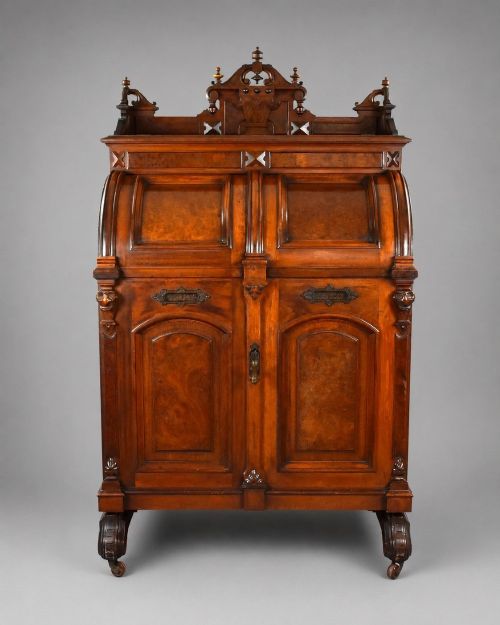
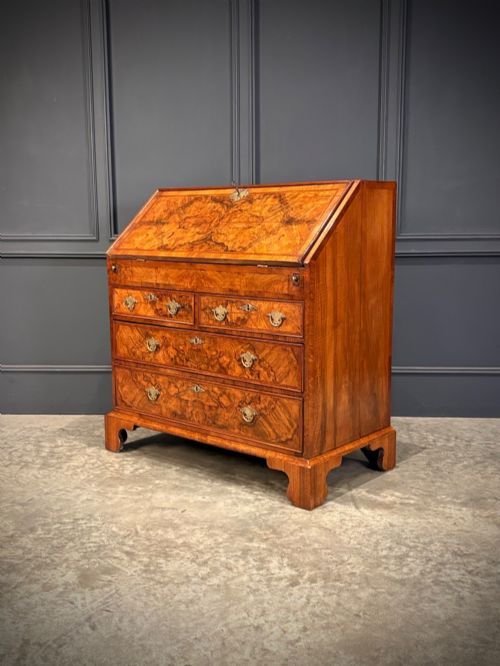
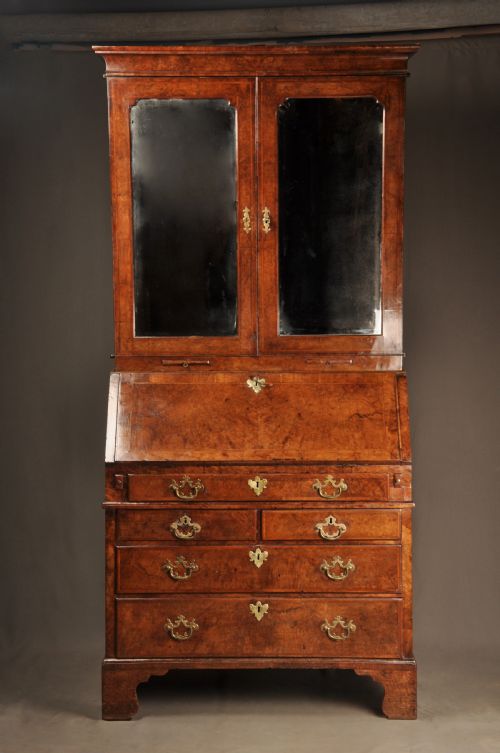
Burr Walnut Fall Front Cabinet
A burr walnut fall front cabinet is a writing piece with a hinged writing flap, meeting collectors through bureau bookcases and escritoires.
Burr Walnut Fall Front Cabinet
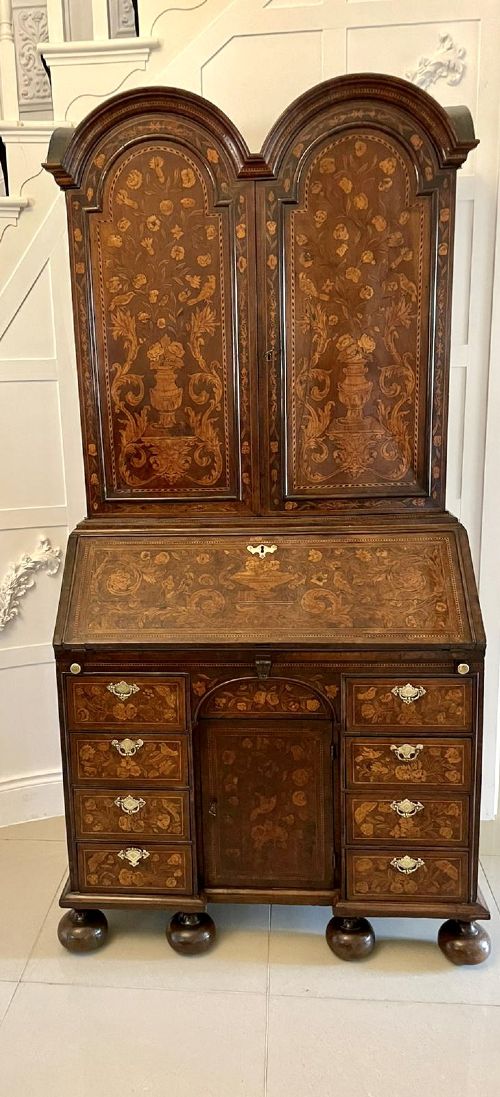
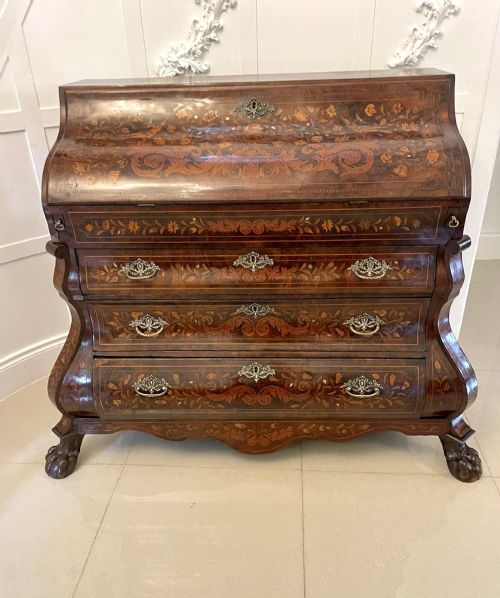
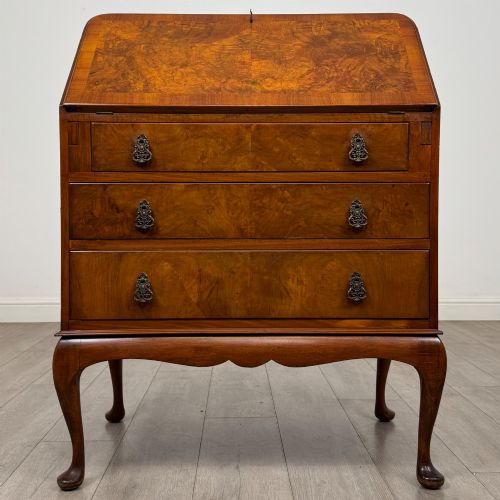
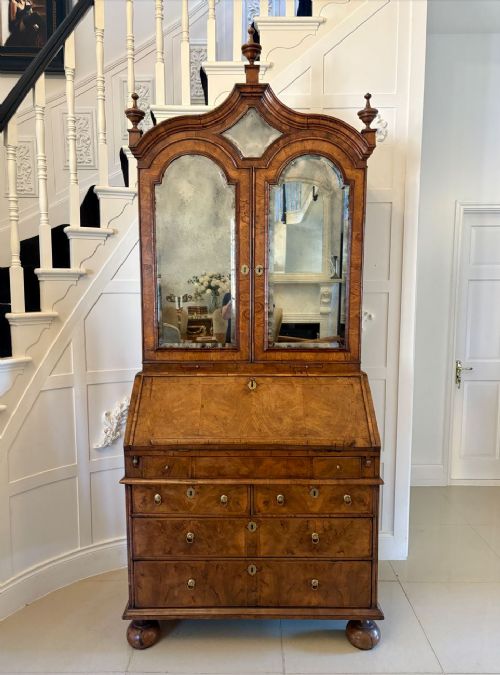
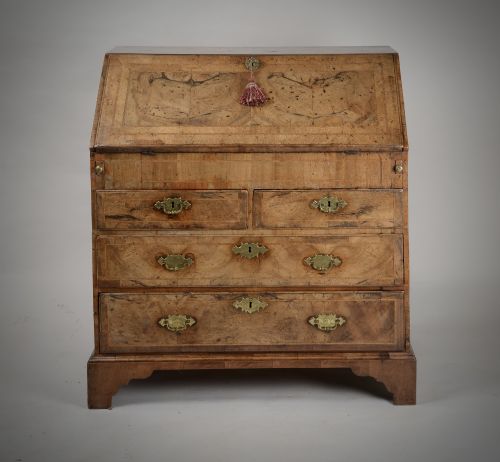
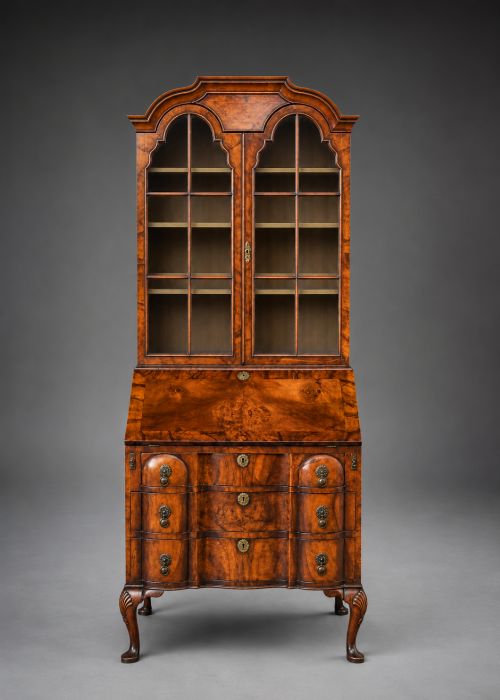
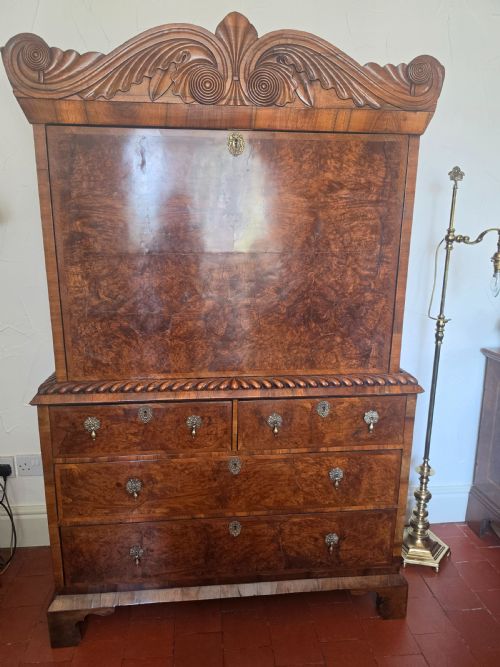
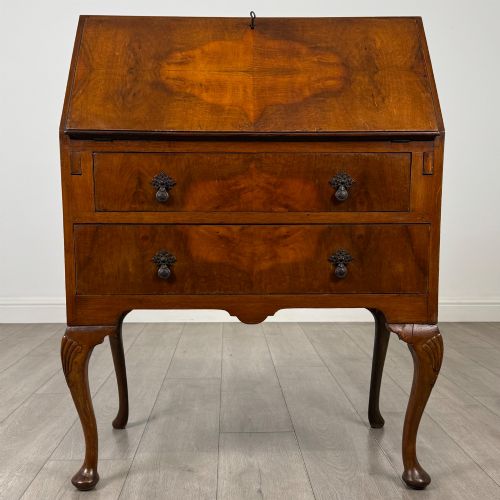
A burr walnut fall front cabinet typically appears as a bureau, bureau bookcase, escritoire, or writing desk. These pieces combine a slanted or vertical drop-front writing surface with concealed internal drawers and pigeonholes.
The selections span significant historical periods from the late seventeenth century through the Georgian era, Queen Anne reigns, and later Edwardian and Art Deco revivals. English, Dutch, and South German origins dominate the historical offerings.
Standard variations include tall two-part bureau bookcases with glazed upper doors, compact slant-front bureaux, and upright cabinets with fitted writing compartments. Buyers encounter both authentic period examples and later nineteenth-century interpretations.
Materials and Construction
The primary visual appeal relies on burr walnut veneer, figured walnut, and mulberry timbers applied to carcases of oak. Artisans selected timber with complex, swirling grain patterns for maximum decorative impact on the fall front and drawer faces.
Decoration incorporates intricate techniques such as featherbanding, herringbone inlay, and floral marquetry in contrasting woods. Brass hardware, including escutcheons and drop handles, accompanies structural elements like glass panels and candle slides.
Listings feature burr walnut fall front cabinets spanning the 17th Century, Georgian, Victorian, and Edwardian periods, alongside Art Deco examples.
Evaluating the Pieces
Quality rests upon the richness of the walnut veneer selection and the precision of the underlying marquetry or featherbanding details. Pieces exhibiting lively, highly figured burr grain and crisp decorative inlay command greater appreciation from collectors.
The integrity of the structural joinery, the presence of original brasses, and the complexity of the internal fitments define the tier of craftsmanship. Superior examples maintain cohesive proportions across multi-part bureau bookcases and Escritoires.
The Burr Walnut Fall Front Cabinet Glossary
- Bureau bookcase
- A writing bureau combined with an upper shelving section, enclosed by panelled or glazed doors. These tall pieces often separate into two distinct parts for transport.
- Escritoire
- A tall writing cabinet featuring a fall front writing flap that conceals a fitted interior of small drawers. This form originated in the seventeenth century.
- Featherbanding
- A decorative border inlay made from small strips of veneer laid in a herringbone or chevron pattern. It frames drawer fronts and writing flaps on walnut furniture.
- Burr walnut
- Timber taken from the abnormal growth growths of a walnut tree, yielding highly ornamental swirling grain patterns. It requires careful veneering onto stable secondary woods.
- Candle slide
- A pull-out wooden board positioned beneath the main writing surface to support lighting. These auxiliary slides appear on eighteenth-century bureau bookcases.
Burr Walnut Fall Front Cabinet: Frequently Asked Questions
What is a fall front cabinet?
A fall front cabinet is a piece of furniture featuring a hinged panel that drops down to form a horizontal writing surface. When closed, the panel conceals an arrangement of small drawers, pigeonholes, and secret compartments.
These cabinets function primarily as compact desks that hide writing materials when not in use. Historical examples often stand on bracket feet or supportive chests of drawers.
How do I identify a Queen Anne bureau?
Queen Anne bureaux typically display graceful cabriole legs or simple bracket feet, combined with restrained proportions and book-matched walnut veneers. The emphasis rests on the natural grain of the wood rather than heavy carving.
Interior compartments often feature stepped drawers and central well doors within the bureau section. Featherbanded borders frequently outline the drawer fronts and the fall flap.
What distinguishes an escritoire?
An escritoire is a tall vertical writing cabinet where the fall front opens downward from a higher vantage point on the case. This form emerged during the seventeenth and early eighteenth centuries.
Unlike standard slope-front desks, escritoires present a flat vertical face when closed. They frequently incorporate substantial cupboard doors or drawers beneath the writing section.
Where were these cabinets made?
The pieces originate primarily from English workshops, alongside notable regional examples from Dutch and South German makers. Regional preferences influenced the complexity of the floral marquetry and the architectural profile of the cornices.
English makers favoured oak as a secondary timber beneath walnut veneers. Continental workshops often utilised distinct floral marquetry patterns and bombé profiles.
How do I care for burr walnut veneer?
Burr walnut veneer requires stable indoor humidity and protection from direct sunlight to prevent timber shrinkage and fading. Gentle dusting with a dry cloth preserves the polished surface.
Avoid placing these cabinets near heat sources or damp environments. Maintaining consistent atmospheric conditions protects the delicate historical veneers from lifting.