






Edwardian Carved Music Cabinet
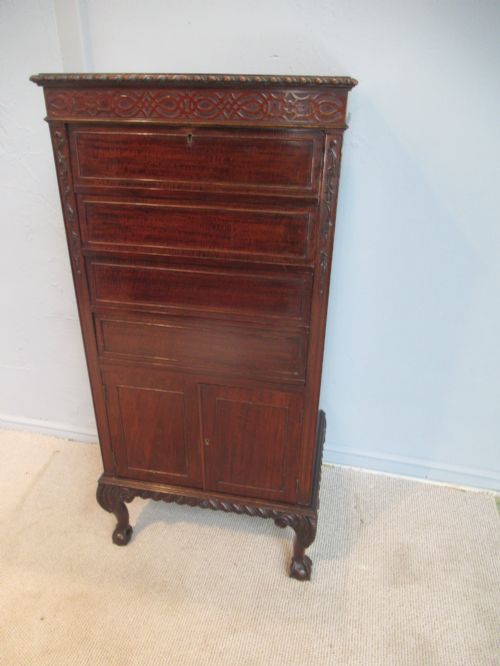
An edwardian carved music cabinet offers tidy storage for sheet music and parlour items, combining period timber work with upright proportions.
Edwardian Carved Music Cabinet
An edwardian carved music cabinet provides compact storage designed specifically for sheet music, scores and small parlour accessories. These upright pieces typically feature shelved interiors or drop fronts to keep paper collections organised in domestic settings.
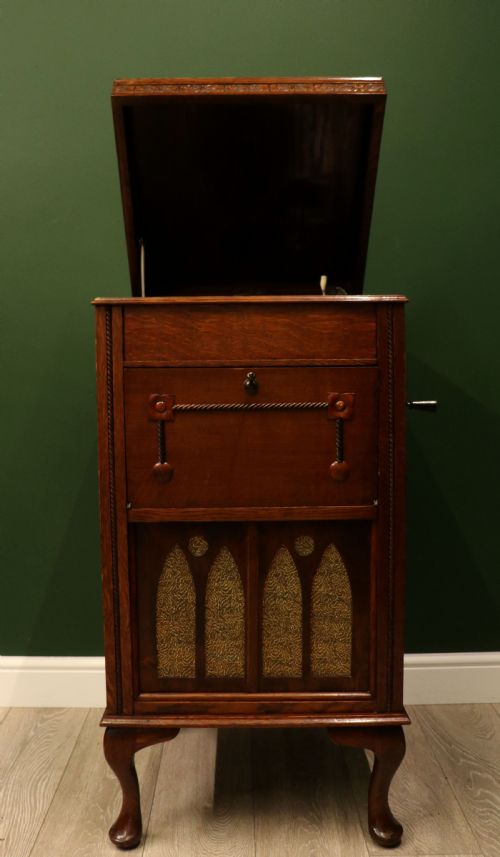
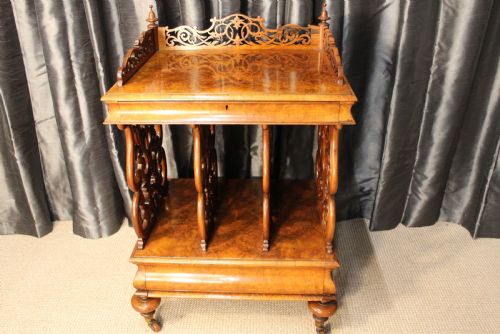
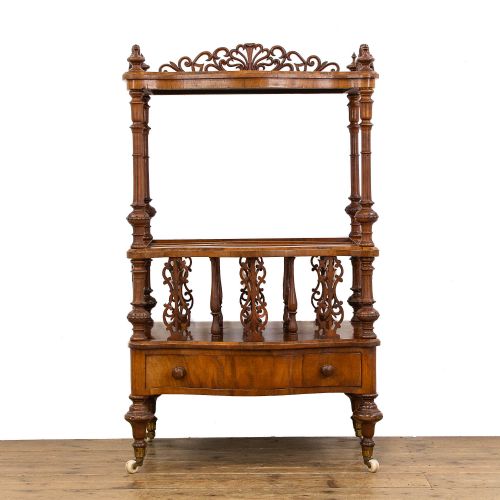
The selection on this page centres primarily on Edwardian examples alongside related Victorian and early twentieth-century pieces. Alongside standard cabinets, you will encounter walnut canterburys, oak file units and occasional parlour gramophones.
Makers and workshops of the period utilised rich timbers like mahogany, walnut and burr walnut, often complemented by inlaid details or subtle carving. Formats range from slim pedestal designs to fall-front boxes intended for the pianist's lounge.
How they were made
Cabinet makers of the period constructed these pieces using solid timbers and decorative veneers such as mahogany, oak and burr walnut. Surfaces frequently display inlaid marquetry, brass handles and ceramic or metal castors for mobility.
Structural elements include fall fronts, mirror backs and internal partitioning designed to hold music folios upright without bending. Carved flourishes and stylistic influences ranging from Art Nouveau to Chippendale Revival define the exterior ornamentation.
Edwardian Carved Music Cabinet Retail Price Guide 2026
Typical asking prices for edwardian carved music cabinet among the pieces listed under this phrase on Sellingantiques today, from the lower quarter to the upper quarter. They describe what is for sale here now, not the wider market.
Listings span the Victorian, Edwardian and 1920 periods, utilising mahogany, walnut, burr walnut, oak and rosewood alongside brass and ceramic fittings.
What varies in quality
Quality in these cabinets rests upon the choice of timber and the depth of figuring in veneers like burr walnut. Finely matched grain patterns and crisp, hand-finished carving separate finer parlour pieces from utilitarian file units.
Internal construction details, such as solid wood drawer linings and original brass or metal hardware, indicate superior workshop production. The integrity of internal shelving and smooth operation of fall fronts also distinguish better examples.
Denby & Spinks·U Phone of Leeds·Liberty
The Edwardian Carved Music Cabinet Glossary
- Canterbury
- A low stand or cabinet fitted with vertical partitions for holding sheet music, folios or newspapers. These pieces often incorporate small drawers or turned legs.
- Fall Front
- A hinged panel that drops forward to serve as a writing surface or to provide easy access to internal compartments. This mechanism is common in compact music storage units.
- Burr Walnut
- Timber taken from the warted excrescences of a walnut tree, prized for its swirling grain patterns. It was frequently used as a decorative veneer on finer Victorian and Edwardian furniture.
- Art Nouveau
- A decorative style characterised by undulating asymmetrical lines, floral motifs and stylised natural forms. Pieces in this style often feature organic brass hardware and carved plant-like details.
- Pedestal Cabinet
- A tall, narrow piece of furniture designed to occupy minimal floor space while offering multi-tiered storage. These units suit compact rooms and corners.
Edwardian Carved Music Cabinet: Frequently Asked Questions
How were music cabinets used originally?
Victorian and Edwardian households used these cabinets to keep sheet music organised and protected near a piano or parlour seating.
The vertical partitions and drop-front compartments allowed musicians to browse and select scores easily during musical evenings.
How do I identify an Edwardian piece?
Edwardian furniture generally exhibits lighter timbers, restrained carving and simpler lines compared to heavier Victorian designs.
Pieces from this era often utilise mahogany or walnut, sometimes incorporating subtle satinwood inlay or Art Nouveau influences.
Can these cabinets hold modern items?
The internal shelving and slim proportions make these cabinets suitable for storing paperwork, notebooks or art supplies.
Their traditional dimensions integrate well into modern living spaces as bedside units or hallway storage.