

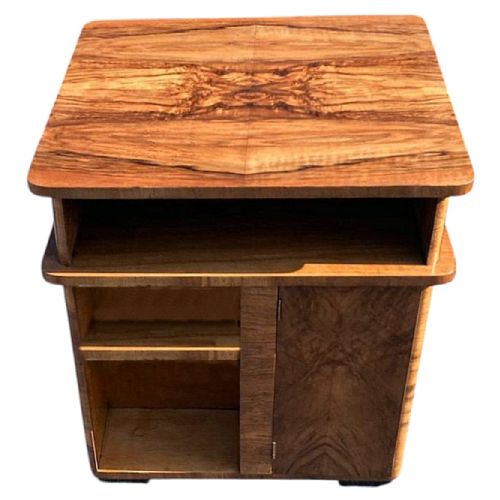


Burr Walnut Bar Cabinet
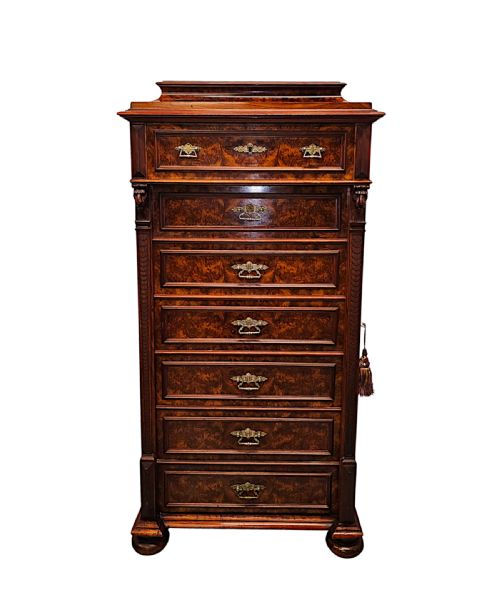
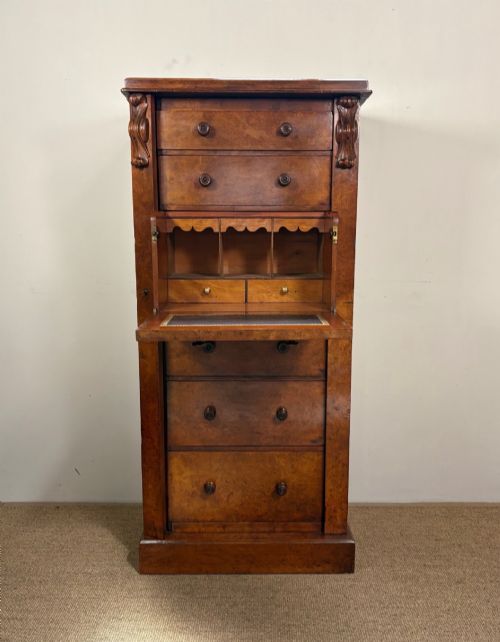
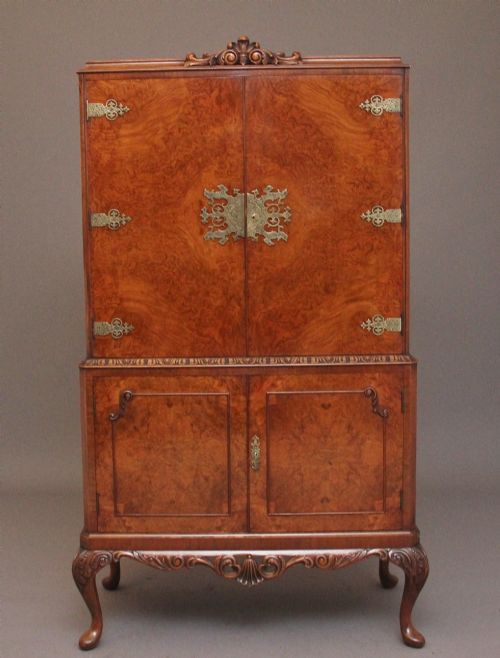
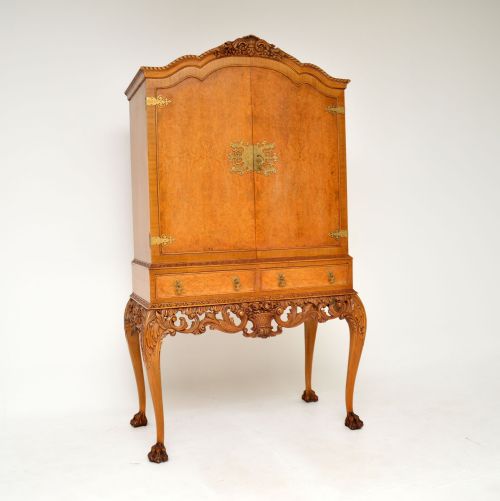
These burr walnut bar cabinet pieces offer figured veneers and fitted interiors designed to serve drinks in style.

Understanding a burr walnut bar cabinet
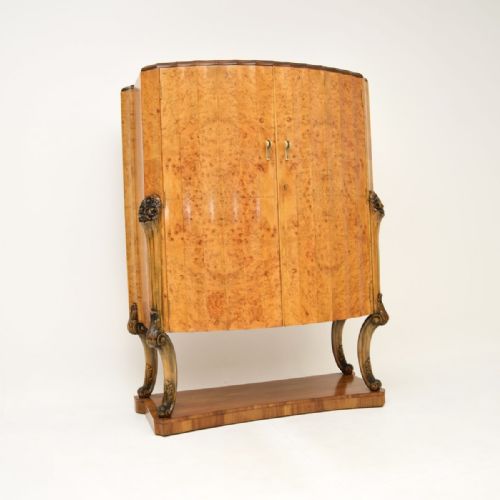
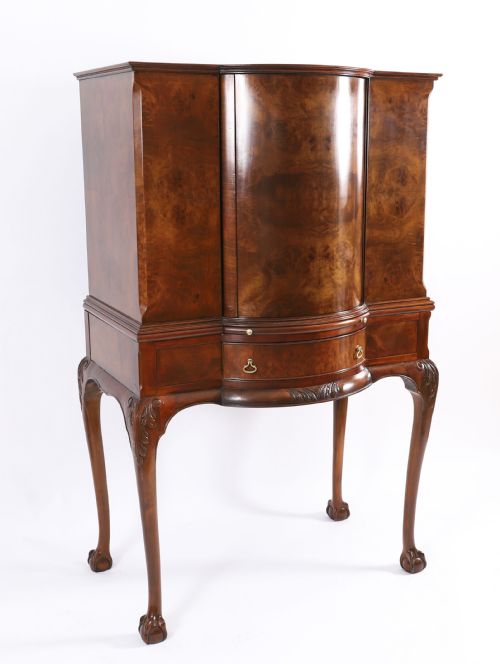
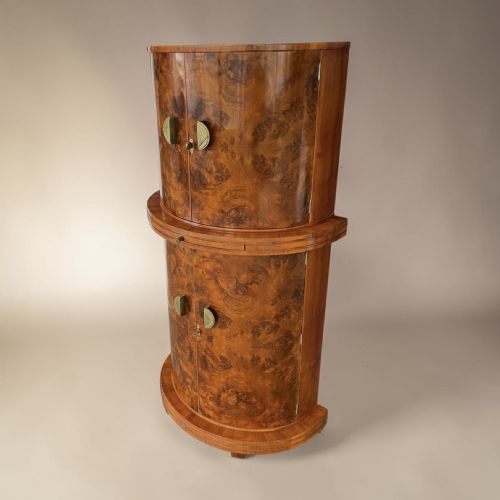
A burr walnut bar cabinet provides dedicated storage for bottles, glassware and mixing accessories within a substantial freestanding furniture piece. Buyers searching for a burr walnut bar cabinet encounter forms designed primarily during the 1920 and 1930 decades, aligning with the Art Deco movement and Queen Anne Revival styles. The selection spans standard cocktail cabinets, dry bar designs, and specialised shapes such as bow front, folding, and cloud-shaped units.
Most examples originate from the interwar period, combining traditional cabinet-making with the flamboyant geometry of the twentieth century. Forms range from upright cupboards with fitted mirrored interiors to barrel and hanging display variations. The prominence of figured timber defines the visual impact across both current offerings and archived pieces.
Materials and construction methods
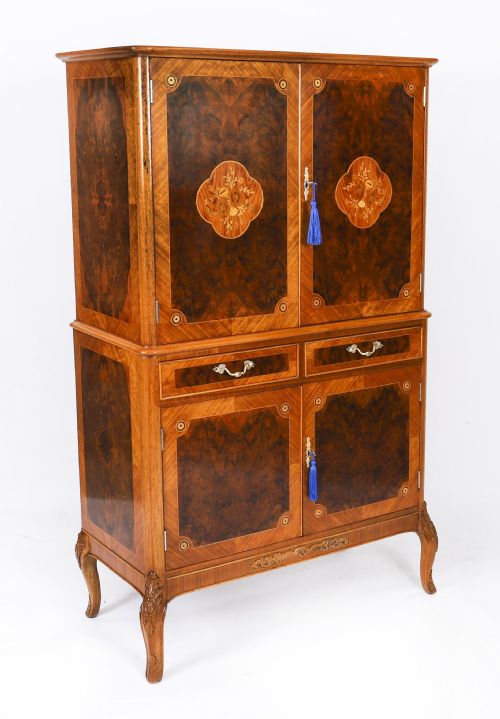
Makers construct these cabinets using walnut carcasses overlaid with highly figured burr walnut veneers. Marquetry inlay occasionally accents the primary timber surfaces, while brass hardware provides functional hinges, locks, and handles. Mirrored glass frequently lines the interior compartments to reflect light behind stored glassware.
Joinery follows established cabinet-making traditions adapted for complex curved fronts and folding mechanisms. The application of veneer requires precise cutting of knotty burr sections to create symmetrical grain patterns across doors and panels. Polishing brings out the deep brown tones and intricate figure of the wood.
Retail Price Guide 2026
Typical UK retail prices for burr walnut bar cabinet, calculated from the Sellingantiques database of over a million retail prices indexed since 2003. This retail price guide relies exclusively on Sellingantiques data; no external sources or auction records are used, so the figures do not describe the wider market.
The archive demonstrates diverse silhouettes including bow front, folding, and cloud-shaped variations alongside standard upright cocktail cabinets.
Distinguishing quality in design and finish
Quality rests upon the selection and matching of the burr walnut veneer across the primary elevations. Superior examples display balanced, highly figured grain patterns that wrap symmetrically around the cabinet doors. The complexity of the carcass shape, from standard upright forms to bow fronts and cloud-shaped silhouettes, also dictates the ambition of the piece.
Interior execution separates standard production from exceptional work. Finer cabinets incorporate dedicated glass storage, mirrored serving slides, and intact internal lighting or specialised hardware. The integration of maker attributions further distinguishes the upper tier of surviving examples.
Epstein·Harrods London
The Burr Walnut Bar Cabinet Glossary
- Burr walnut
- A figured wood veneer harvested from the growth excrescences on walnut trees, prized for its swirling, knotty grain patterns.
- Cocktail cabinet
- A specialised piece of furniture designed for the storage and preparation of alcoholic drinks, typically featuring a drop-down serving flap and mirrored interior.
- Art Deco
- A design style of the 1920 and 1930 decades characterised by sleek geometric shapes, streamlined forms, and stylized ornamentation.
- Queen Anne Revival
- A revivalist style drawing inspiration from early eighteenth-century English furniture, notable in these listings through arched proportions and traditional silhouettes.
- Marquetry
- The decorative craft of applying small pieces of veneer to a structure to form intricate pictorial or geometric patterns.
Frequently Asked Questions
What periods do these cabinets come from?
The pieces originate primarily from the 1920 and 1930 decades, coinciding with the height of the Art Deco period.
Craftsmen utilised traditional techniques alongside modern revival styles during these interwar years.
How were these cabinets used originally?
Owners stored bottles, decanters, and cocktail glasses within the specialised compartments for entertaining guests at home.
The drop-down flaps often served as preparation counters for mixing drinks during gatherings.
What materials are used in construction?
The primary timber is walnut, specifically finished with highly figured burr walnut veneers across the exterior surfaces.
Additional elements include brass hardware, mirrored glass panels, and occasional marquetry inlay.
How do I identify an Art Deco example?
Art Deco pieces often feature streamlined silhouettes, geometric door alignments, and specialised shapes like bow fronts or cloud-like curves.
The grain matching on the burr walnut veneer usually emphasises symmetry.