





Burgundy Wool Textile
A burgundy wool textile brings deep tribal warmth to a room, offering rich Central Asian colour and ancient nomadic craftsmanship.
Burgundy Wool Textile
A burgundy wool textile encompasses tribal rugs, wall hangings and camel trappings originating from Central Asia and Afghanistan. Buyers seeking this phrase encounter Yomut, Tekke, Ersari and Timuri pieces created across the nineteenth and early twentieth centuries.
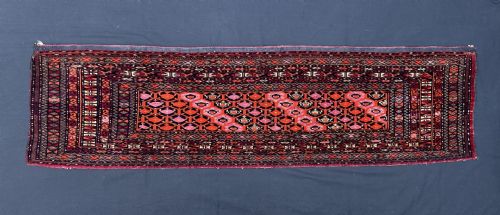
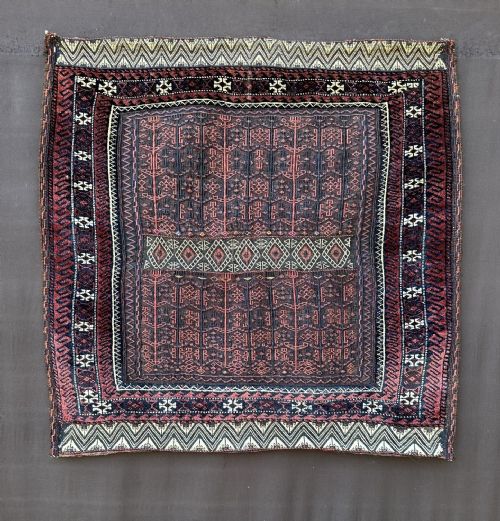
The most common forms on this page are torba faces, chuvals and asmalyks woven by tribal makers in regions such as Turkmenistan and the Amu Darya valley. These functional nomadic items now serve as decorative wall hangings and collector pieces.
Such textiles date from periods spanning the middle nineteenth century through to the early twentieth century, reflecting traditional tribal designs and natural dyes.
Factors of quality
Quality depends upon the fineness of the weave and the clarity of traditional tribal motifs such as the gul, as seen in pieces featuring multiple turreted guls. Tightly constructed torba faces and asmalyks demonstrate superior technical execution by the weaver.
The depth and consistency of natural dyes across hand-spun wool separate standard examples from finer tribal works. Completeness, such as retaining a plain weave back on a torba, also elevates an individual piece.
Listings span periods from 1850 to 1920, focusing entirely on tribal textiles and rugs woven in wool and cotton with natural dyes.
The Burgundy Wool Textile Glossary
- Gul
- A repeating medallion or octagonal motif central to Turkmen tribal design. Different tribes utilise distinct gul patterns to signify heritage and identity.
- Torba
- A small storage bag face produced by nomadic tribes for domestic use inside a tent. These pieces often feature intricate geometric layouts.
- Asmalyk
- A decorative triangular trapping hung on the flanks of a bridal camel during wedding processions. These are notably harder to find than standard rugs.
- Engsi
- A tribal wall hanging designed to hang over the doorway inside a yurt. They typically feature a quartered field design.
Burgundy Wool Textile: Frequently Asked Questions
What is a burgundy wool textile used for today?
These historical nomad items function primarily as wall art or decorative floor coverings within contemporary interiors. Their rich textures bring an authentic tribal aesthetic to domestic spaces.
Collectors also mount smaller trappings like torbas and asmalyks directly onto walls to preserve their textile structure and display the intricate motifs.
Where do these tribal textiles originate?
The pieces originate across Central Asia, including regions of Turkmenistan, Afghanistan and the Trans-Caspian steppes. Nomadic groups such as the Yomut, Tekke, Ersari and Timuri created them.
Each tribal group applied distinct regional designs, natural dye palettes and weaving methods passed down through generations.
How do I date a nineteenth-century textile?
Dating relies on assessing the materials, particularly the use of hand-spun wool and early natural dye formulations before synthetic colorants became widespread. Structural evidence like knot density and tribal attribution also guide the dating process.
Items span specific periods from the mid-nineteenth century up to the early twentieth century based on stylistic evolution.
Are these pieces made with natural dyes?
Yes, the textiles utilise traditional natural dyes derived from local plants and minerals to produce deep burgundy, red and contrasting secondary shades. These dyes yield rich, complex tones that age gracefully over decades.
The interaction between natural dyes and hand-spun wool creates the characteristic coloration found across nineteenth-century tribal weaving.