




Brown Wooden Sewing Table
A brown wooden sewing table brings functional elegance to a room, offering compartments for needlework alongside a handsome surface.
Brown Wooden Sewing Table
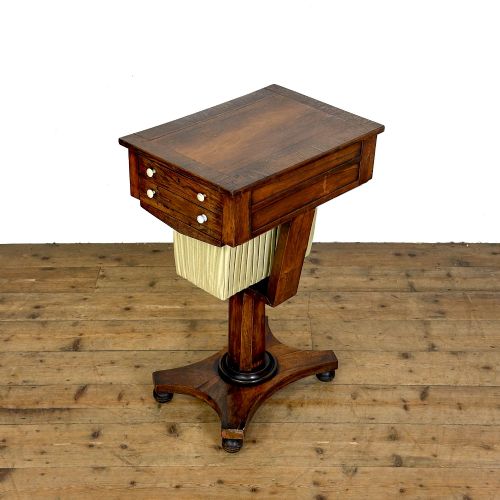
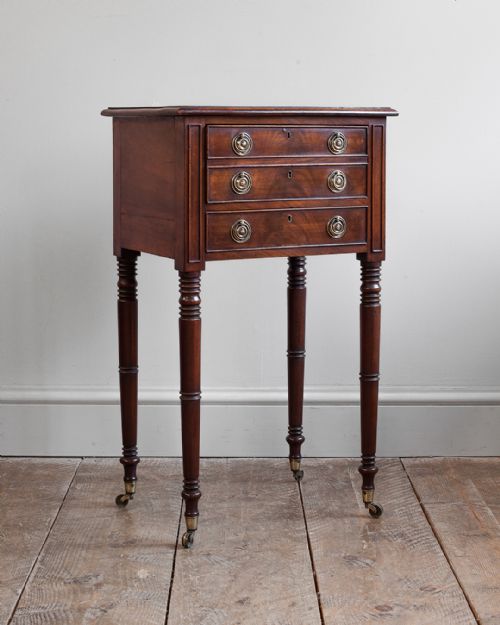
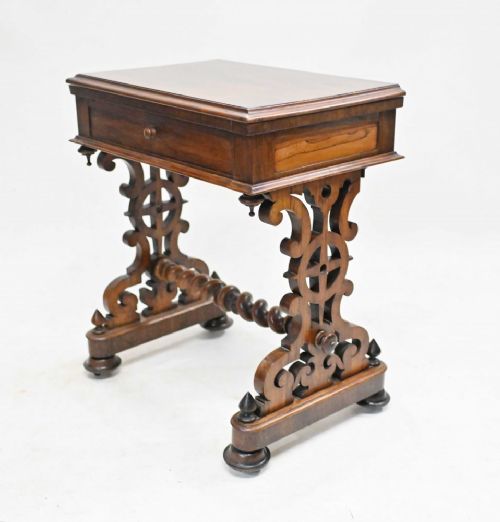
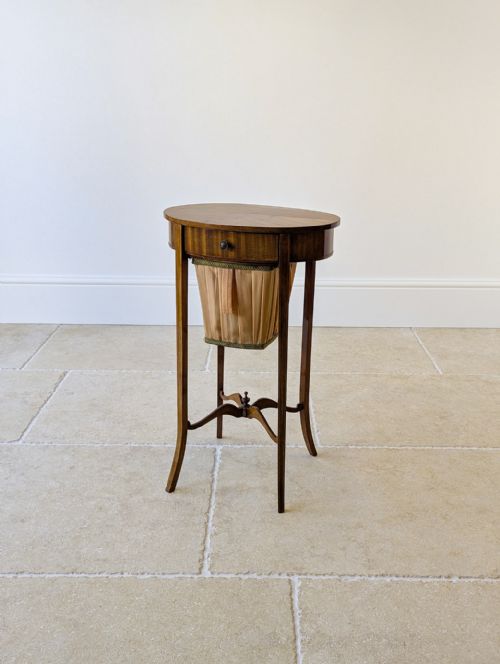
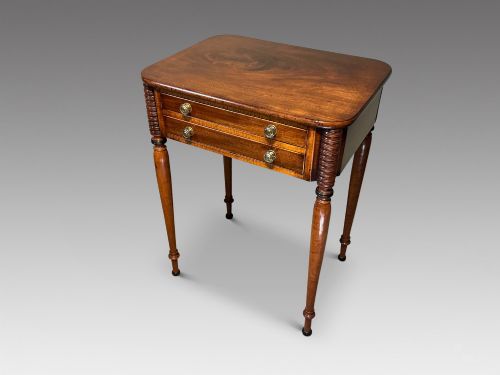
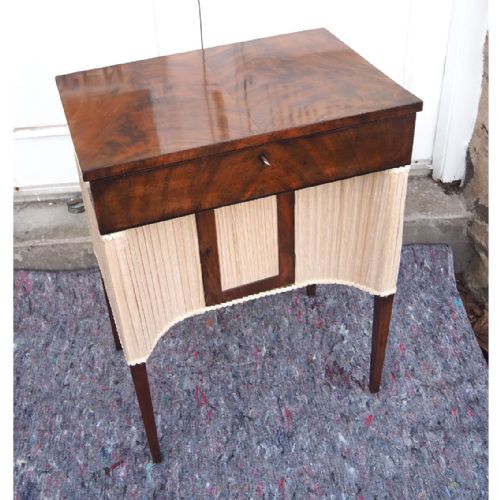
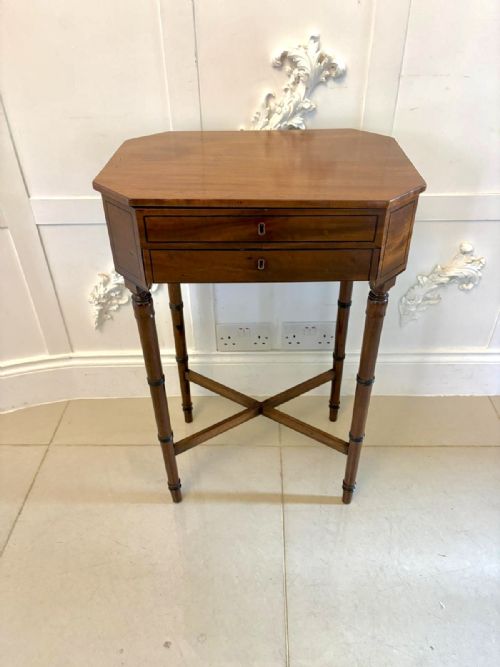
A brown wooden sewing table, frequently designated as a work table or sewing box, combines a compact tabletop with internal storage designed for needlework and small crafts. The selection spans several periods, notably the Georgian, Regency, Victorian, and Edwardian eras.
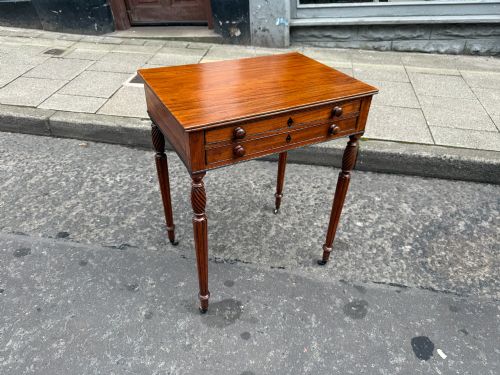
Most examples encountered here are constructed from mahogany or walnut, often featuring fitted interiors for organisation. These pieces double easily as lamp tables or occasional side tables in modern spaces.
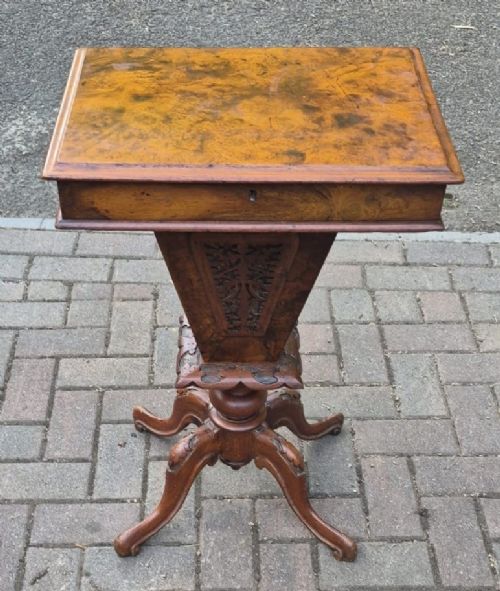
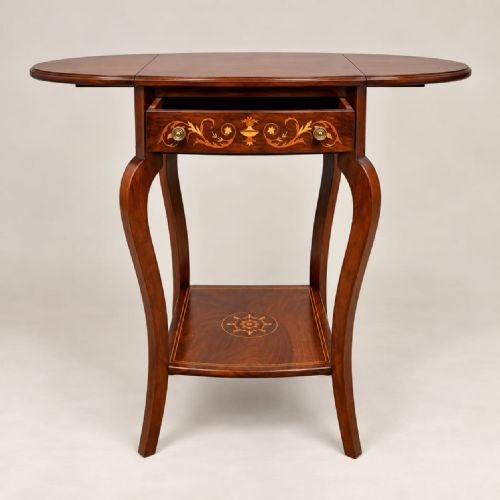
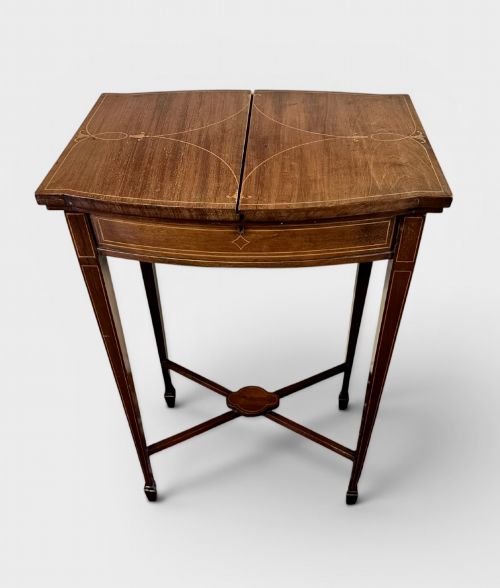
Forms vary from drop-leaf pembroke designs to freestanding pedestal tables and inlaid occasional pieces with lift-up tops. Scottish and Anglo-Indian regional variants also appear among the standard domestic British production.
How they were made
Cabinet makers utilised dense hardwoods such as mahogany, rosewood, and walnut, frequently selecting figured veneers like burr walnut or flame mahogany for the primary surfaces. Satinwood and maple provided contrasting details through delicate stringing and wood inlay.
Structural elements incorporated brass hardware, leather panels, and occasionally ormolu mounts to accent the drawers and drop leaves. Interiors relied on precision joinery to create fitted compartments, removable baskets, and specialised storage for sewing implements.
Listings feature pieces spanning the Georgian, Regency, Victorian, and Edwardian periods, utilising mahogany, walnut, rosewood, and satinwood.
What varies in quality
The standard of timber selection largely dictates the standing of a piece, with finely figured veneers and matched grain patterns marking out superior examples. Plain secondary timbers and heavy, unsympathetic restorations lower the visual appeal.
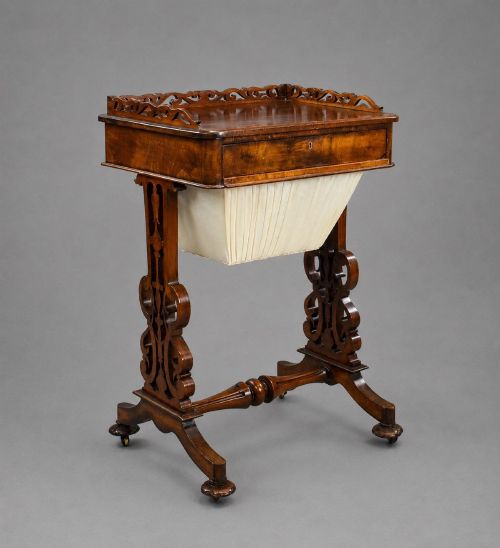
The intricacy of the interior fitting and the crispness of any inlaid woodwork or carved detailing distinguish high workshop production from utilitarian domestic items. Well-executed drop leaves and smoothly operating drawers demonstrate superior initial construction.
The Brown Wooden Sewing Table Glossary
- Pembroke table
- A small occasional table featuring two hinged drop leaves on opposing sides, often fitted with a single drawer. It originated in the eighteenth century and serves well as a compact desk or side table.
- Work table
- A multi-functional small table designed specifically for women's domestic tasks such as sewing and embroidery, usually containing a drawer and an attached fabric bag or wooden box.
- Burr walnut
- A highly prized wood veneer obtained from the deformed growths or burrs on walnut trees, yielding complex swirling grain patterns. It was favoured for luxury furniture surfaces during the nineteenth century.
- Stringing
- A narrow strip of contrasting wood inlaid into the surface of a piece in a shallow groove to form delicate linear patterns. It is frequently seen on Edwardian and Regency satinwood and mahogany furniture.
- Ormolu
- Gilded bronze ornamentation applied to furniture as mounts, feet, or handles. It provides a bright metallic contrast to dark woods like mahogany and rosewood.
Brown Wooden Sewing Table: Frequently Asked Questions
What is a brown wooden sewing table?
A brown wooden sewing table is a compact piece of antique furniture designed with internal compartments or a basket for storing needlework, wool, and sewing tools.
These versatile items typically feature a hinged lid or drawers, allowing them to function simultaneously as decorative lamp tables or side tables in a living space.
How were sewing tables used originally?
In past centuries, these tables served as functional workstations for ladies undertaking needlepoint, embroidery, and other domestic handcrafts.
The fitted interior kept spools, needles, and fabric tidy, while the flat top surface accommodated a candle or a small lamp during evening work.
How do I date a wooden sewing table?
Dating relies on observing the primary timber, the cabinet style, and structural construction methods. Georgian and Regency pieces tend to show clean classical lines in mahogany, while Victorian examples often feature heavy walnut and elaborate carving.
Edwardian versions frequently incorporate lighter satinwood finishes, delicate wood inlay, and simplified proportions characteristic of the early twentieth century.
Can I use an antique sewing table today?
These tables adapt easily to modern homes as bedside stands, hallway lamp tables, or compact side tables next to a sofa.
The internal compartments provide discreet storage for modern clutter like remote controls, charging cables, or stationery.