


Brown Wooden Ottoman
A brown wooden ottoman provides practical seating and surface space while introducing rich timber grain and intricate inlay into a room.
Brown Wooden Ottoman
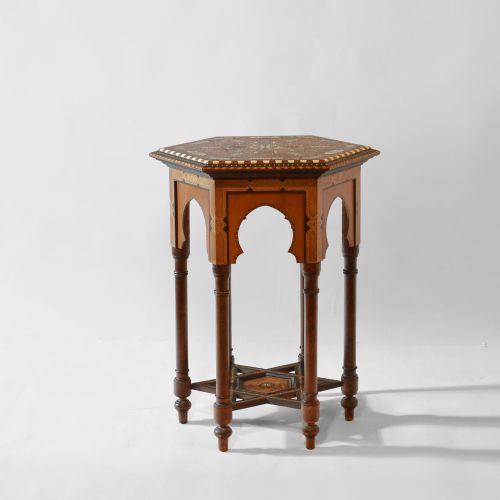
When searching for a brown wooden ottoman, buyers encounter low seating forms, blanket boxes, and folding tables spanning the eighteenth to the early twentieth century. These pieces draw from Victorian, Edwardian, and Moorish Revival traditions, utilising solid timbers like oak, walnut, and mahogany alongside exotic inlays.
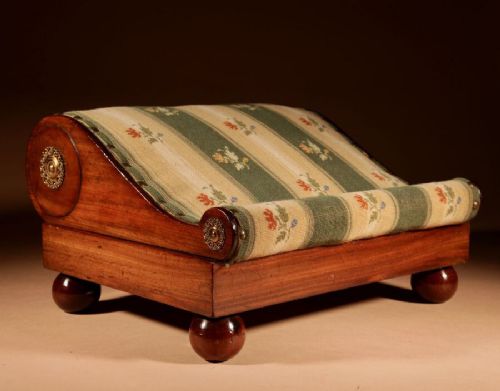
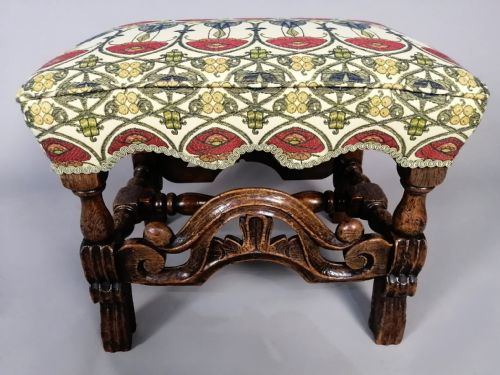
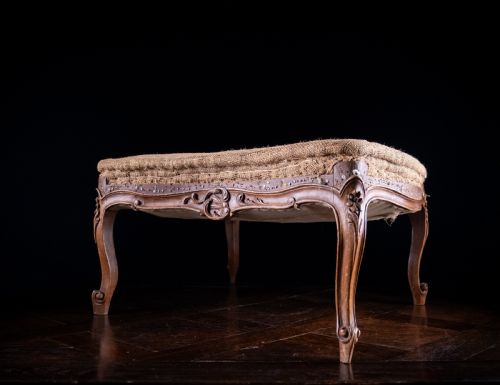
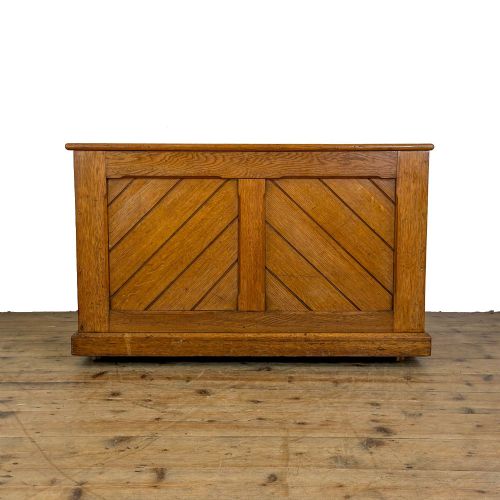
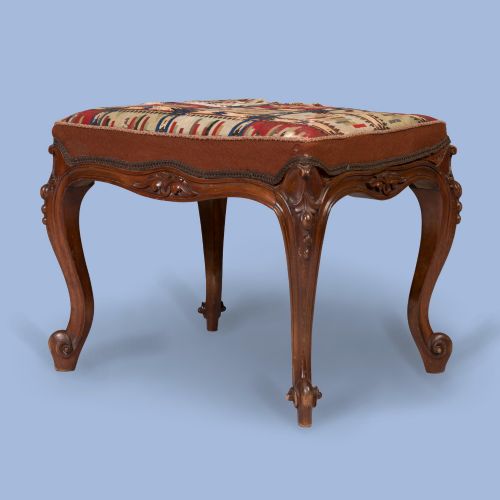
The version most frequently met on this page is the low footstool or window seat, often framed in dark timber with turned legs, carved details, or upholstered pads. Alongside these sit occasional blanket boxes and folding Damascus tables that share the same warm brown wooden palette.
How they were made
Cabinet makers utilised sturdy hardwoods such as oak, walnut, and mahogany for the primary frames, employing traditional joinery and hand carving to shape legs and stretchers. Turning lathes produced fluted or barley-twist supports, while hand-held chisels created deep relief carvings on skirts and panels.
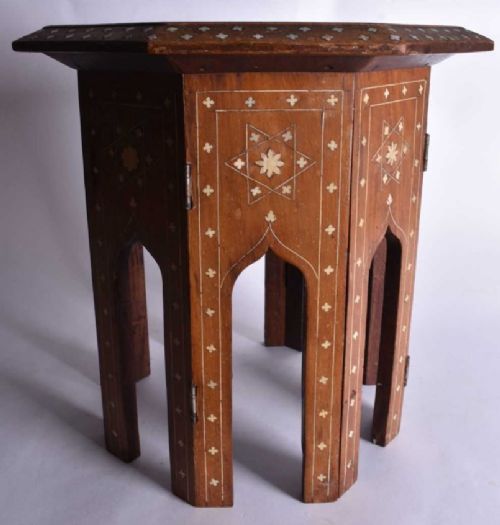
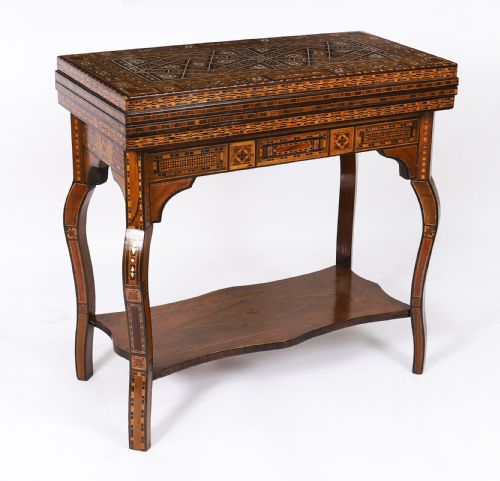
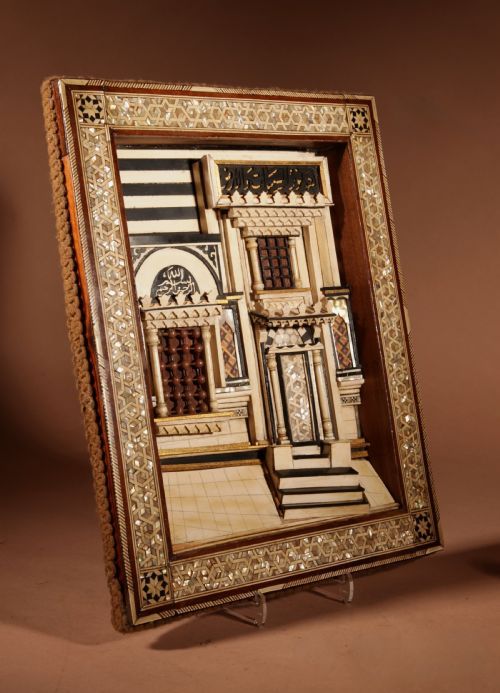
Surface embellishment frequently involved detailed marquetry and inlay work using mother-of-pearl, bone, and lighter woods set into darker walnut or teak foundations. Upholstered elements relied on traditional textile coverings fastened over horsehair or padding, while folding items utilised hinged wooden slats.
The furniture styles range from plain utilitarian blanket boxes to Moorish Revival architectural dioramas and folding tables.
What varies in quality
The distinction between standard utility items and finer examples rests upon the crispness of the hand carving and the precision of the timber joinery. Superior pieces display harmonious proportions, tightly fitted joints, and timber selected for rich grain pattern rather than plain utility.
Inlaid items separate themselves by the completeness of the mother-of-pearl or bone tesserae and the complexity of the geometric patterns. Original upholstery foundations and untouched period surface finishes carry greater integrity than later replacements.
Simpson Kendall
The Brown Wooden Ottoman Glossary
- Moorish Revival
- A nineteenth-century design style incorporating Islamic architectural motifs, intricate geometric lattice, and bone or mother-of-pearl inlay. It heavily influenced occasional tables and seating.
- Marquetry
- The art of applying small pieces of veneer to a structure to form decorative patterns. Craftsmen utilised contrasting woods and shell materials.
- Cabriole leg
- A furniture leg that curves outward and then tapers inward, finishing in a pad or foot. This form appears frequently on walnut seating.
- Blanket box
- A deep wooden chest utilised for storing textiles and linens. These often feature simple hinged lids and robust board construction.
- Damascus table
- A folding hexagonal or octagonal low table originating from the Levant. They are characterised by intricate wood-turned lattice panels and extensive inlay.
Brown Wooden Ottoman: Frequently Asked Questions
What periods do these wooden ottomans come from?
The selections span the eighteenth century through the Edwardian era and the early twentieth century. Victorian and 1900s manufacturing periods appear most frequently.
Individual pieces reflect specific historical revivals, including Moorish, Jacobean, and Queen Anne styles.
How were inlaid wooden tables constructed?
Artisans built folding frames using interlocking wooden slats that allowed the structure to collapse flat. Surfaces were then decorated with geometric tessellations of mother-of-pearl and bone.
This technique created highly ornate side tables and stools associated with Levantine and Damascus workshops.
Are these pieces made of solid wood?
The frames and structural elements utilise solid hardwoods including oak, walnut, mahogany, and teak. Selected surfaces incorporate contrasting veneers and inlaid detail.
Secondary woods may be used for internal framing of boxes and stools.
How do I distinguish between Victorian and Edwardian pieces?
Victorian examples often feature heavier carving, darker walnut or oak timbers, and elaborate upholstery or fringing. Edwardian items tend toward lighter construction and simpler lines.
Stylistic crossovers remain common due to overlapping manufacturing dates around the turn of the century.