




Floral Fabric Footstool
These floral fabric footstool designs offer practical seating and low-level rest, bringing period character and traditional textile pattern into a room.
Floral Fabric Footstool
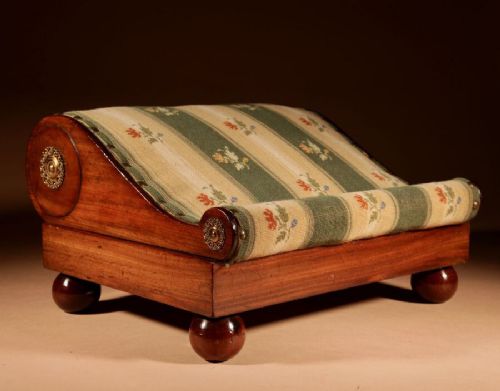
A floral fabric footstool brings together functional low seating and traditional textile patterns across several historic periods. Buyers searching this phrase encounter examples ranging from the Regency era through to the Edwardian period, often featuring shaped timber frames and patterned upholstery.
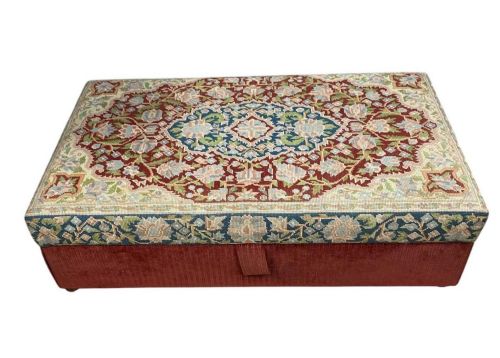
The selection on this page relies primarily on nineteenth century craftsmanship, including Victorian and Edwardian interpretations. Forms include low footstools, waisted ottoman stools, and pieces with storage or work box compartments.
Origins span English country styles alongside continental influences, with woods such as mahogany and walnut providing the structural foundation. Each piece demonstrates the domestic utility and decorative upholstery typical of its specific decade.
Construction and materials
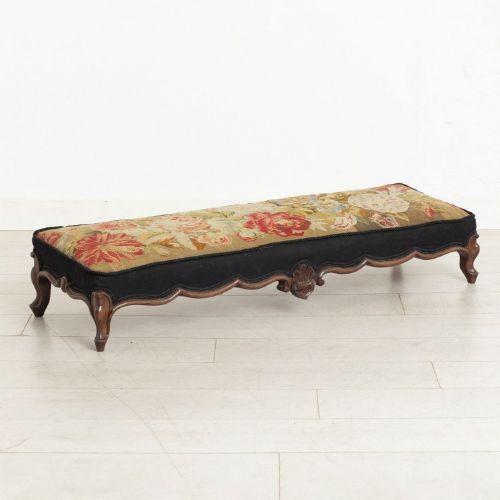
Makers utilised solid timbers including mahogany, walnut, and general wood or timber to build sturdy frames that supported padded upholstery. Turned or cabriole legs shaped the base, sometimes incorporating brass elements for mobility or decoration.
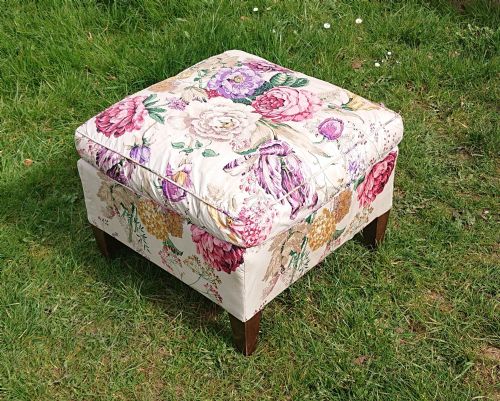
Upholstery methods involved securing patterned covers over cushion tops, incorporating specific maker textiles such as Liberty fabric or traditional tapestry and cotton. Some variants integrated functional hinged lids to create internal storage or work box compartments.
Some nineteenth century footstools doubled as secret sewing repositories, hiding thimbles and threads beneath their upholstered cushion tops.
Assessing quality and character
Distinctions in quality emerge from the refinement of the timber frame and the sophistication of the upholstery work. Finer examples display carefully carved cabriole legs or waisted profiles alongside enduring textile choices.
The integrity of the original structure and the preservation of period fabric contribute significantly to the character of a piece. Attention to detail in the turning of the wood and the joinery separates standard domestic items from superior workshop productions.
Howard and Sons·Liberty
The Floral Fabric Footstool Glossary
- Ottoman
- A low upholstered seat or stool without arms or a back, frequently designed with internal storage space. These pieces serve as both footrests and supplementary seating.
- Cabriole leg
- A furniture leg that curves out and then in, resembling the leg of an animal. This decorative feature appears frequently on Victorian walnut and mahogany frames.
- Waisted
- Describing a furniture form that curves inward towards the middle. This profile creates a distinct hourglass or tapering silhouette on specific nineteenth century stools.
- Work box
- A compartmented box incorporated into furniture for storing sewing materials and needlework tools. Certain Regency and Victorian variants combine this function with an ottoman seat.
Floral Fabric Footstool: Frequently Asked Questions
What is a floral fabric footstool?
A floral fabric footstool is a low nineteenth century or Edwardian seat upholstered in patterned textile, designed for resting feet or providing casual seating.
These pieces combine wooden frames of mahogany or walnut with durable fabric covers, often featuring specialised forms like ottomans or work boxes.
How were these stools used historically?
Historically, these items served multiple domestic purposes in Victorian and Edwardian parlours and drawing rooms. They provided comfort as footrests and additional seating during gatherings.
Variations with hinged tops also functioned as storage receptacles for textiles and sewing equipment.
How do I identify a Victorian footstool?
Victorian footstools are identified through specific structural characteristics such as walnut or mahogany construction and turned or cabriole legs. Upholstery styles and frame profiles help date pieces to the nineteenth century.
Makers often employed traditional upholstery methods combined with floral tapestry or cotton fabrics characteristic of the period.
Are these stools suitable for daily use?
These antique stools remain practical for everyday interior use when placed in appropriate domestic settings. Their sturdy timber frames provide reliable structural support.
Owners often position them in living spaces as functional footrests or decorative accent seating.