


Georgian Mahogany Ottoman
A georgian mahogany ottoman brings solid timber framing and traditional upholstery together to anchor a period seating arrangement.
Georgian Mahogany Ottoman
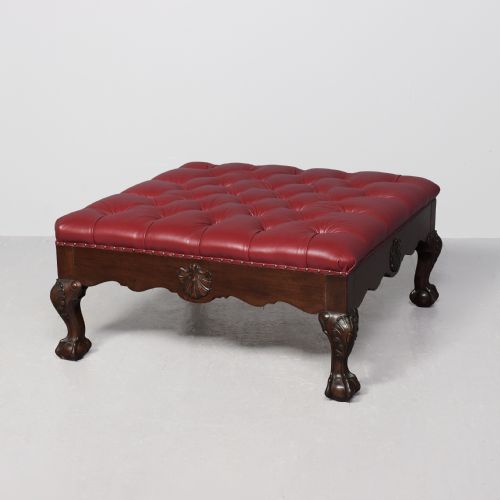
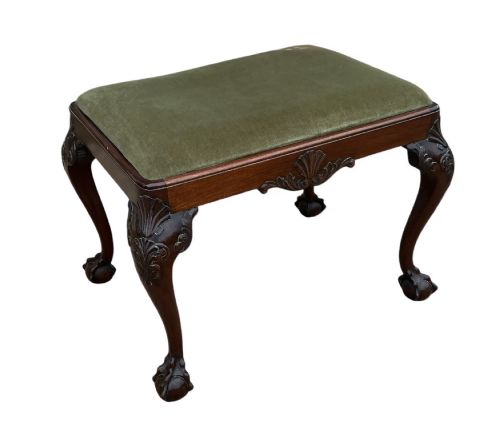
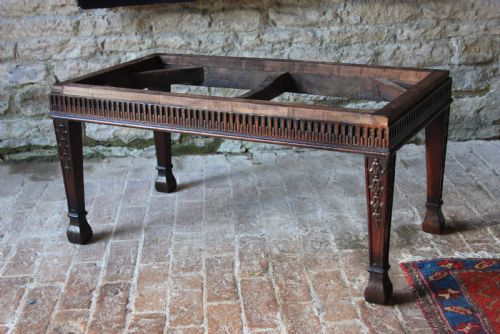
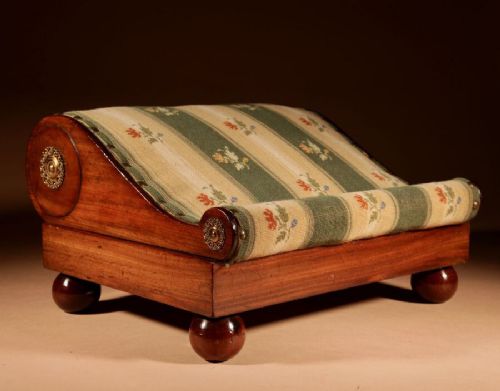
When you search for a georgian mahogany ottoman, you encounter low seating forms including footstools, dressing stools, centre stools, and long duet pieces designed for domestic use. The pieces appearing here span genuine eighteenth-century origins alongside later revival periods, incorporating styles from George II to Regency and Chippendale revival.
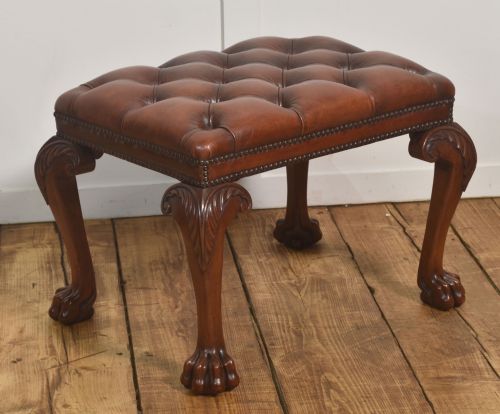
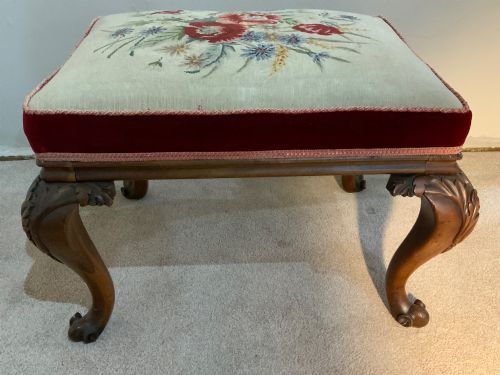
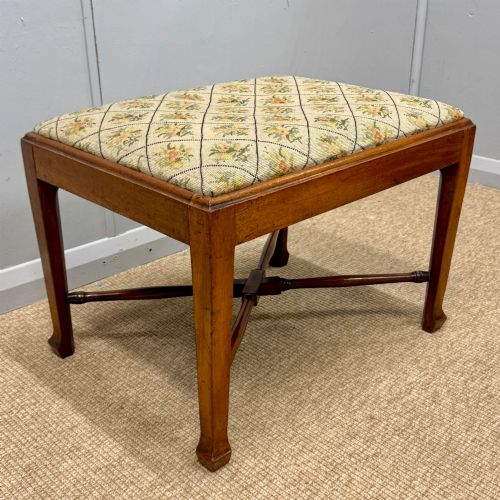
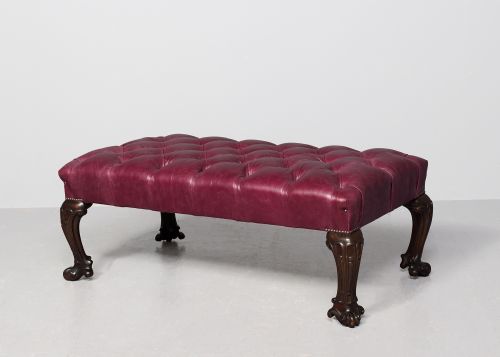
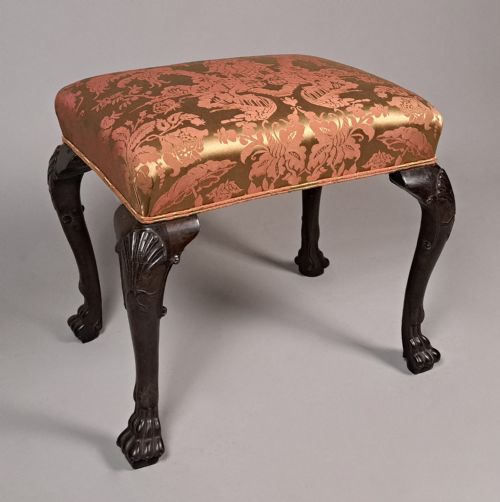
Most examples present timber frames supporting padded surfaces, ranging from compact single-seat footstools to extended long stools and X-frame supports. Forms include dressing table seats, carved cabriole leg designs, and pieces featuring traditional cross stretchers or lions paw feet.
How they were made
Makers built the structural frames using solid mahogany, shaping the wood through carving on cabriole legs, rails, and feet. Workshops applied brass details such as studding to secure the soft coverings.
Upholstery methods utilised traditional textiles including leather, hide, velvet, wool, tapestry, chenille, damask, and kilim coverings over padded interiors. Buttoning and needlepoint techniques appeared on both original period examples and subsequent revival pieces.
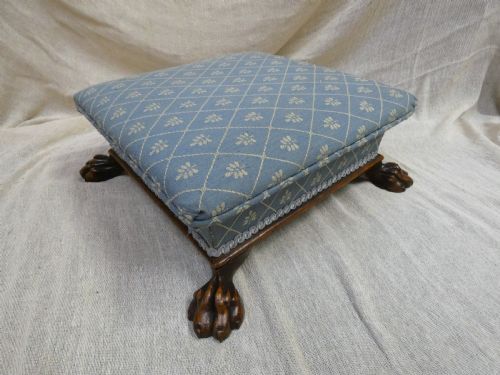
Some nineteenth-century examples incorporate lions paw feet that appear ready to walk away across the carpet.
What varies in quality
The standard of carving on the mahogany frame dictates much of the distinction, separating simple turned supports from deeply sculpted cabriole legs and crisp ornamentation. Finer examples display meticulous joinery and substantial timber scantlings in the underframe.
The selection and execution of the upholstery materials, from plain hide to intricate needlepoint and damask, reflect the original ambition of the piece. Superior execution shows in the precision of brass stud placement and the tension of the internal padding.
Whytock and Reid
The Georgian Mahogany Ottoman Glossary
- Cabriole leg
- A furniture leg that curves out at the knee and tapers inward to an ankle, finishing in a foot such as a claw or pad. This profile originates from classical furniture design and recurs across eighteenth-century and revival seating.
- Cross stretcher
- A pair of intersecting timber bars connected between the legs beneath a stool to provide structural stability. They frequently appear on dressing stools and larger centre forms.
- Needlepoint
- Hand-stitched canvas work using yarn in a counted thread count, commonly used for historical stool upholstery. Surviving examples display geometric or floral patterns executed in wool.
- X-framed
- A structural configuration where the legs cross in an X shape when viewed from the side, supporting the seat frame above. This form appears on specific Regency and nineteenth-century variants.
- Sabre leg
- A concave-tapered furniture leg that curves backward from the seat frame, typical of Regency design. This profile offers a lighter visual weight than straight or cabriole supports.
Georgian Mahogany Ottoman: Frequently Asked Questions
What is a georgian mahogany ottoman used for?
These pieces serve primarily as footstools, dressing table seats, or low centre benches within a room. Their sturdy timber frames and cushioned tops allow them to function as movable seating or resting places for the feet.
Larger long stools and duet forms accommodate multiple occupants or serve as decorative accents at the foot of a bed. Their compact height keeps sightlines open across a living space.
How do I identify a revival piece?
Revival pieces replicate earlier eighteenth-century aesthetics, such as Chippendale or George II styles, using period-appropriate timber and traditional carving motifs. Examining the timber maturity, construction joints, and wear patterns helps distinguish an original eighteenth-century work from a nineteenth- or twentieth-century interpretation.
Makers working in later periods often adopted historic forms while utilising the machine assistance and hardware conventions of their own manufacturing era.
What fabrics cover these stools?
Upholstery materials range from smooth leathers and buttoned hides to woven textiles like damask, chenille, and tapestry. Wool needlepoint and kilim fragments also appear across various periods, reflecting changing interior tastes from the eighteenth century onward.
Many surviving pieces retain later reupholstery that respects traditional colour palettes and fastening methods such as brass studding.
Where should I place a long stool?
Long stools and duet forms suit placement at the foot of a bed, beneath a window, or alongside a principal seating group. Their elongated proportions fill spaces where a standard square footstool would appear undersized.
Ensuring adequate clearance around the piece allows the carved mahogany frame and upholstered top to remain visible as a focal point.