



Blanket Box Stool
These blanket box stool pieces combine a seat with interior storage, offering practical utility and period character for any room.
Blanket Box Stool
A blanket box stool serves as dual-purpose furniture, combining a seat with concealed storage beneath the lid. When searching for a blanket box stool, buyers encounter forms spanning from the seventeenth century through to the early twentieth century.
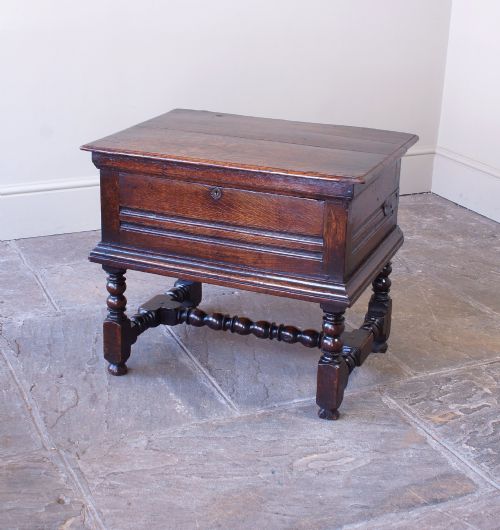
The pieces listed on this page appear in various styles including Victorian, Regency, Jacobean, and Elizabethan Revival. Object types range from box stools and close stools to large ottomans and dressing table stools.
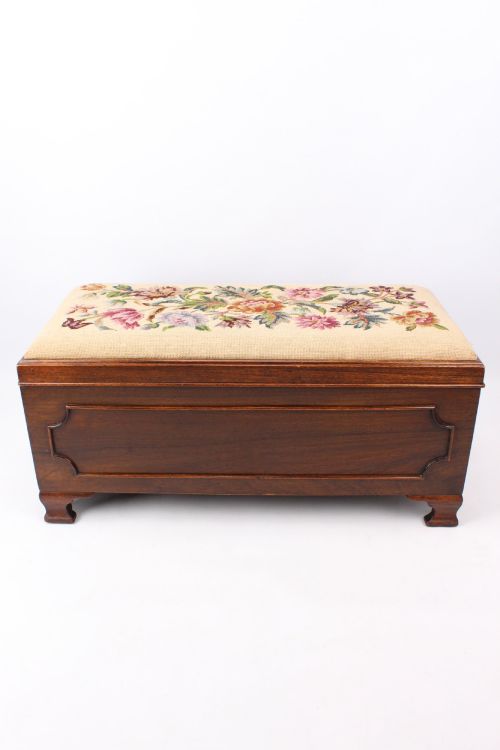
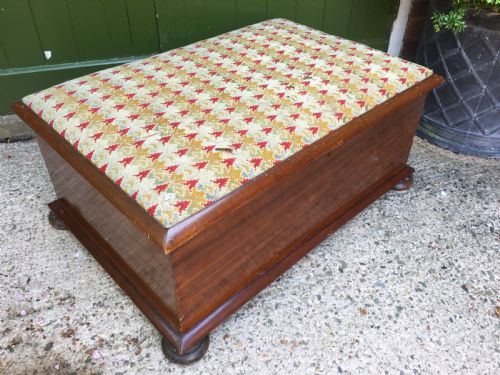
Earlier examples typically present heavy timber construction, while later nineteenth- and twentieth-century versions often incorporate upholstered seats covered in needlework, velvet, or textile. Buyers frequently find mahogany and oak used for the main body of the furniture.
Judging quality in a blanket box stool
Quality in these pieces rests upon the choice of timber and the precision of the cabinetwork. Heavier hardwoods and detailed hand-carved elements distinguish finer examples from simpler vernacular items.
The condition and execution of the top seat upholstery also influence the standard of the piece. Original gros-point needlework or fine velvet retains greater integrity than later replacements.
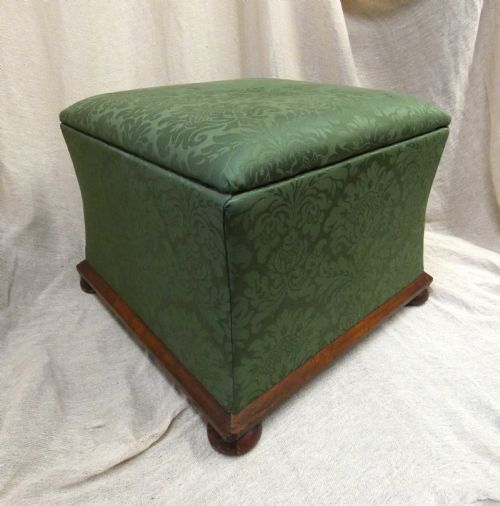
The listings demonstrate materials ranging from solid oak and mahogany to velvet, wool, and brass.
Hallett & Sons
The Blanket Box Stool Glossary
- Close stool
- A box stool enclosing a chamber pot, common in earlier centuries before modern plumbing. These items often feature hinged wooden seats concealing the interior compartment.
- Gros-point
- A type of heavy needlepoint stitch used on upholstery top panels. This durable thread work appears on nineteenth-century ottoman seats.
- Ottoman
- A padded seat without a back or arms, typically featuring a hinged lid for storage. Versions on this page span the Regency and Victorian eras.
- Regency
- A design period spanning the early nineteenth century characterised by classical influences and rich timbers like rosewood and mahogany. Pieces from this era often incorporate decorative feet.
- Jacobean
- A seventeenth-century English style known for dark oak construction and geometric panel carving. Box stools from this period display sturdy rectangular proportions.
Blanket Box Stool: Frequently Asked Questions
What is a blanket box stool used for?
These items provide both a place to sit and an enclosed compartment for storing textiles or household items. The hinged lid opens to reveal the storage space within the wooden frame.
Historically, specific variants like close stools served alternative domestic functions before modern sanitation. Today, they function primarily as decorative and practical seating in bedrooms or living areas.
How do I identify a 17th-century oak box stool?
Seventeenth-century examples feature solid oak construction with period joinery techniques and often hand-carved panels. Their proportions are generally sturdy and utilitarian.
Later revival pieces from the Victorian era sometimes emulate these earlier Jacobean and Elizabethan styles, so examining the timber ageing and construction methods helps determine the actual period.
What materials are used for the seats?
Many seats feature textile upholstery, including wool, velvet, and gros-point needlework. Other versions utilise plain wooden lids or leather tops depending on the specific period and style.
Victorian and Edwardian pieces frequently showcase decorative needlework top panels supported by mahogany or rosewood frames.
Are Regency ottomans different from Victorian ones?
Regency pieces often utilise mahogany or rosewood and incorporate classical design motifs, such as carved lions paw feet. Their lines tend to reflect early nineteenth-century aesthetics.
Victorian versions frequently introduce more elaborate upholstery, varied wood selections like rosewood, and diverse shapes such as concave or large storage ottomans.