




Regency Mahogany Storage Box
A regency mahogany storage box brings together figured timber and solid brass to hold tea, wine, or papers.
Regency Mahogany Storage Box
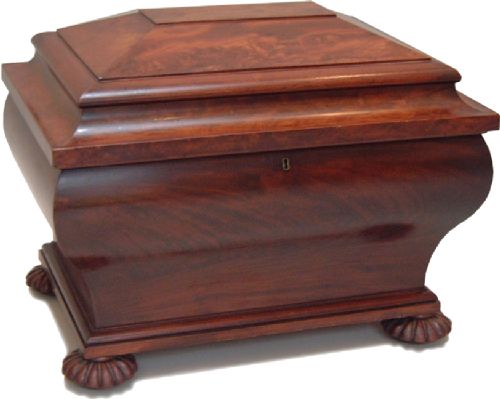
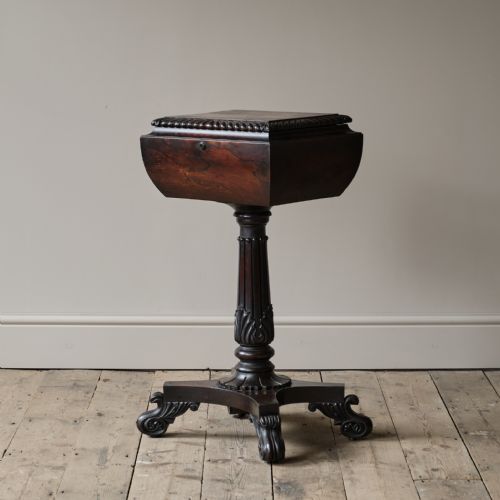
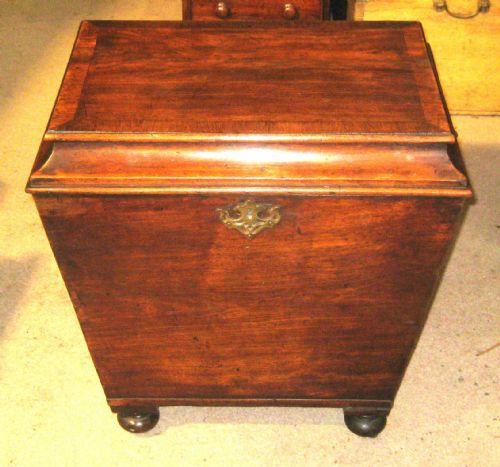
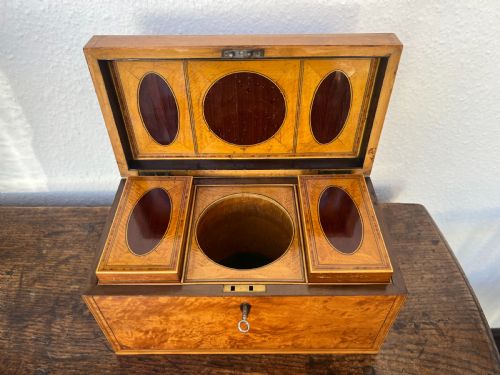
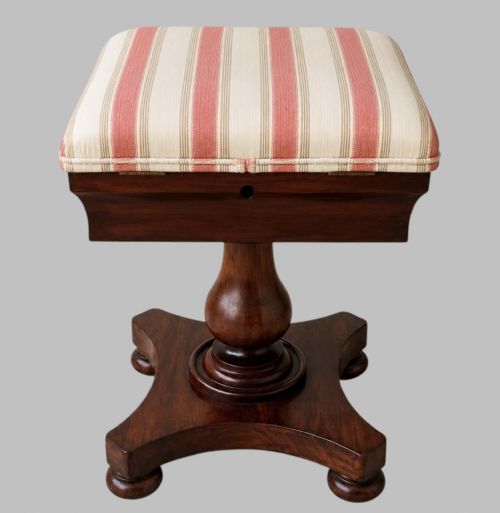
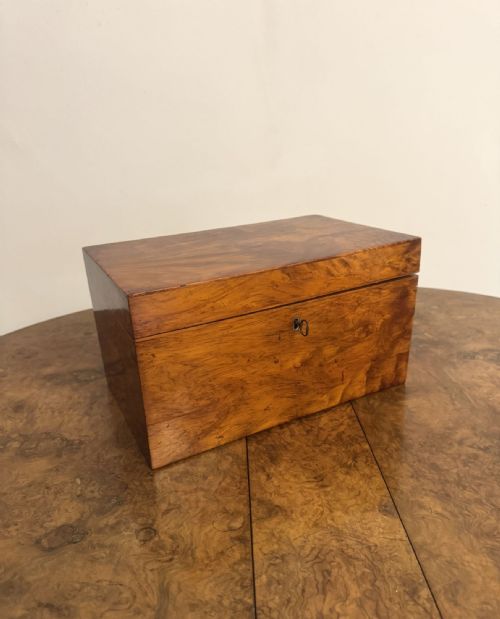
When you search for a regency mahogany storage box, you encounter pieces designed for practical storage with architectural lines. The listings show forms ranging from tea caddies and sewing box stools to large wine coolers and sarcophagus cellarettes.
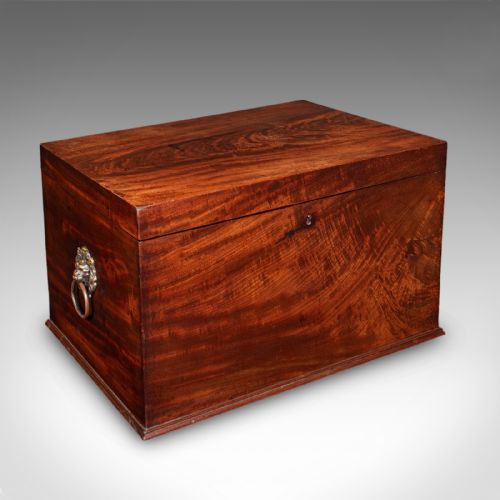
Most examples originate from the Regency, Georgian, and William IV periods, employing rich tropical timber. You will frequently meet sarcophagus-shaped boxes resting on paw feet or fitted interiors with compartments for bottles and bowls.
Materials and construction
Cabinet makers built these storage boxes primarily in solid mahogany and flame mahogany veneers over secondary timbers. They often enriched the surfaces with contrasting inlay using ebony, satinwood, and amboyna.
Hardware played both a structural and decorative role, with heavy cast brass handles, paw feet, and escutcheons secured to the corners. Interiors frequently incorporated velvet, fabric linings, bone details, and cut glass vessels.
Materials documented across the pieces include mahogany, ebony, satinwood, amboyna, brass, bone, glass, and velvet.
Judging the standard of execution
Quality rests on the choice of timber and the grain alignment across the lid and sides. Flame mahogany and figured veneers show deliberate selection, whereas plain timber reduces visual depth.
The precision of the joinery and the weight of the cast brass fittings distinguish superior pieces. Original interior partitions, working locks with keys, and intact glass or bone components elevate the standing of a box.
Gillingtons·Gillows of Lancaster and London
The Regency Mahogany Storage Box Glossary
- Sarcophagus
- A box form with a convex lid and tapered body resembling a stone coffin. This architectural shape is typical of larger wine coolers and tea caddies from the early nineteenth century.
- Cellarette
- A dedicated container for storing bottles of wine or spirits. These vessels often feature internal dividers and lead lining.
- Teapoy
- A small stand or table top box designed to hold tea leaves. They frequently include internal lidded canisters and a glass mixing bowl.
- Escutcheon
- A protective plate surrounding a keyhole. Makers cast these in brass to match the carrying handles and feet.
- Flame mahogany
- A wood veneer cut from the branch junction where the grain pattern fans out into a flame-like figure. This decorative grain marks high-status cabinet work.
Regency Mahogany Storage Box: Frequently Asked Questions
What were regency mahogany storage boxes used for?
These boxes served specific domestic storage duties in the dining room, parlour, or bedroom. They held loose tea leaves, bottled wine, sewing equipment, or medical travel supplies.
Interior compartments kept valuable commodities secure and organised. Many included locks and small mixing bowls or bottles tailored to the contents.
How do I date a regency box?
Dating relies on stylistic markers, timber choice, and construction methods. Pieces from the Regency and Georgian periods typically show flame mahogany veneers, brass paw feet, and sarcophagus outlines.
Later nineteenth-century iterations often adopt simpler lines or heavier proportions. Examining the secondary woods and interior fittings also helps narrow the decade of manufacture.
Where should I place a storage box in my home?
These boxes function well as tabletop display pieces or standalone low tables depending on their scale. Smaller tea caddies rest easily on sideboards, chests, or desks.
Larger cellarettes and box ottomans operate effectively as low accent furniture in living spaces. Their hinged lids allow them to continue storing small items out of sight.
How do I care for antique mahogany and brass?
Maintenance requires keeping the timber away from direct sunlight and sudden temperature shifts to prevent veneer cracking. Dusting with a dry, soft cloth preserves the polished surface.
Brass fittings benefit from minimal intervention, as gentle cleaning avoids stripping the historic patina. Avoid liquid polishes that can seep into exposed wood grains or fabric linings.