


Upholstered Box Stool
An upholstered box stool combines a hidden storage compartment with a padded seat, offering both practical utility and period character.
Upholstered Box Stool
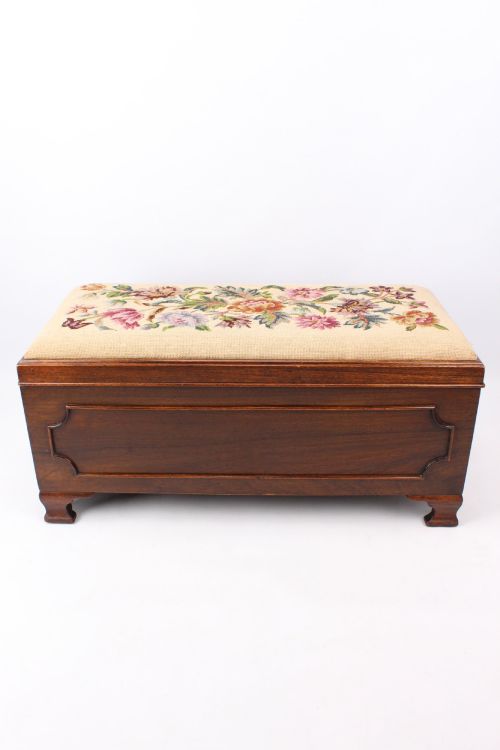
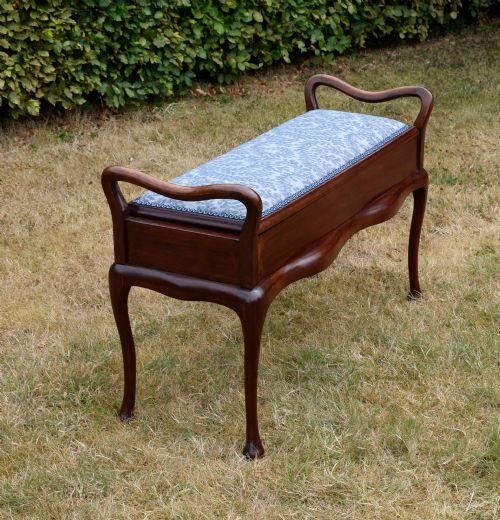
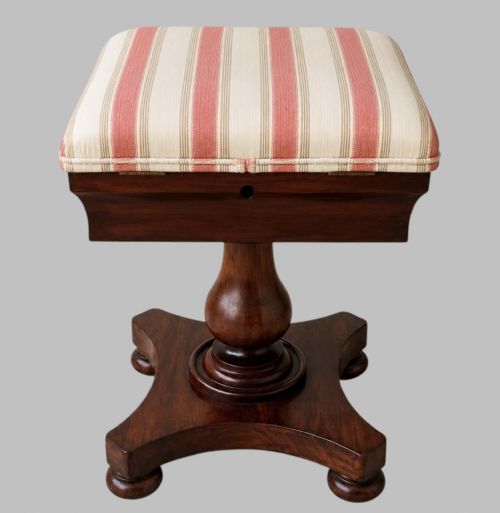
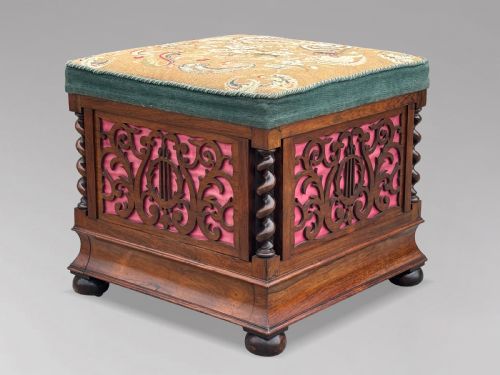
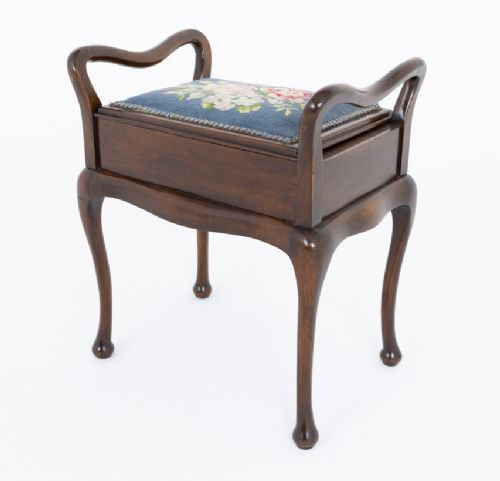
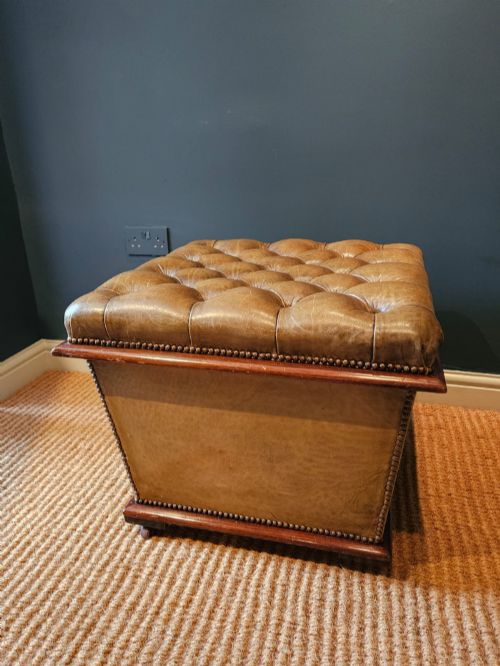
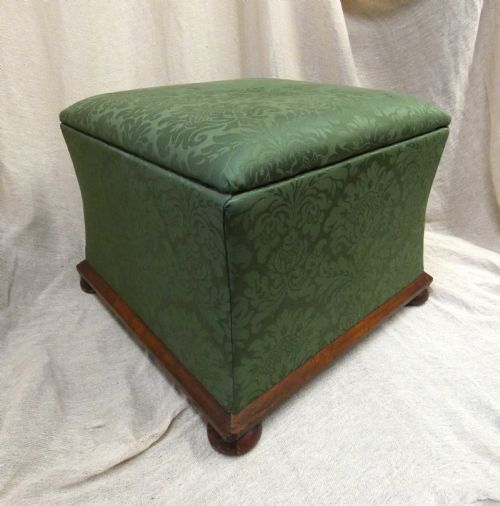
The upholstered box stool serves as a dual-purpose piece of furniture, combining a seat with an internal compartment for storage. When searching for an upholstered box stool, buyers encounter forms ranging from piano stools and sewing boxes to large country house ottomans.
The pieces on this page span several periods, including Regency, William IV, Victorian, and Edwardian eras. Mahogany and rosewood form the majority of the wooden frames, whilst the seating surfaces showcase diverse textiles.
Common variations include piano stools with drop-action mechanisms, sewing box stools containing internal compartments, and deep ottoman chests designed for blankets or storage. These versatile seats function equally well in drawing rooms, bedrooms, and music rooms.
Materials and construction methods
Makers built the structural carcasses of these stools from solid timbers like mahogany, walnut, and rosewood, often shaping the wood with turned legs, concave sides, or carved lion's paw feet. Secondary woods appeared in internal storage compartments and base linings.
Upholstered lids and drop seats utilised traditional webbing and stuffing, finished with tactile coverings such as leather, velvet, wool, tapestry, needlework, and crewel work. Brass hinges, handles, and castors provided functional hardware for moving and opening the storage compartments.
Several stools double as concealed music repositories, ensuring no pianist ever had to search far for their favourite nocturne.
Judging quality and craftsmanship
The distinction between standard examples and superior pieces lies in the precision of the cabinet work and the choice of materials. Dense, finely figured rosewood or mahogany frames with crisp carving indicate higher workshop standards than plain secondary timbers.
Original upholstery textiles, such as hand-worked gros-point needlework or period crewel work, elevate a piece above standard re-covered variants. The integrity of the internal storage box, secure framing joints, and original brass hardware further distinguish finer examples.
Hallett & Sons
The Upholstered Box Stool Glossary
- Ottoman
- A low upholstered seat or stool without arms or a back, frequently fitted with a hinged lid for interior storage. These pieces originated as comfortable lounging seats inspired by Near Eastern furnishings.
- Needlework
- Hand-stitched textile work used to cover furniture seats and cushions. Gros-point and petit-point needlework provide durable, textured surfaces on many period stool tops.
- Gothic Revival
- A nineteenth-century architectural and decorative style that revived medieval forms and pointed arches. Stools from this movement display characteristic architectural mouldings and heavy timber framing.
- Canterbury
- A low wooden stand or box originally designed for holding sheet music or books. In stool form, it incorporates vertical partitions alongside an upholstered seat.
Upholstered Box Stool: Frequently Asked Questions
Where were upholstered box stools placed?
These pieces sat primarily in drawing rooms, bedrooms, and music rooms where hidden storage proved useful. Piano stools sat beside keyboard instruments, whilst larger ottomans stood at the foot of beds or beside fireplaces.
Their dual function allowed households to store sheet music, sewing supplies, and blankets out of sight while maintaining an extra seat in the room.
How do I identify a Regency box stool?
Regency examples typically feature dark timbers like rosewood or mahogany, often accented with brass inlay, carved paw feet, or concave sides. The proportions remain classical and restrained.
Cabinet makers of this period favoured clean architectural lines and frequently incorporated heavy box bases designed to lift open from the top.
What is a piano stool?
A piano stool is a specialised seat designed to accommodate keyboard players, often featuring an adjustable height mechanism or a hinged storage compartment for sheet music. Duet variants provided wider seating surfaces for two players.
Victorian and Edwardian versions frequently utilised walnut or mahogany frames with revolving tops or fall-front storage compartments.
Are the fabrics usually original?
Most surviving stools have undergone reupholstery over their lifetime due to the natural wear placed on seating surfaces. Finding pieces with original needlework, tapestry, or leather remains less common.
When original textiles do survive, they typically display period stitching techniques like gros-point or crewel work mounted securely over traditional stuffing.