





Green Upholstered Footstool
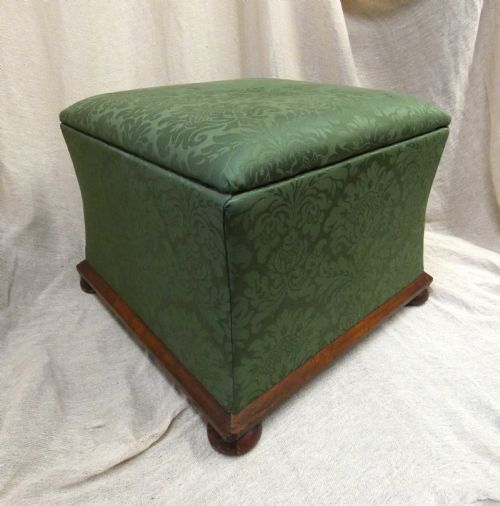
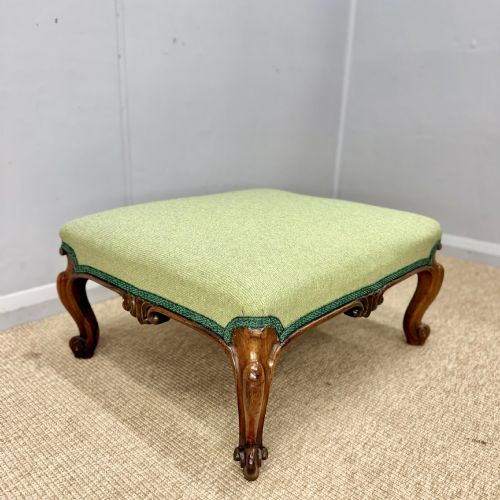
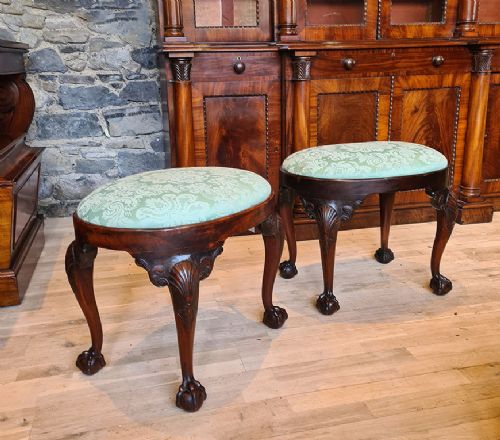
A green upholstered footstool offers a low seat or rest, bringing traditional timber frames and textured fabrics together into a practical room accessory.
Green Upholstered Footstool
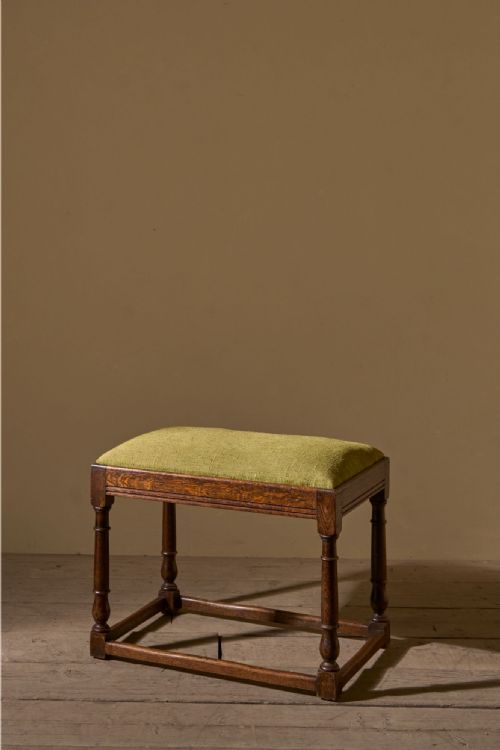
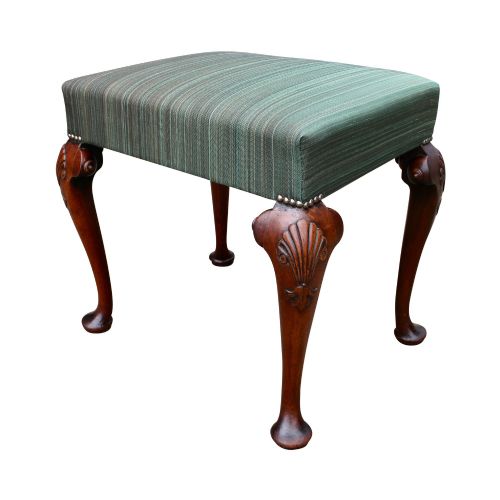
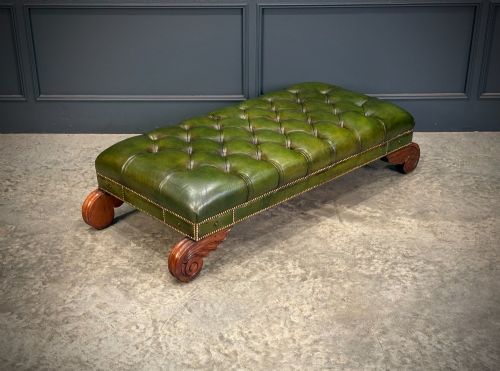
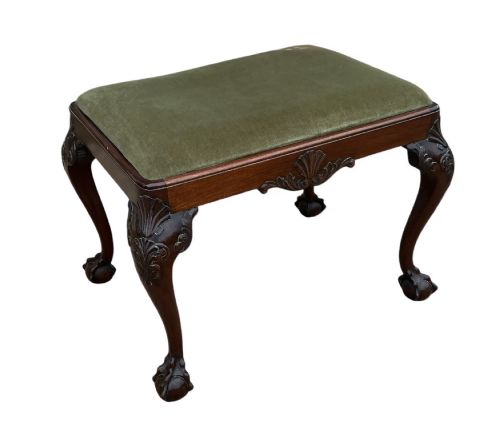
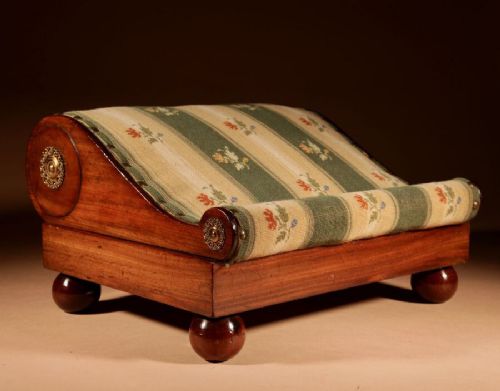
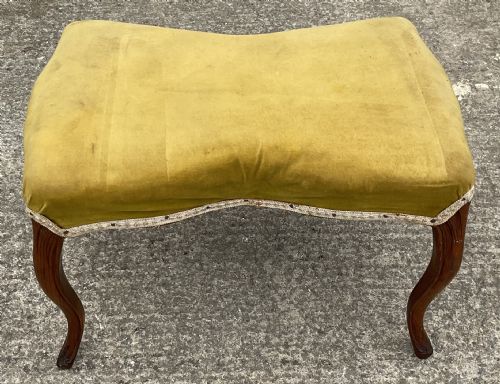
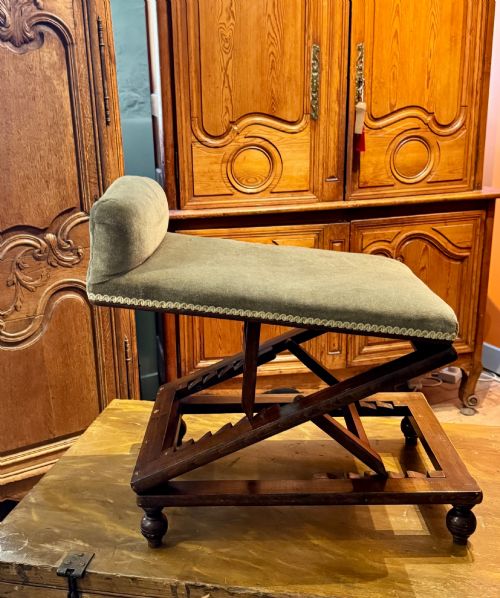
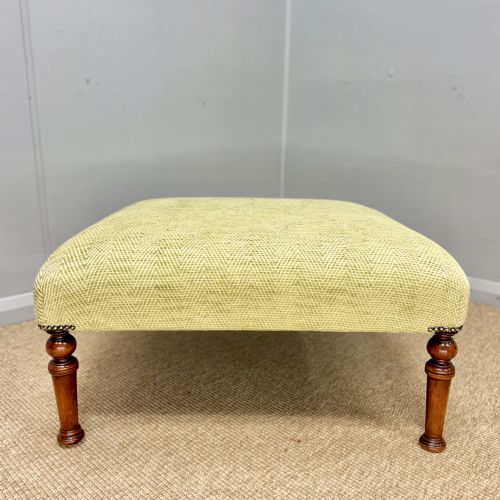
A green upholstered footstool brings together solid timber frames and soft textile coverings, appearing across periods from the Georgian era through the Victorian decades and into the twentieth century. These pieces serve as low seats, window rests, or supports for tired feet, taking forms such as square ottomans, long benches, and adjustable gout stools.
The version most commonly met on this page combines a rich wooden base in mahogany, walnut, or rosewood with textile top coverings in shades of green. These range from heavy linen and chenille to buttoned leather and needlework, reflecting revival styles like Queen Anne, Chippendale, and William and Mary.
How they were made
Makers shaped the structural frames from dense hardwoods including mahogany, walnut, rosewood, oak, and beech, often finishing the timber with carved details, spiral turnings, or inlaid patterns. Joinery relied on traditional methods to ensure stability under foot or seat, while specific forms incorporated brass adjustments or hinged compartments.
Upholstery techniques secured the top coverings over firm padding, utilising materials such as woven linen, chenille, leather, and needlepoint tapestries. Artisans fastened these textiles with careful placement, frequently finishing the edges with tight buttoning or decorative trim.
Listings feature woods such as mahogany, walnut, rosewood, and oak paired with fabrics including velvet, leather, and needlework.
What varies in quality
The distinction between standard examples and finer pieces rests upon the crispness of the timber carving and the architectural balance of the frame proportions. Superior stools display confident joinery, well-drawn curves, and high-grade native or exotic hardwoods that have retained their structural integrity.
Quality also shows in the choice and execution of the top covering, where hand-worked needlepoint, supple buttoned leather, or heavy woven linen demonstrate superior craftsmanship compared to plain commercial textiles. The harmony between the historic timber base and its upholstery defines the overall distinction of the piece.
Harry and Lou Epstein
The Green Upholstered Footstool Glossary
- Gout stool
- A specialised footrest featuring an adjustable mechanism designed to elevate and support the foot of someone suffering from joint pain. These pieces often employ beechwood frames alongside mechanical ratchets.
- Ottoman
- A low, upholstered seat or footstool without a back or arms, frequently built with generous proportions for domestic comfort. They appear in square and rectangular formats across nineteenth-century rooms.
- Needlepoint
- A form of counted-thread embroidery worked over a stiff canvas mesh to create dense, durable patterns for seat covers. This technique frequently employs wool or silk threads.
- Chenille
- A fuzzy, tufted fabric woven with pile yarns that provide a tactile, velvety surface texture. It appears on period dressing stools and footrests.
- Window seat
- A long stool designed specifically to fit the architectural recess of a window, often sharing the formal stylistic traits of larger seating furniture.
Green Upholstered Footstool: Frequently Asked Questions
What is a green upholstered footstool used for?
These pieces serve primarily as low supports for resting feet or as auxiliary seating in living spaces and bedrooms. Certain larger formats function as window seats or combine storage compartments beneath the top.
Their compact dimensions allow them to sit easily in front of armchairs, sofas, or dressing tables. They bring both utility and decorative texture into a traditional interior scheme.
How do I tell Victorian from Regency stools?
Regency pieces often display classical proportions with dark woods like rosewood and mahogany, sometimes featuring restrained brass mounts or delicate turnings. Victorian examples frequently utilise heavier walnut or stained beech, embracing ornate carving and buttoned upholstery.
Looking at the joinery and timber finish helps distinguish the earlier Regency aesthetic from the more exuberant Victorian revival styles.
Are these footstools comfortable to use daily?
Most pieces provide firm support due to traditional padding methods and sturdy hardwood frames. Upholstery materials like leather, linen, and wool offer durable surfaces for everyday domestic life.
Placing a footstool before a favoured armchair allows it to function comfortably as an everyday rest. The solid timber construction ensures the frame withstands regular weight.
How do I clean antique upholstery fabrics?
Gentle surface brushing removes dust from delicate needlework, linen, and chenille coverings without disturbing the underlying fibres. Leather surfaces benefit from periodic conditioning to maintain their supple texture.
Avoiding harsh chemical cleaners preserves the historical integrity of vintage textiles. Professional conservation cleaning is recommended for fragile antique needlepoint.