


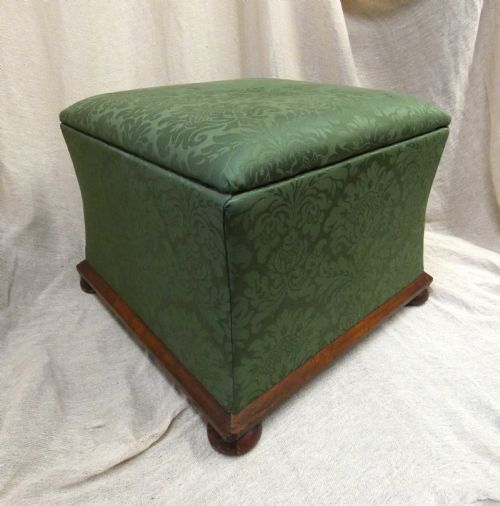


Traditional Mahogany Footstool
These traditional mahogany footstool examples bring solid timber frames and period upholstery into sitting rooms.
Traditional Mahogany Footstool
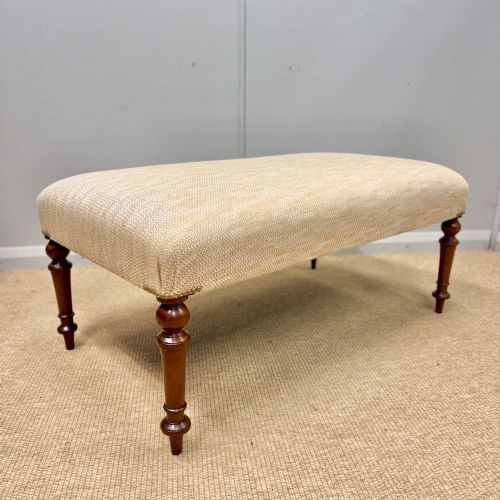
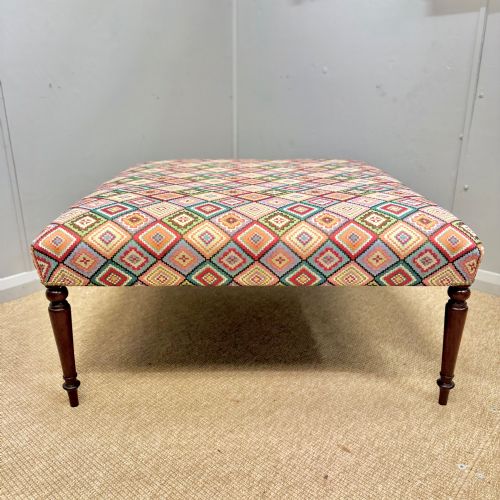
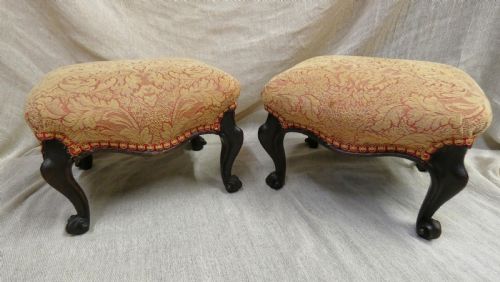
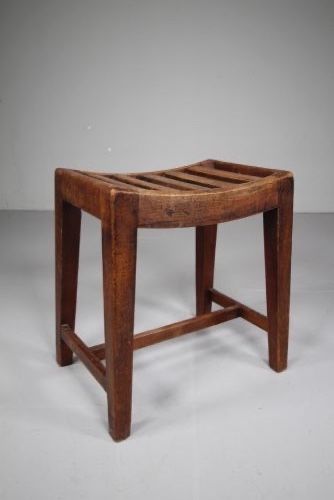
A traditional mahogany footstool serves as a low seat or rest, appearing across periods from the eighteenth century through the Edwardian era. These pieces manifest as oblong, square, or long forms, sometimes standing upon brass castors or cabriole legs.
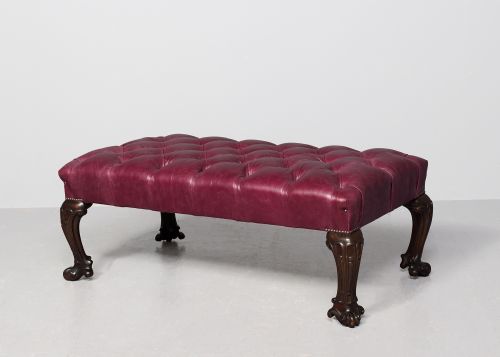
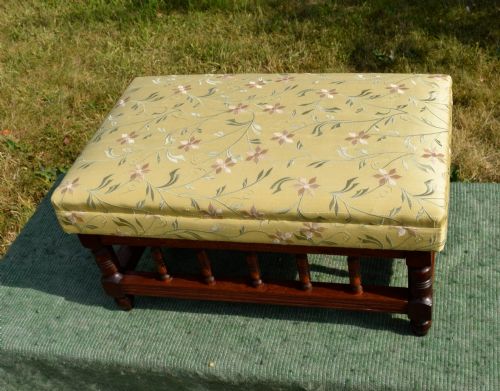
The version most commonly met on this page dates from the nineteenth century or the Victorian period. These items often feature buttoned leather, tapestry, or newly upholstered fabric seats housed within dark timber frames.
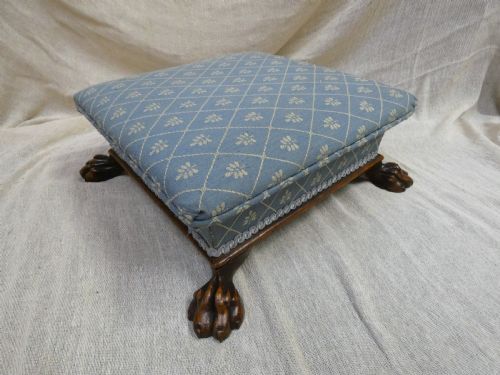
Makers also produced piano stools, ottomans, and revival pieces influenced by Georgian and Chippendale styles. Such variants include hinged seats, caned tops, and carved ball and claw details.
Materials and construction methods
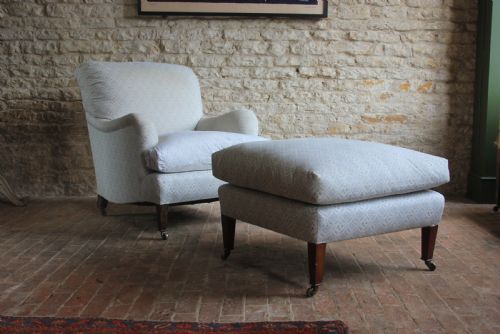
Cabinetmakers utilised solid mahogany to build robust frames, employing styles that ranged from plain nineteenth-century forms to ornate Chippendale and George II revivals with carved legs. Timber components were frequently paired with brass castors to allow smooth movement across floors.
Upholstery techniques varied widely according to date, incorporating traditional stuffing materials beneath outer layers of red hide leather, wool, Kilim, geometric textiles, or needlework tapestry. Many surviving frames retain original fabric coverings, while others have received modern re-upholstering.
Piano duet stools include hinged seats designed to hide sheet music during performance.
Judging the quality of a traditional mahogany footstool
Quality rests upon the crispness of the mahogany carving and the structural integrity of the timber frame. Pieces displaying refined proportions, solid joinery, and well-executed stylistic details like ball and claw feet stand apart from simpler iterations.
The standard of the upholstery work and the selection of covering materials also dictate worth. Examples retaining original needlework tapestry, specialised leather, or branded maker details command distinct attention compared to standard replacement fabrics.
Howard and Sons
The Traditional Mahogany Footstool Glossary
- Mahogany
- A dense, dark tropical hardwood valued by cabinetmakers for its strength and rich grain. It forms the structural skeleton of nearly every piece on this page.
- Cabriole leg
- A furniture leg featuring a double curve, typically arching outward and then inward toward a foot. This design appears frequently on eighteenth-century and Victorian stools.
- Ottoman
- A large upholstered seat or footstool usually lacking arms or a back. Versions on record include deep buttoned leather and country house scales.
- Tapestry
- A heavy textile featuring woven pictorial or geometric designs. It is often employed as the primary covering for period stool seats.
- Castor
- A small wheel mounted on a swivel attached to the base of a leg. Brass iterations allow heavy mahogany stools to roll easily across carpets.
Traditional Mahogany Footstool: Frequently Asked Questions
What periods do these footstools come from?
The pieces span several centuries, beginning with eighteenth-century Georgian examples and extending through Victorian production into the Edwardian era and early twentieth century.
Victorian items make up a large portion of the available selection, alongside revival pieces that imitate earlier Georgian cabinetmaking trends.
Are the upholstery fabrics original?
Some pieces retain their original fabric seats, leather coverings, or period tapestry work, showing authentic wear from long use.
Other items arrive newly upholstered, having been fitted with fresh textiles while keeping their antique mahogany frames intact.
How do I identify a Chippendale style stool?
Chippendale style pieces typically showcase carved mahogany woodwork, often incorporating distinct motifs such as ball and claw details upon the legs.
These designs draw inspiration from eighteenth-century patterns but frequently date from later nineteenth or early twentieth-century revival periods.
What is the difference between a footstool and an ottoman?
Footstools are generally smaller items designed specifically for resting feet, whereas ottomans tend to be larger upholstered furniture forms.
Several listings categorise larger pieces interchangeably as footstools and ottomans, occasionally featuring hinged compartments or deep buttoned leather.