


Brown Wooden Joint Stool
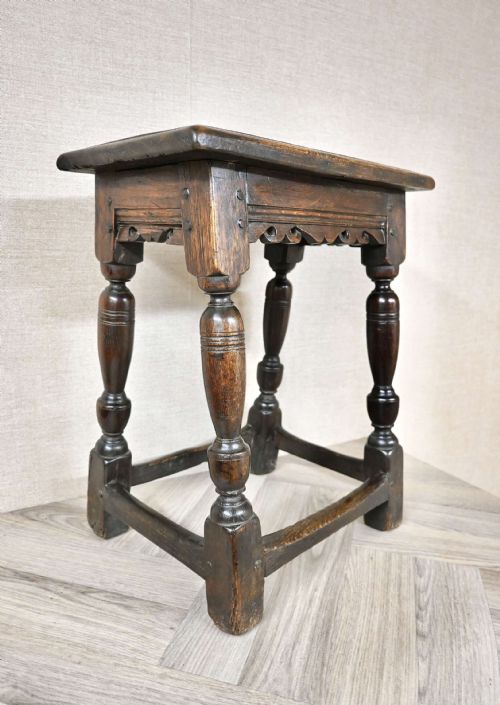
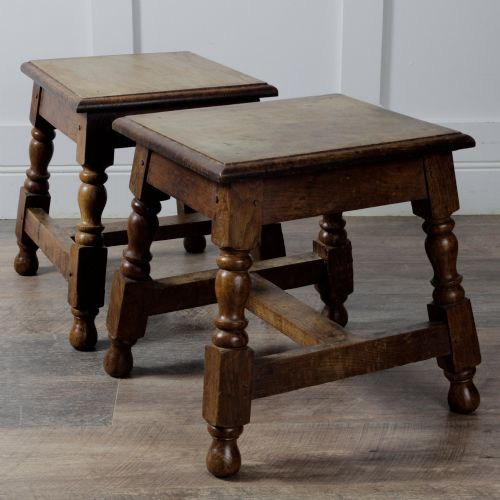
These brown wooden joint stools are sturdy timbers built for sitting or resting objects, offering centuries of domestic utility.
Brown Wooden Joint Stool
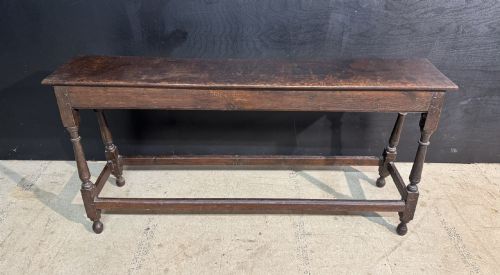
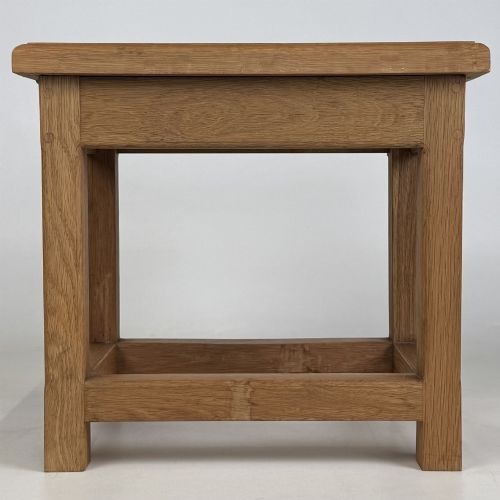
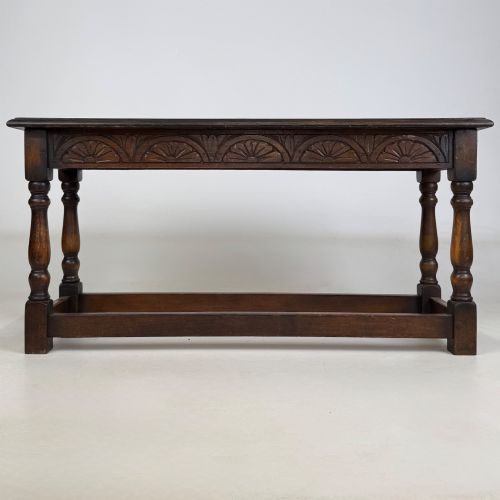
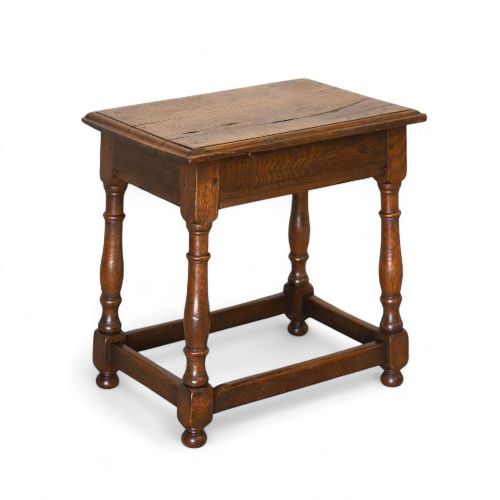
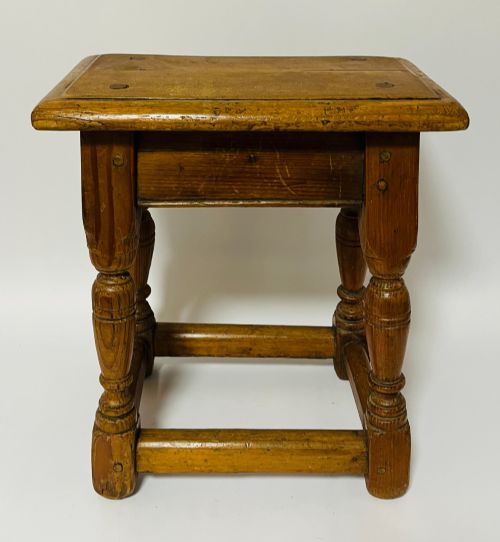
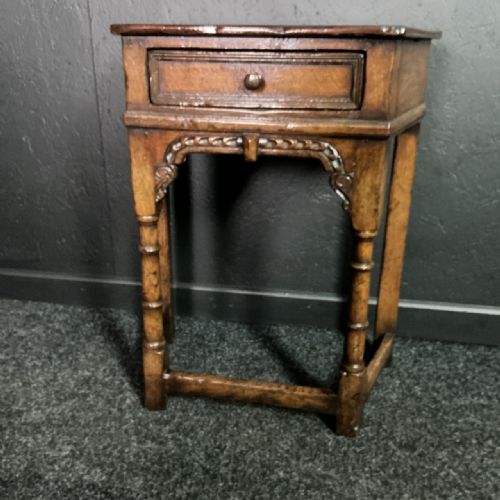
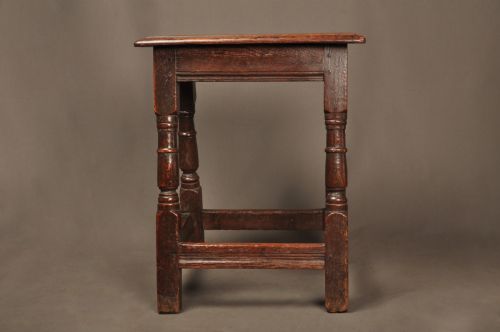
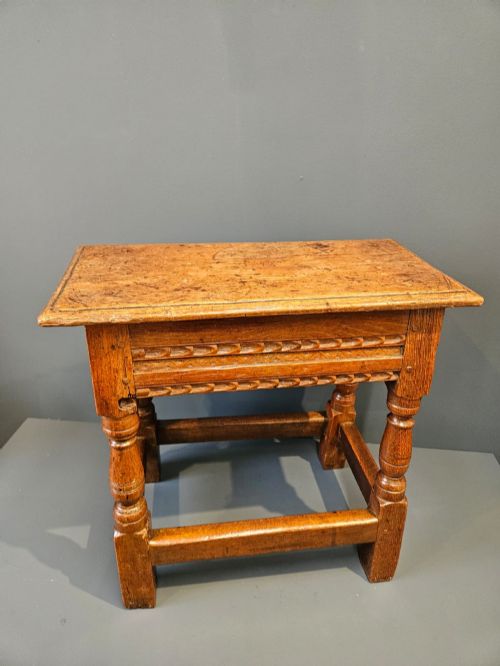
A brown wooden joint stool is a rigid seating form constructed with pegged mortise and tenon joints rather than simple nailed boards. These pieces emerge in forms such as rectangular joint stools, box stools, benches, and occasional tables.
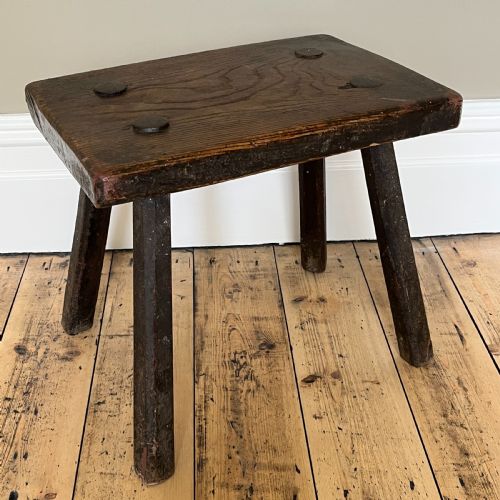
The versions most commonly met on this page span from the seventeenth century through to later revivals in the nineteenth and twentieth centuries. Provincial makers produced these items in solid English timbers for everyday household tasks.
Constructed primarily for domestic seating or small side surfaces, examples also include miniature apprentice pieces and longer bench formats. The overarching structure remains low, heavy, and functionally direct.
What varies in quality
Quality rests upon the integrity of the original construction and the proportion of the timber frame. Pieces retaining their early pegged joints without extensive modern timber replacement stand higher in the scale.
Subtleties of surface patina, such as rich colour accumulated over centuries of handling, separate provincial examples of deep character from later revival pieces. The thickness of the top boards and the crispness of any period carving further distinguish the range.
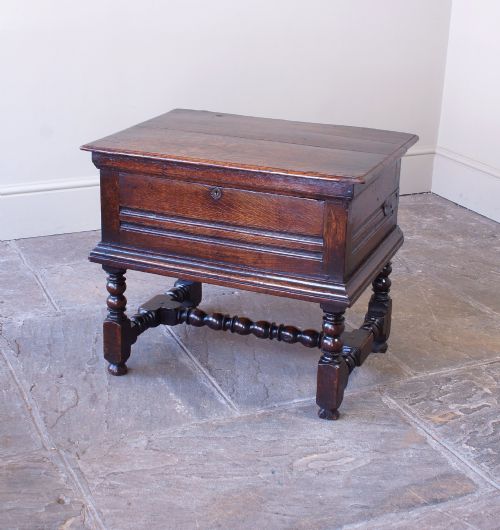
Forms range from standard rectangular joint stools to box stools, miniature apprentice pieces, and occasional tables.
The Brown Wooden Joint Stool Glossary
- Joint stool
- A sturdy wooden seat constructed with joined framing rather than turned legs alone. The term derives from joined timber work.
- Mortise and tenon
- A joint wherein a protruding tenon fits tightly into a corresponding mortise hole. This mechanical interlock provides primary structural strength.
- Pegged construction
- A method of securing joints using wooden pins driven through the timber assembly. It avoids metal fastenings entirely.
- Box stool
- A variant form incorporating a concealed compartment beneath the seat for storage. These occasionally double as close stools.
- Patina
- The surface sheen and colour developed by wood through age, wear, and polishing. It serves as an indicator of longevity.
Brown Wooden Joint Stool: Frequently Asked Questions
What is a joint stool?
A joint stool is a heavy wooden seat built with joined framing and pegged joints. These pieces were utilised in early households for sitting or reaching high places.
The term joint refers to the carpentry method rather than any connection to a table. They predate upholstered chairs in general domestic use.
How old are these stools?
The listings include examples dating from the seventeenth century up to twentieth-century revivals. Earlier pieces feature seventeenth-century construction methods, while later ones reflect nineteenth and twentieth-century interpretations.
Craftsmen continued building in these traditional styles across multiple centuries. Examining the timber surface and construction pins helps clarify the period.
Were these used just for sitting?
While primarily designed for seating, their sturdy flat tops made them versatile surfaces for holding small objects. Some variations incorporate boxes beneath the seat for storage.
Shorter and longer formats appear across provincial workshops. They functioned as portable furniture moved about the room as needed.
What woods were used?
Oak is the predominant material seen across the listings, alongside elm, yew wood, pine, and mixed hardwoods. English oak provided the heavy framework required for pegged construction.
Secondary timbers like elm and yew appear in regional country pieces. These native woods weathered generations of domestic handling.