



Brown Wooden Filing Cabinet
A brown wooden filing cabinet brings practical organisation and period character into a room.
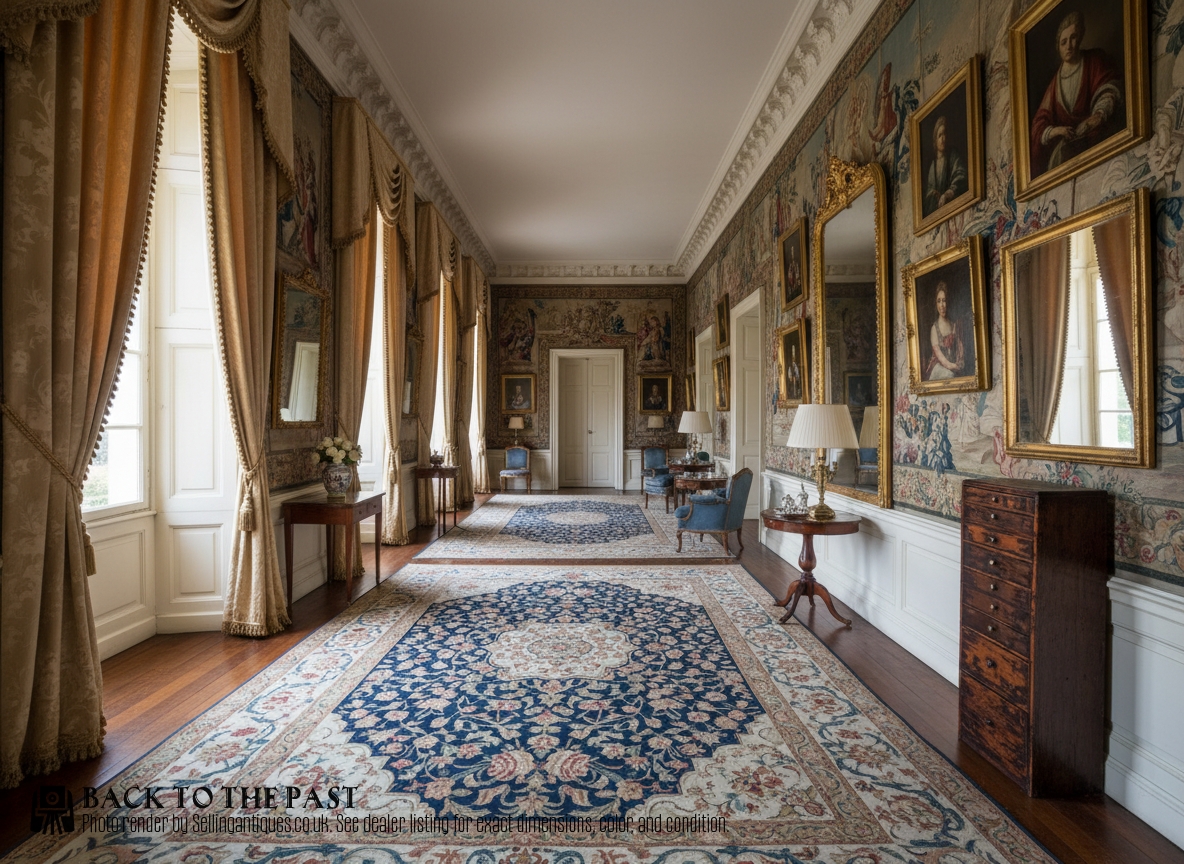
Brown Wooden Filing Cabinet
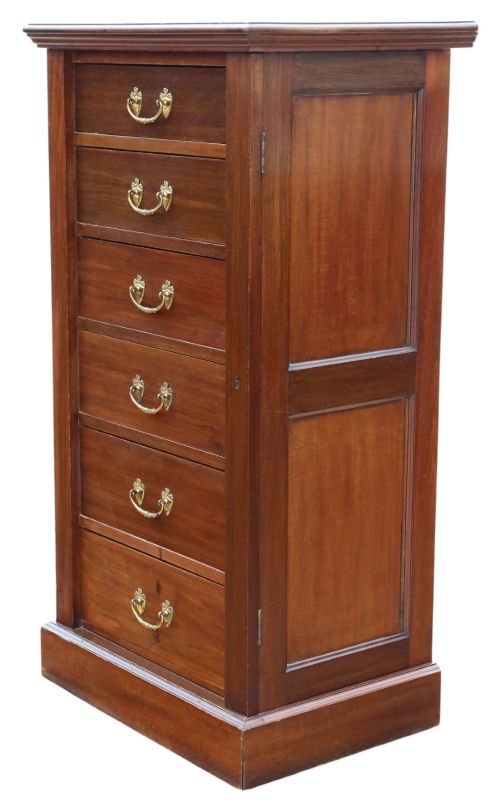
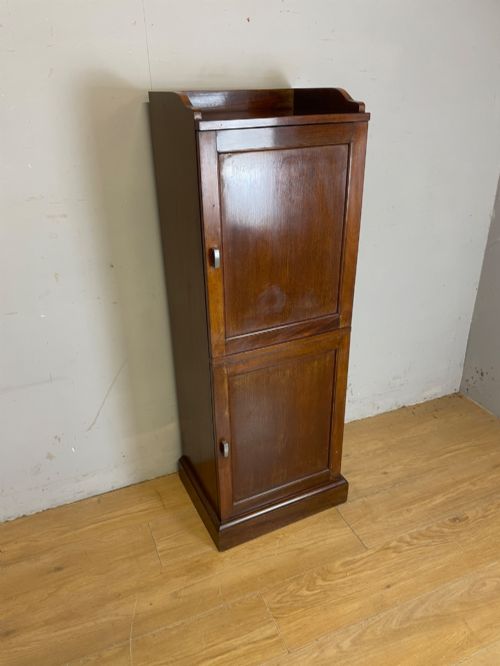
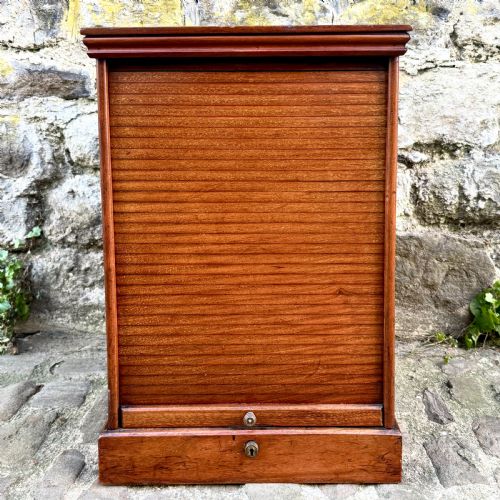
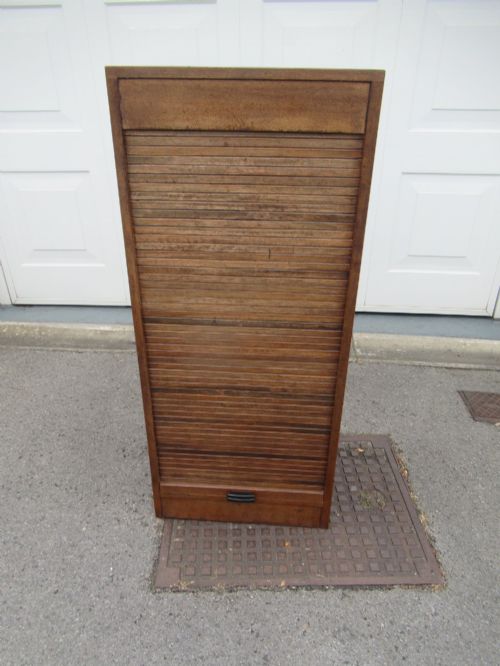
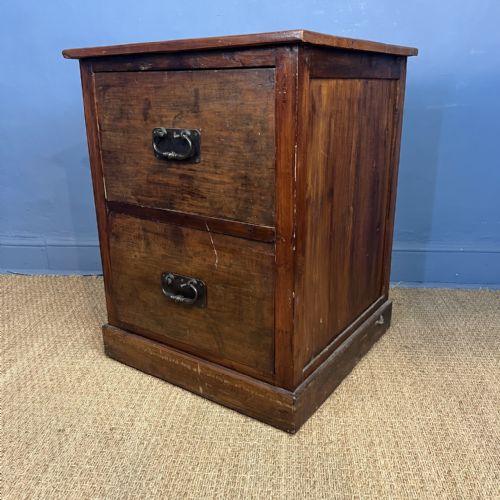
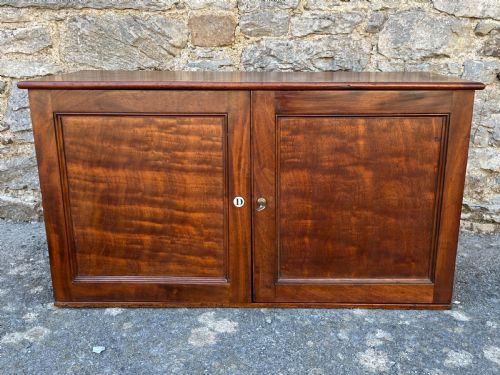
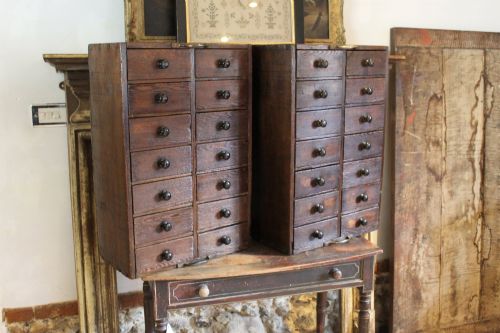
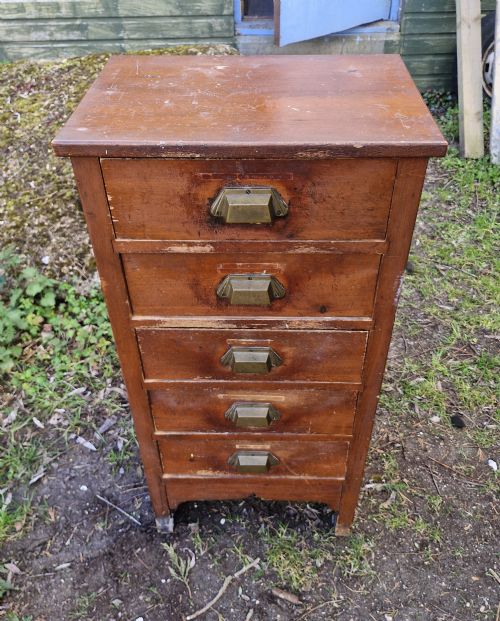
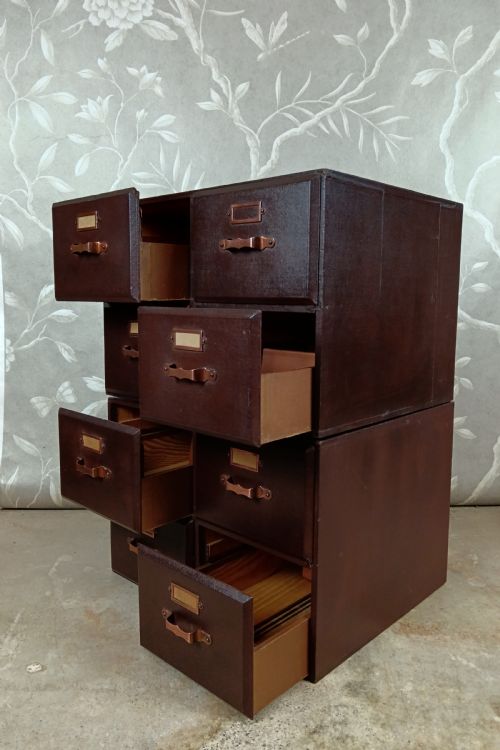
A brown wooden filing cabinet is a functional piece of office or domestic furniture designed to organise papers and documents. When searching for a brown wooden filing cabinet, buyers encounter various forms including tambour front cabinets, banks of drawers, and modular filing sets. These pieces originate predominantly from the Victorian, Edwardian, and early twentieth-century periods.
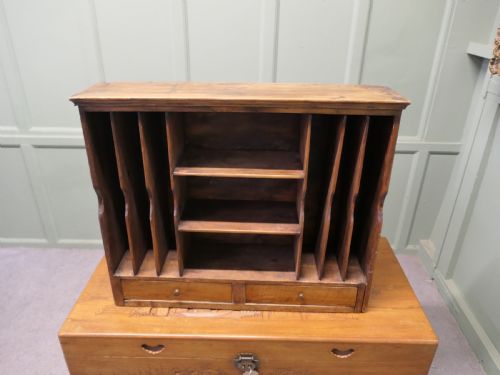
The selection ranges from compact desktop organisers and music cabinets to large office units and tall banks of drawers. Materials span mahogany, oak, walnut, pine, and teak, often finished with polished surfaces or inlaid details.
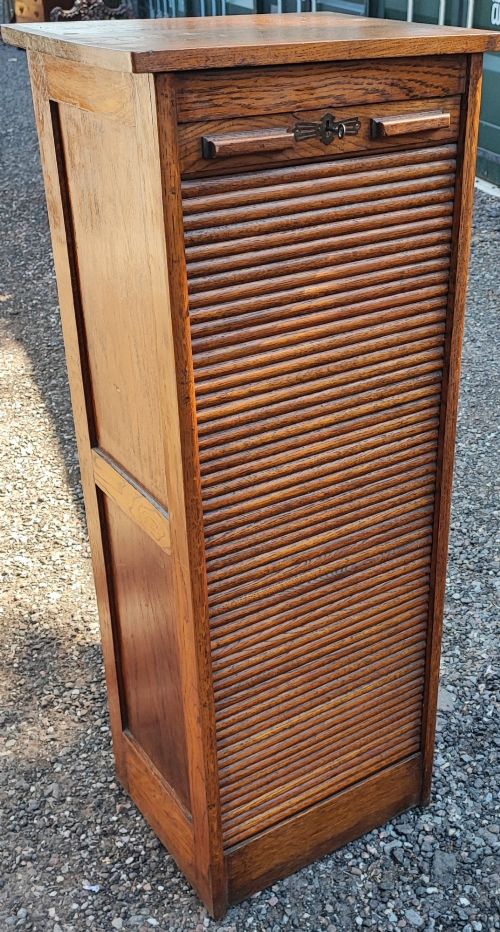
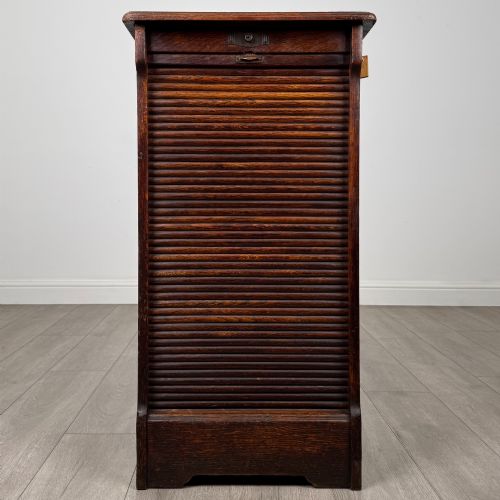
Most pieces date from the late nineteenth century up to the 1930s, reflecting the administrative expansion of those eras. Buyers frequently find tambour fronts that slide to conceal drawers, alongside traditional pull-handle drawer arrangements.
Construction and materials
Cabinet makers utilised solid hardwoods and veneers such as mahogany, oak, walnut, and teak over sturdy carcases. Joinery techniques ensured drawers slid smoothly within banks, supporting heavy loads of paper and documents.
Functional elements included brass handles, patent locking mechanisms, and slatted tambour doors constructed from numerous small wooden strips glued to canvas backings.
Listings feature oak, mahogany, walnut, and pine across Victorian, Edwardian, and 1930s periods.
Assessing quality and craftsmanship
Quality in a brown wooden filing cabinet rests on the selection of timber and the precision of the drawer construction. Superior examples feature figured mahogany, quarter-sawn oak, or walnut, paired with original brass hardware and working locks.
The smoothness of the sliding mechanism in tambour fronts distinguishes standard production from finer pieces. Cabinet maker signatures, patent mechanisms, and intact internal dividers further elevate the standing of a piece.
Amberg·Shannon·D Napier And Sons
The Brown Wooden Filing Cabinet Glossary
- Tambour
- A flexible door made of narrow wooden slats attached to fabric, allowing it to slide around a track to conceal cabinet contents. This mechanism was popular in early twentieth-century office furniture.
- Wellington chest
- A tall, narrow chest of drawers secured by a locking hinged side pilaster that fastens over the drawer edges. These units often served administrative and filing purposes.
- Bank of drawers
- A multi-drawer storage unit designed for sorting correspondence, documents, or small items. They appear in tall vertical formats or wide counter-top configurations.
- Inlay
- The technique of embedding pieces of contrasting timber or decorative materials into the primary wood surface to form patterns. Edwardian pieces frequently utilise this method.
- Quarter-sawn oak
- Timber cut radially from the log, producing a distinct grain pattern known as medullary rays. This method yields stable boards used in quality cabinet making.
Brown Wooden Filing Cabinet: Frequently Asked Questions
How do I use a tambour front?
Grasp the handle and slide the slatted wooden door smoothly along its track around the side or back of the cabinet carcase. This reveals the interior filing space without requiring clearance for swinging doors.
Ensure the tracks remain clean and free from obstruction to maintain smooth operation of the wooden slats.
Where were these cabinets placed?
These cabinets served administrative functions in period offices, libraries, studies, and commercial spaces. Tall banks of drawers and card index sets accommodated growing paperwork demands.
In domestic settings, smaller music cabinets and filing chests provided discreet storage for household documents and sheet music.
How do I clean wooden surfaces?
Dust the exterior regularly with a soft, dry cloth to prevent dirt accumulation on the polished wood. Avoid harsh chemical cleaners that can strip the historic finish.
Apply a traditional beeswax polish occasionally to nourish the timber and maintain the natural lustre of the mahogany, oak, or walnut grain.
Are these cabinets suitable for modern paper?
Many historical filing drawers accommodate standard modern paper sizes and folders, particularly larger office cabinets and card index sets. Some specialist or older drawers may require tailored folder insertion.
Measure the internal drawer dimensions before purchasing if you intend to store specific modern file sizes.
How do I date a wooden cabinet?
Examine the construction methods, timber choices, and hardware styles to determine the era of manufacture. Victorian and Edwardian pieces often display characteristic brass handles and distinct joinery.
Patent marks, maker plaques, and specific stylistic influences like Arts and Crafts or Art Deco provide further chronological clues.