

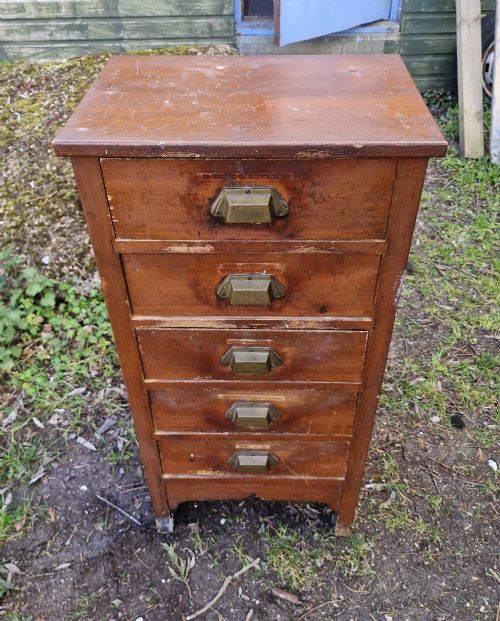


Antique Oak Index Chest
An antique oak index chest is a heavy-duty filing piece built for commerce, prized today for bringing robust practical storage into a home.
Antique Oak Index Chest
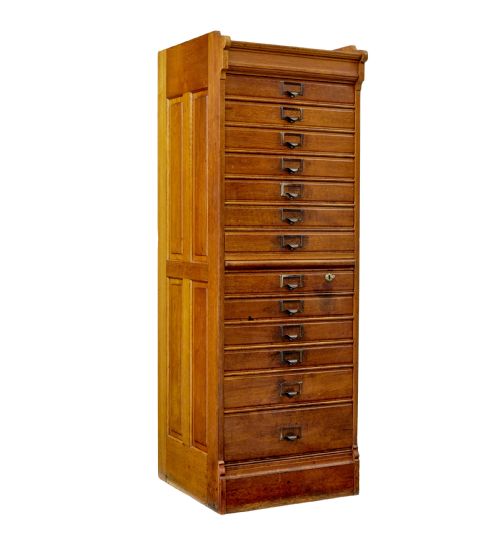
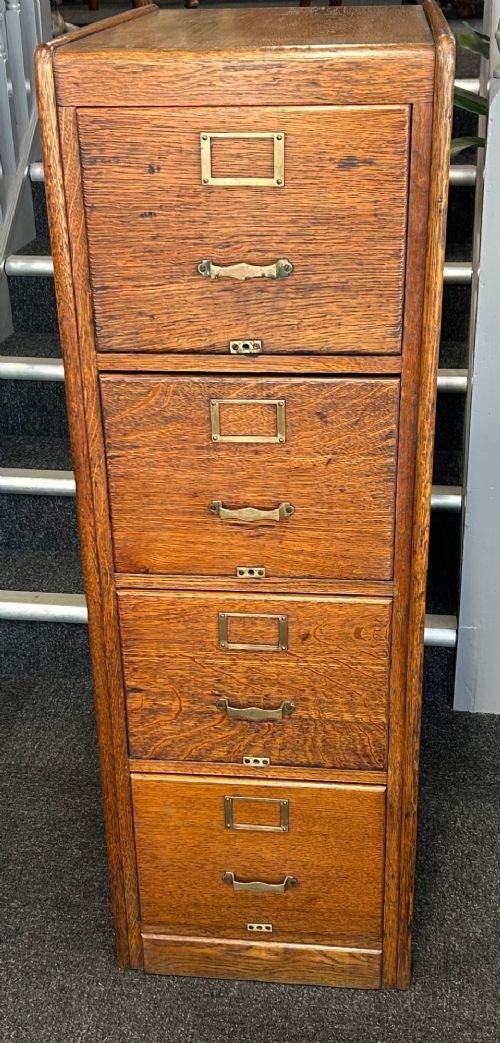
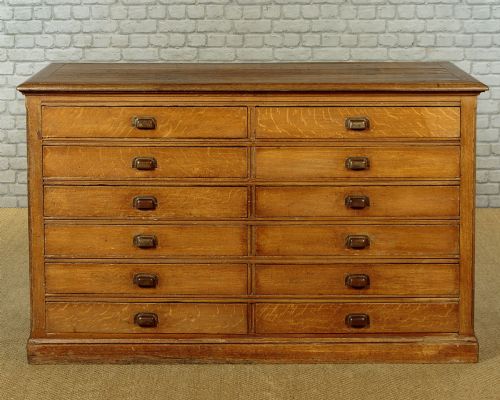
When buyers search for an antique oak index chest, they are looking at utilitarian office and shop furniture built to organise correspondence, records or small goods. These pieces take the form of filing cabinets, banks of drawers, and haberdashery cabinets designed for daily business use.
The versions most commonly met on this page date from the late nineteenth century through to the 1930s, spanning Late Victorian, Edwardian, and industrial utility styles. They are built primarily to serve a hardworking function rather than merely to decorate a room.
Most examples rely on dense timber frames and numerous small compartments to hold paper or small items securely. Their straightforward construction makes them adaptable as statement storage furniture in modern studies and living spaces.
How they were made
These chests are constructed predominantly from solid oak, paired occasionally with secondary timbers like pine and fitted with robust metal or brass hardware. The choice of heavy oak ensures the structural integrity required to support dozens of laden drawers without sagging.
Makers utilised durable joinery to withstand constant commercial handling, attaching functional brass handles, label holders, and patent locking mechanisms designed for rapid filing. The emphasis throughout manufacture rests on utility and longevity rather than delicate ornamentation.
Antique Oak Index Chest Retail Price Guide 2026
Typical asking prices for oak index chest among the pieces listed under this phrase on Sellingantiques today, from the lower quarter to the upper quarter. They describe what is for sale here now, not the wider market.
Listings feature pieces spanning from the 19th century through the 1930s, constructed predominantly in oak with brass and metal hardware.
What varies in quality
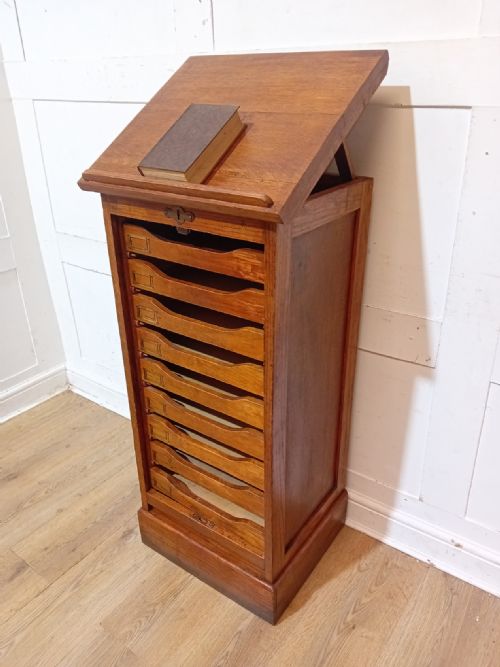
Quality in these pieces rests on the scale of the drawer formation and the sophistication of the internal mechanism, such as patented letter filing systems by makers like Shannon or Amberg. A greater number of uniform drawers or an integrated patent system elevates a piece above standard office furniture.
The integrity of the original brass hardware and the crispness of the oak grain also separate utilitarian storage from superior commercial output. Retaining authentic period handles and operational patent mechanisms marks out the finest survivals.
Amberg·Shannon
The Antique Oak Index Chest Glossary
- Index chest
- A multi-drawer cabinet designed specifically for filing documents, letters, or index cards. These pieces originate from commercial offices and stationers.
- Bank of drawers
- A large assembly of numerous small drawers sharing a single housing. They provide extensive compartmentalised storage for collectors and offices.
- Haberdashery cabinet
- A glass-fronted or multi-drawer storage unit originally used in shops for selling small ribbons, threads, or notions. They are valued today for displaying collections.
- Edwardian
- The architectural and decorative style spanning the reign of King Edward VII from 1901 to 1910. Furniture from this period often retains traditional craftsmanship while adapting to early twentieth-century office needs.
Antique Oak Index Chest: Frequently Asked Questions
What are antique oak index chests?
These are sturdy commercial filing units and banks of drawers constructed mostly in the late nineteenth and early twentieth centuries. They were built for offices, banks, and mercantile shops to keep vast amounts of paperwork organised.
Today, buyers repurpose them as statement storage pieces in homes to hold stationery, collections, or daily clutter. Their industrial utility design brings a strong architectural presence to a room.
How do I date an oak filing cabinet?
Dating relies on observing the hardware, construction methods, and stylistic cues present in the piece. Late Victorian and Edwardian examples often feature heavy brass pulls and patent mechanisms stamped with maker details.
Later pieces from the 1920s and 1930s tend towards industrial utility designs with simpler metal fittings. Comparing the drawer construction to documented catalogue examples helps narrow down the decade of manufacture.
Where were index chests used originally?
They originated in bustling commercial offices, solicitors' chambers, and retail drapery shops where efficient document or stock retrieval was essential. Clerks and merchants relied on them to house thousands of individual letters or small goods.
Because they were made for heavy workplace environments, their construction is exceptionally robust. This commercial pedigree is precisely why they survive in working order today.
How do I incorporate one into a modern room?
An index chest works exceptionally well as a freestanding desk pedestal, a hallway catch-all, or a media console base. The numerous shallow drawers make them ideal for sorting modern office supplies, craft materials, or collections.
Allowing the piece to stand as a focal point lets the natural oak grain and original brass hardware provide texture against neutral walls. Their neutral timber tones blend easily with both contemporary and traditional interiors.
What is an Amberg system?
An Amberg's patent cabinet uses a specific mechanical arrangement designed to keep business letters and documents compressed and indexed alphabetically. These systems often include drop-front drawers and specialised dividers for rapid filing.
Finding a cabinet with an intact patent system offers a direct glimpse into early office efficiency. Collectors particularly prize these operational mechanical details.