


Commercial Office Cabinet
These commercial office cabinet pieces are sturdy period furnishings built for utility, offering genuine workspace character and robust storage.
Commercial Office Cabinet
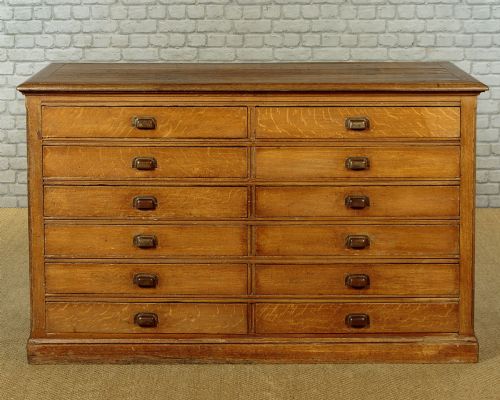
A commercial office cabinet serves as a heavy-duty workspace storage solution, encompassing filing cabinets, banks of drawers, and safes designed for daily business utility. When searching for a commercial office cabinet, buyers encounter diverse forms ranging from tall wooden filing units to compact haberdashery chests.
The pieces on this page span from the nineteenth century into the early twentieth century, including Victorian and Edwardian examples. Materials vary across these forms, combining structural timbers with secure metal fittings and handles.
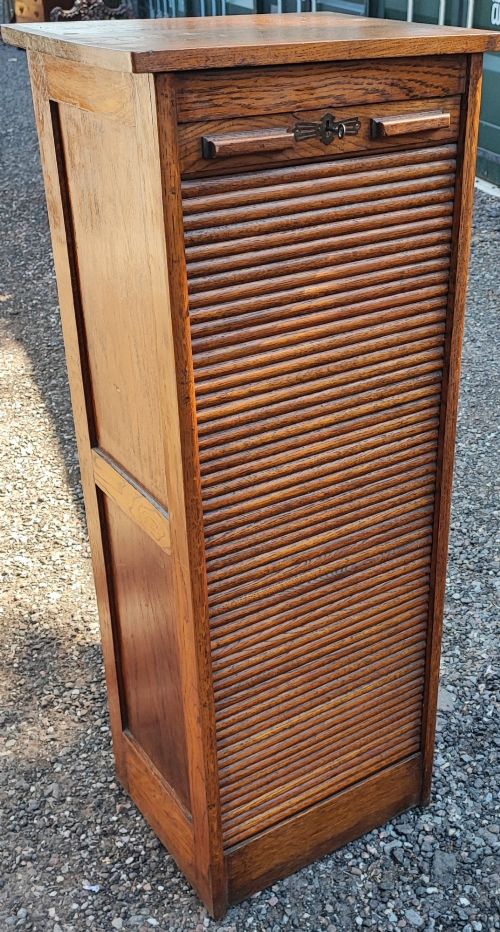
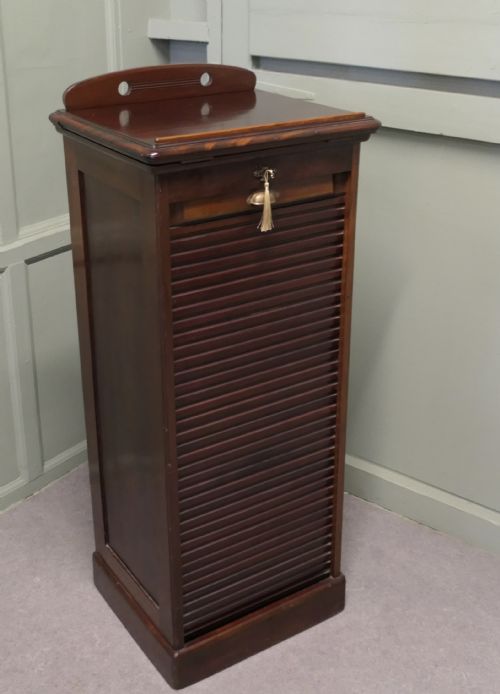
Buyers frequently meet oak filing systems featuring tambour fronts or multiple drawers alongside walnut and mahogany variations. These functional items reflect the administrative needs of past offices through robust construction and practical internal compartments.
How they were made
Construction relies heavily on durable timbers such as oak, mahogany, walnut, and pine, paired with functional brass hardware. Cabinetmakers utilised solid woods for framing and drawer construction to withstand heavy daily use in busy working environments.
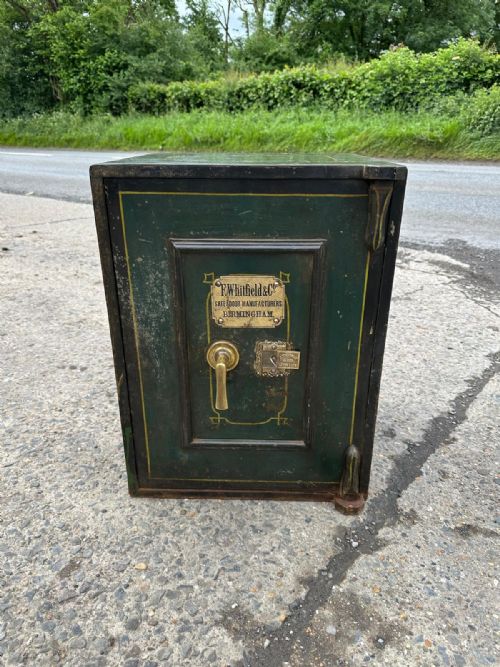
Metal elements including cast iron and steel appear in safes, strongboxes, and internal filing mechanisms, providing enhanced security and longevity. Tambour fronts utilise slatted wooden strips glued to canvas backing to slide smoothly around curved tracks.
Listings feature pieces spanning from the 19th Century through Edwardian times and the 1930s, constructed in oak, mahogany, walnut, pine, brass, iron, and steel.
What varies in quality
Quality differences emerge in the selection of primary timbers and the precision of mechanical elements like tambour shutters and locking systems. Finer examples display superior grain matching in woods such as mahogany or walnut, alongside robust brass drawer pulls and branded hardware.
The complexity of internal filing mechanisms, such as patented letter file systems or multi-drawer banks, dictates the sophistication of the piece. Sturdier construction methods and heavier gauge metals in safes and strongboxes separate basic utility items from superior commercial office furniture.
F. Whitfield and Co.·Amberg·Shannon
The Commercial Office Cabinet Glossary
- Tambour front
- A flexible door formed of narrow wooden slats attached to canvas, allowing it to slide sideways or vertically around a curved track. This clever mechanism conceals office storage efficiently without requiring clearance space for hinged doors.
- Bank of drawers
- A multi-tiered stack of numerous shallow or deep drawers housed within a single cabinetry frame. Such pieces served businesses for sorting documents, sundries, and small items.
- Pedestal
- A structural support base containing drawers or cupboards, often supporting a desk top or serving as a standalone storage block. These units maximised floor space beneath work surfaces.
- Haberdashery cabinet
- A glass-fronted or multi-drawer cabinet originally utilised by merchants to display and store small dry goods. In office contexts, these shallow drawers suit stationery and documents.
- Strongbox
- A heavily reinforced metal security container designed to protect valuables and important documents from theft and fire. They often feature robust cast iron and steel construction with complex lever locks.
Commercial Office Cabinet: Frequently Asked Questions
What is a tambour front?
A tambour front consists of narrow wooden slats mounted on a flexible fabric backing, sliding smoothly along recessed tracks to enclose a cabinet.
This clever design allows the door to retract completely out of sight, making it ideal for compact office environments where swinging doors would obstruct movement.
How were old filing cabinets used?
Businesses relied on these cabinets to organise correspondence, ledgers, and administrative records systematically before the advent of modern digital filing.
Specialised mechanisms like patent letter files kept papers sorted alphabetically or chronologically for rapid retrieval by clerks.
Are these cabinets made of solid wood?
Most period examples utilise solid timbers such as oak, mahogany, walnut, and pine for their structural frames and drawer construction.
Cabinetmakers selected these durable hardwoods to withstand the demanding conditions of busy commercial offices and counting houses.
How do I date an office cabinet?
Dating relies on observing stylistic markers, hardware materials, and construction techniques associated with periods like the Victorian era or early twentieth century.
Makers' marks, patent stamps, and the presence of specific mechanisms like early sliding tambour doors also help narrow down the decade of manufacture.