





Industrial Workshop Drawers
Industrial workshop drawers are robust storage units built for trade and utility, offering heavy storage and striking character to modern interiors.
Industrial Workshop Drawers
Industrial workshop drawers are utilitarian storage pieces originally built for trade, commerce, and manual crafts. These sturdy units served jewellers, carpenters, ironmongers, and watchmakers in sorting small parts, tools, and materials.
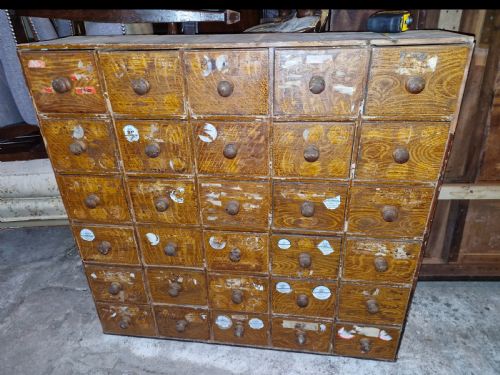
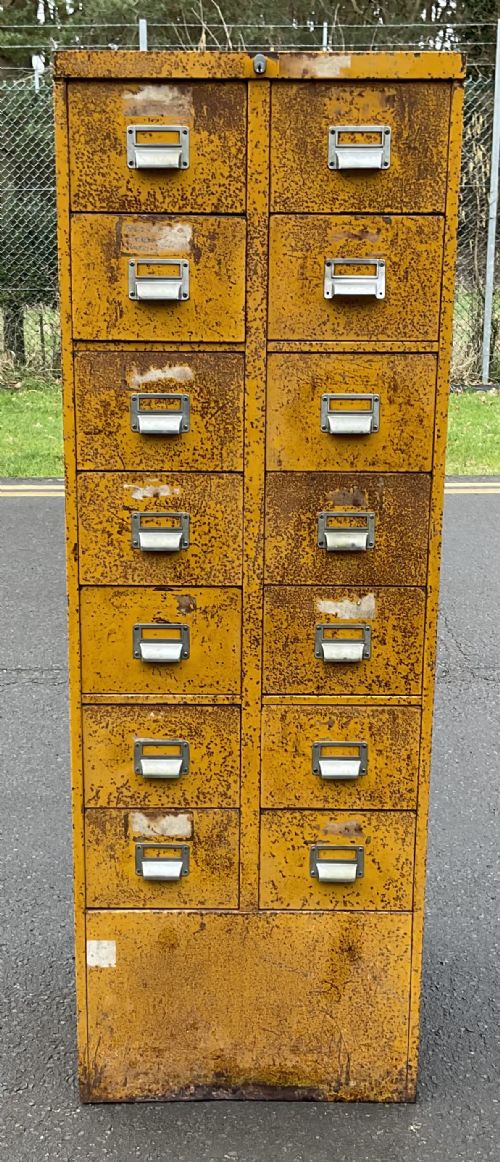
The versions most frequently met on this page include banks of drawers, filing cabinets, and tall chests originating from the nineteenth century through to the 1930s. Pieces span English and French workshops, utilising woods such as pine and mahogany alongside robust metal and iron structures.
How they were made
Makers constructed these functional pieces using solid timbers like pine, mahogany, and general wood, often combining them with steel, iron, and brass fittings for durability. Ironmongers and carpenters required robust joinery to withstand daily commercial use in demanding workshop environments.
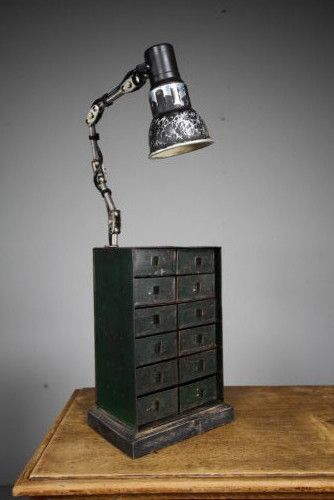
Surfaces frequently retain original paint finishes, showing the marks of active trades alongside metal handles and label holders. Some specialised pieces integrated utilitarian elements like original light fittings or tall multi-drawer configurations.
Listings feature workshop drawers from the Victorian era, the Edwardian period, and the 1920s, constructed in pine, mahogany, steel, and iron.
What varies in quality
The presence of original hardware, such as brass pulls, iron brackets, and paint finishes, distinguishes superior examples. Simpler secondary pine constructions or pieces with heavily altered surfaces represent the simpler end of the spectrum.
The Industrial Workshop Drawers Glossary
- Bank of drawers
- A multi-drawer storage unit designed for systematic sorting of small items in a trade setting. These tall or wide banks formed essential furniture in jewellers and watchmakers workshops.
- Ironmongers drawers
- Modular storage cabinetry built for hardware stores to house screws, nails, and small metal goods. They typically feature numerous small compartments with integrated label holders.
- Industrial loft
- A design style drawing directly from discarded factory and workshop furnishings. It utilises raw materials like exposed steel, iron, and reclaimed wood.
- Carpenters chest
- A heavy wooden storage box built for transporting and housing hand tools. These large chests often utilise sturdy pine construction.
Industrial Workshop Drawers: Frequently Asked Questions
What were industrial workshop drawers used for?
These pieces served practical tradespeople such as carpenters, watchmakers, and ironmongers who needed to organise small tools, components, and materials. Their numerous small compartments allowed for efficient inventory management in busy workshops.
Over time, these utilitarian units transitioned from commercial settings into domestic spaces, prized for their capacity to store modern household items while adding historical character to a room.
How do I date an industrial bank of drawers?
Dating relies on examining the materials, construction techniques, and hardware used in the piece. Victorian and Edwardian examples often feature hand-cut dovetailing in pine or mahogany, whereas pieces from the 1920s and 1930s increasingly incorporate steel and iron.
Hardware details like brass pulls, cast iron handles, and original painted finishes also provide clear chronological markers that align with specific manufacturing eras.
Are these drawers suitable for daily home use?
Their original heavy construction makes them exceptionally durable for everyday storage in modern homes. The deep and numerous drawers accommodate everything from kitchen utensils to office supplies and clothing.
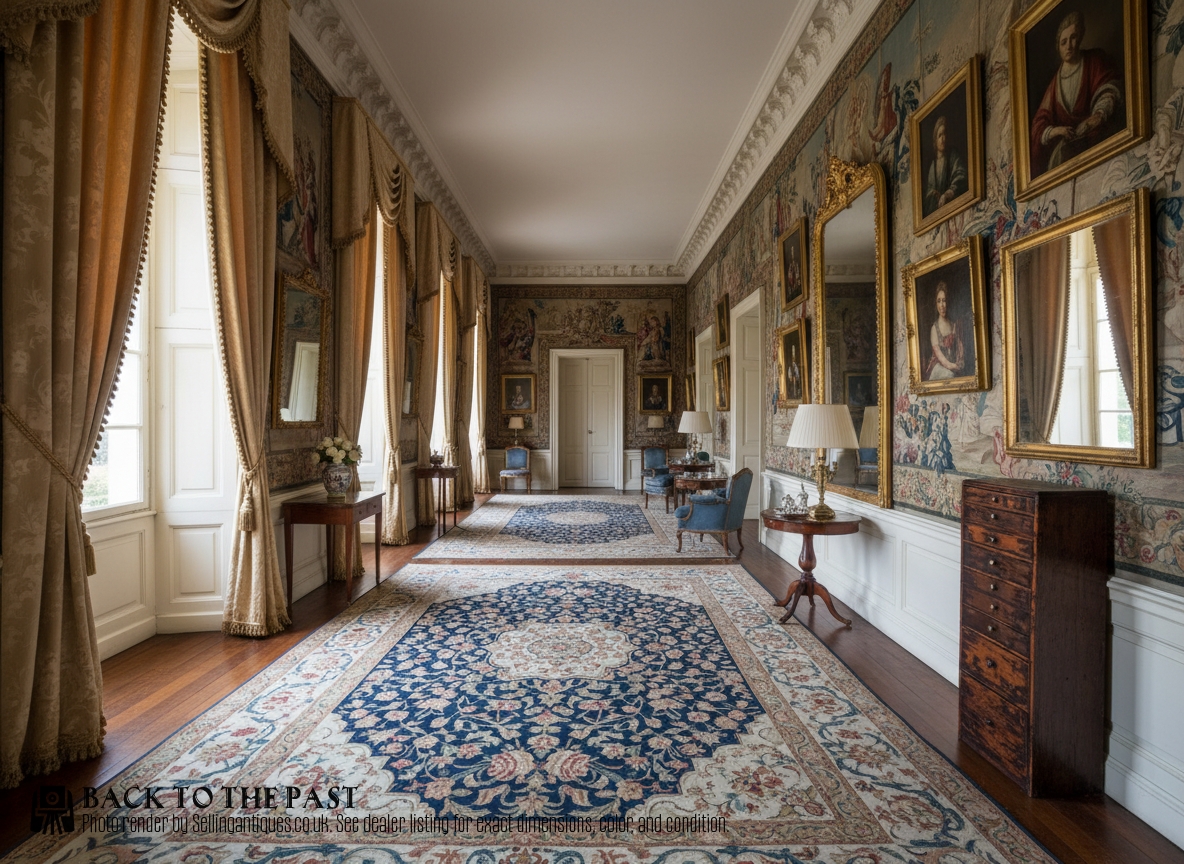
Placing them in a hallway, study, or living space brings both practical organisation and a strong architectural focal point to an interior scheme.
How do English and French workshop drawers differ?
English pieces from the Victorian and Edwardian periods frequently utilise dense native timbers like mahogany and pine, reflecting traditional cabinet-making applied to trade furniture. They often prioritize straightforward utility and robust joinery.
French workshops frequently employed distinct painted finishes and specific ironmongery styles, reflecting the aesthetic preferences of continental trade furniture from the nineteenth and early twentieth centuries.