
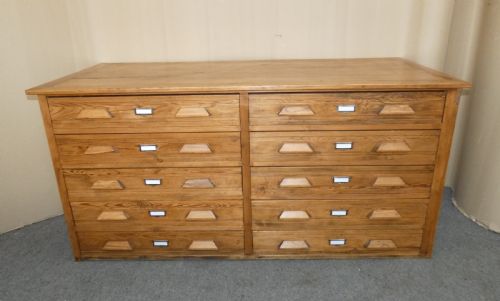


Haberdashery Drawer Unit
A haberdashery drawer unit brings commercial order into a home, offering rows of shallow compartments designed for dry goods or small objects.
Haberdashery Drawer Unit
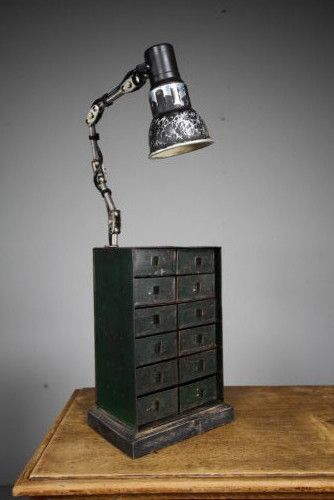
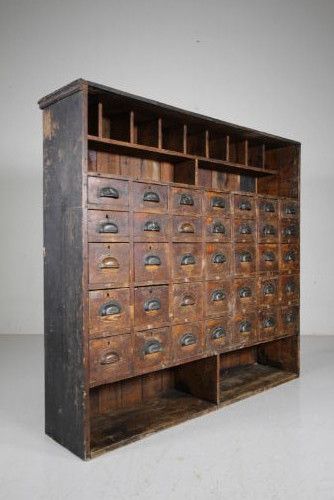
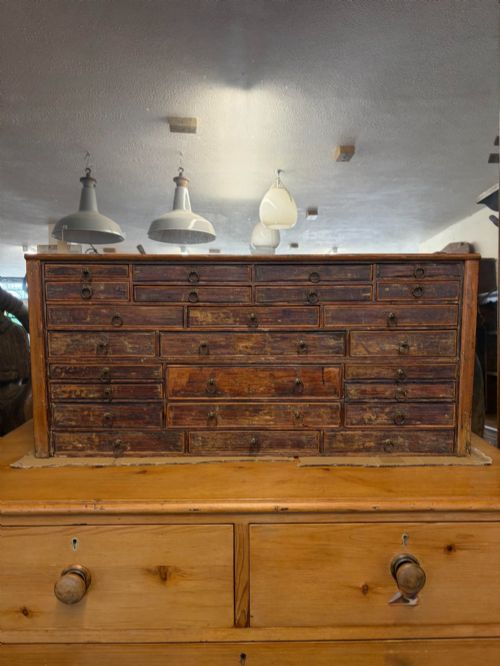
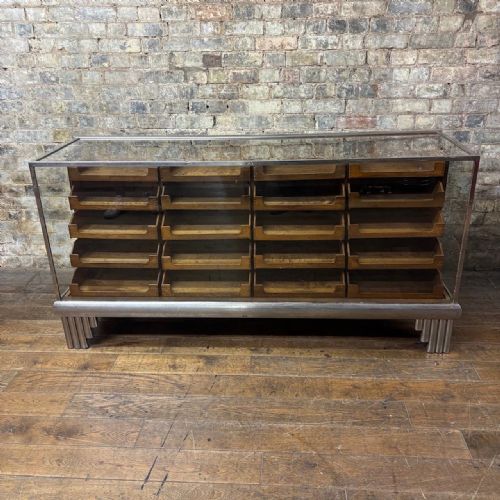
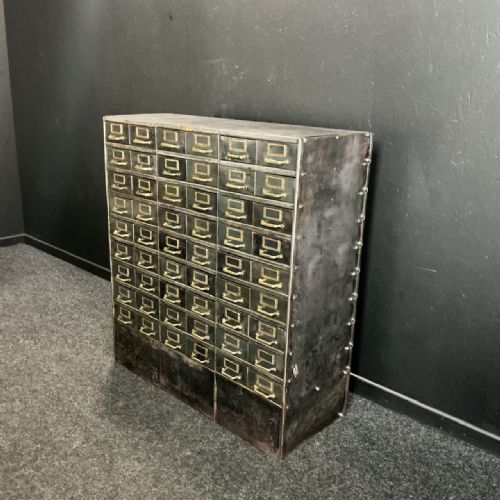
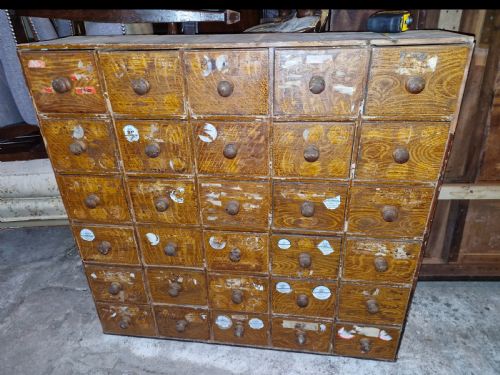
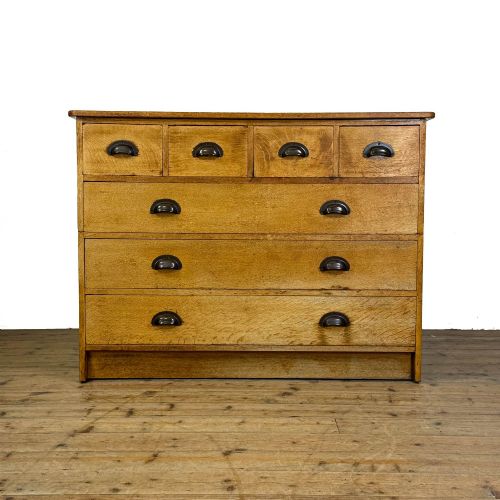
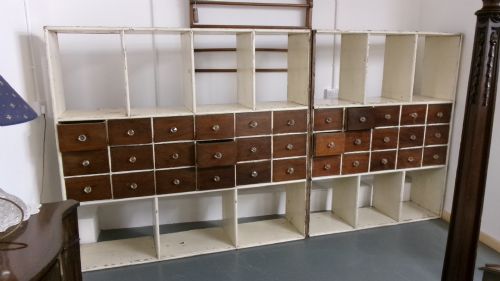
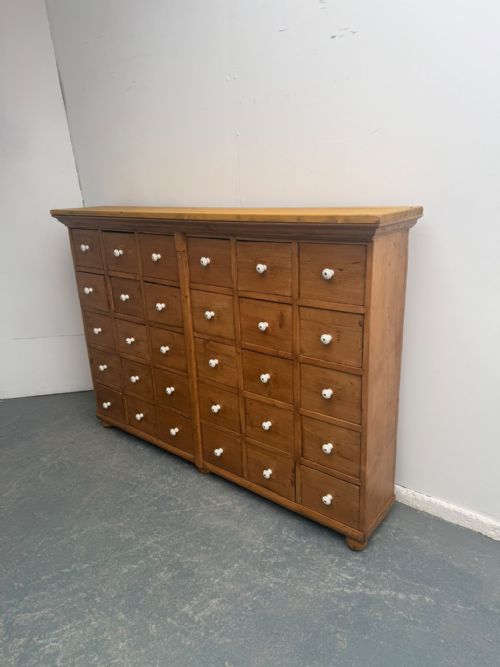
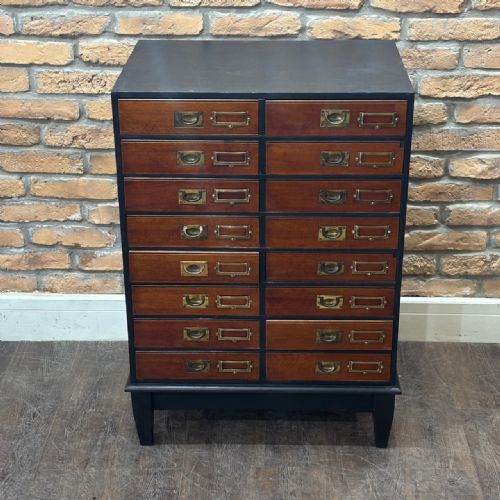
A haberdashery drawer unit comprises multi-drawer cabinets, banks of drawers, and shop counters originating from trade and retail environments. You will frequently encounter tall banks of drawers and shop fittings built to hold ribbons, cottons, and haberdashery stock. These pieces span the nineteenth century, Victorian, Edwardian, and 1930s periods.
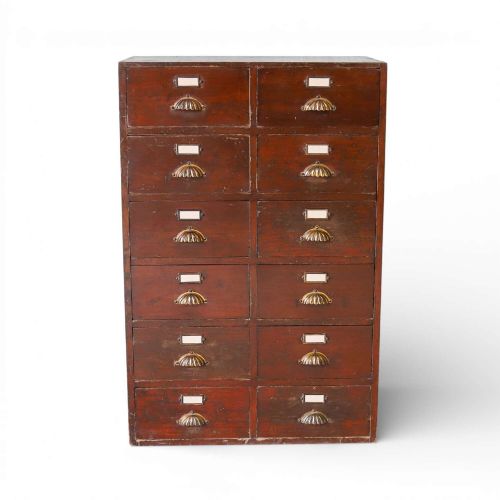
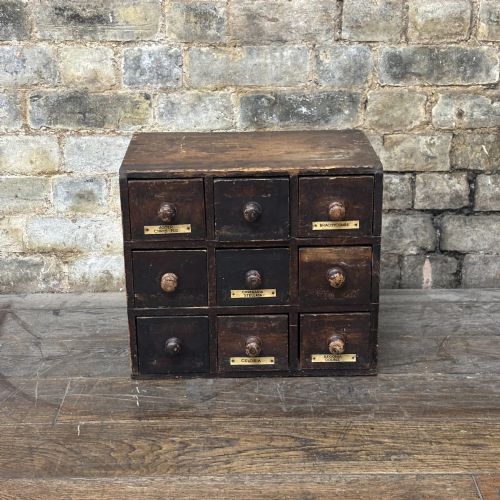
The selection includes specific shop forms such as drapers counters, florist seed chests, chemist apothecary chests, and ironmongers drawers. Materials range from pine and oak to mahogany, fruitwood, walnut, and metal. Many retain their original functional hardware like shell pulls and label holders.
Materials and construction
Cabinet makers utilised robust timbers such as oak, mahogany, and pine to construct these heavy commercial units, often pairing them with brass or iron handles and glass display elements. Painted finishes appear on pine shop fittings from the Victorian era, whilst later twentieth-century pieces incorporate chrome alongside oak.
Construction prioritised daily mercantile use, resulting in dovetailed drawer boxes and substantial framing designed to hold dense inventories. Original label holders and shell pulls were integrated directly into the drawer fronts to facilitate rapid sorting in busy shops.
Some multi-drawer units still retain faint traces of handwritten paper inventory slips tucked behind original brass label holders.
Assessing build and survival
Quality rests in the intact survival of original hardware, such as brass shell pulls, label holders, and maker plates that anchor the piece in its commercial past. Cabinetry with clean internal drawer construction and uncompromised timber surfaces sits higher in the range than altered examples.
The scale of the piece and the complexity of its multi-drawer arrangement dictate desirability, with larger banks and specialist counters commanding attention. Retained factory paint or honest, polished wood patination preserves the integrity of the original shop interior.
Dudley and Co·Luxmore of Ilfracombe·Amberg
The Haberdashery Drawer Unit Glossary
- Bank of drawers
- A large cabinetry unit containing numerous individual drawers stacked in rows and columns. These were standard trade fittings for sorting hardware or textiles.
- Shell pull
- A pressed metal handle shaped like an inverted half-shell. It often incorporates a small slot to hold a paper identification label.
- Shop fitting
- Fixtures and furniture built specifically for commercial retail premises. Examples include drapers counters and chemist banks.
- Plan chest
- A wide, shallow multi-drawer cabinet designed originally for architectural drawings. They function similarly to large haberdashery units.
Haberdashery Drawer Unit: Frequently Asked Questions
What were haberdashery drawers used for?
These cabinets served in retail shops to store small merchandise like ribbons, threads, buttons, and needles.
Merchants relied on the many shallow drawers to keep diverse stock sorted and visible to customers behind counters.
How do I date a drawer unit?
Dating relies on timber choices, construction methods like dovetailing, and the style of handles and label holders.
Victorian and Edwardian pieces often feature solid pine or mahogany, whilst 1930s items introduce oak and chrome combinations.
Can I use these in a modern kitchen?
Multi-drawer units fit well in contemporary kitchens for storing cutlery, spices, linens, and small utensils.
The shallow depth of the drawers keeps contents organised and prevents items from getting lost at the back.
What is the difference between an apothecary chest and a haberdashery unit?
Apothecary chests were made for chemists to store dry ingredients, herbs, and medicines in small apothecary bottles.
Haberdashery units featured wider, shallower drawers specifically proportioned for folded textiles and sewing supplies.