
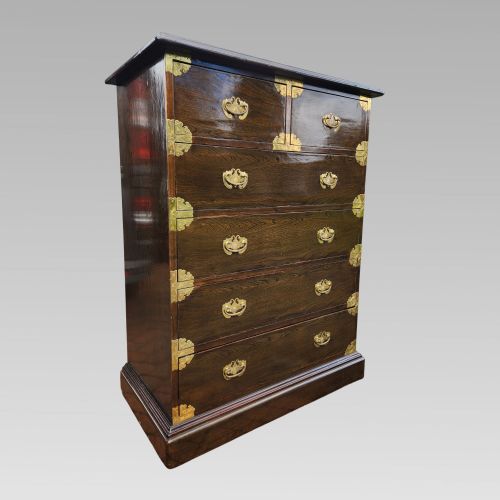


Hardware Storage Drawers
These hardware storage drawers offer practical utility and historical character, bringing robust organisation and craftsmanship into any modern interior.
Hardware Storage Drawers
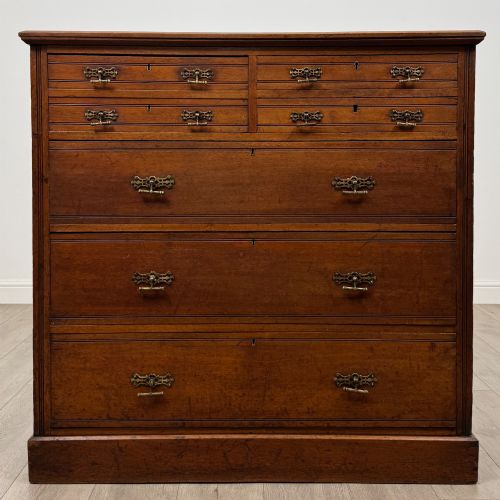
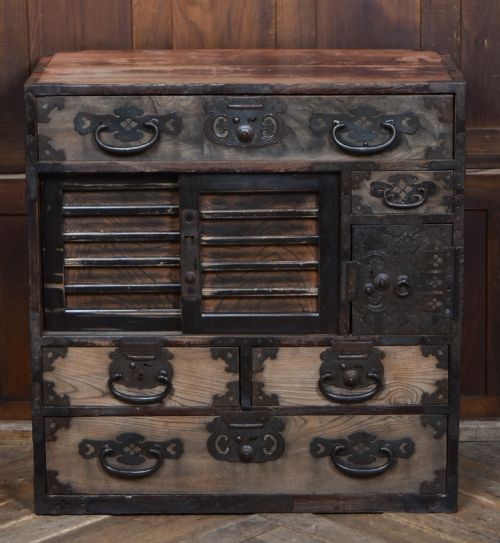
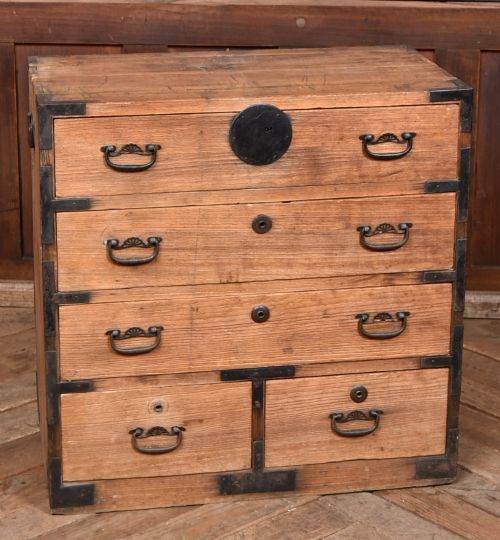
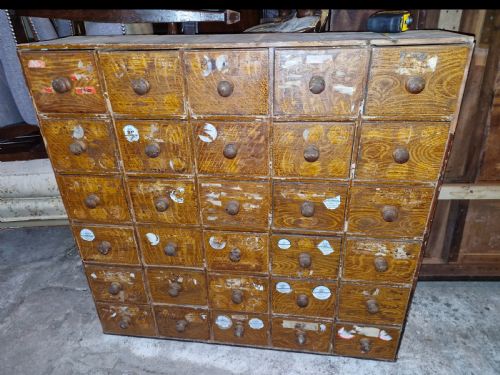
Hardware storage drawers span diverse international traditions, from Japanese tansu chests and Korean bandaji cabinets to European commercial and domestic chests of drawers. When searching for hardware storage drawers, a buyer encounters utilitarian banks of drawers alongside refined period furniture designed for specific organisational tasks.
The pieces appearing on this page range from late eighteenth-century walnut commodes and Victorian ironmongers' banks to nineteenth-century cedar and red lacquered tansu chests. Traditional Japanese and Korean storage pieces feature prominently among the selections, alongside European industrial and traditional designs.
How they were made
Construction relies upon traditional timber framing utilising woods such as pine, walnut, cedar, elm, chestnut and oak. Cabinetmakers employed durable joinery methods suited to heavy daily use, incorporating substantial timber panels and structural framing.
Metal components play an essential role in construction, with iron and brass utilised for handles, strapwork, keyplates and reinforcing corners. Lacquer finishes appear on specific regional examples, providing both a protective surface and a distinct visual texture.
Listings span the eighteenth, nineteenth, and twentieth centuries, incorporating oak, walnut, pine, cedar, elm, and chestnut alongside brass and iron hardware.
What varies in quality
Quality rests upon the integrity of the timber selection, the complexity of the internal arrangement, and the preservation of original metal hardware. Superior pieces display thoughtful grain matching and robust construction that withstands generations of opening and closing.
The refinement of regional joinery and the survival of original surface finishes, whether polished wood or applied lacquer, dictate the distinction between standard utilitarian items and masterworks of cabinetmaking.
Jas Shoolbred
The Hardware Storage Drawers Glossary
- Tansu
- A traditional Japanese mobile storage chest built for domestic or mercantile utility. These pieces often feature multiple internal compartments secured by sliding panels or external hardware.
- Bandaji
- A traditional Korean storage chest typically constructed with elm veneer and prominent iron strapwork. The name translates roughly to band chest, referring to the heavy metal bands reinforcing the structure.
- Commode
- A low chest of drawers originating in eighteenth-century France and adopted across European furniture traditions. It combines decorative presence with practical storage capacity.
- Ironmongers
- A commercial trade term designating hardware merchants. Chests and banks originating from these establishments were built specifically to sort and display small metal goods and fasteners.
Hardware Storage Drawers: Frequently Asked Questions
What are hardware storage drawers?
Hardware storage drawers encompass robust multi-drawer cabinets, banks, and chests built for organising small items, tools, or household goods. They range from utilitarian merchant units to domestic furniture.
These pieces combine functional compartment layouts with traditional regional cabinetmaking, using durable timbers and metal fittings to endure frequent daily use.
How were tansu chests used?
Tansu chests served as versatile storage solutions in traditional Japanese households and merchant shops, holding clothing, documents, and valuables. Their modular construction allowed owners to transport them easily during fires or household moves.
Many incorporated hidden compartments or specialised locking mechanisms to secure important possessions, reflecting the specific domestic needs of the Edo and Meiji periods.
How do I identify period pieces?
Period identification relies upon examining construction methods, timber species, tool marks, and the style of the hardware fittings. Eighteenth-century and nineteenth-century pieces exhibit hand-cut joinery and period-specific locking mechanisms.
Comparing the patination of the wood around handles and drawer edges helps confirm the age of the piece and the authenticity of its components.
How do I live with antique storage drawers?
Integrating these drawers into a modern home offers practical surface space and concealed organisation for everyday items. Their varied scales suit living rooms, hallways, and studies alike.
Positioning them away from direct heat sources and sudden humidity changes preserves the historical timber and maintains the smooth movement of the drawers.