
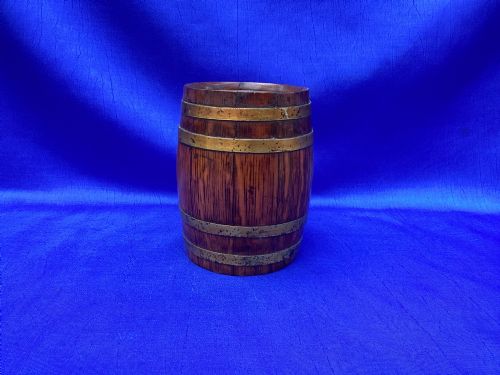
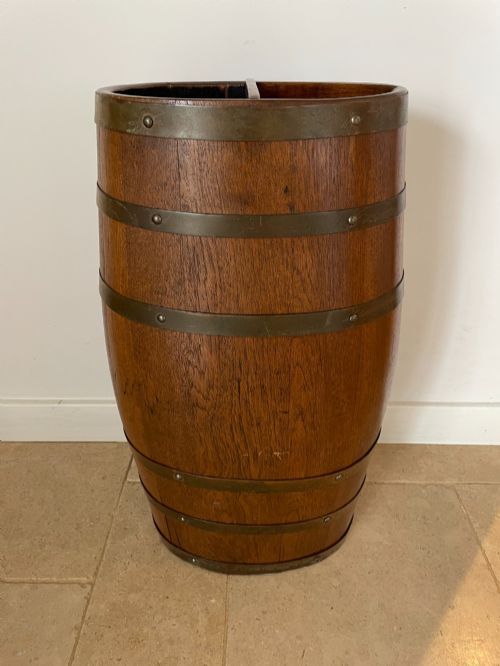
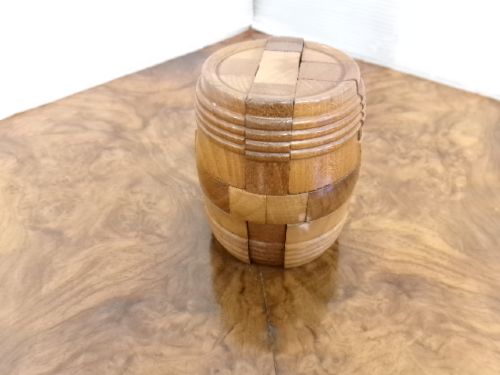


Brown Wooden Barrel
A brown wooden barrel brings sturdy coopered craft into a room, offering practical storage or seating shaped by traditional stave construction.
Brown Wooden Barrel
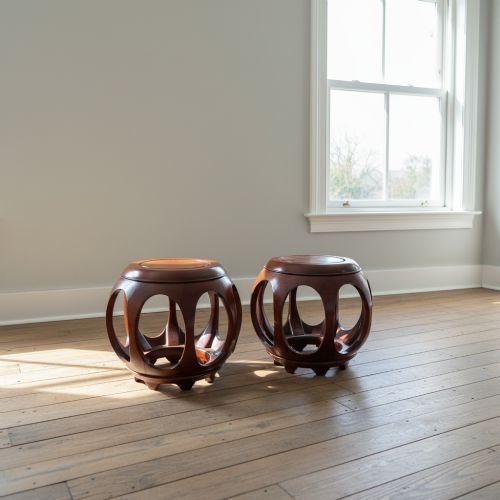
A brown wooden barrel search reveals a diverse collection of coopered vessels, stick stands, planters, stools and settles spanning the Georgian, Victorian and Edwardian eras. Buyers encounter domestic utility items ranging from butter barrels and money boxes to large wine coolers and garden planters.
The objects originate from English, Dutch and Chinese workshops, utilising traditional stave construction methods adapted for domestic use or commercial storage. Oak and hardwood variants predominate, frequently augmented by brass bands or iron hoops that secure the wooden staves.
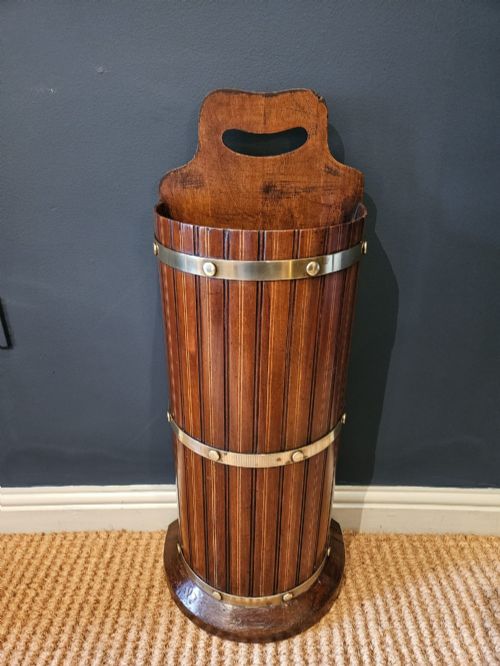
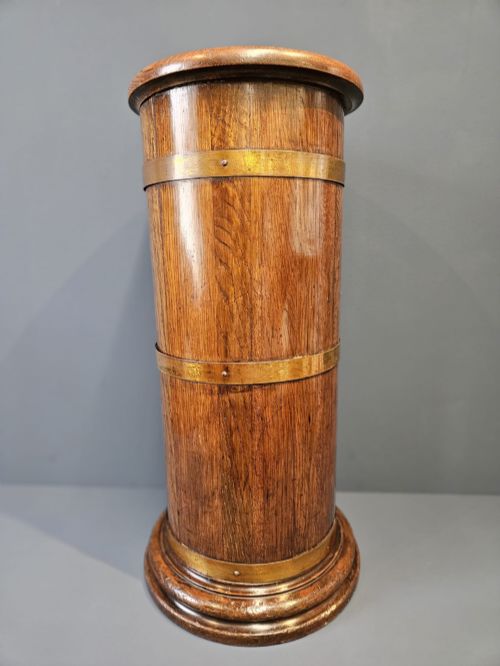
Sticks stands and jardinieres emerge as the most frequent domestic adaptation of the barrel form on this page, often dating from the late nineteenth or early twentieth century. These pieces retain the curved silhouette of utilitarian containers while functioning as decorative furniture in hallways and living spaces.
Materials and Construction Techniques
Coopers shaped individual strips of oak, mahogany, pine or teak into gently curved staves that fit tightly together to form a watertight or structurally sound cylinder. Skilled artisans then secured these wooden staves using tightly fitted metal bands made from brass or iron.
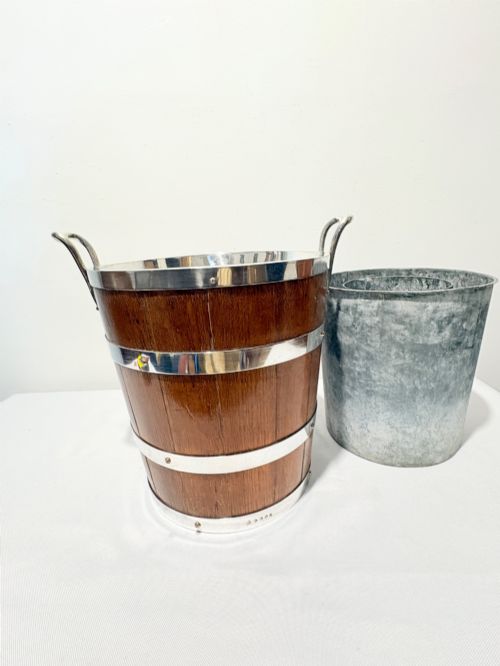
Metal hardware such as brass hoops, handles and silver plated mounts reinforced the wooden bodies while adding decorative contrast to the dark timber. Selected pieces incorporate carved details, burr wood veneers or painted surfaces alongside the exposed grain of the natural wood.
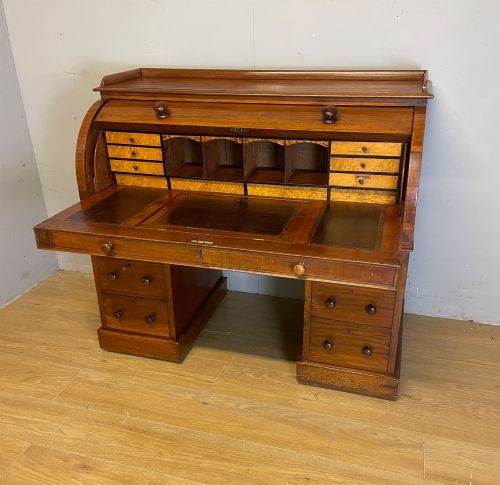
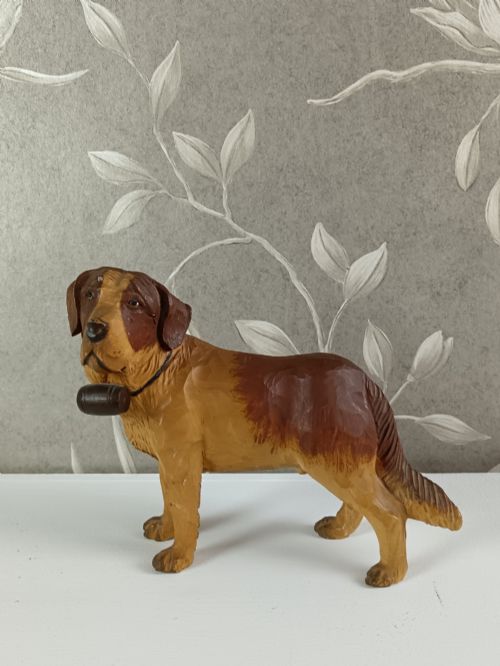
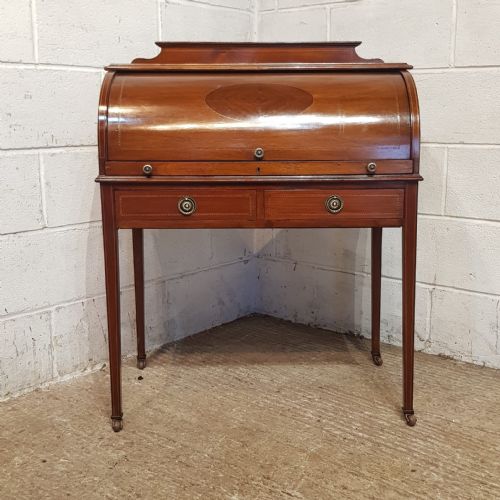
Object forms span stick stands, wine coolers, butter churns, settles, desks and sculptural animal carvings.
Assessing Craftsmanship and Material Quality
Quality rests upon the precision of the cooperage, where tightly joined staves maintain structural integrity and a smooth exterior curve without excessive filler or modern adhesives. The selection of timber, such as figured oak or burr wood, dictates the visual richness of the finished surface.
Original metal mounts, whether brass bands on a stick stand or silver plated fittings on a wine cooler, elevate a piece above utilitarian examples. Well-preserved internal structures and intact hardware demonstrate superior original manufacture and careful subsequent preservation.
Ross of London·John Grinsell & Sons·Thonet
The Brown Wooden Barrel Glossary
- Coopered
- Constructed from curved wooden staves bound together by hoops of metal or wood. This traditional technique formed the basis for barrels, buckets and specialised furniture.
- Stave
- One of the narrow shaped strips of wood that form the sides of a barrel or tub. The precise beveling of each stave ensures a tight, seamless cylinder.
- Jardiniere
- An ornamental pot or stand for holding plants or flowers. These decorative vessels often utilise repurposed barrel forms or coopered construction.
- Treen
- Small handmade wooden domestic objects such as nutmeg graters and small vessels. These items display the turned and carved capabilities of historical woodworkers.
Brown Wooden Barrel: Frequently Asked Questions
What were wooden barrels used for originally?
Historical wooden barrels served primarily to store and transport dry goods, liquids such as wine and spirits, and perishable foods like butter. Coopers built these vessels to withstand the rigours of maritime trade and domestic pantry storage.
Over time, many of these containers found new life within the home as umbrella stands, planters or money boxes, adapting robust industrial designs for decorative domestic use.
How do I identify a Victorian barrel stand?
Victorian barrel stands typically feature exposed oak staves bound with brass hoops and heavy iron or brass liners designed to catch water from umbrellas and walking sticks. These pieces often date from the latter half of the nineteenth century.
Look for traditional coopered construction combined with Victorian aesthetic preferences, which favoured dark polished timber and sturdy metal reinforcement.
Are barrel furniture pieces comfortable?
Pieces like barrel stools and tub armchairs provide structured seating with curved backs that wrap partially around the sitter. Their ergonomic shape derives from the natural radius of coopered vessels.
While firm and upright compared to modern upholstery, these wooden seats offer solid lumbar support and compact proportions suited to smaller rooms.
How should I care for antique coopered wood?
Maintain antique coopered wood by keeping pieces away from direct heat sources and extreme humidity fluctuations, which can cause timber staves to shrink and metal hoops to loosen. Dust regularly with a dry cloth and apply occasional specialist wax to nourish the grain.
Avoid excessive moisture on unlined wooden surfaces, and polish brass or iron hardware gently to preserve its patination without stripping historical character.