
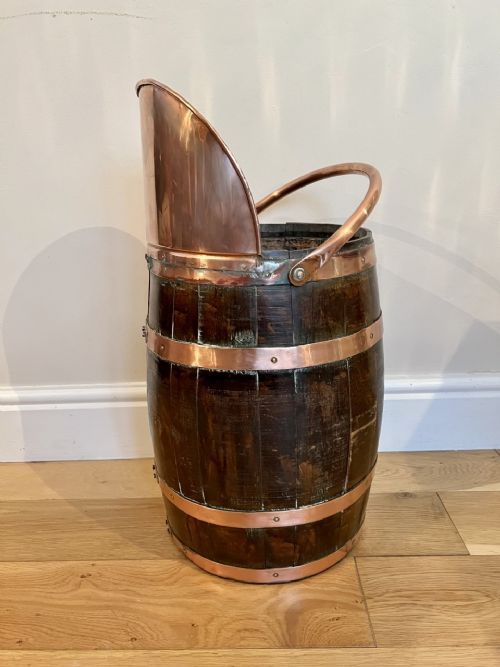

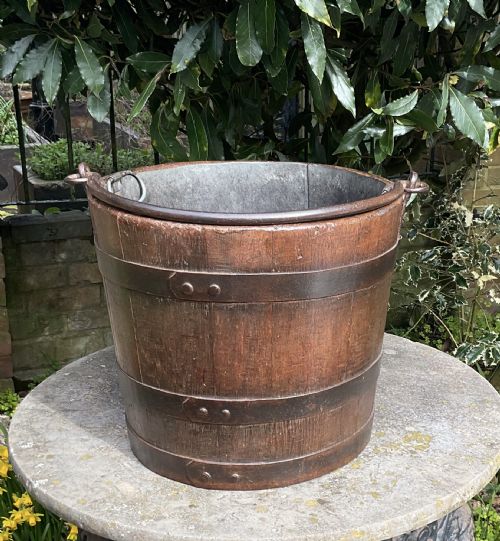


Vintage Oak Log Bucket
These vintage oak log bucket designs bring sturdy timber and metal hardware right to the hearth to keep fuel dry and orderly.
Vintage Oak Log Bucket
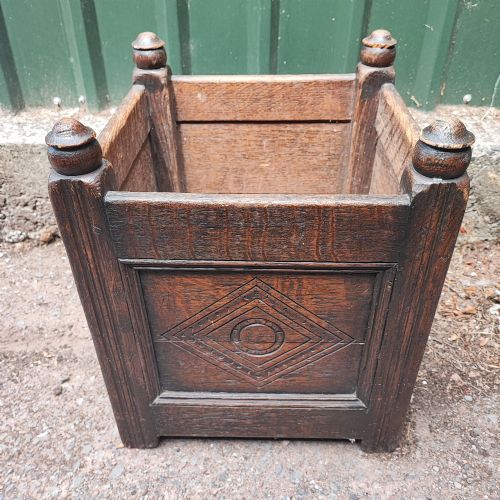
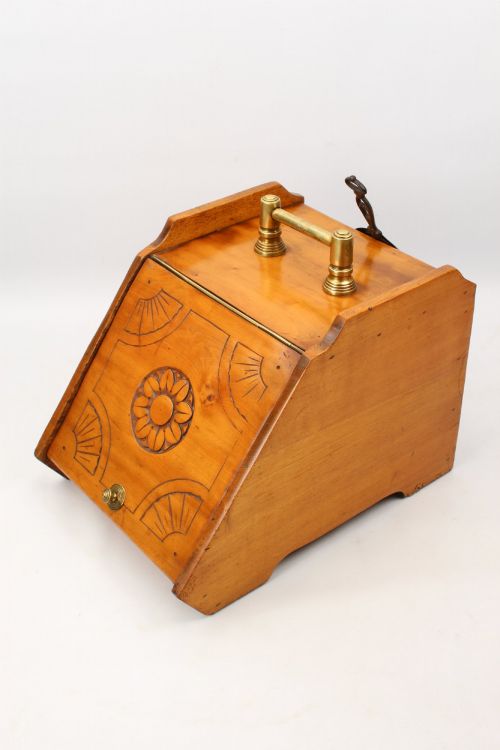
A vintage oak log bucket serves as a robust container for hearthside fuel, keeping logs and peat neatly contained beside the fireplace. When searching for a vintage oak log bucket, buyers encounter various robust forms ranging from Georgian and Victorian periods down to the nineteen twenties.
The selection includes coopered barrels, coal scuttles, peat buckets, and well buckets adapted for fireside use. These vessels function as practical storage while adding traditional character to domestic interiors.
How they were made
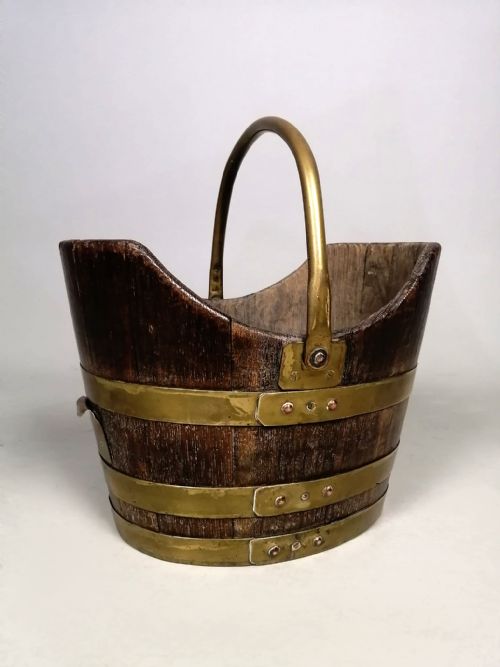
Constructed primarily from solid timber, these pieces rely on traditional woodworking techniques such as coopering, where narrow staves of oak are fitted together to form a rounded vessel. Metal hardware provides structural integrity and contrast against the wood.
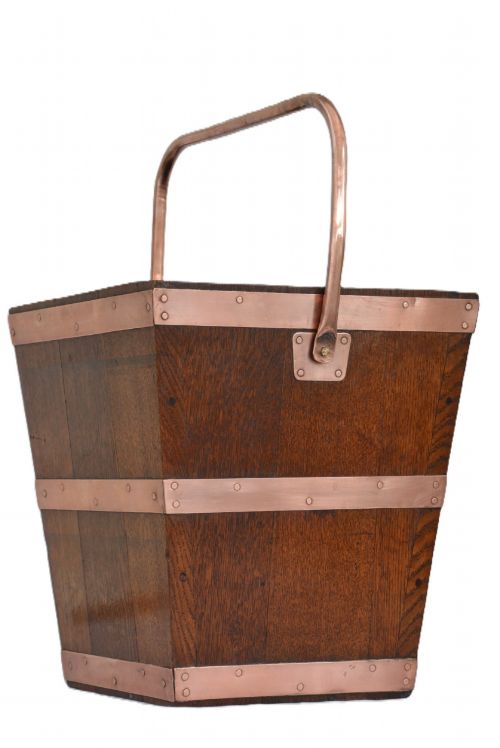
Bands and bindings made from brass, iron, copper, or wrought iron encircle the wooden staves to hold them tight. Handles in iron or brass facilitate lifting, while certain examples include internal zinc or metal liners to protect the timber from moisture.
The listings span from the eighteenth century through the Victorian era up to nineteen twenty, utilising oak combined with brass, copper, and iron.
What varies in quality
Quality depends on the precision of the coopering work and the weight of the metal bands securing the staves. Finer examples display tight joints and substantial brass or copper mountings that demonstrate superior craftsmanship.
The selection of the oak timber itself dictates the character of the piece, with dense grain and rich patination marking out better examples. Original metal liners and sturdy swing handles also separate utilitarian vessels from finer decorative items.
The Vintage Oak Log Bucket Glossary
- Coopered
- Method of construction using curved wooden staves bound together with metal hoops to form a watertight or sturdy cylindrical vessel. This technique creates the curved profile characteristic of traditional barrels and buckets.
- Stave
- One of the narrow vertical strips of oak that form the sides of a coopered bucket or barrel. Staves are shaped with bevelled edges so they fit tightly together.
- Coal scuttle
- A metal-bound container designed specifically for holding and transporting coal to the fire. They often feature a shovel and hinged handle.
- Peat bucket
- A traditional vessel used in regions like Scotland for holding dried peat turf for fuel. These share a similar coopered construction to log buckets.
- Patina
- The surface sheen and colour developed on timber and metal over long periods of handling and age. Good patination reflects the genuine history of an antique piece.
Vintage Oak Log Bucket: Frequently Asked Questions
What is a coopered bucket?
A coopered bucket is built from curved wooden staves joined edge to edge and held fast by metal hoops rather than carved from a single block of wood.
This traditional method provides exceptional strength and flexibility, making the vessel ideal for holding heavy loads of logs or coal.
How do I clean a vintage oak log bucket?
Dust the oak gently with a dry cloth and occasionally feed the dry timber with a suitable beeswax to maintain the finish.
Avoid soaking the wood in water, and ensure any internal metal liner is dried thoroughly if used for damp fuel.
Were these buckets always used for logs?
Many of these vessels started life as coal bins, peat buckets, or even well buckets before finding a second life by the fireplace.
Their robust construction and moisture-resistant linings made them adaptable for carrying water, garden planting, and solid fuel storage.
How do I date an oak log bucket?
Dating relies on observing the style of construction, the type of metal used for the bands, and any distinctive regional design traits.
Georgian and Victorian examples often display hand-beaten brass bindings or distinct proportions compared to later twentieth-century pieces.