

Vintage Hallway Cane Rack
A vintage hallway cane rack keeps walking sticks and umbrellas orderly in an entrance, drawing on Victorian and Edwardian forms made for daily utility.
Vintage Hallway Cane Rack
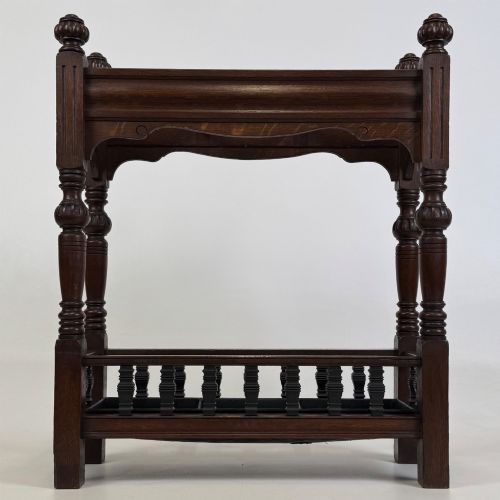
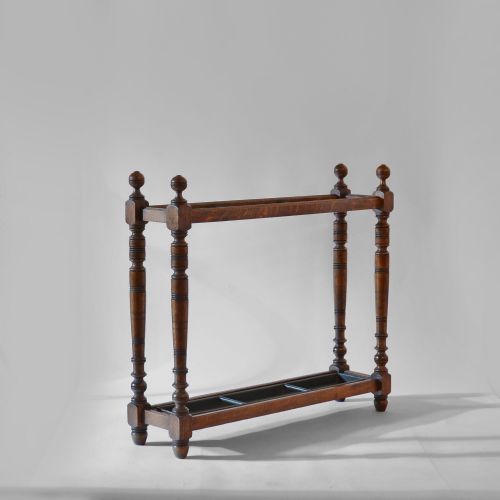
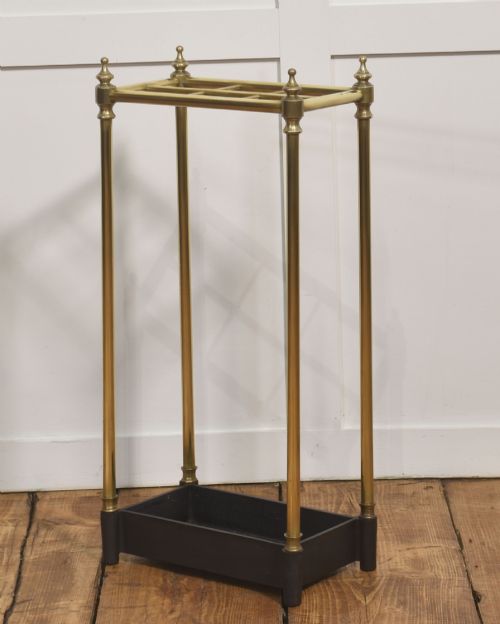
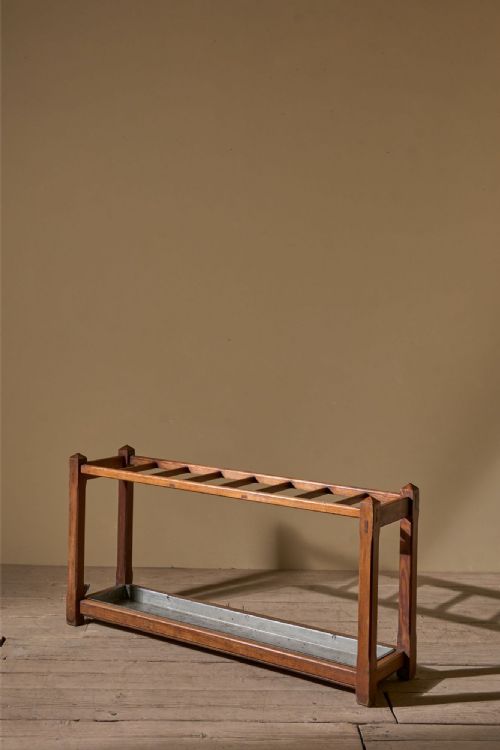
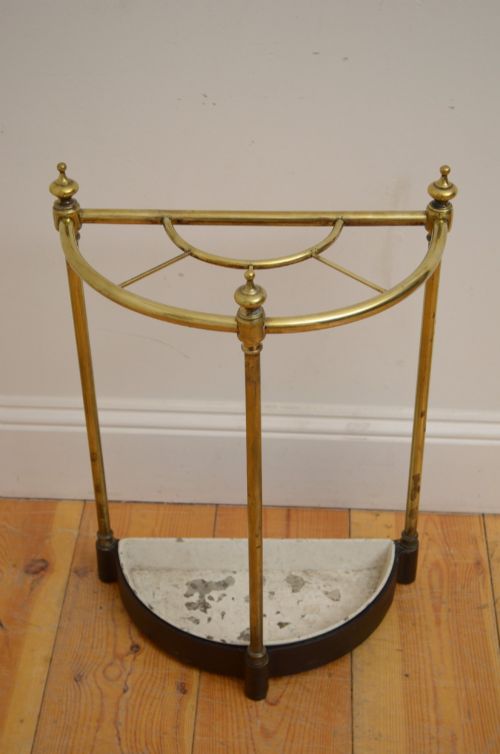
A vintage hallway cane rack serves as a practical entryway fixture designed to hold walking sticks, canes and umbrellas. Buyers seeking these items will find various configurations, from corner units to flat-backed stands destined for narrow hallways. The selection heavily favours umbrella and stick stands originating from the Victorian and Edwardian periods, alongside later twentieth-century examples.
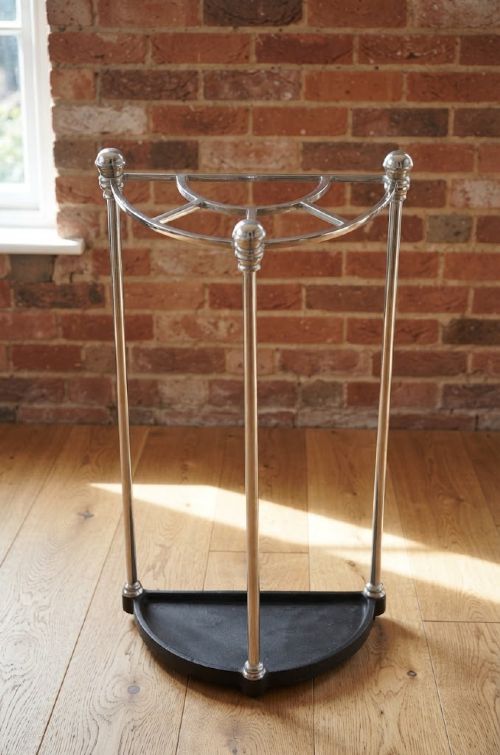
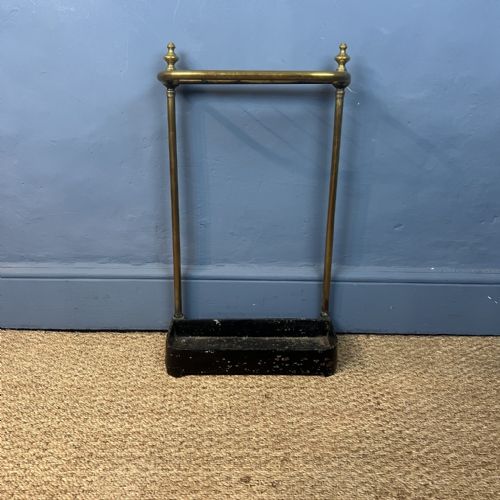
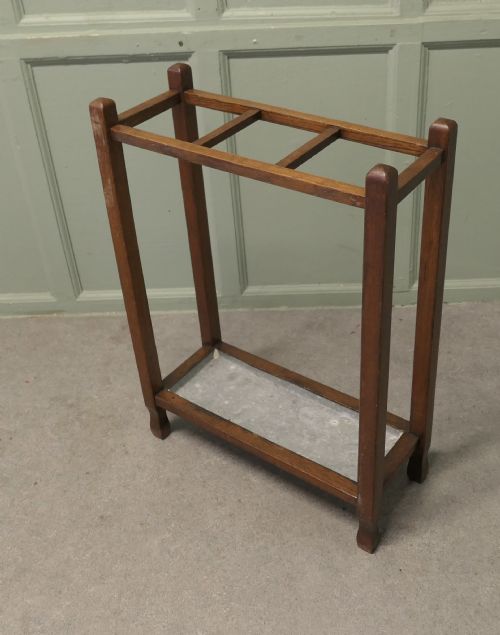
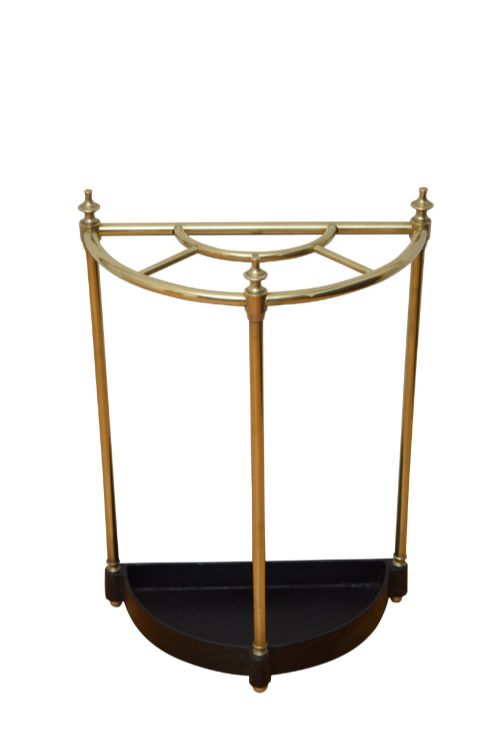
Most entries on this page take the form of umbrella stands and stick stands rather than wall-mounted racks, reflecting historical hallway furnishings. These pieces accommodate long implements in upright compartments, often grouping them by divisions or half-moon shapes known as demi-lune designs. Common materials include timber frames paired with metal components to handle damp items arriving from outside.
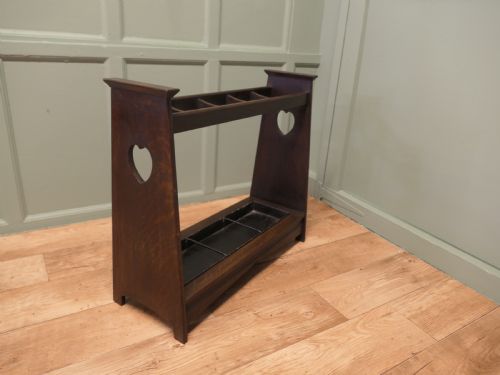
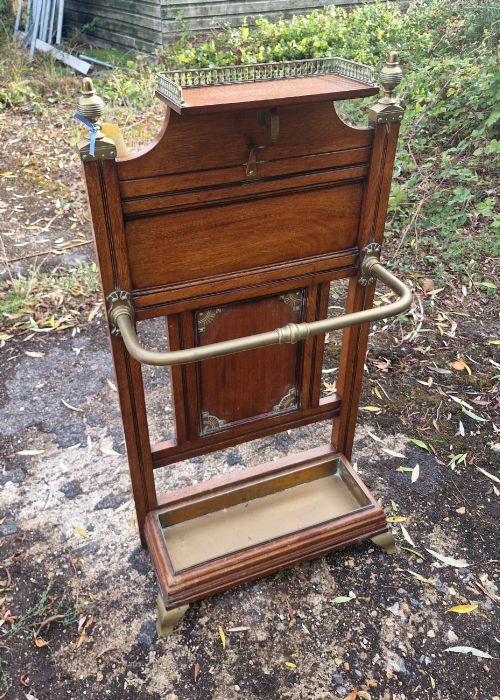
The objects span multiple design movements, including Arts and Crafts, Art Nouveau and the Aesthetic Movement. Oak and mahogany appear alongside cast iron and brass, showing how domestic spaces mixed utilitarian metals with polished hardwoods. Pieces range from straightforward domestic items to decorative hall furnishings bearing maker attributions.
How they were made
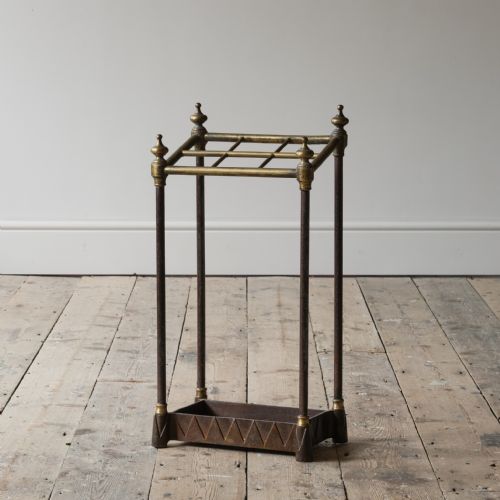
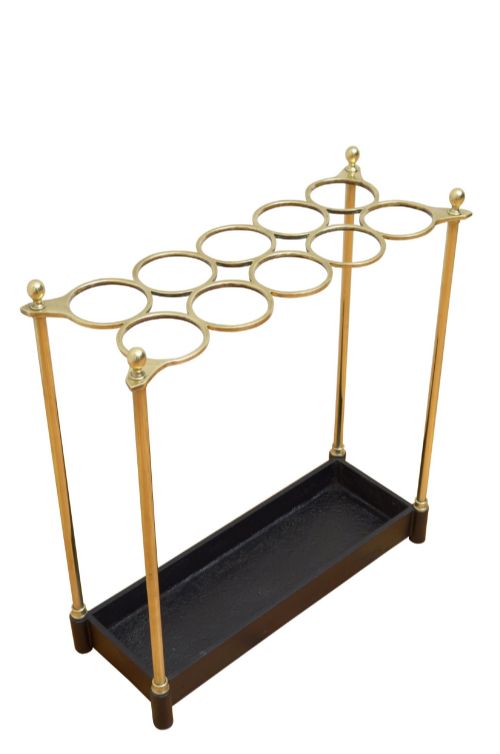
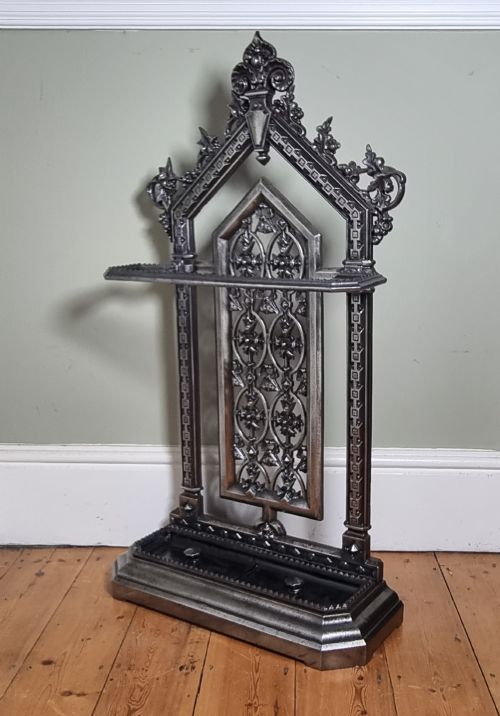
Makers constructed these stands using robust materials capable of withstanding heavy daily use and moisture from wet umbrellas. Cast iron and brass provide structural rigidity, frequently forming the framework or decorative grilles of nineteenth-century models. Cast iron elements often incorporate moulded details like faux bois bamboo or intricate floral patterns.
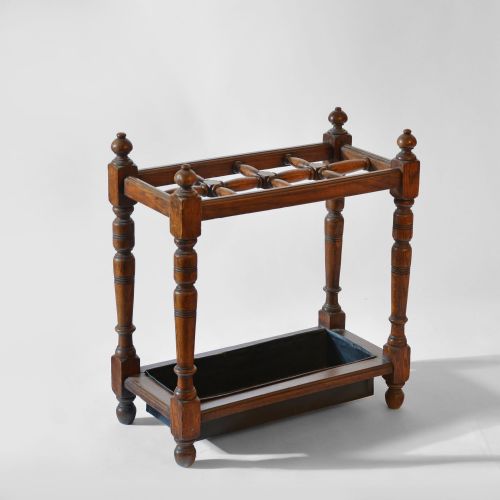
Woodworking techniques define the oak, mahogany and bentwood examples, employing joinery suited to upright furniture. Bentwood stands utilise steam-bending to shape wood into curved profiles, while oak models often display the plain or golden grain typical of the Arts and Crafts period. Metal components such as drip trays and ball finials attach securely to contain water and add weight to the base.
What varies in quality
The standard of a piece rests upon the weight of its construction and the integrity of its materials. Heavy cast iron frames and solid oak structures indicate superior durability compared to lighter composite builds. The presence of original fitted metal drip trays, rather than modern replacements, distinguishes better-preserved examples.
Design ambition separates basic utility items from exceptional workshop productions. Distinctive aesthetic choices, such as nickel-plated finishes, decorative ball finials or specific stylistic motifs from movements like Art Nouveau, elevate the piece. The crispness of cast iron moulding and the quality of timber grain further differentiate the range.
Coalbrookdale·Thonet·Heals of London·Liberty Design
The Vintage Hallway Cane Rack Glossary
- Demi-lune
- A half-moon shape used for stands designed to sit flat against a hallway wall. This configuration saves floor space in narrow entrances.
- Drip tray
- A metal tray positioned at the base of the stand to catch water from wet umbrellas and protect flooring. These are often removable for emptying.
- Faux bois
- An artistic imitation of wood texture applied to other materials, commonly seen on cast iron stands shaped to resemble bamboo or branches.
- Bentwood
- Wood that has been heated with steam to make it pliable, allowing manufacturers to bend it into curved structural shapes.
- Finial
- A decorative ornament fixed to the top of a post or frame, frequently taking the form of a polished metal ball on brass stands.
Vintage Hallway Cane Rack: Frequently Asked Questions
How were wet umbrellas managed?
Stands incorporated metal drip trays at the bottom to catch moisture running off wet umbrellas. These removable trays protected hallway floors from water damage.
Materials like cast iron and brass resisted rust and moisture from daily use.
Are these stands suitable for modern hallways?
These pieces fit narrow entranceways by providing compact vertical storage for walking sticks and umbrellas. Their period designs add traditional character to contemporary homes.
Many examples offer divided sections to keep individual items upright and separate.
How do I identify an Edwardian stand?
Edwardian stands often display lighter construction, simpler lines, and materials like polished brass or oak. They frequently date from around nineteen hundred to nineteen ten.
Design influences from this era favored restrained ornamentation compared to earlier Victorian models.