



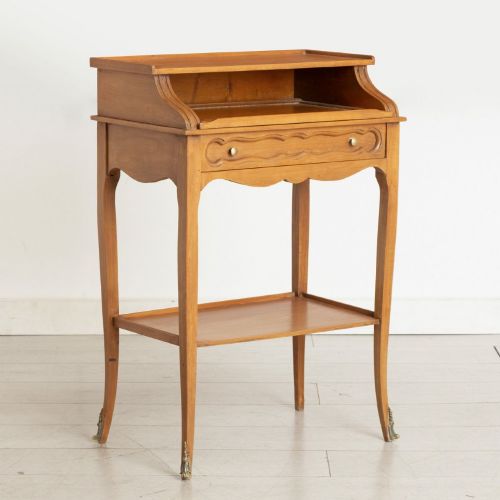
Brown Wood Writing Cabinet
Brown wood writing cabinet pieces combine practical workspace with concealed storage, drawing collectors who appreciate period craftsmanship and timber variety.
Brown Wood Writing Cabinet
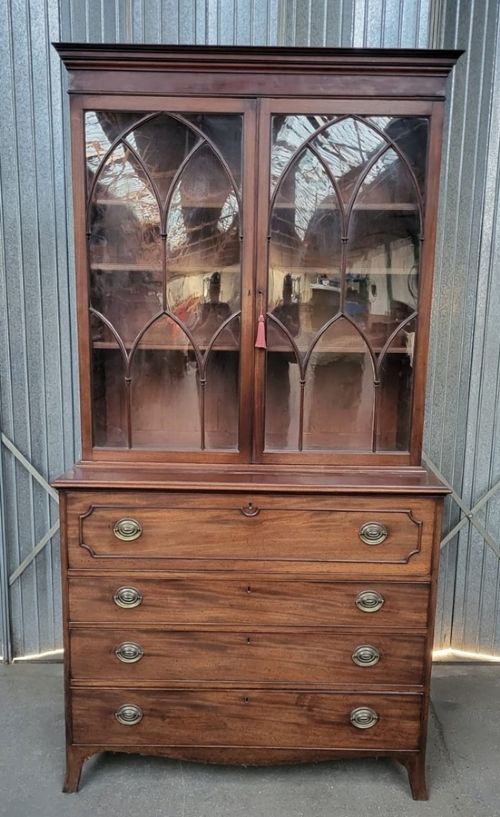
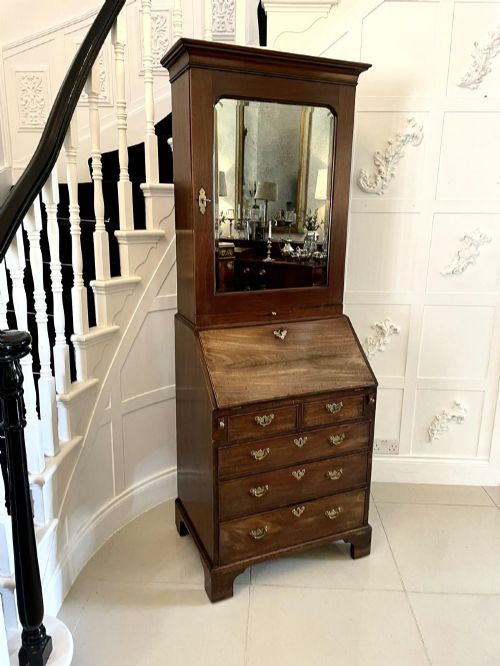
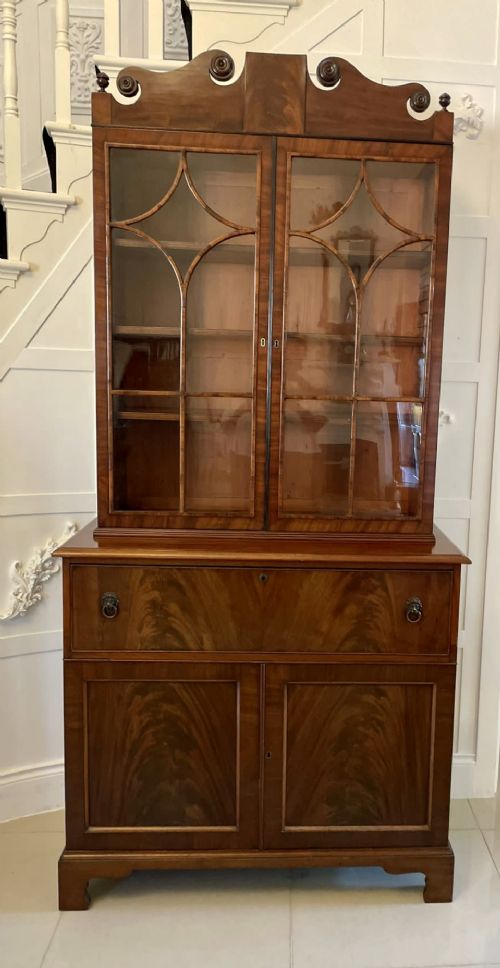
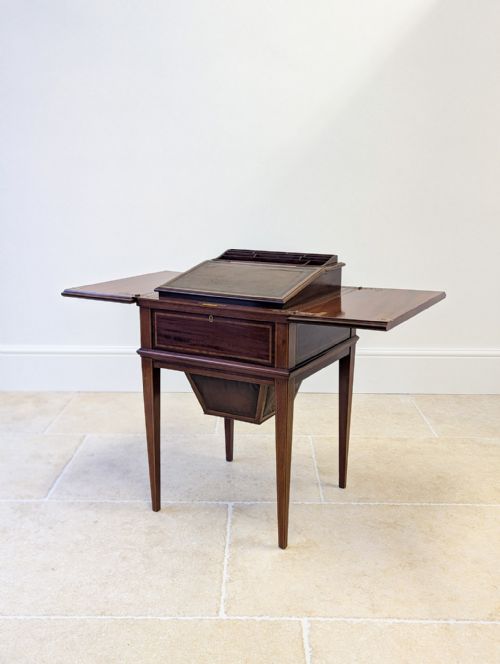
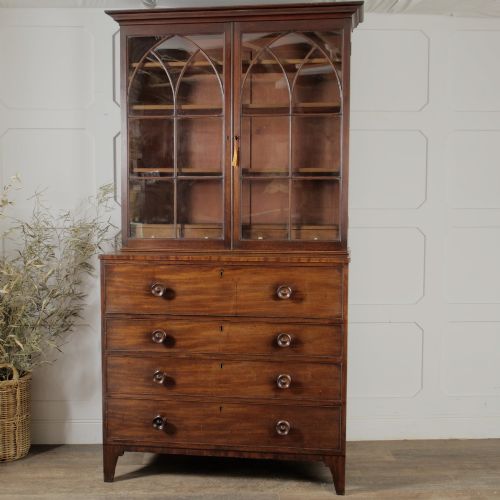
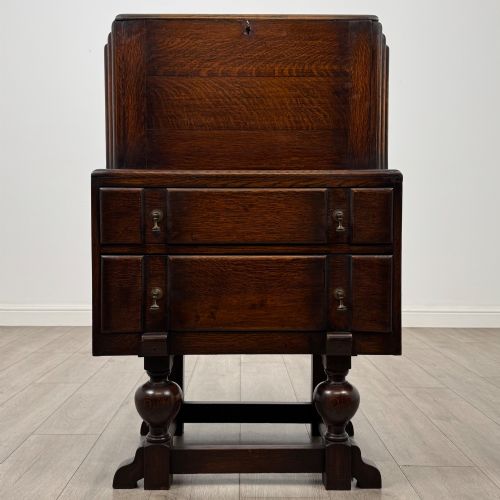
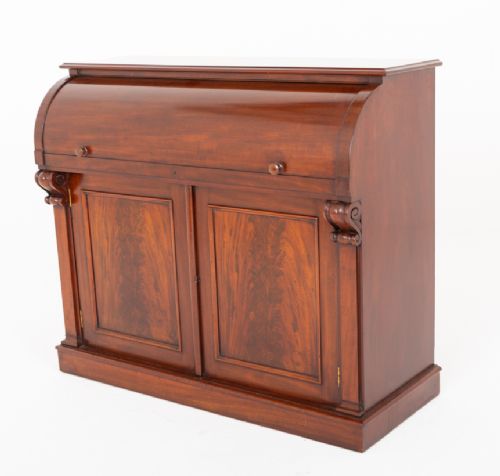
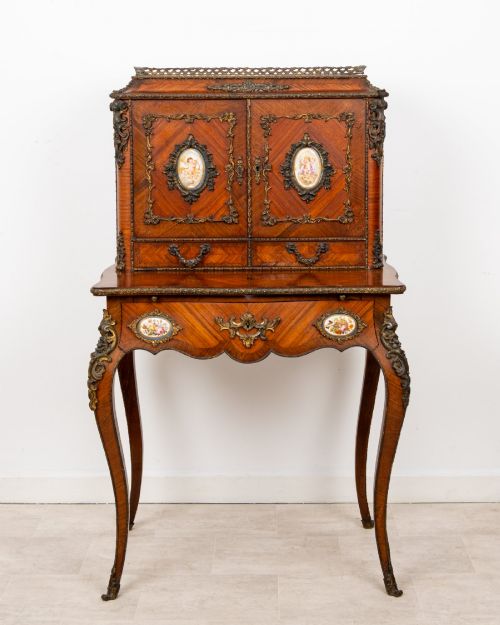
A brown wood writing cabinet encompasses various forms designed for correspondence and storage, ranging from compact fall-front desks to large bureau bookcases. These pieces frequently appear in mahogany, walnut, and oak, reflecting periods from the eighteenth century through the Edwardian era.
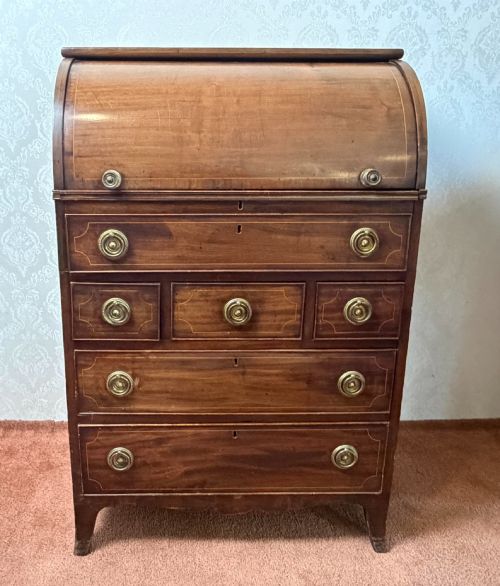
Collectors encounter numerous configurations on this page, including kneehole desks, cylinder desks, and secretaire chests. Pieces from the Georgian and Regency periods predominate, alongside later Victorian and Edwardian examples.
How they were made
Cabinet makers utilised dense hardwoods such as mahogany and walnut, often applying veneers of burr walnut or kingwood over secondary timbers. Construction relied on traditional joinery, dovetailing, and internal framing to support drop-front writing surfaces and heavy bookcase sections.
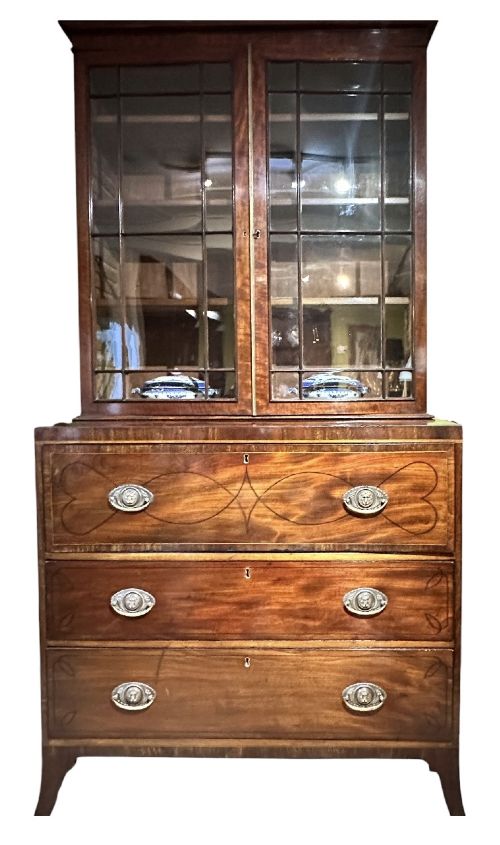
Brass hardware, leather inserts, and glass panels frequently complete the construction of these cabinets. Surviving examples demonstrate careful timber selection, particularly in figured mahogany and inlaid panels.
The listings on this page span the 18th, 19th, and 20th centuries, featuring materials from standard mahogany and oak to exotic kingwood.
What varies in quality
The degree of refinement in timber selection separates standard items from finer examples, especially where highly figured veneers or matching grain patterns appear across drawer fronts. Finer construction also shows in the precision of internal pigeonholes, secret compartments, and original brass fittings.
Proportion and scale influence desirability, with smaller proportions and miniature samples commanding distinct interest. The integrity of the secondary woods and the retention of original glass or hardware further distinguish individual pieces.
The Brown Wood Writing Cabinet Glossary
- Secretaire
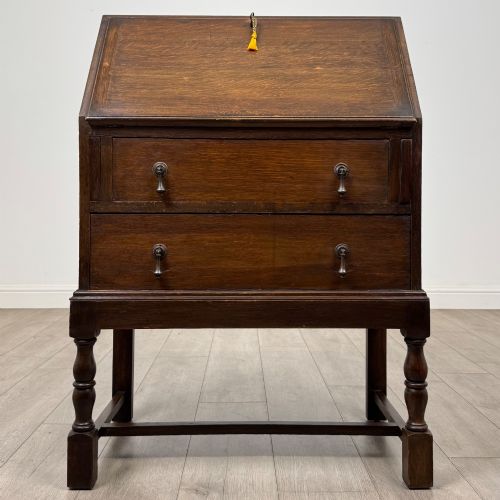
- A desk or chest featuring a pull-down drawer front that conceals a writing surface and small compartments. This form allows a piece of furniture to serve dual functions as both a chest of drawers and a desk.
- Bureau bookcase
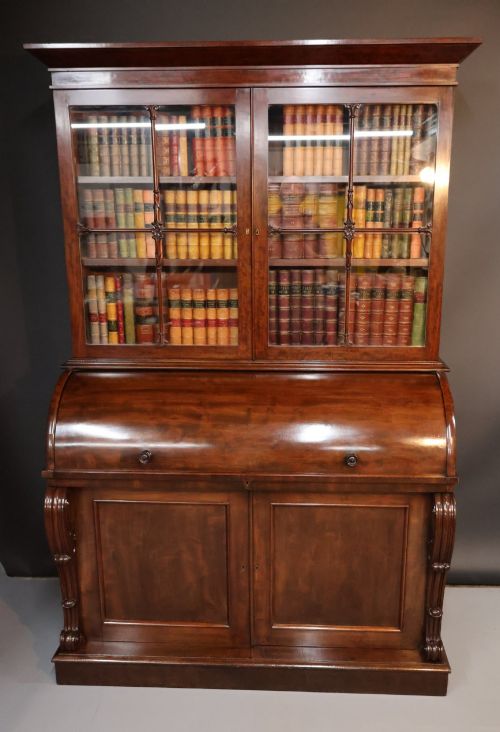
- A writing cabinet topped by a glazed or panelled shelving unit for books. These tall pieces combine upper display storage with a lower sloping fall-front writing desk.
- Fall front
- A hinged writing flap that drops down into a horizontal position for use. When closed, it conceals the inner drawers and pigeonholes of a bureau.
- Kneehole desk
- A compact desk featuring a central recess for the user's legs, flanked by pedestals of small drawers. This form became popular during the eighteenth century.
- Kingwood
- A dense, exotic timber with distinct dark striping used for decorative veneers on fine nineteenth-century cabinet work. It frequently appears alongside ormolu mounts and marquetry.
Brown Wood Writing Cabinet: Frequently Asked Questions
How do I identify a Georgian bureau?
Georgian bureaux typically feature a sloping fall-front that opens to reveal fitted interior compartments above several graduated external drawers. The timber is frequently solid mahogany or walnut with hand-cut dovetails on the drawer construction.
Earlier examples from the eighteenth century often display bracket feet and restrained brass handles, while later pieces incorporate finer stringing and inlay.
What timber was used for these cabinets?
Makers relied heavily on mahogany and walnut throughout the eighteenth and nineteenth centuries, often selecting figured varieties for primary display surfaces. Oak and yew also appear frequently in regional English furniture and later Edwardian pieces.
Decorative veneers such as kingwood, burr walnut, and amboyna were utilised on revival and high-status pieces to create contrasting grain patterns.
How were bureau bookcases used?
Bureau bookcases combined upper storage for books with a lower drop-front desk for writing and document storage. The upper glazed doors kept valuable volumes clean while displaying them in a library or parlour.
The lower section provided a private workspace that could be locked shut when correspondence was finished.