

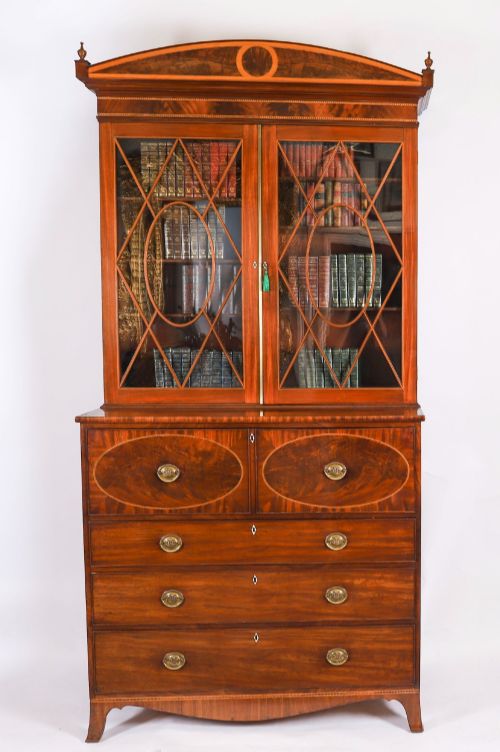
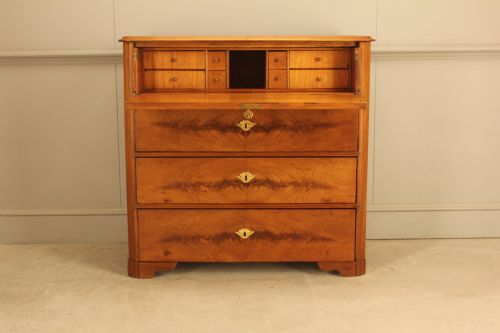
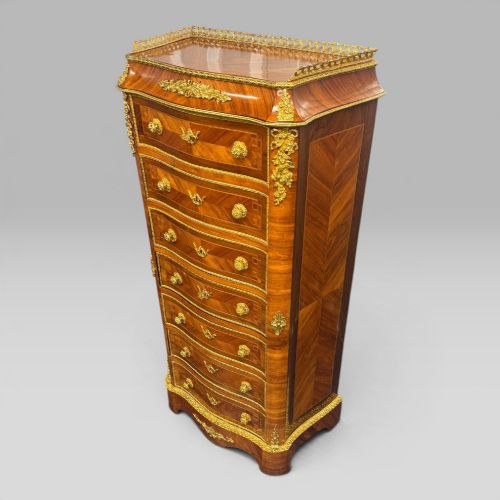
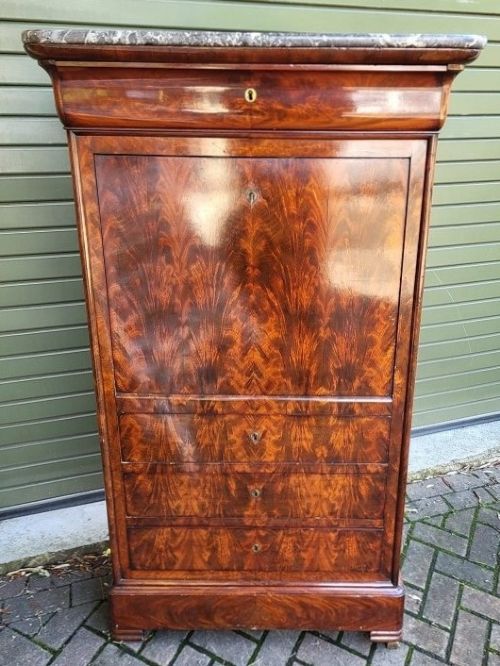


Antique Tallboy Bureau Desk
An antique tallboy bureau desk combines tall vertical storage with a fitted writing surface, offering practical room organisation within a commanding timber form.
Antique Tallboy Bureau Desk
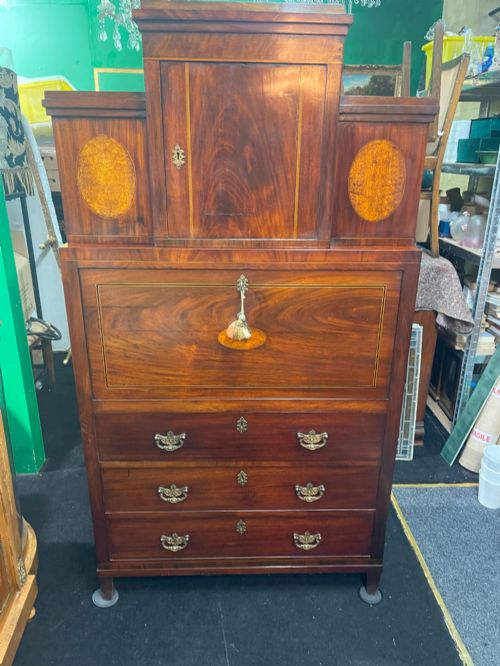
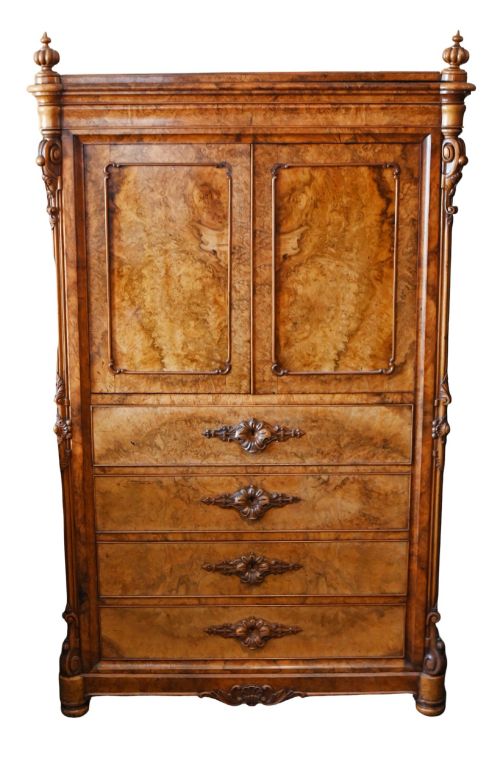
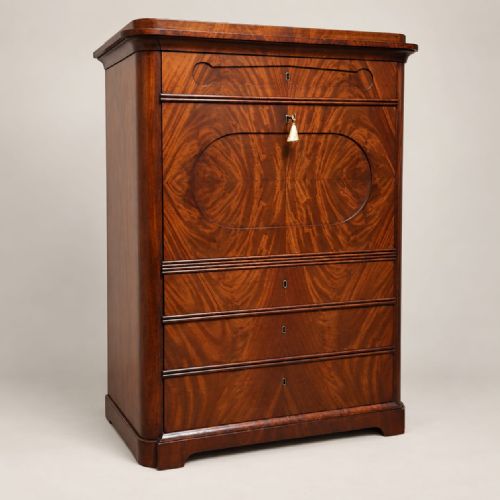
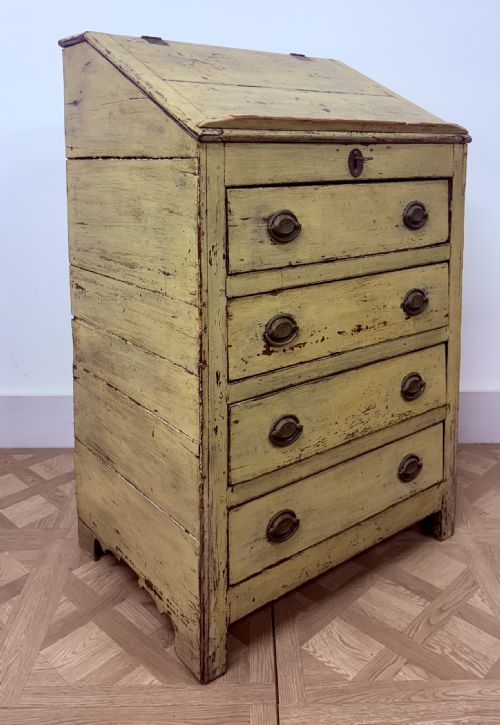
An antique tallboy bureau desk brings together multiple tiers of drawer storage and a dedicated writing compartment, uniting the functions of a tall chest and a fall-front desk. The selections span from the early eighteenth century through the Georgian, Regency, and Victorian eras, crossing English, French, Swedish, and continental workshops.
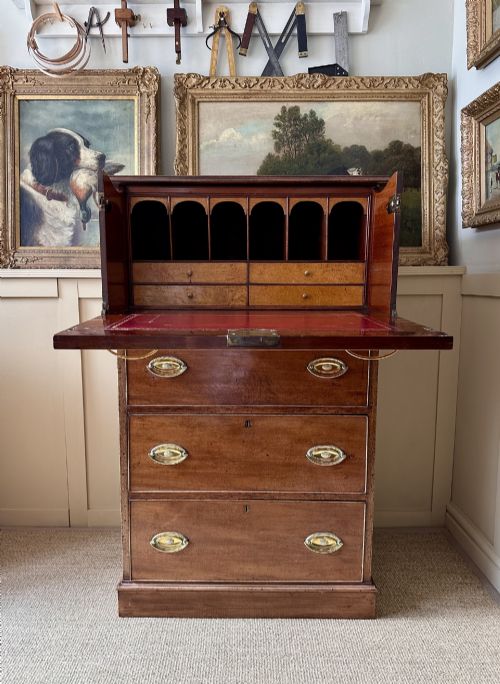
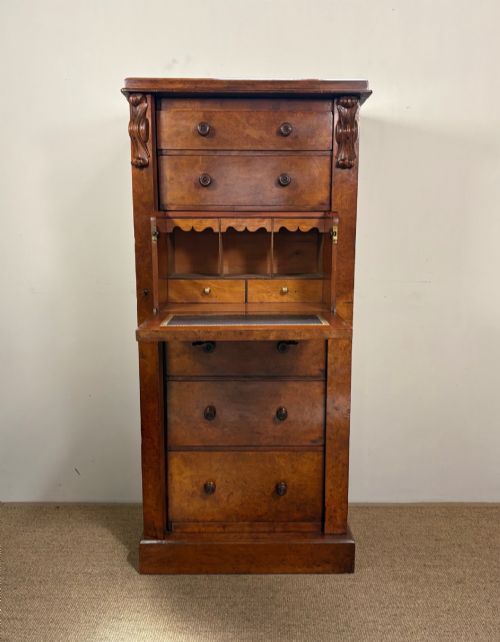
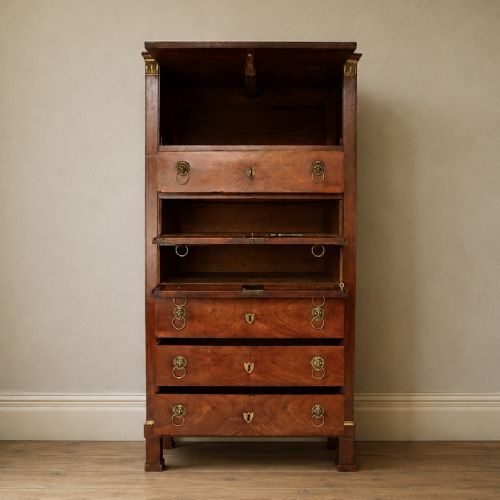
Buyers encounter forms ranging from towering chest-on-chest secretaires to compact Wellington chests and fall-front secretaire cabinets. Mahogany, walnut, and oak dominate the surviving examples, often paired with fitted pigeonholes and small drawers concealed behind a drop-down writing flap.
The most common formats on this page include Georgian mahogany secretaire chest on chest pieces and nineteenth-century bureau bookcases. These dual-purpose items served domestic and administrative needs in period houses, providing upper bookshelf space or towering drawer capacity alongside a stable writing surface.
Materials and Construction
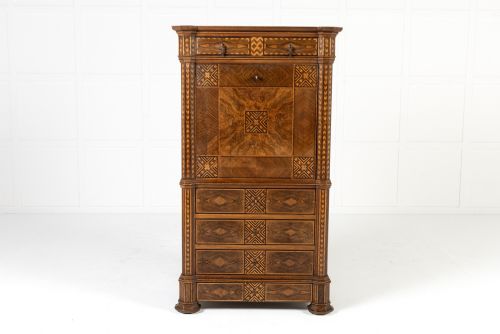
Cabinetmakers utilised dense native and exotic timbers such as figured mahogany, burr walnut, oak, and amboyna veneer over sturdy secondary woods like pine. Surfaces often display careful grain matching and intricate marquetry or inlay work.
Structural integrity relied on hand-cut dovetail joints for the drawers and robust frame-and-panel construction for the larger carcases. Brass drop handles, escutcheons, and working locks secure the compartments, while specialised fittings internal to the writing sections reflect regional woodworking traditions.
Antique Tallboy Bureau Desk Retail Price Guide 2026
Typical asking prices for tallboy bureau desk among the pieces listed under this phrase on Sellingantiques today, from the lower quarter to the upper quarter. They describe what is for sale here now, not the wider market.
Some nineteenth-century Wellington chests require unlocking a hinged side pillar before a single drawer will open its mouth.
Judging Quality
Excellence in these pieces rests upon the crispness of the timber figuring, the precision of the joinery, and the retention of original brass hardware. Finer examples display continuous grain across drawer fronts and delicate, uncompromised internal stationary compartments.
Proportion and surface patination separate standard workshop output from exceptional furniture. Pieces retaining their original polished finish and untouched secondary woods command attention for their integrity and the clarity of their historical details.
Gillows of Lancaster·Maison Krieger
The Antique Tallboy Bureau Desk Glossary
- Secretaire
- A desk or a chest of drawers containing a concealed writing drawer or a drop-down writing flap. This mechanism hides internal pigeonholes and small storage compartments.
- Tallboy
- A tall chest of drawers made in two stacked sections, often combining a lower chest with a slightly narrower upper chest. It maximises vertical storage floor space.
- Bureau bookcase
- A dual-purpose piece featuring a lower writing desk component beneath an upper glazed or panelled bookcase section. They house libraries and writing materials in one footprint.
- Wellington chest
- A tall, narrow chest of drawers secured by a hinged vertical locking side bar that fastens all drawers simultaneously. The design originated in the nineteenth century.
- Marquetry
- Decorative veneer work forming pictorial patterns by fitting together small pieces of tinted wood, ivory, or metal. Artisans applied these designs to exterior carcase surfaces.
Antique Tallboy Bureau Desk: Frequently Asked Questions
What is a tallboy bureau desk?
A tallboy bureau desk is a vertical furniture piece that combines stacked drawer storage with an integrated writing surface or drop-down desk flap. It allows users to write and store papers while occupying a minimal floor footprint.
These items range from eighteenth-century walnut chest-on-chest designs to nineteenth-century mahogany secretaire cabinets. They suit studies, bedrooms, and living spaces requiring substantial storage.
How were these desks used historically?
Owners used these pieces for correspondence, managing household accounts, and storing personal papers securely within the locked compartments. The upper sections accommodated books, ledgers, or extra linens depending on the exact form.
In period homes, they functioned as primary administrative hubs. The drop-down flap provided an immediate writing surface that could be closed away when not in use.
How do I care for antique timber surfaces?
Protect antique wood by placing pieces away from direct sunlight and maintaining stable indoor humidity levels to prevent timber splitting or veneer lifting. Regular dusting with a dry, soft cloth maintains the polished finish.
Avoid silicone-based sprays and apply traditional beeswax sparingly to nourish the grain. Gentle upkeep preserves the natural patination built up over centuries of handling.
How can I tell the period of a piece?
Dating relies on examining the construction methods, such as hand-cut dovetail joints on drawers, timber choices, and internal hardware. Eighteenth-century pieces often feature oak linings and dense mahogany or walnut, while nineteenth-century items introduce alternative veneers and machine-assisted elements.
Stylistic cues like bracket feet, cornice mouldings, and inlay patterns align with Georgian, Regency, or Victorian design vocabularies. Comparing these structural details helps establish an approximate date of manufacture.