

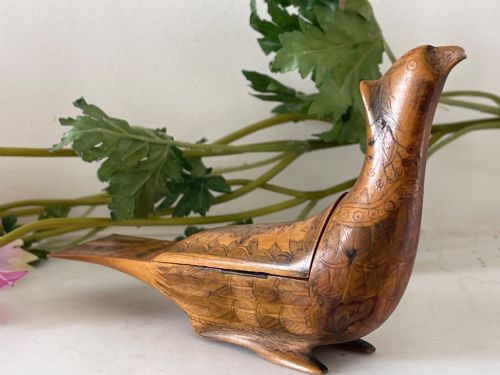
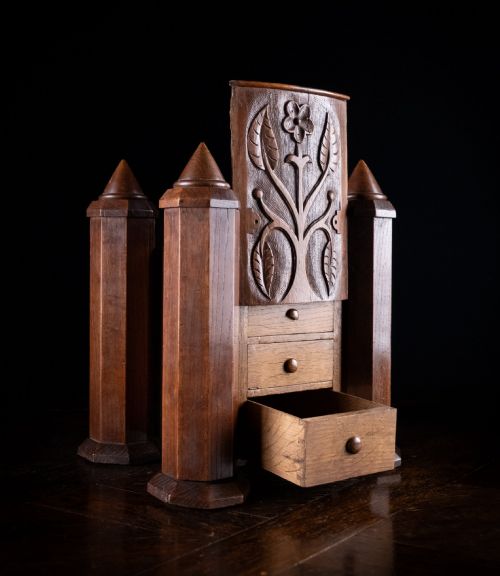
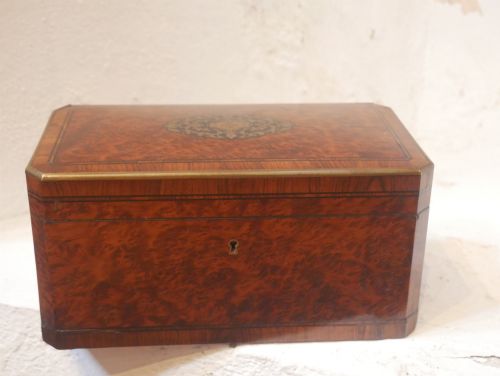

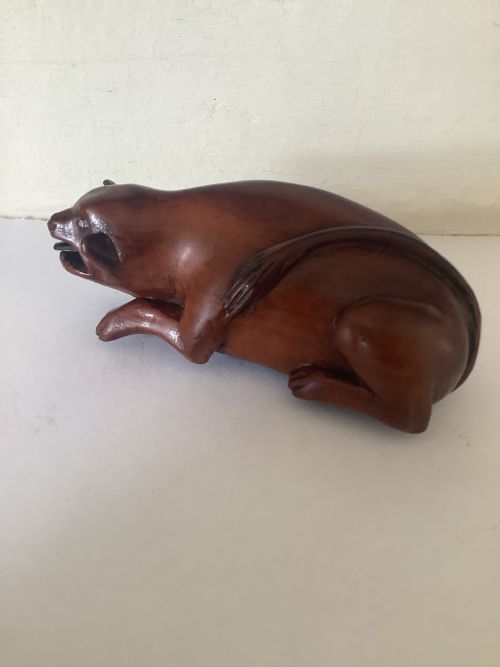
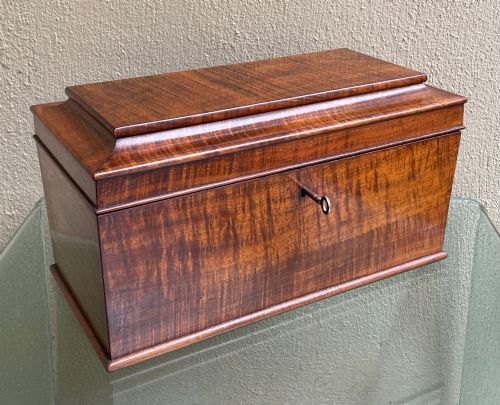
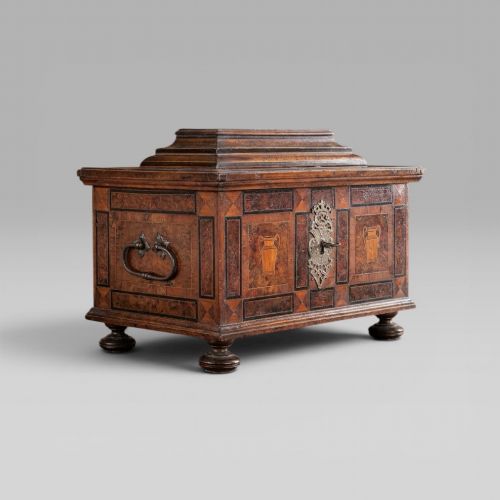
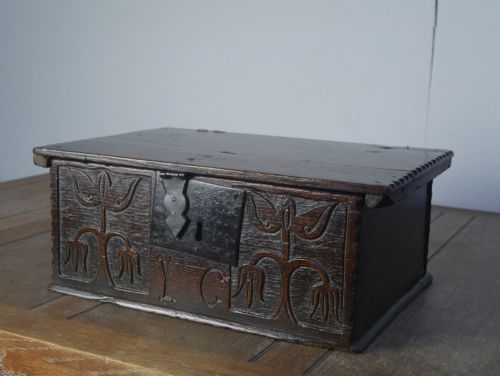
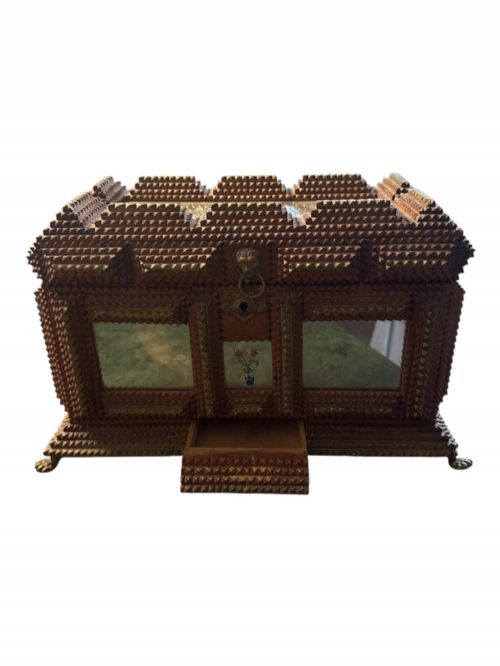
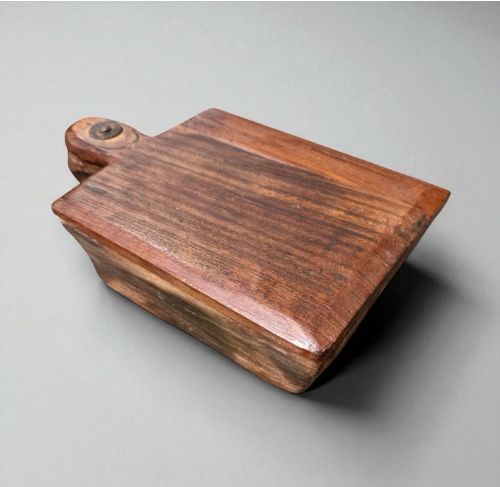
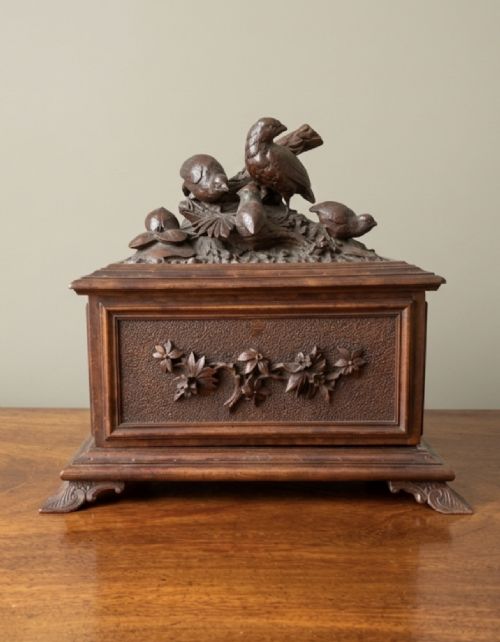
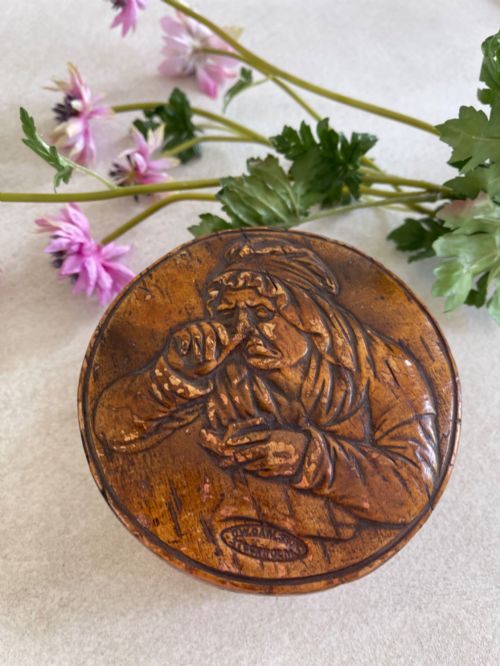
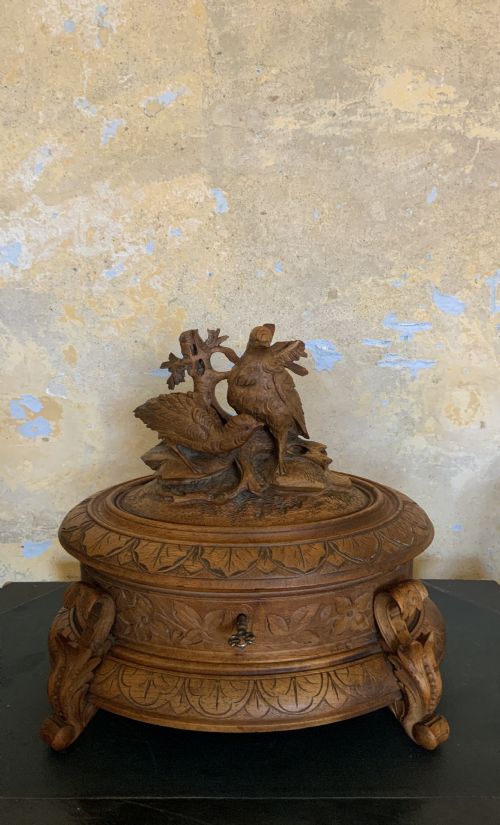


Brown Wood Trinket Box
A brown wood trinket box brings small treasures together in timber worked by hands from the seventeenth century onward.
Brown Wood Trinket Box
A brown wood trinket box takes many forms across the centuries, appearing as a tea caddy, snuff box, jewellery casket or miniature chest of drawers. The pieces on this page span from the seventeenth century through the Victorian era up to the nineteen-twenties, reflecting domestic storage needs across generations.
Buyers meet a wide range of regional styles here, from British Tunbridge ware and Welsh chip carving to continental Black Forest caskets, Sorrento olive wood and Anglo-Indian sandalwood workboxes. These objects served everyday uses, holding spices, tobacco, correspondence and personal ornaments in sturdy timber containers.
The version most commonly seen on this page is the nineteenth-century trinket or jewellery box, constructed in walnut, mahogany or rosewood. Many incorporate intricate parquetry, mother of pearl inlay or regional carving traditions that mark out their origins.
How they were made
Cabinet makers utilised dense hardwoods such as mahogany, walnut, rosewood, amboyna and oak to build these receptacles, often selecting burr veneers and oyster cuts of laburnum or olive wood for visual depth. Brass mounts, hinges and locks provided structural security and contrasting metallic detail.
Surface ornamentation relied on specialised hand techniques including chip carving, parquetry, micromosaic Tunbridge ware and pressed maple. Artisans shaped blocks of sandalwood, sycamore and boxwood using traditional saws, chisels and turning lathes before applying transparent finishes.
Brown Wood Trinket Box Retail Price Guide 2026
Typical asking prices for brown wood trinket box among the pieces listed under this phrase on Sellingantiques today, from the lower quarter to the upper quarter. They describe what is for sale here now, not the wider market.
Periods represented on this page range from the seventeenth century through the Georgian and Victorian eras to the nineteen-twenties.
What varies in quality
The standard of a brown wood trinket box depends upon the precision of the timber joints, the complexity of the parquetry inlay and the depth of the hand carving. Early examples show disciplined execution in the dovetailing and grain alignment.
Superior execution reveals itself in intact original linings, working brass locks with matching keys, and tightly fitted lids that maintain their shape over centuries of changing humidity. Lesser pieces exhibit loose veneers, replacement hardware or careless restoration work.
The Brown Wood Trinket Box Glossary
- Tunbridge ware
- A form of British woodwork utilising thousands of tiny coloured wood blocks to create mosaic pictorial designs. This technique reached its height in nineteenth-century Kent.
- Parquetry
- Geometric mosaic woodwork formed by fitting small pieces of veneer together onto a solid carcase. The resulting patterns create repeating optical designs.
- Tramp art
- Folk sculpture created by self-taught makers using notched, chipped and layered scrap wood from cigar boxes and packing crates. Pieces frequently display stepped geometric reliefs.
- Sarcophagus
- A box shape featuring a domed or sloping lid resting on a rectangular base, popular for nineteenth-century tea caddies and jewellery chests. The silhouette mimics classical stone monuments.
- Oyster veneering
- The practice of cutting small circular branch wood sections across the grain to produce concentric ring patterns. Cabinet makers arranged these slices closely together on seventeenth and eighteenth-century surfaces.
Brown Wood Trinket Box: Frequently Asked Questions
What did people store inside?
These containers held precious personal items including tea leaves, snuff, correspondence, coins and jewellery.
Different forms evolved for specific contents, such as foil-lined caddies for tea or partitioned trays for rings and pins.
How do I date a wooden box?
Dating relies upon timber selection, construction methods, hinge types and decorative styles visible across the piece.
Hand-cut dovetails, original brass hardware and regional carving motifs provide clear indicators of the period.
How should I clean the wood?
Maintenance requires dry dusting with a soft cloth to protect the aged patina and delicate surface veneers.
Harsh chemical polishes and excessive moisture damage the timber, lift old glues and dull hand-applied finishes.
Are original keys common?
Original working keys are uncommon because many were lost through generations of daily domestic use.
Locks remain intact on most examples, allowing replacement keys to be fitted by a specialist restorer if needed.