
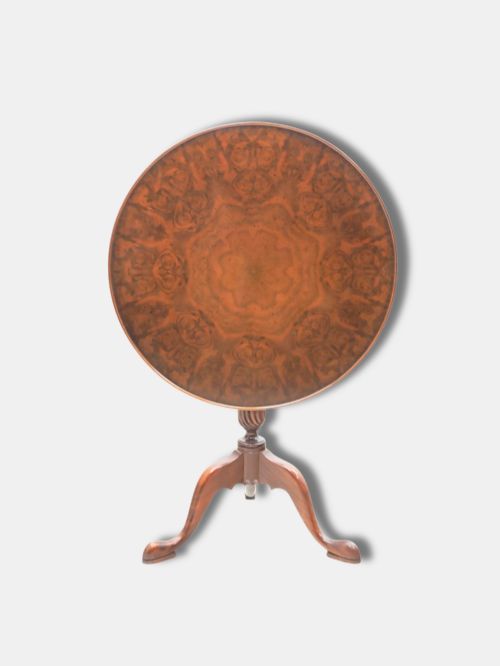
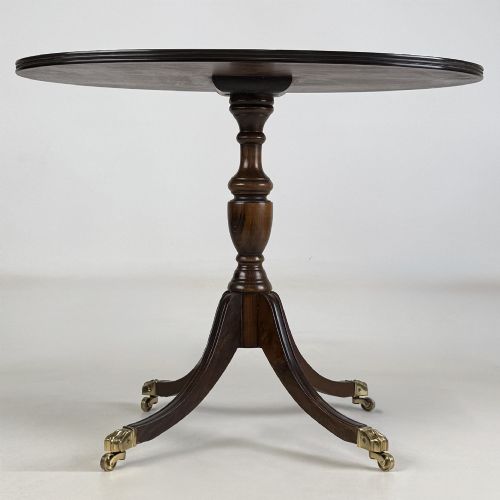
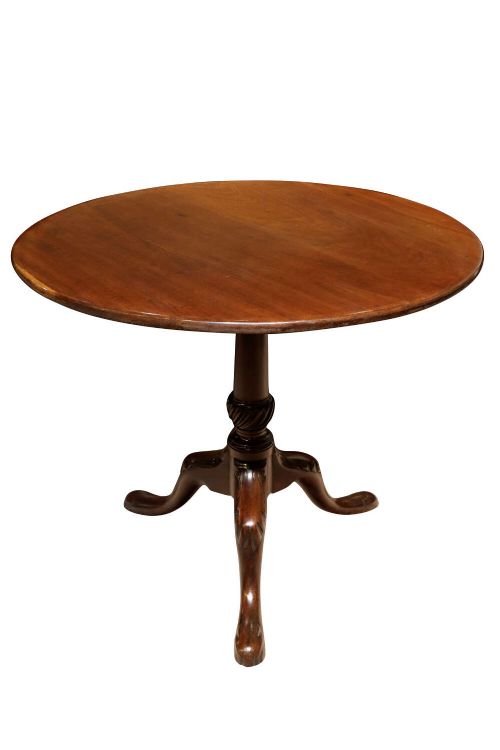
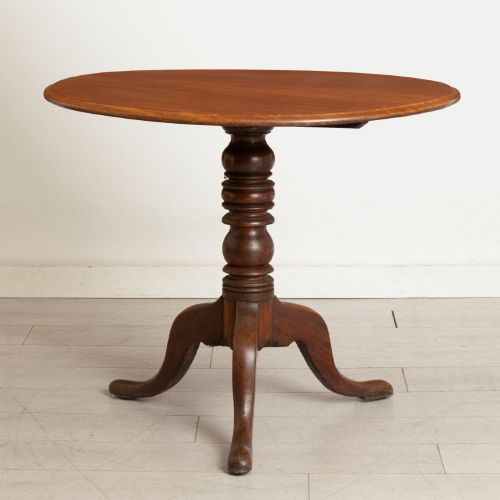
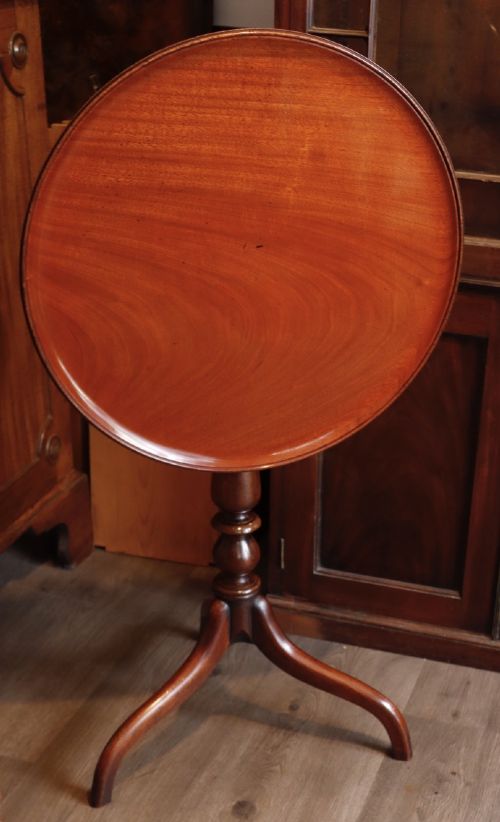
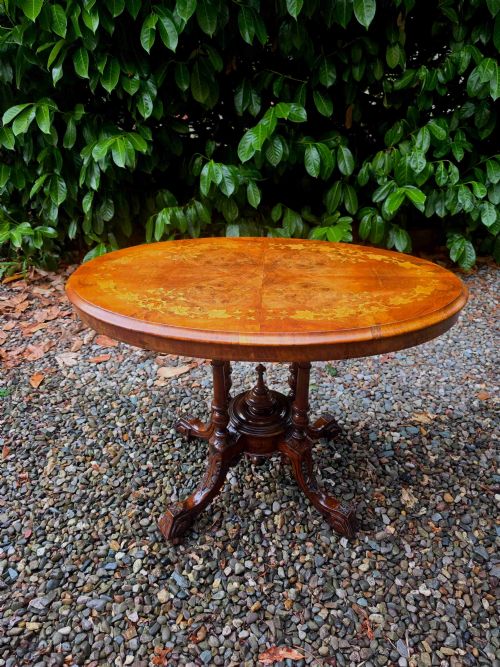
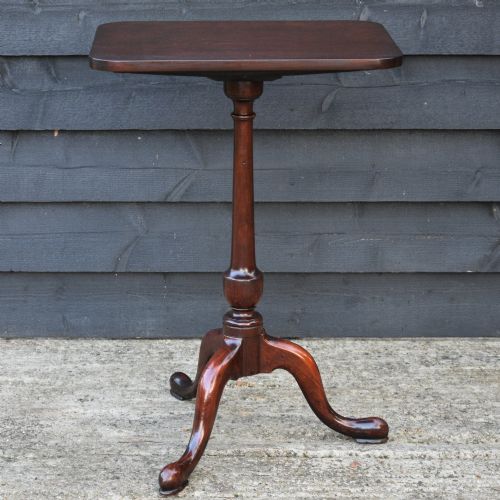
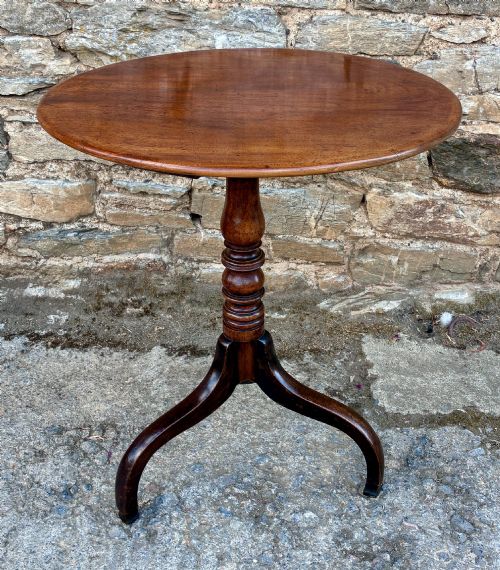
Brown Wood Tilt Top Table
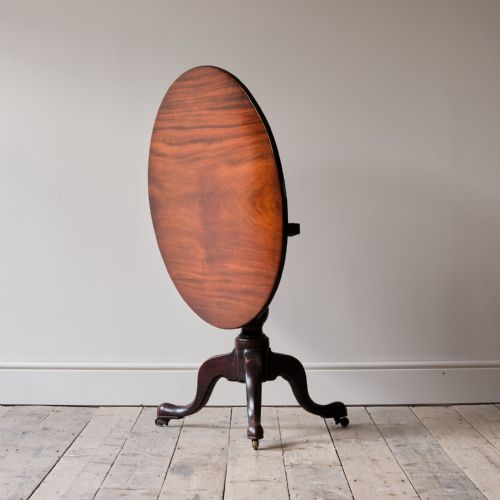
A brown wood tilt top table is a versatile surface engineered to fold upright when not in use.
Brown Wood Tilt Top Table
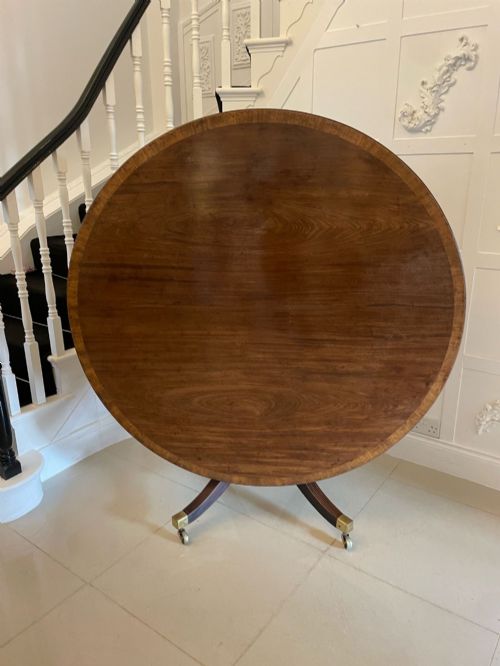
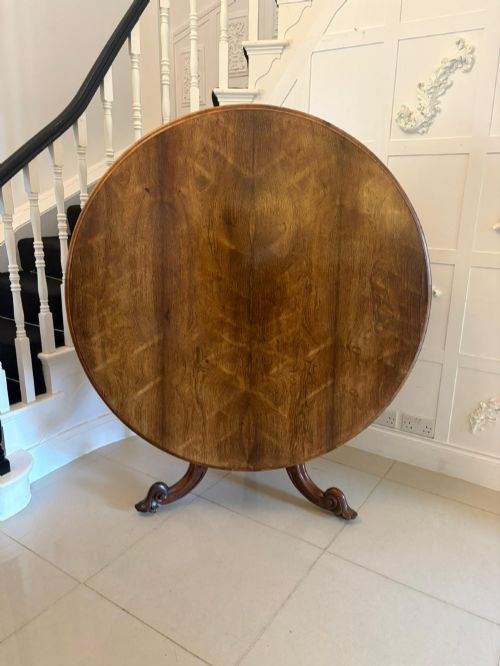
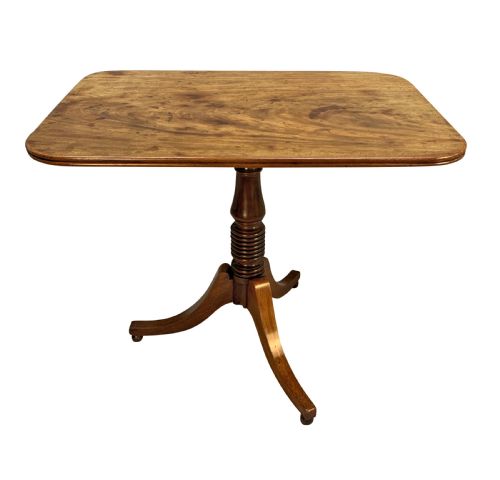
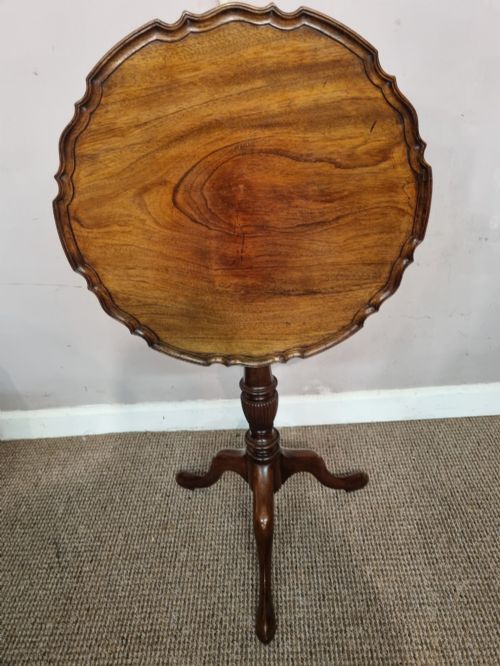
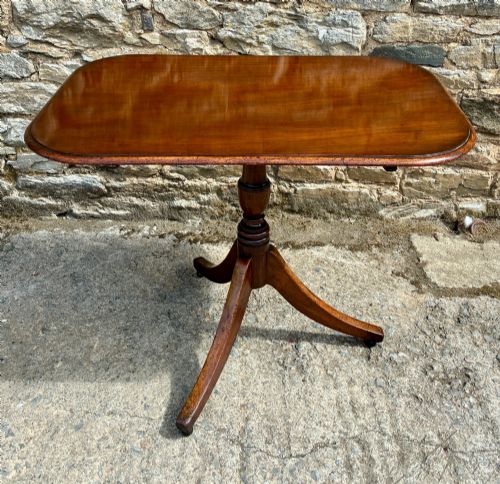
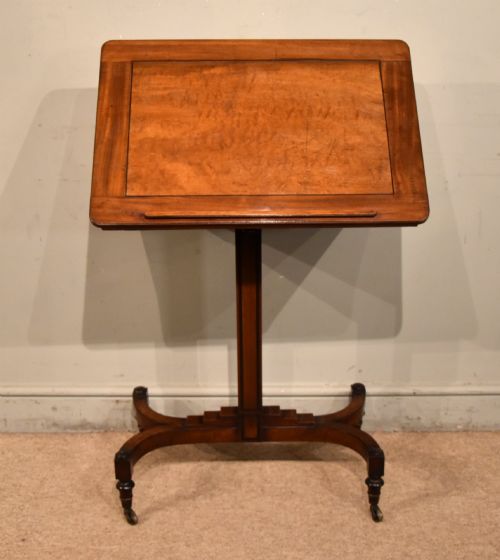
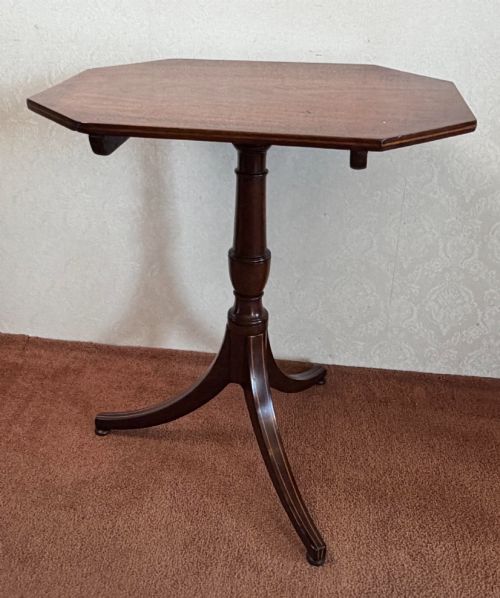
A brown wood tilt top table functions primarily as an occasional, wine, or dining surface that saves floor space by tipping on a central mechanism. Buyers searching for a brown wood tilt top table encounter examples ranging from compact 18th-century tripod designs to substantial Regency and Victorian breakfast tables.
The materials span mahogany, walnut, burr walnut, oak, satinwood, rosewood, and fruitwood, often supported on pillar and tripod bases. Pieces emerge from Georgian, Regency, and Victorian periods alongside later revivals, reflecting diverse domestic uses from tea service to reading.
Most entries on this page take the form of circular or oval occasional tables featuring pivoting mechanisms. These domestic furnishings bridge utilitarian storage and formal reception room display.
Construction and Materials
Cabinetmakers utilised dense timbers like mahogany, walnut, and rosewood for structural stability and rich surface figuring. Secondary woods and fruitwoods appear in turning and secondary framing.
Turning, joinery, and veneering define the construction of the central pillar and tripod legs. Brass hinges, catches, and tilt mechanisms permit the top to pivot and lock securely into position.
Inlays of boxwood, satinwood, and marquetry enrich the top surfaces alongside carved borders and shaped pie crust edges.
Listings feature woods including mahogany, walnut, burr walnut, oak, satinwood, rosewood, and fruitwood.
Assessing Quality
The sophistication of the timber figuring and the crispness of carved tripod legs distinguish standard workshop production from exhibition pieces. Superior execution shows in the seamless operation of the birdcage or pivot mechanism.
Proportion and stability determine the success of the pedestal design, where heavier tops require balanced weight distribution across the feet. Subtle details such as finely cut stringing, crossbanding, and well-executed inlay elevate the status of an individual table.
Gillows·Ralph Turnbull·Egan Workshop
The Brown Wood Tilt Top Table Glossary
- Tilt-top
- A table mechanism allowing the surface to rotate vertically for storage against a wall.
- Tripod table
- A small stand supported on three legs radiating from a central turned pillar.
- Birdcage
- A wooden framework beneath the table top that enables both rotation and tilting actions.
- Pie crust edge
- A carved, raised perimeter moulding shaped with alternating curves.
- Crossbanding
- A border of veneer laid with the grain running perpendicular to the main surface.
Brown Wood Tilt Top Table: Frequently Asked Questions
How do I use a brown wood tilt top table today?
These tables adapt easily to modern rooms as bedside stands, lamp surfaces, or hallway accents where space remains at a premium.
When tipped upright, they function as decorative panels against a wall, revealing the grain and inlay of the top.
Why did historical homes use tilting tables?
Houses of the eighteenth and nineteenth centuries required multifunctional rooms that changed purpose between day and night.
Tipping the surface allowed bulky dining or tea tables to move out of the way when meals concluded.
What is the difference between a wine table and a breakfast table?
Wine tables are smaller occasional stands designed to hold glasses or bottles beside seating. Breakfast tables are substantially larger pedestal pieces built for dining in morning rooms.
Both types frequently share the tilting mechanism for convenience.