
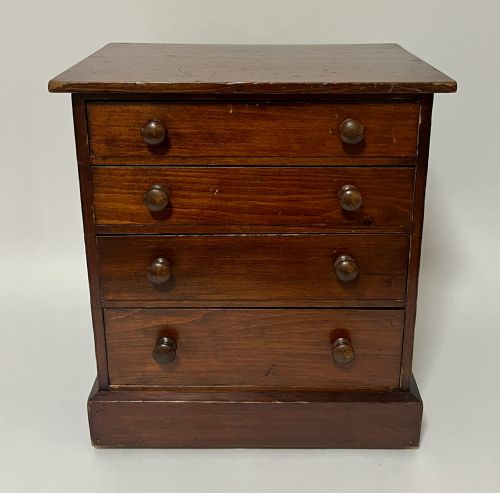
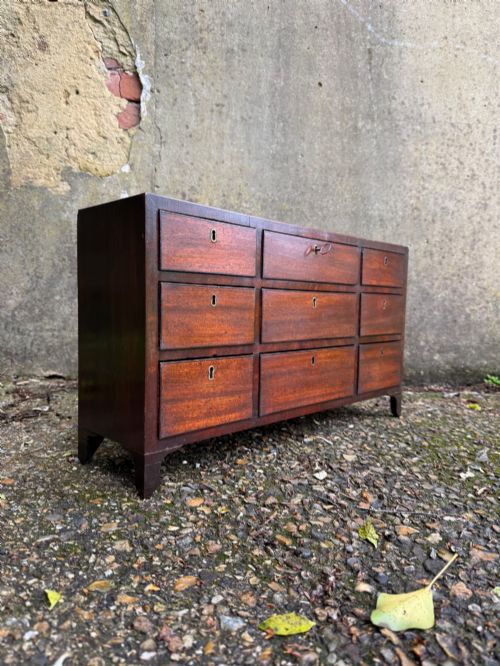


Brown Wood Miniature Drawers
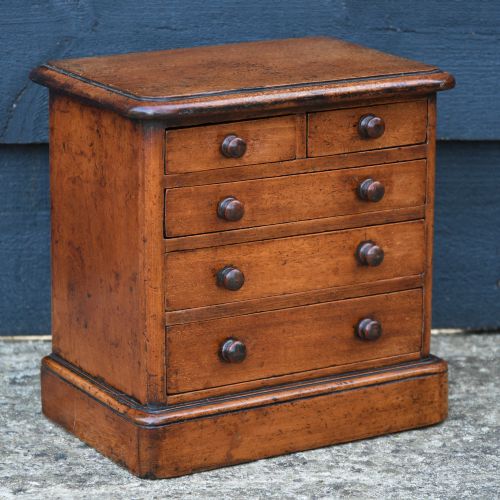
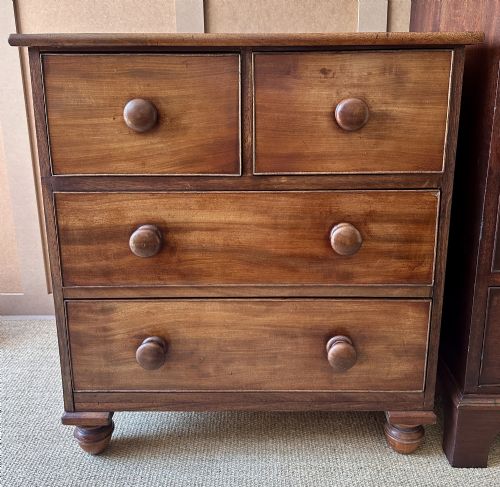
Brown wood miniature drawers are small-scale chests and cabinets crafted in various historical periods to display fine cabinetmaking or store small treasures.
Brown Wood Miniature Drawers
When you search for brown wood miniature drawers, you encounter compact chests of drawers, collectors cabinets, and tabletop desks produced across the Georgian, Victorian, and Edwardian eras. These small pieces replicate the grand furniture of their times, serving practical storage functions on tabletops or acting as demonstrations of skill.
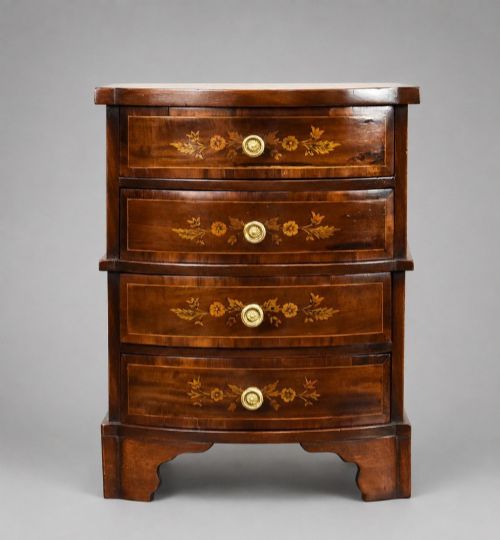
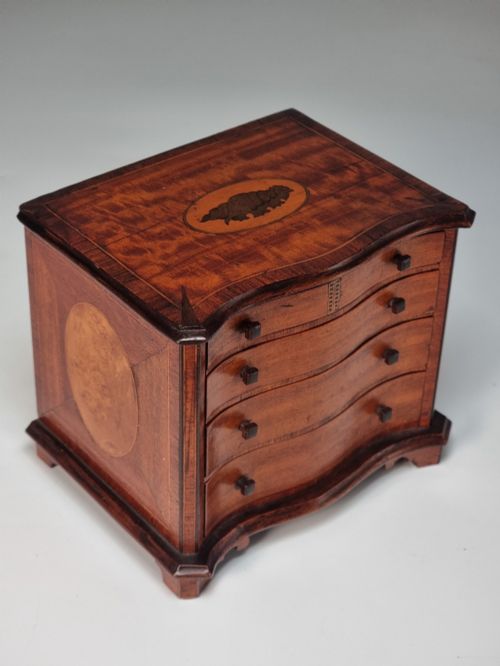
The selections on this page span several centuries and styles, ranging from early eighteenth-century elm and yew pieces to late nineteenth-century mahogany, satinwood, and pitch pine examples. You will find bow front, serpentine, and straight-front configurations alongside specialised forms like apprentice pieces and specimen cases.
Materials and Construction Techniques
Cabinetmakers utilised hardwoods such as mahogany, walnut, oak, and elm, often pairing them with decorative veneers like satinwood, burr yew, and amboyna. Construction methods mirrored full-size furniture through dovetailed drawer construction, mortise and tenon joints, and precise timber selection.
Surface ornamentation included mother of pearl inlay, marquetry, ebonised moulding, and brass handles or escutcheons. These details required high levels of dexterity given the restricted surface area of miniature furniture.
Some miniature chests hide tiny secret compartments behind the main drawers for stashing miniature valuables.
Distinguishing Quality in Small-Scale Furniture
Quality rests primarily in the fidelity of proportion and the precision of the scaling, where lesser examples appear heavy-handed while superior pieces maintain the exact architectural harmony of their full-size counterparts. The choice of primary timber and secondary framing woods also dictates standard, with well-figured veneers and clean interior linings marking out finer workshops.
The integrity of the construction, from the tightness of the dovetails to the smooth operation of the miniature drawers, separates standard utilitarian items from exhibition pieces. Original hardware, clean inlay work, and minimal structural alteration preserve the integrity that collectors seek.
A. F. Lloyd
The Brown Wood Miniature Drawers Glossary
- Apprentice piece
- A small-scale furniture item created by a trainee to demonstrate mastery before admission to a guild. These pieces often exhibit meticulous attention to detail.
- Collectors cabinet
- A specialised tabletop unit fitted with multiple small drawers or trays designed to house natural history specimens or coins. They feature secure doors or open fronts.
- Serpentine
- A front contour characterised by a convex central section flanked by concave curves. This profile requires advanced woodworking skill to execute on a miniature scale.
- Bow front
- A convex curved cabinet or drawer front popular in Georgian and Victorian furniture. It softens the linear appearance of small chests.
- Specimen case
- A small cabinet or box intended for holding scientific samples, fossils, or geological collections. They utilise shallow drawers with dust-proof framing.
Brown Wood Miniature Drawers: Frequently Asked Questions
What were miniature drawers used for?
These small chests stored precious trinkets, sewing accessories, documents, or natural history specimens on tabletops and desks.
Cabinetmakers also produced them as showcase items to demonstrate advanced woodworking proficiency to prospective clients.
How do I date a miniature chest?
Dating relies on identifying the primary timber species, construction methods like dovetailing, and the prevailing decorative style of the period.
Georgian pieces often feature solid mahogany or elm with simple brass pulls, while Victorian examples introduce varied veneers, ebonised mouldings, and ceramic or brass hardware.
Are apprentice pieces genuine?
Many small chests are traditionally called apprentice pieces, though historians note many were actually salesman samples or luxury items for affluent homes.
Regardless of the exact workshop context, genuine antique examples display period-correct timber shrinkage and handmade structural joints.
How should I care for antique wood miniature furniture?
Keep these pieces away from direct sunlight and fluctuating heat sources to prevent the dry timbers and delicate veneers from splitting.
Apply a microcrystalline wax periodically to nourish the surface polish without building up heavy residue.