



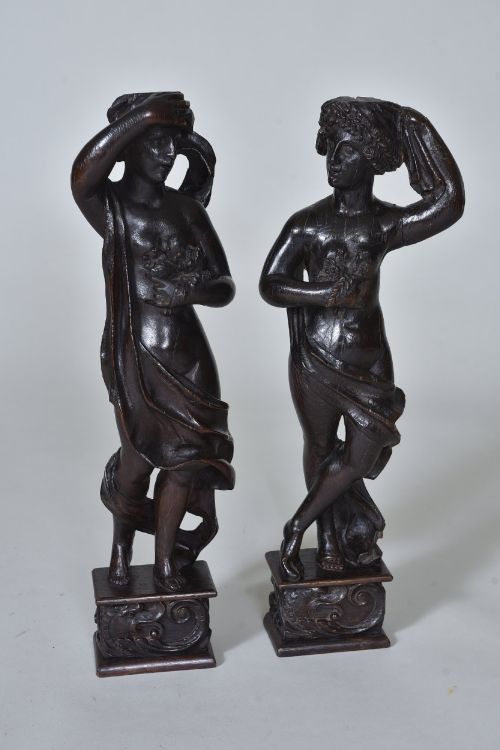
Brown Wood Figure
A brown wood figure brings warmth and character to a room, ranging from small carved animals to monumental guardian statues.
Brown Wood Figure
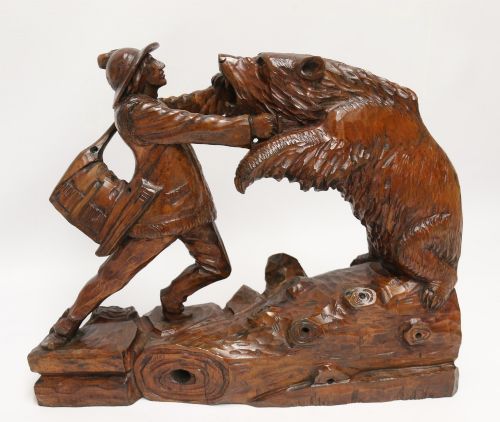
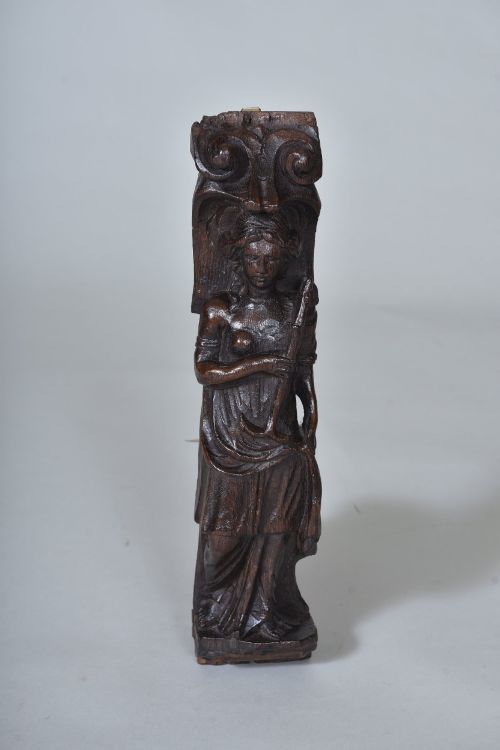
A brown wood figure encompasses carved sculptures, decorative panels, and artist's lay figures created across multiple centuries. These works include European devotional carvings, Black Forest animal groups, and Chinese hardwood sculptures of Daoist immortals.
The selections available span from the seventeenth century through to the art deco period of the 1930s. Buyers will find everything from miniature match holders to large architectural carvings and freestanding statues.
The forms vary widely, taking the shape of human saints, mythical immortals, owls, bears, and fully articulated artists' models. Each piece demonstrates the sculptural traditions of its specific origin and period.
Materials and construction methods
Carvers shaped these figures primarily from walnut, oak, mahogany, linden, and dense hardwoods using specialised gouges and chisels. The natural grain of the timber dictates the texture and tonal depth of the finished surface.
Some works incorporate polychrome pigments applied directly over the carved wood to add colour and detail to drapery and faces. Others rely entirely on hand-polished wax finishes that highlight the distinct figuring of the timber.
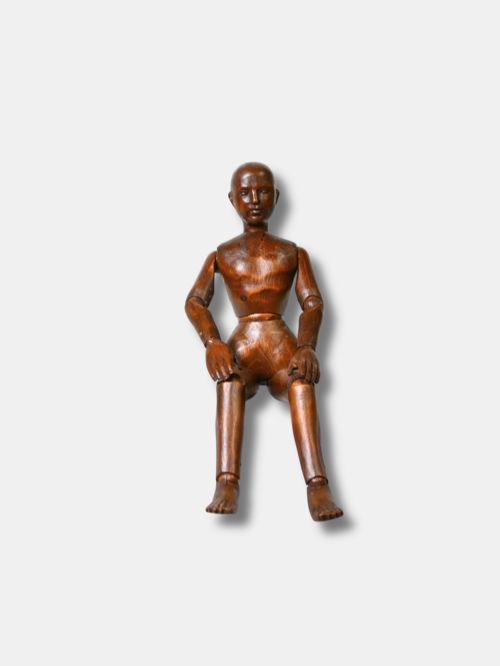
A nineteenth-century artist's lay figure comes fully articulated, ready to strike a dramatic pose on any desk.
Determining quality and execution
Quality rests upon the depth of the carving and the precision with which anatomical or textural details are rendered. Superior execution shows in the crispness of facial expressions, the realistic fall of drapery, and the careful alignment of the wood grain.
Condition plays a central role, particularly regarding the preservation of fine extremities, original surface patination, and the stability of joints or mounted elements. Examples retaining their untouched finish and original maker marks command greater attention.
J Huggler
The Brown Wood Figure Glossary
- Black Forest
- A style of wood carving originating from the Brienz region of Switzerland, known for realistic depictions of animals and rustic subjects.
- Polychrome
- The practice of painting or decorating wooden surfaces in a variety of colours.
- Lay figure
- An articulated wooden mannequin used by artists to study human form and drapery.
- Hardwood
- Dense timber derived from broad-leaved trees, used for intricate and durable sculptural work.
- Carving
- The process of shaping wood by cutting away material with a sharp tool.
Brown Wood Figure: Frequently Asked Questions
What is a brown wood figure?
A brown wood figure is a carved sculpture, statue, or decorative panel fashioned from timbers such as walnut, oak, or exotic hardwoods. These pieces range from folk art carvings to formal European and Asian sculptures.
They serve primarily as decorative objects or collectors' items, reflecting the sculptural styles of periods spanning from the seventeenth century to the early twentieth century.
How do I care for wooden sculptures?
Wooden figures require stable indoor humidity levels away from direct sunlight and heat sources to prevent the timber from splitting or warping. Dusting should be done gently with a dry, soft cloth.
Applying microcrystalline wax occasionally helps protect the original finish, but heavy polishes should be avoided to preserve the natural patina.
How are different periods identified?
Periods are identified by examining the tool marks, the choice of timber, stylistic cues, and construction techniques. Earlier works often display hand-hewn marks and simpler joinery.
Later pieces from the nineteenth and twentieth centuries show the influence of industrial tools, specific regional carving traditions, and documented artistic movements.
Where were these figures made?
These pieces originate from diverse workshops across Europe and Asia, including specific regional hubs like the Swiss Black Forest and traditional Chinese carving centres. European examples often reflect religious or domestic traditions.
Asian works frequently depict mythological figures or guardians using dense, imported hardwoods native to their regions of production.