
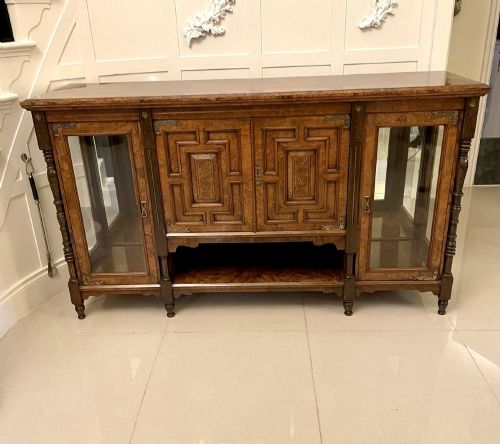
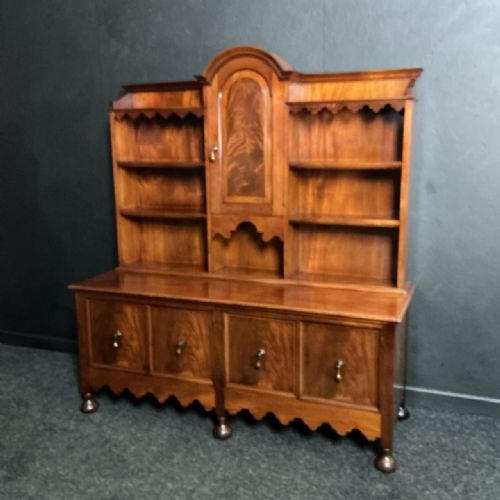
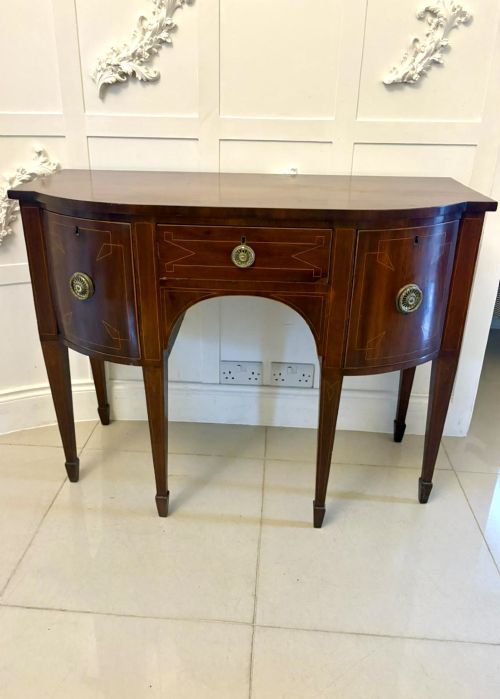
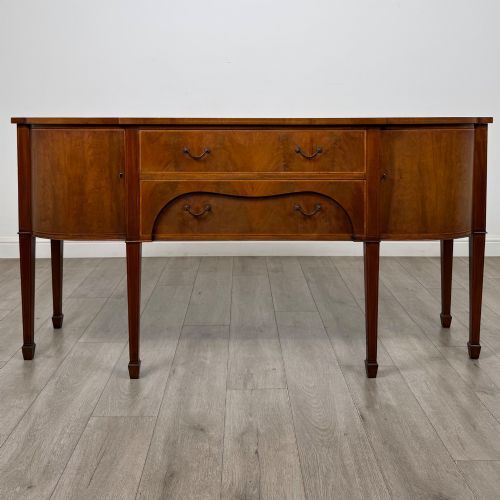
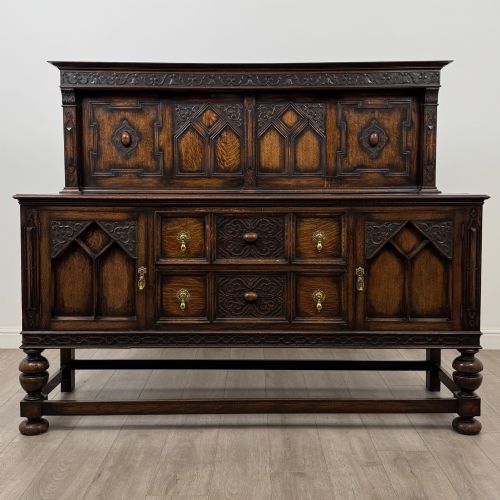
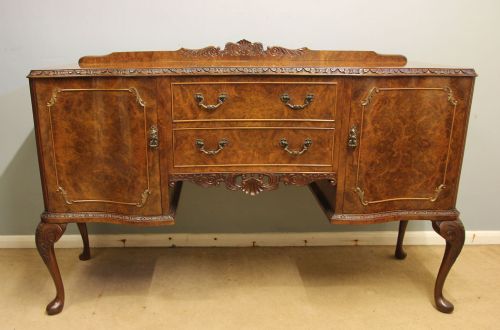
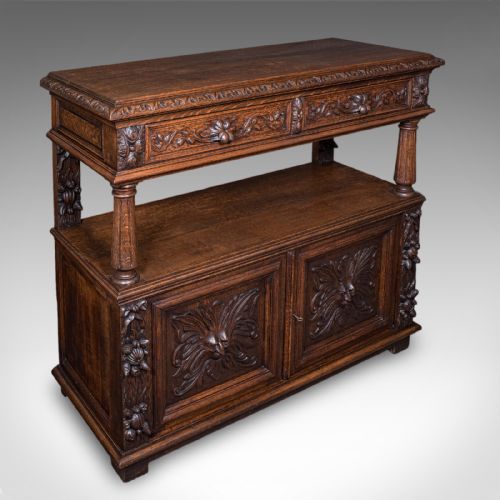
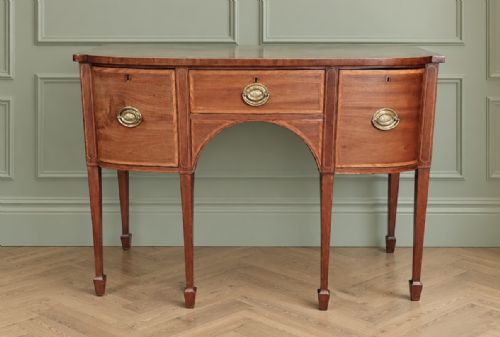
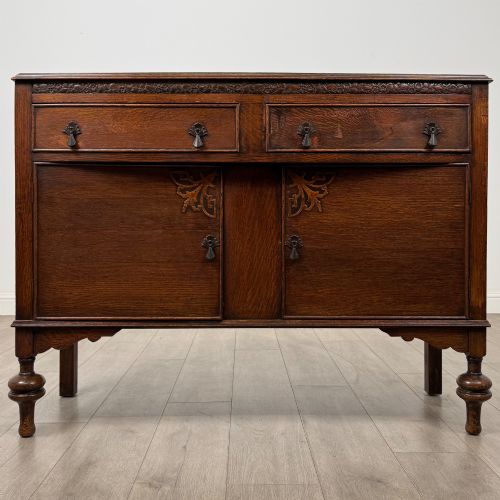
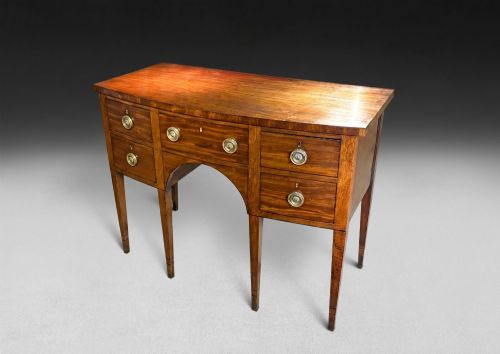
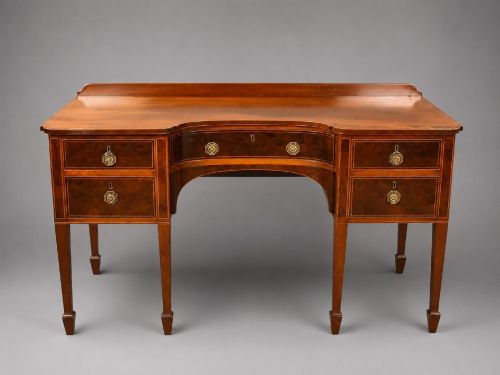
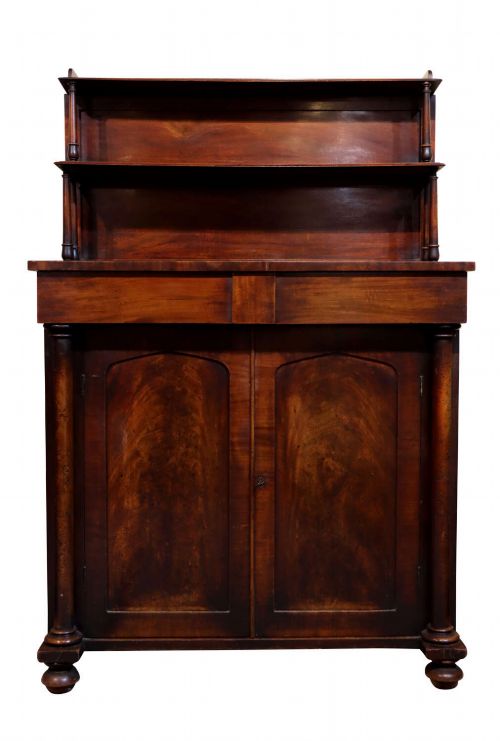
Brown Wood Dining Sideboard
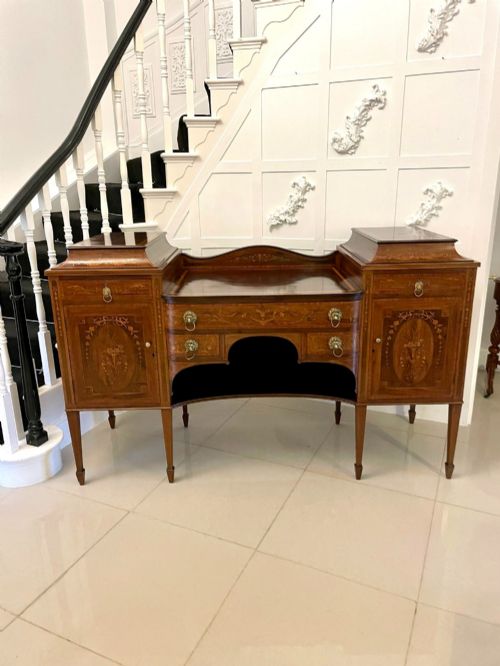
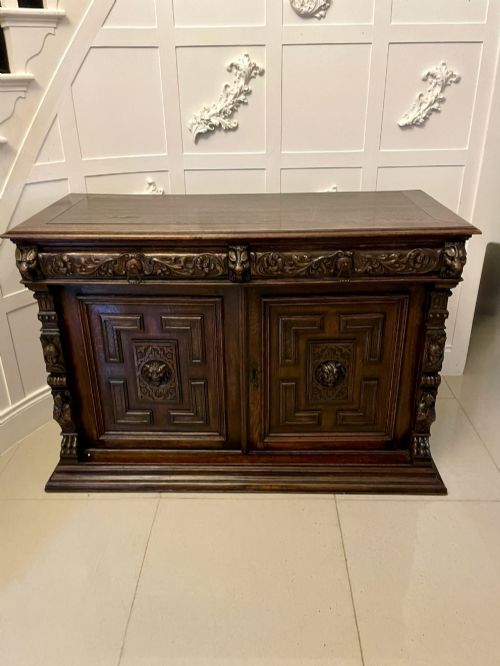
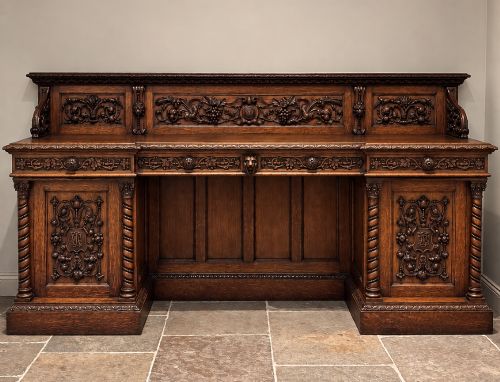
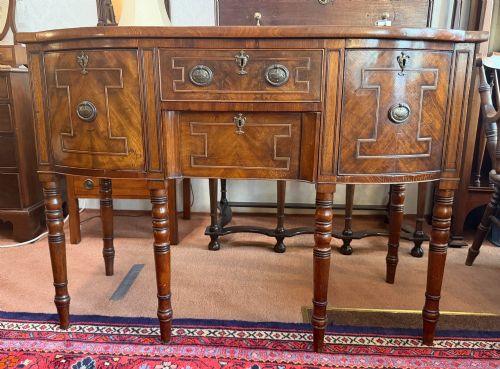
A brown wood dining sideboard serves as a substantial dining room server, combining practical storage with period craftsmanship.
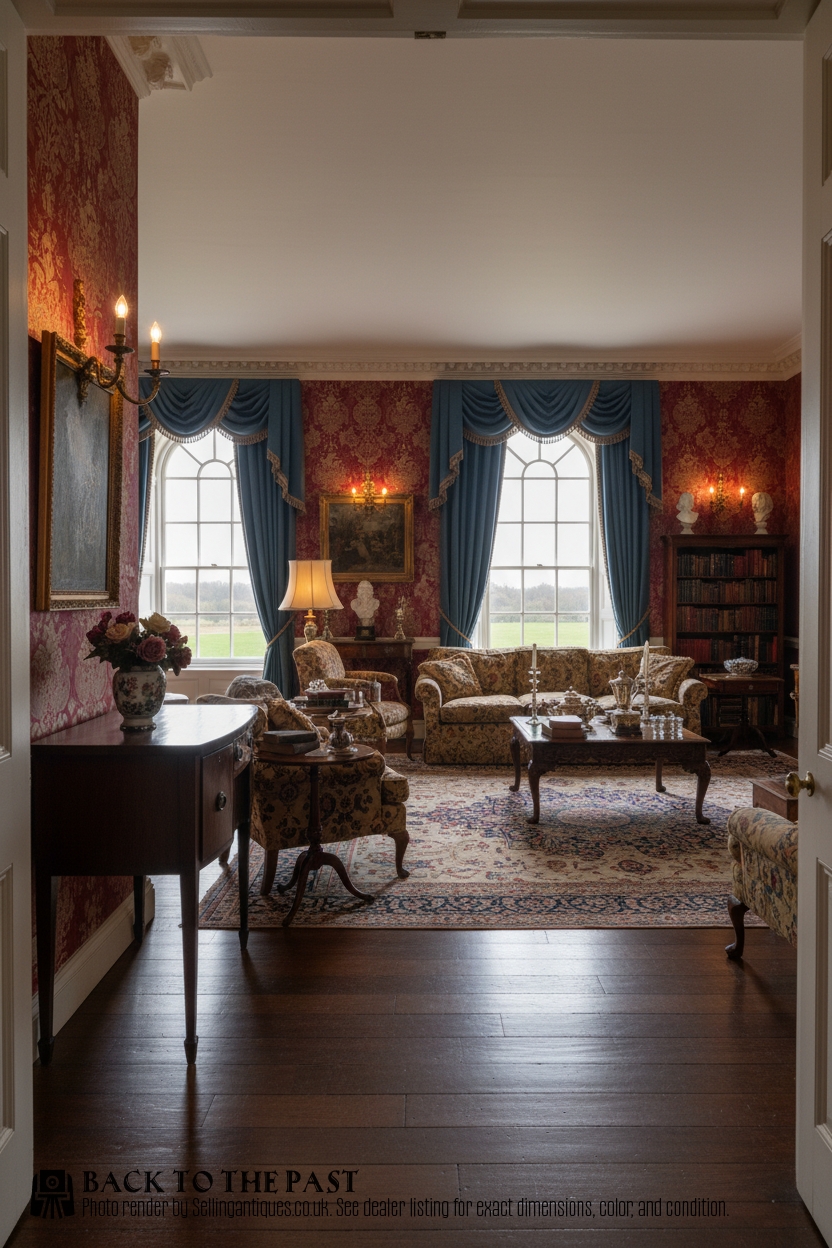
Brown Wood Dining Sideboard
A brown wood dining sideboard encompasses server cabinets, credenzas, and buffets designed for dining spaces. These pieces emerge predominantly in mahogany, oak, and burr walnut across periods spanning the eighteenth century, the Victorian era, and the Edwardian epoch.
The selections available range from bow-front and serpentine George III models to Edwardian flame mahogany pieces and Jacobean revival oak cupboards. Sideboards and chiffoniers provide deep drawers and enclosed shelving configured specifically for dining room utility.
Makers and designers from Georgian through Edwardian times built these brown wood items to anchor large dining rooms. Formal dining halls relied on these heavy timber pieces to house plate, linen, and service vessels.
Distinctions in craftsmanship
Quality rests upon the selection of timber figures, where matched flame mahogany veneers or figured burr walnut elevate a piece far above plain stock. Timber choice dictates visual depth, particularly on curved bow-front and serpentine facades.
Refinement in inlay work, cabinet joinery, and original brasses separates standard workshop production from signed pieces by makers such as Hewetsons. The integrity of internal drawer construction and the crispness of carved oak or satinwood stringing measure the standard of execution.
Listings feature mahogany, oak, burr walnut, and satinwood across Georgian, Victorian, Edwardian, and 1930s periods.
Hewetsons London
The Brown Wood Dining Sideboard Glossary
- Bow front
- A convex curved cabinet front that projects outward in a smooth arc. This shape gained popularity during the Georgian period on mahogany sideboards.
- Serpentine front
- A furniture front characterised by a central convex curve flanked by concave sweeps. This undulating design requires advanced cabinetmaking skill.
- Chiffonier
- A low cabinet or sideboard featuring cupboards and sometimes a raised shelf back. These pieces evolved during the nineteenth century for dining and drawing rooms.
- Marquetry
- Decorative patterns formed by fitting together small pieces of coloured wood veneer. Craftsmen applied this technique to top surfaces and drawer fronts.
- Credenza
- A sideboard or buffet cabinet typically standing low to the floor with enclosed cupboards. Victorian examples often incorporate glass doors and burr walnut veneers.
Brown Wood Dining Sideboard: Frequently Asked Questions
What is a brown wood dining sideboard?
A brown wood dining sideboard is a large storage cabinet utilised in dining rooms for holding tableware, linens, and serving dishes.
These pieces are constructed from timbers such as mahogany, oak, and walnut, reflecting design periods from Georgian times to the twentieth century.
How do I date a sideboard?
Dating relies on identifying stylistic markers, timber types, and construction methods associated with specific eras like George III or the Victorian period.
Details such as inlay materials, carcase timber, and structural hardware provide clear indicators of when a piece was manufactured.
Where were sideboards placed?
Sideboards were traditionally positioned against the main wall of a formal dining room.
They served as a central station for preparing meals and displaying silver service during dinner parties.
What is the difference between a sideboard and a buffet?
A sideboard and a buffet serve similar dining room functions, though buffets traditionally feature shorter legs and deeper cabinet space.
Both forms provide substantial surface area for serving food and storing dining room accessories.