
Dark Mahogany Server Table
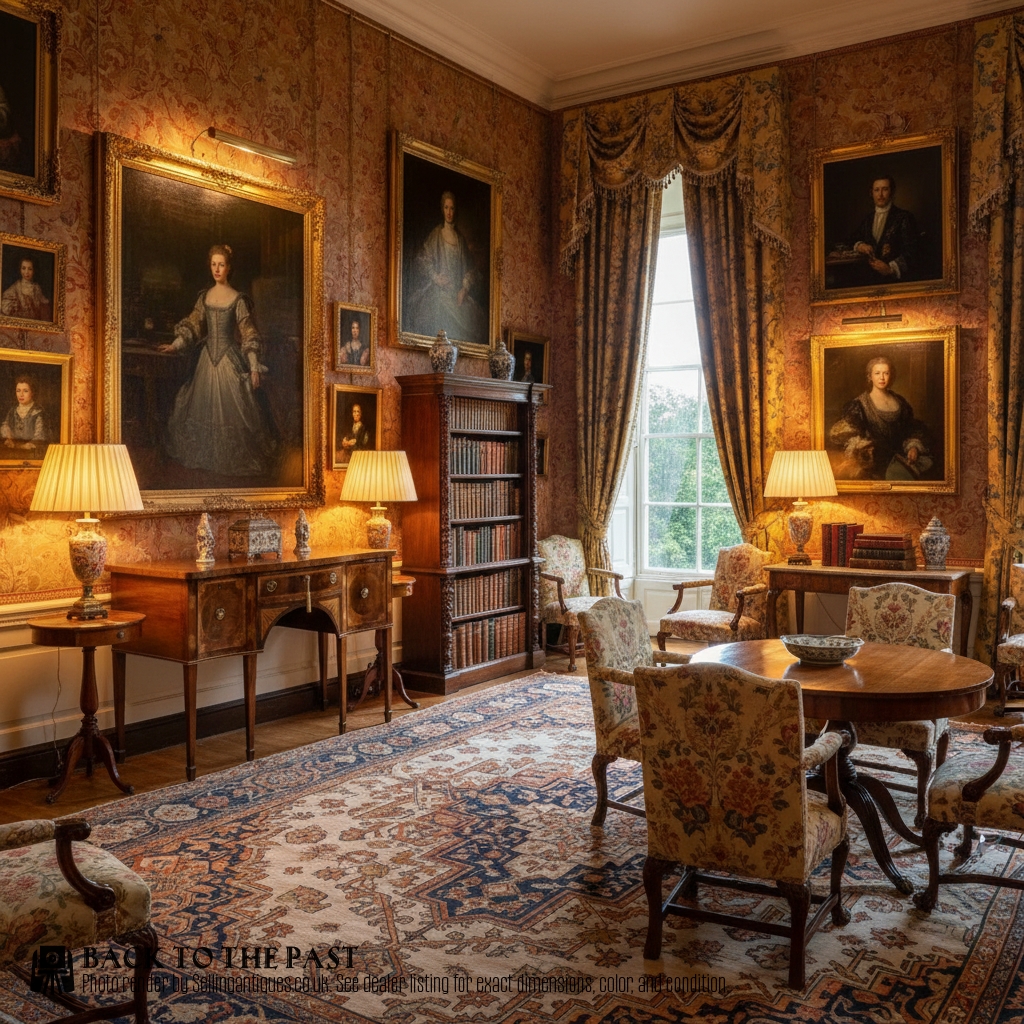
A dark mahogany server table brings formal dining presence and rich grain to a room, offering a sturdy surface for service and display.
Dark Mahogany Server Table
When you search for a dark mahogany server table, you are looking at heavy timber serving pieces, console tables, and sideboards designed for dining and entertaining. These items appear primarily across Georgian, Regency, and Victorian periods, as well as later Edwardian and revival interpretations.
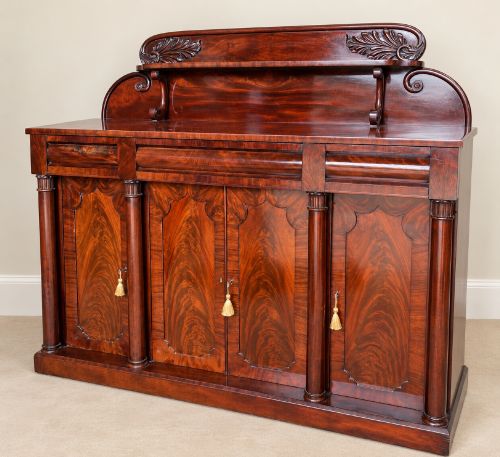
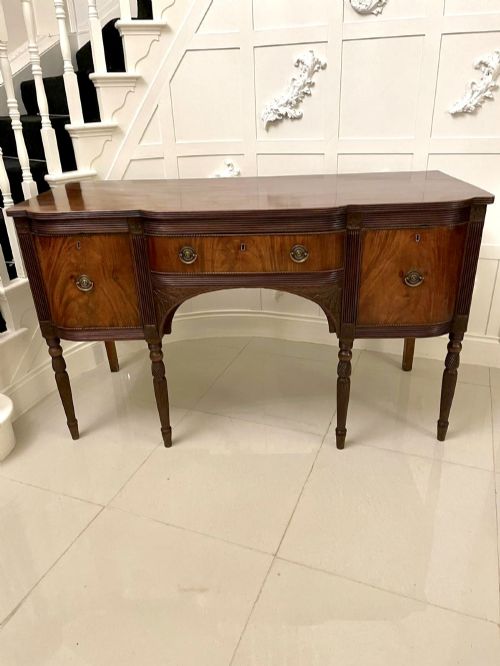
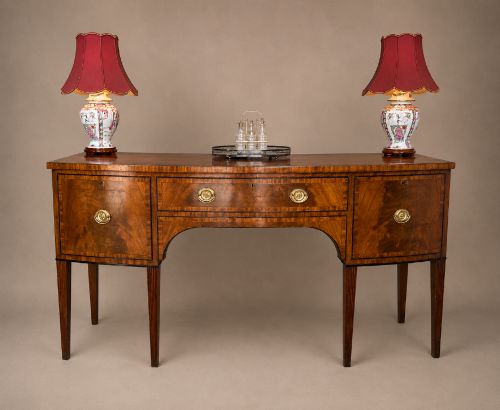
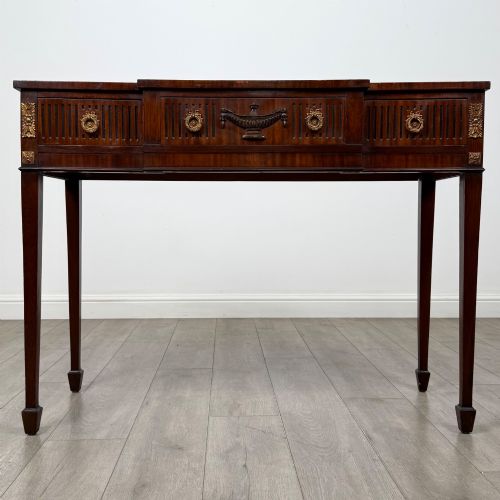
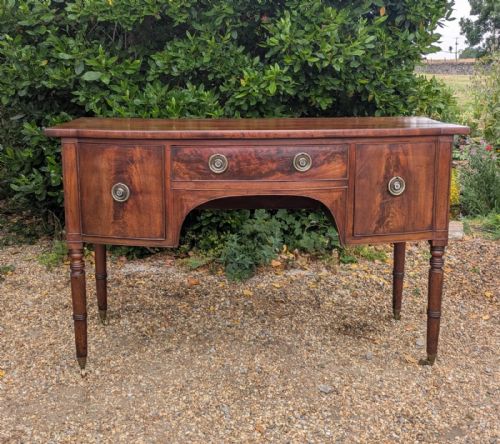
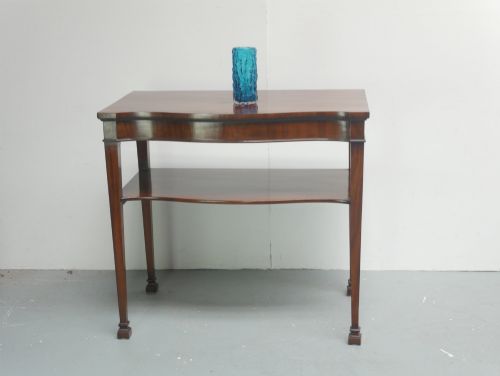
The version you are most likely to meet on this page is a Georgian or George III serving table or sideboard, frequently featuring drawers or serpentine fronts. Sideboards and console tables form the core of the selection, built for domestic utility in reception rooms and dining halls.
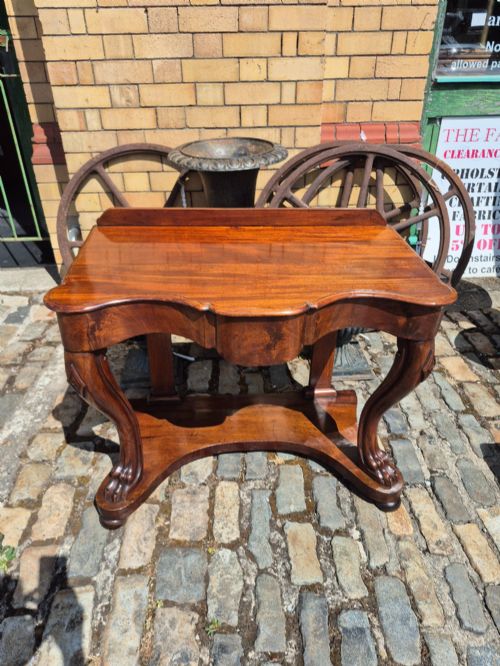
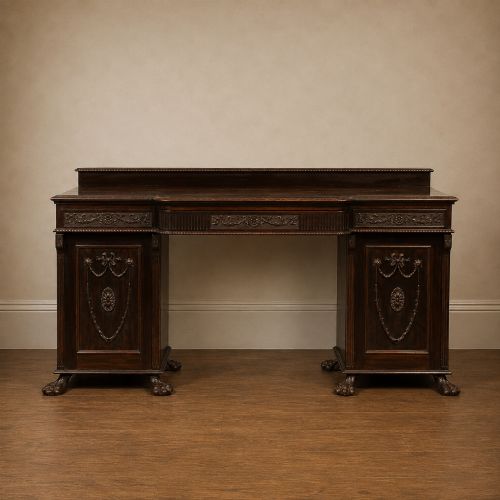
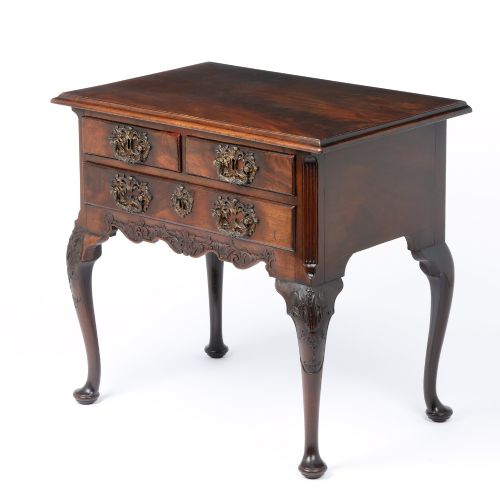
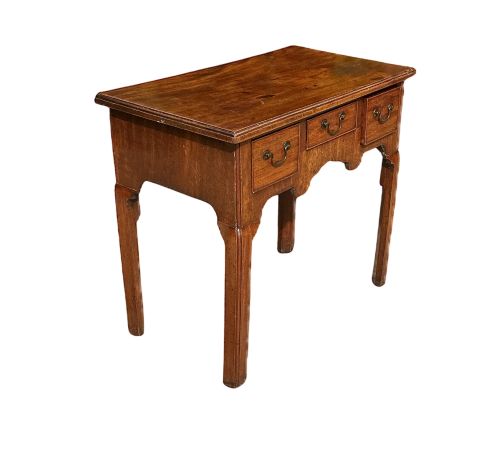
Origins span English workshops alongside Irish regional pieces, showcasing forms from simple lowboys to grand breakfront sideboards. Makers and periods stretch from the mid-eighteenth century through to the early twentieth century, maintaining a consistent timber palette.
What varies in quality
The distinction between standard domestic furniture and exceptional craftsmanship lies in the selection of timber and the precision of the cabinetwork. Figured mahogany and flame veneer demand careful matching across a serpentine or breakfront facade, whereas lesser pieces rely on plain stock timber.
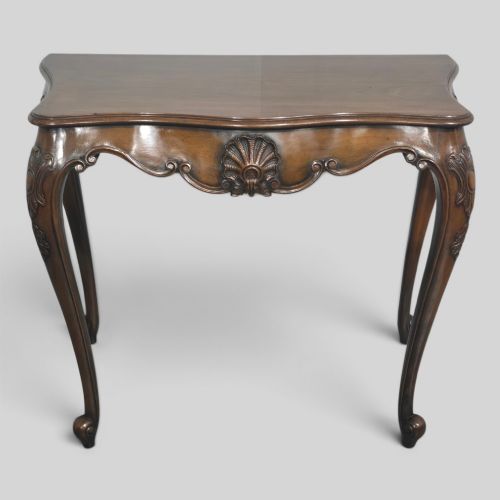
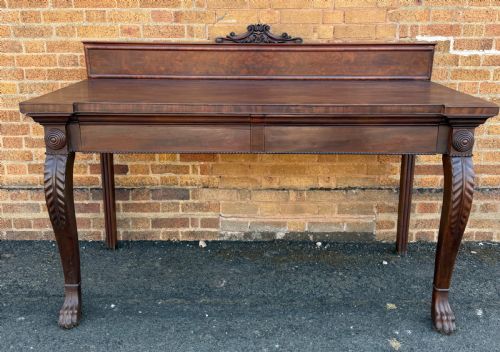
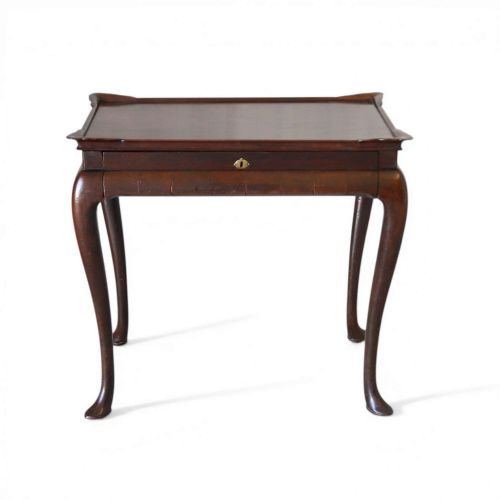
Proportion and carving define the top of the range, seen in crisp blind fretwork, cabriole legs, or well-executed paw feet. Subtle details such as drawer linings in secondary timbers and restrained inlay indicate a workshop of higher standing.
Circular dumb waiters let diners reach their own port without the staff lingering.
Gillows·M. D. Miller & Sons
The Dark Mahogany Server Table Glossary
- Serpentine
- A front outline curving outward in the centre and inward at the sides. This shape demands expert joinery to fit drawers accurately.
- Breakfront
- A piece of furniture whose central section projects forward from the flanking wings. It creates a formal architectural profile on sideboards and consoles.
- Dumb waiter
- A tiered revolving stand used to hold dishes and glasses near a dining table. They appear in circular multi-tiered forms from the Georgian and Regency eras.
- Lowboy
- A small side table or dressing table with one or more rows of drawers supported on four legs. Early examples often feature cabriole legs.
- Stringing
- Thin lines of contrasting timber inlaid into a surface to create decorative borders. Satinwood and boxwood were common choices for this technique.
Dark Mahogany Server Table: Frequently Asked Questions
What is a dark mahogany server table?
A dark mahogany server table is a heavy timber furnishing used originally for food service and display in dining rooms. These pieces encompass sideboards, serving tables, and console tables built in styles ranging from Georgian to Edwardian.
They provide a long surface for serving dishes alongside practical drawer storage for linen and cutlery. The deep reddish-brown tones of the timber suit formal reception spaces and traditional interiors.
How do I date a mahogany sideboard?
Dating a mahogany sideboard involves examining the structural timber, hardware, and decorative vocabulary such as inlay and leg profiles. Georgian and George III pieces generally display simpler structural lines or restrained bracket feet, while Regency items often introduce bolder brass mounts and reeded legs.
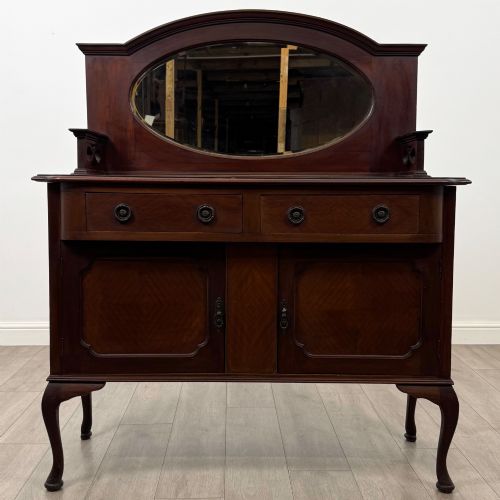
Later Edwardian and revival pieces copy earlier Georgian or Adam styles but frequently utilise lighter interior woods or machine-cut veneers. Comparing the secondary woods inside the drawer boxes helps confirm the period of construction.
Where were serving tables placed?
Serving tables stood against dining room walls to hold heavy platters and tureens during large meals. Servants plated food from these surfaces before carrying it to the main dining table.
In modern rooms, they function as side consoles in hallways or dining spaces for lamps, books, and decorative objects. Their narrow depth allows them to sit flush against walls without blocking walkways.
What is the difference between a sideboard and a server?
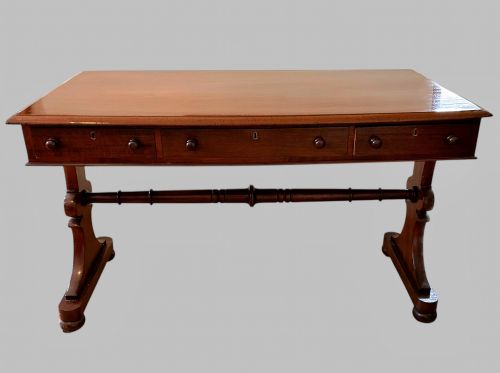
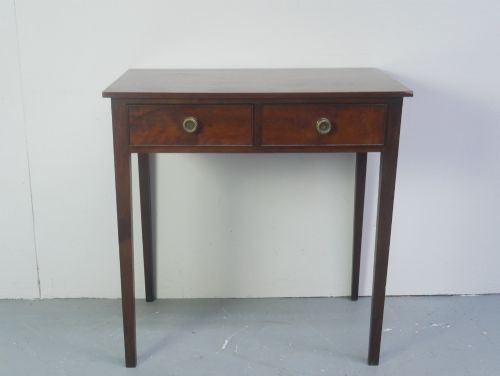
A sideboard traditionally incorporates deep drawer storage and sometimes central cupboards enclosed by doors. Servers and serving tables tend to be more open in design, featuring fewer drawers and standing on taller legs without enclosed lower cabinets.
Both forms utilise dark mahogany and share similar aesthetic origins in eighteenth and nineteenth-century dining furniture. Servers offer a lighter visual footprint compared to massive breakfront sideboards.