
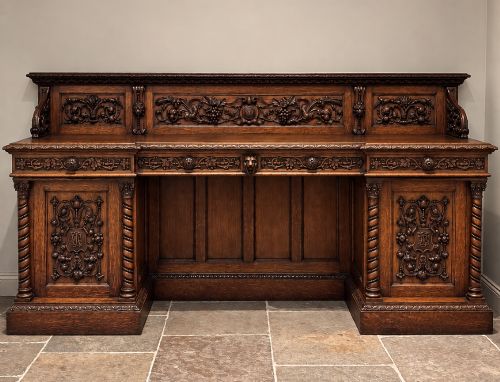
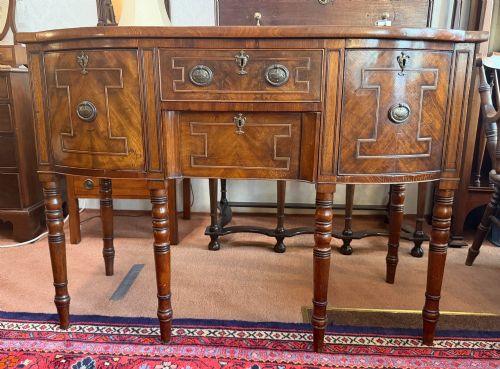
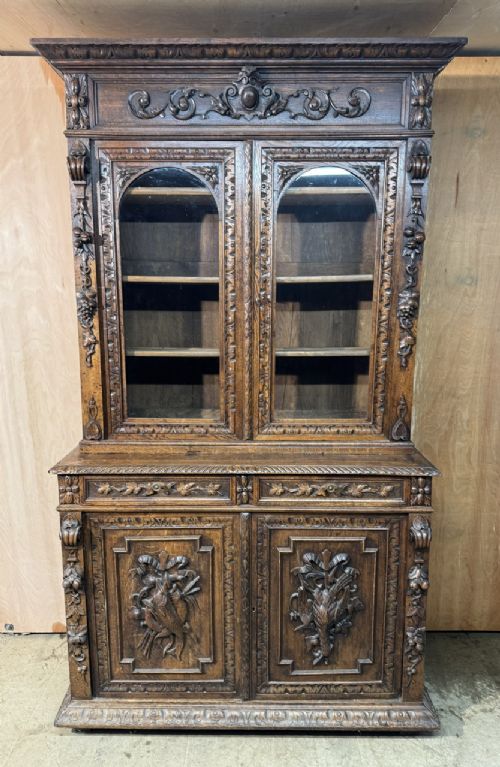
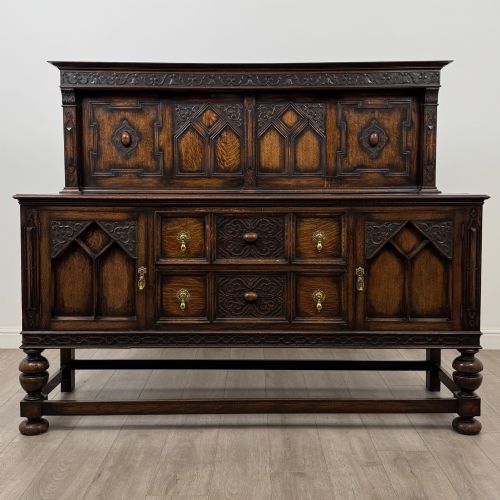
Brown Wood Buffet
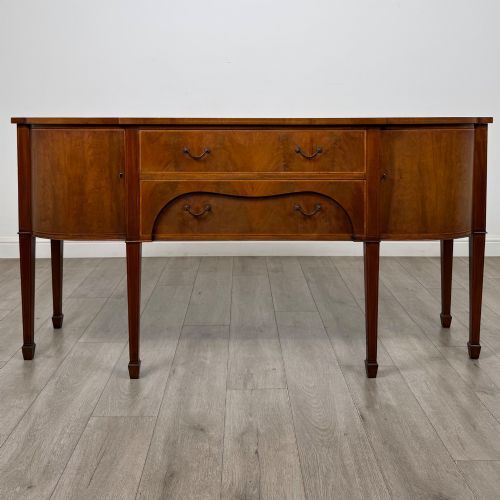
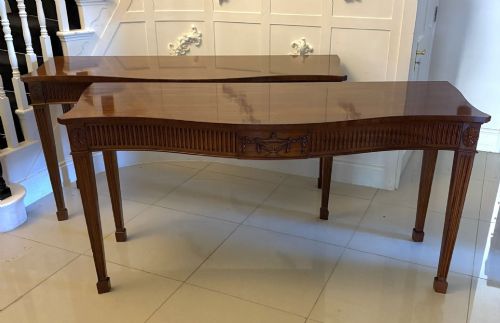
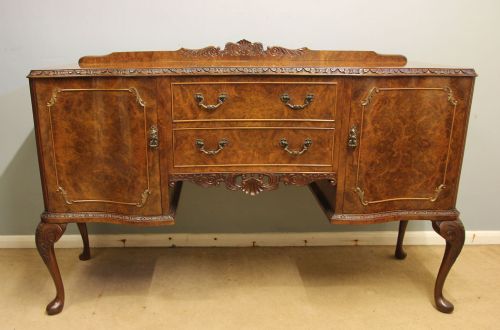
These brown wood buffet examples combine useful storage with rich grain, offering practical presence for a traditional dining room or hallway.
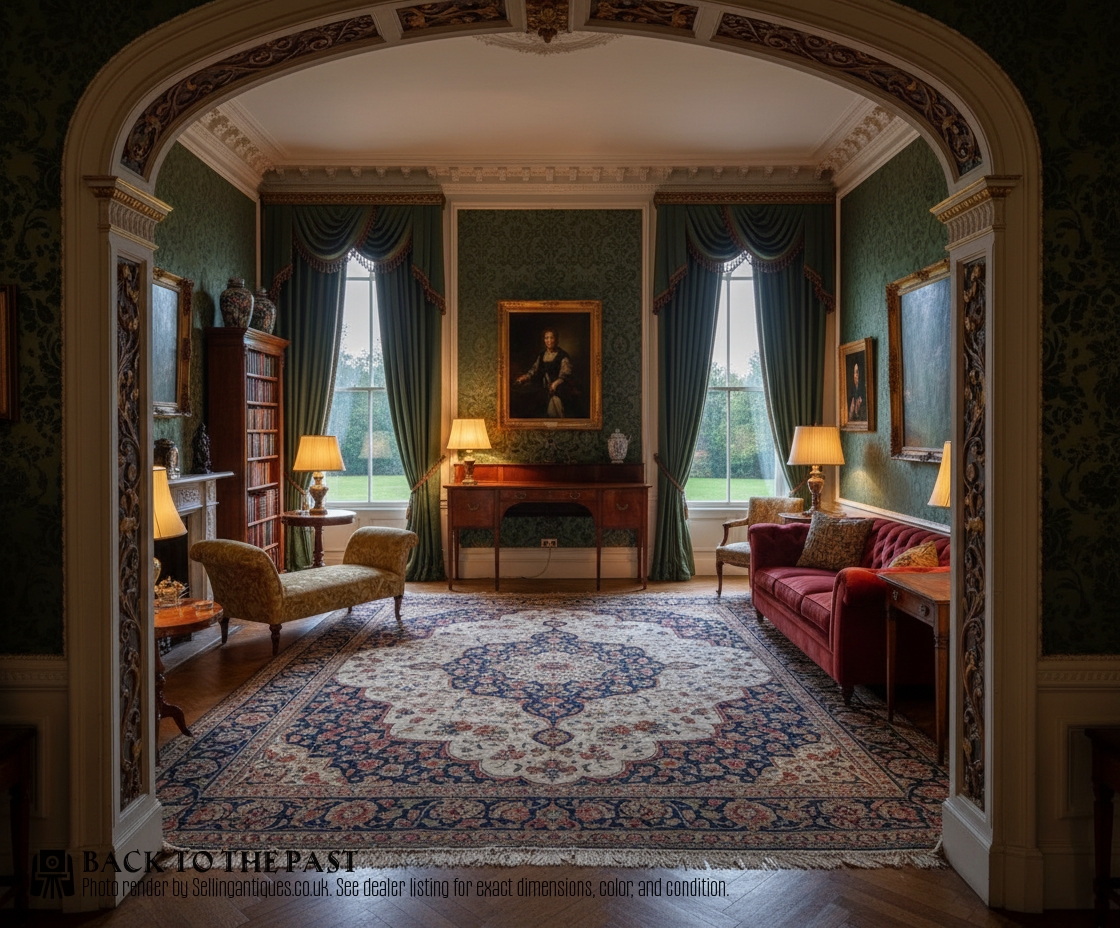
Identifying a brown wood buffet
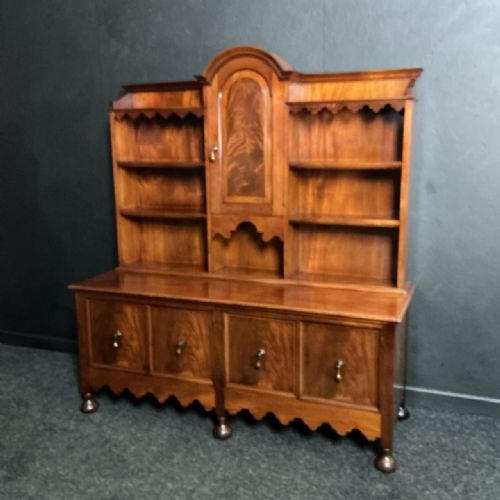
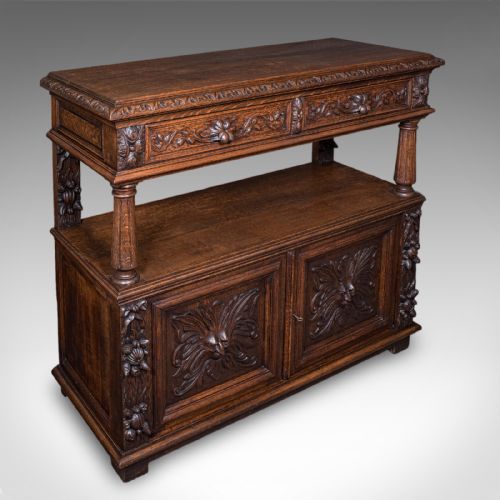
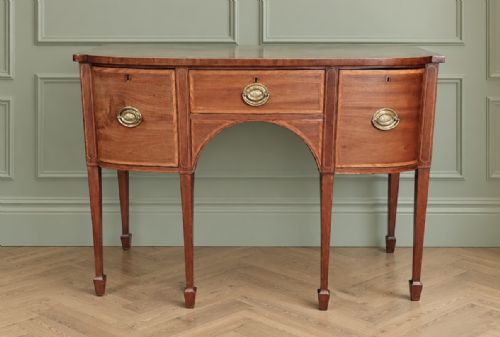
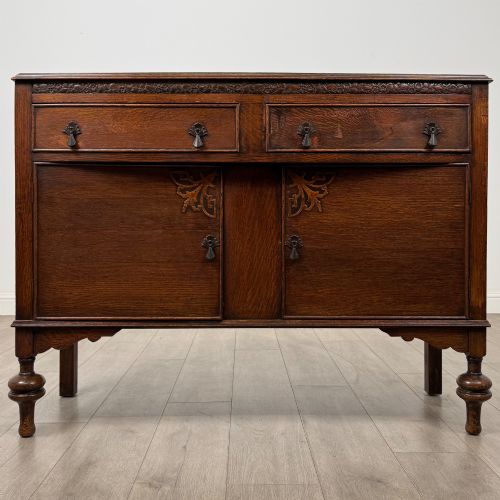
A brown wood buffet serves as a substantial storage piece, encompassing related forms such as sideboards, dumb waiters, and serving tables. These items appear across several distinct periods, including the eighteenth century, the nineteenth century, and the Edwardian era.
The styles range from George III and William IV to Victorian, Edwardian, and Sheraton Revival, alongside French provincial iterations. Sideboards and buffets provide long surfaces and cabinet space, while dumb waiters offer tiered shelving.
Materials span mahogany, oak, walnut, and chestnut, sometimes accented with satinwood or boxwood. Pieces arrive from various eras, showing both formal proportions and regional carving traditions.
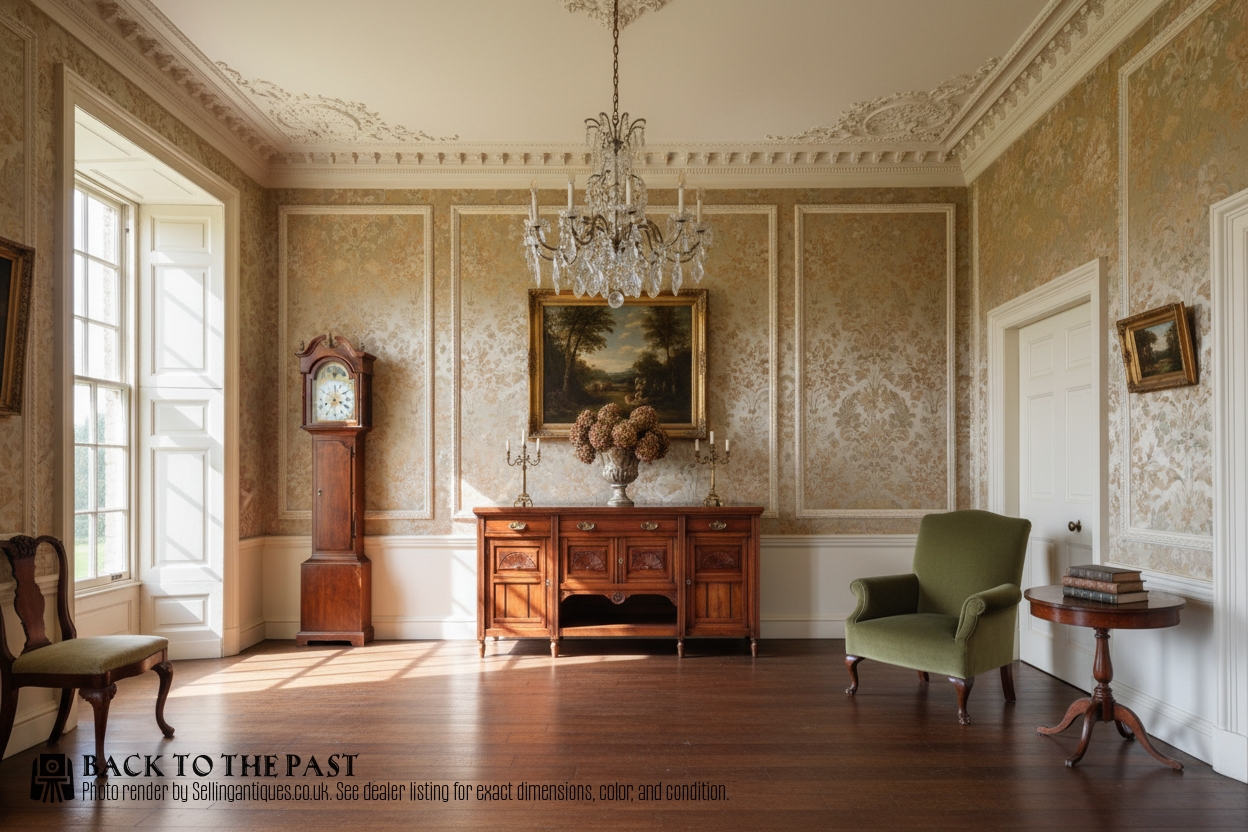
Materials and construction
Cabinet makers utilised dense hardwoods like mahogany, oak, and walnut for the primary carcases and framework. Chestnut appears in regional French provincial pieces, bringing its own distinct grain and weight.
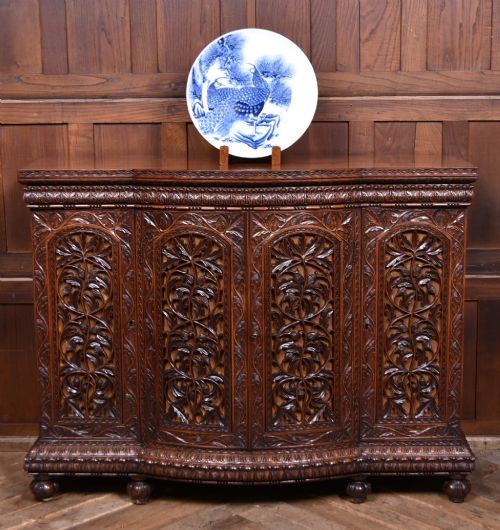
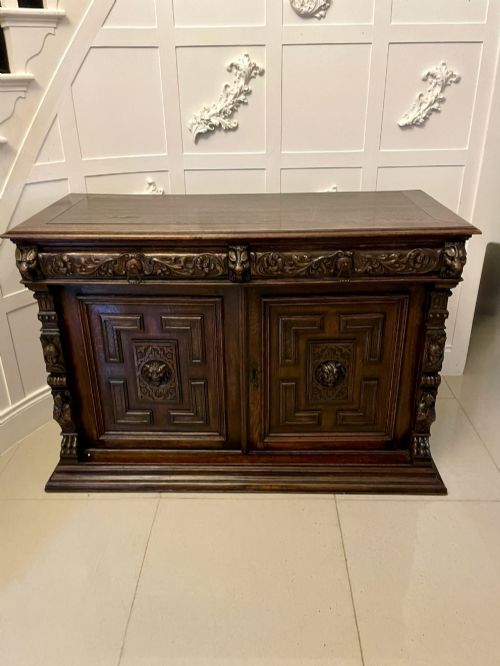
Secondary details involve inlay and hardware, incorporating satinwood, boxwood, brass, and iron elements. Carved decoration appears on select Victorian and provincial examples, showing hand-chiselled surface work.
Retail Price Guide 2026
Typical UK retail prices for brown wood buffet, calculated from the Sellingantiques database of over a million retail prices indexed since 2003. This retail price guide relies exclusively on Sellingantiques data; no external sources or auction records are used, so the figures do not describe the wider market.
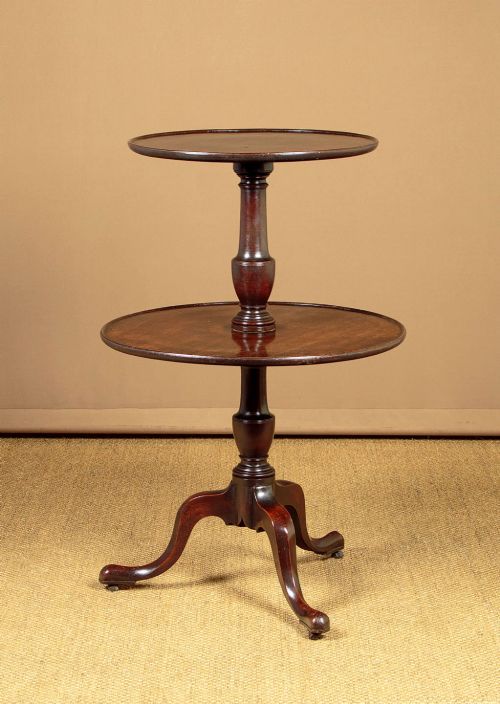
A three tier dumb waiter stands ready to hold afternoon tea, proving that furniture can multitask with Victorian ambition.
Judging quality in brown wood buffet designs
Quality rests in the selection of timber and the crispness of any carved ornament or inlay. Finer pieces demonstrate careful grain matching across large doors and drawer fronts, whereas simpler items rely on plain surfaces.
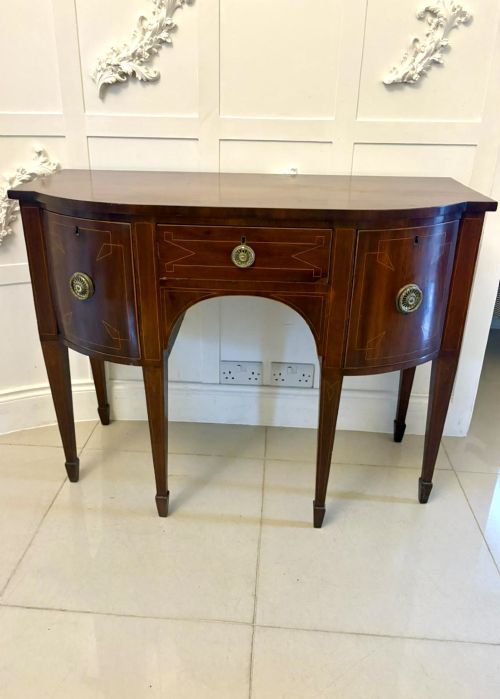
The integration of brass and iron hardware also separates standard production from higher status items. Proportion and structural balance dictate the visual weight of the piece within an interior.
The Brown Wood Buffet Glossary
- Buffet
- A low storage piece designed for serving food and holding dining wares. It sits alongside sideboards within dining spaces.
- Sideboard
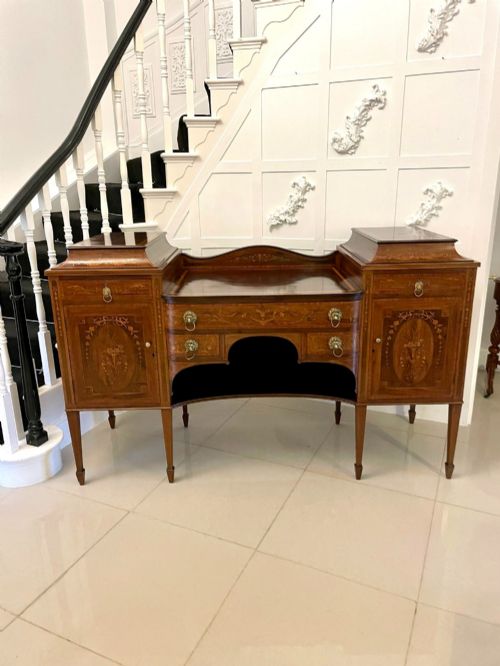
- A long dining room furniture item featuring cupboards and drawers. It evolved significantly from the George III period through the Victorian era.
- Dumb waiter
- A tiered freestanding serving stand with multiple platforms. The Victorian mahogany version on this page uses three distinct levels.
- Sheraton Revival
- A late nineteenth and early twentieth century style looking back to eighteenth century neoclassical designs. It frequently employs satinwood and mahogany.
- Pedestal sideboard
- A large form featuring two distinct side pedestals connected by a central counter or table section. These date into the nineteenth century.
Frequently Asked Questions
What is a brown wood buffet?
A brown wood buffet is a heavy timber serving and storage piece intended for the dining room. These items encompass sideboards, dumb waiters, and provincial cupboards.
They appear in various styles from the eighteenth century onwards, constructed from mahogany, oak, walnut, and chestnut.
How do I date a sideboard?
Dating relies on observing the combination of timber, construction methods, and stylistic details. Pieces from the George III period show restrained neoclassical lines, while Victorian examples often feature heavier carved oak or walnut.
Hardware, such as brass pulls and hinges, also provides clues to the manufacturing decade.
Where should I place a buffet?
These pieces suit dining rooms, large hallways, or spacious living areas where surface space and storage are required. Their deep timber tones work best against neutral walls that allow the wood grain to stand out.
Ensure adequate floor space is available for opening cabinet doors and drawers.
What is the difference between a buffet and a sideboard?
While the terms often overlap in listings, a traditional buffet sits lower and focuses on serving food, whereas a sideboard frequently incorporates deeper cupboards and drawers. Both share a common heritage in dining room storage.
Examples on this page span both categories.
How do I care for antique timber?
Protect antique wood by keeping it away from direct heat sources and strong sunlight that can dry out the surface. Regular dusting with a dry cloth maintains the finish without needing heavy polishes.
Apply wax sparingly when the timber appears dull.