


Brown Walnut Semainier
These brown walnut semainier pieces offer tall, narrow storage built for bedrooms, combining French and English cabinet-making traditions with seven signature drawers.
Brown Walnut Semainier
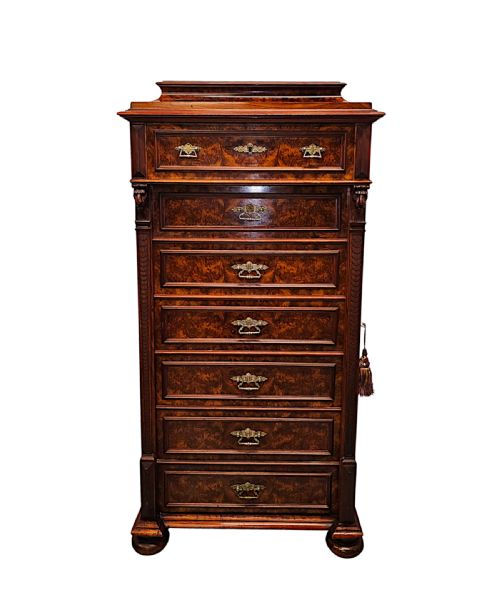
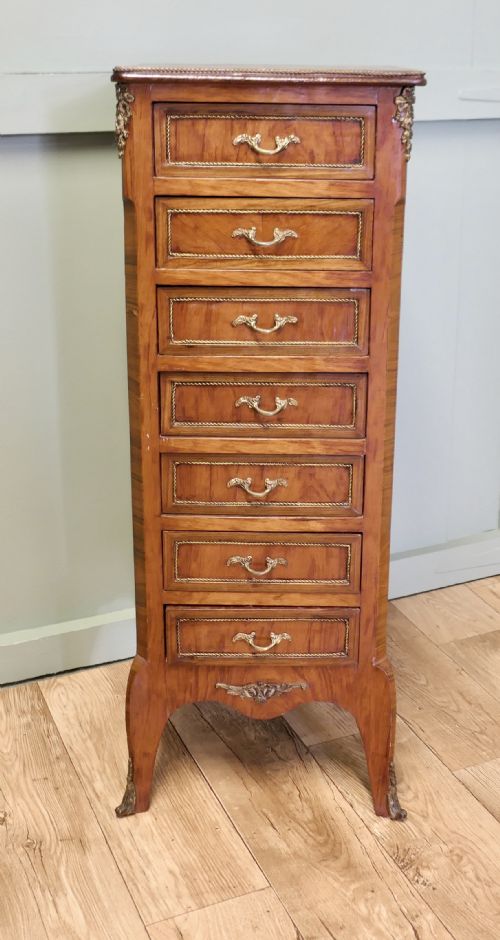
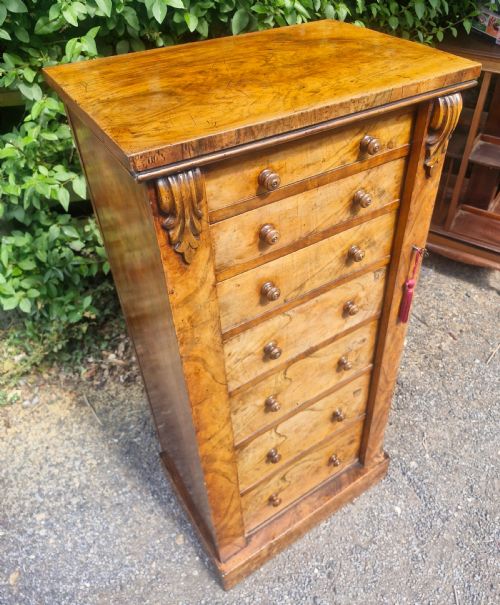
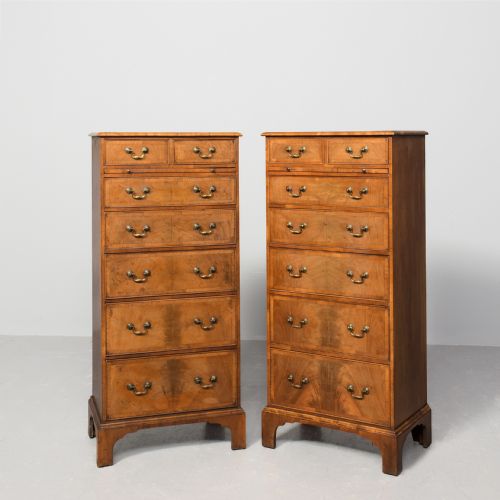
A brown walnut semainier stands as a tall chest of drawers designed traditionally to hold a week of clothing, with seven drawers stacked vertically to maximise floor space. Most examples found here stem from the nineteenth century or early twentieth century, encompassing Victorian pieces and French stylistic influences.
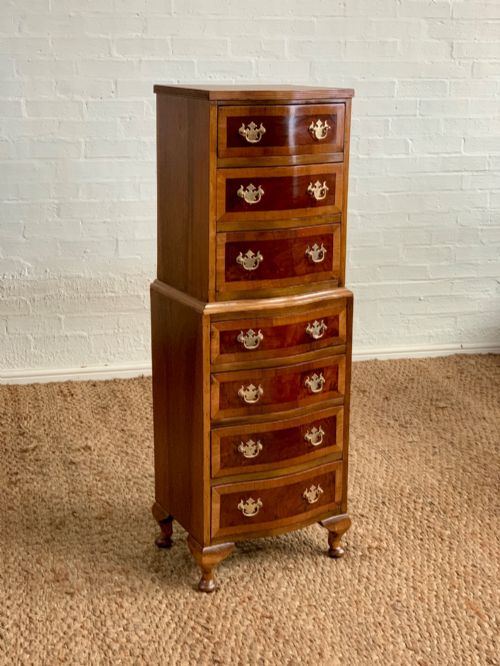
The form appears in various regional guises, including Wellington chests with side locking bars, Queen Anne style tallboys, and French marble-topped cabinets. Buyers encounter everything from neat George III style proportions to massive nineteenth century architectural carcases.
Materials and construction
Craftsmen built these tall carcases using timber framing faced with walnut veneer or burr walnut, creating rich grain patterns across the drawer fronts. Marquetry inlay sometimes decorates the surfaces, adding intricate floral or geometric motifs to the wood.
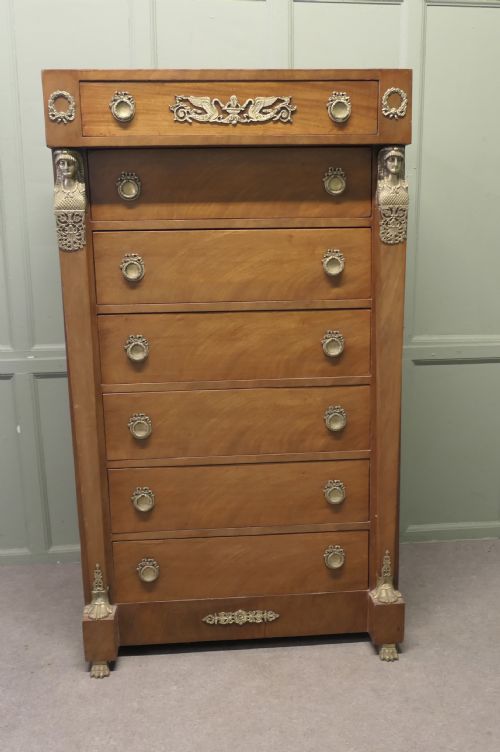
Metal fittings complete the construction, incorporating brass handles, iron locking mechanisms, gilt bronze, and ormolu mounts. Marble tops appear on several continental variants, providing a durable and decorative upper surface.
Legend says the seven drawers were originally designated for storing seven distinct sleeping caps, one for every night of the week.
Factors determining quality
Quality rests heavily on the selection of the walnut timber and how cleanly the veneer or burr walnut is matched across the drawer fronts. Finely figured grain patterns and symmetrical layouts elevate a piece above standard utility furniture.
The integration of decorative hardware, such as chased ormolu mounts, cast brass handles, and heavy marble tops, separates standard workshop output from finer cabinet-making. Internal drawer construction, dovetailing precision, and smooth sliding mechanisms further distinguish the better examples.
Betty Joel
The Brown Walnut Semainier Glossary
- Semainier
- A tall chest traditionally containing seven drawers, one for each day of the week. This form originated in France during the eighteenth century.
- Wellington chest
- A tall, narrow Victorian chest featuring a hinged vertical locking bar on one side that secures all the drawers at once. It often includes a plinth and a moulded cornice.
- Burr walnut
- Timber taken from a tree growth or burl, yielding swirling, knotty grain patterns prized for decorative veneering. It is sliced thin and applied to solid carcase woods.
- Ormolu
- Gilt bronze mounts cast and finished to adorn furniture, particularly common on French styles. The technique involves applying a gold amalgam to bronze.
Brown Walnut Semainier: Frequently Asked Questions
What is a semainier used for?
A semainier serves as a tall bedroom chest designed to hold daily garments, with its seven vertical drawers historically used to organise a full week of clothing.
Its narrow footprint makes it practical for rooms where floor space is limited while still providing substantial vertical storage.
How do I tell a Wellington chest apart?
A Wellington chest is identified by its narrow proportions and a hinged wooden locking bar on the right side that fastens over the drawer edges.
This specific mechanism sets it apart from standard tall chests of drawers and French semainiers.
Where did walnut semainiers originate?
The semainier form developed primarily in France, though British cabinet makers adopted similar tall narrow formats during the nineteenth century.
French pieces frequently feature marble tops and ormolu mounts, whereas British versions often follow Victorian or earlier stylistic revivals.
How do I fit a tall chest into a room?
Because these chests build upwards rather than outwards, they fit well into alcoves or tight bedroom corners where standard wide chests will not go.
Securing tall furniture to a wall is often recommended for safety given their height and narrow base.