




Kingwood Inlaid Chest
A kingwood inlaid chest brings together rich violet-brown timbers and precise geometric or floral patterns, offering a sophisticated storage piece for the home.
Kingwood Inlaid Chest
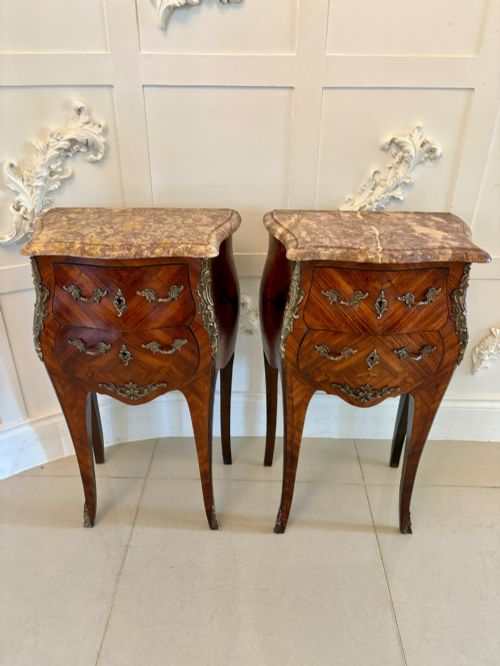
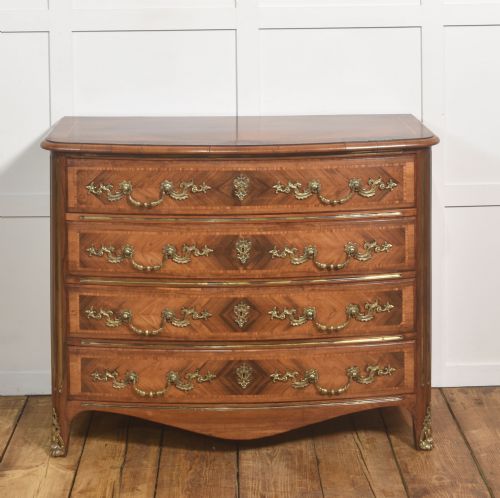
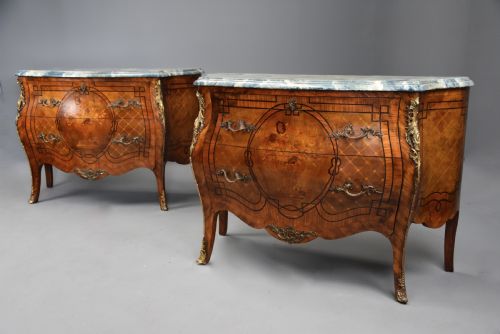
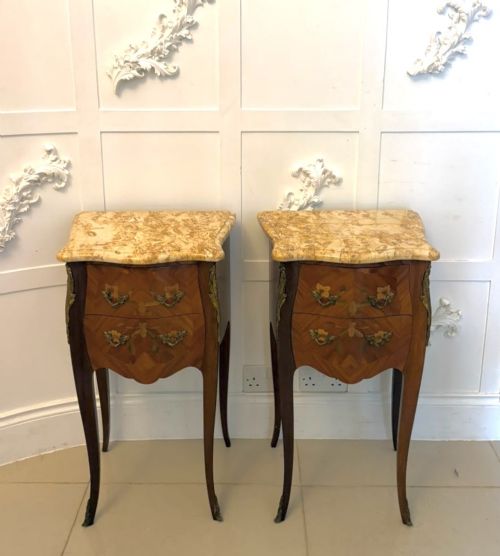
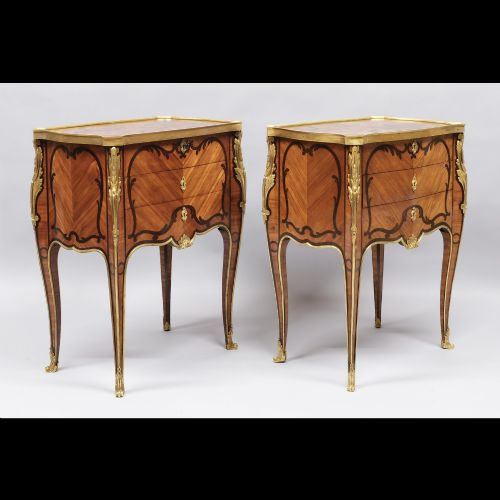
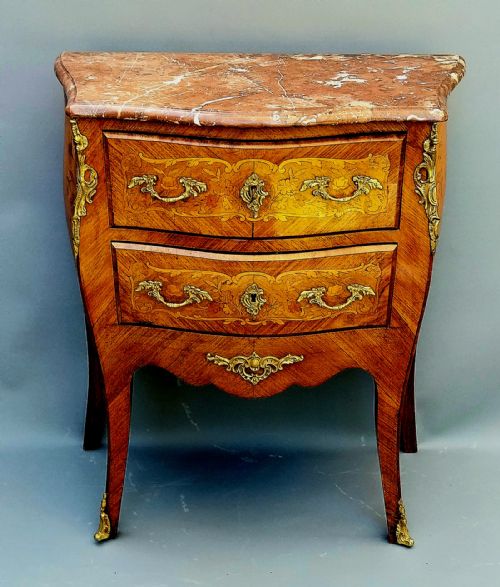
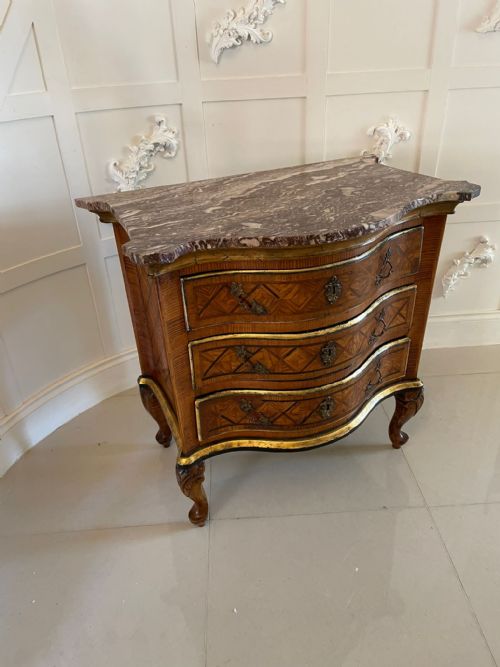
A kingwood inlaid chest typically manifests as a French commode, bedside cabinet, or serpentine chest of drawers originating from the eighteenth to the twentieth centuries. These pieces serve as functional storage furniture defined by decorative wooden veneers and often feature shaped marble tops.
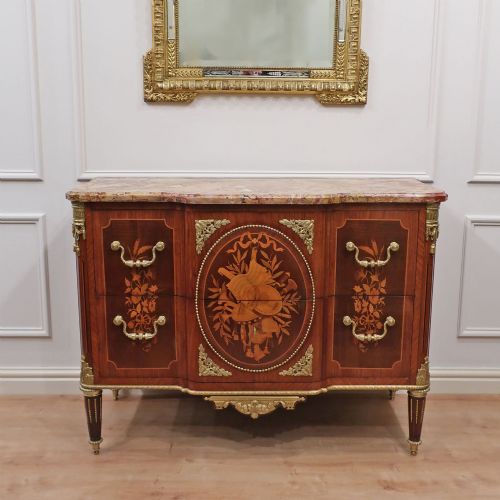
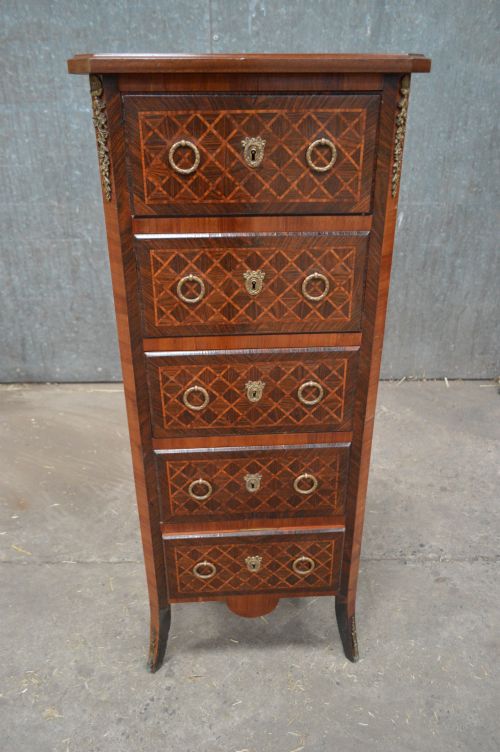
The most common versions met on this page are French commodes and bedside cabinets from the nineteenth and early twentieth centuries, designed in Louis XV or Louis XVI revival styles. They combine practical drawer space with decorative marquetry or parquetry surfaces.
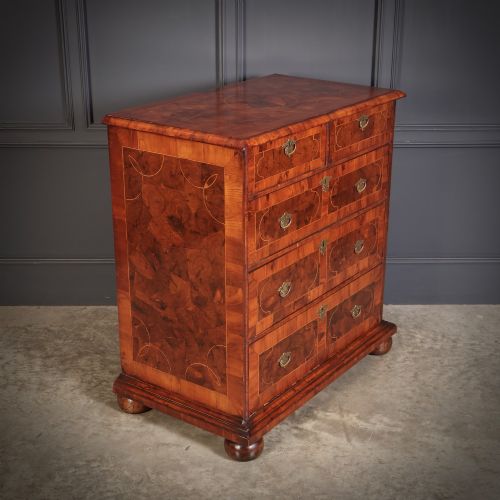
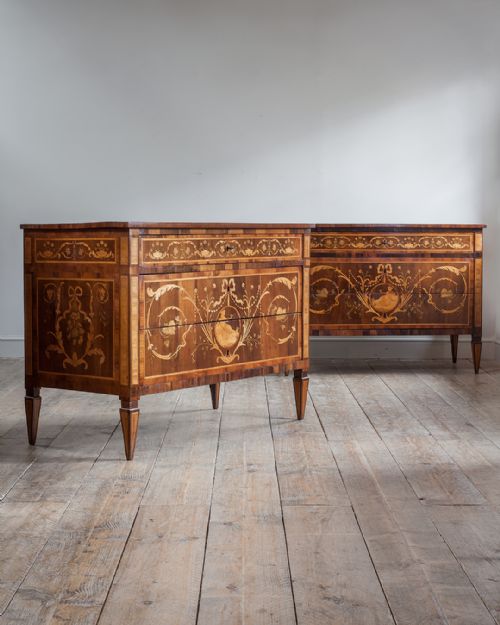
Earlier examples also appear, ranging from seventeenth-century oyster veneered chests to eighteenth-century Italian and English walnut and kingwood pieces. These variations demonstrate the enduring appeal of contrasting timber grains across different European workshops.
Materials and construction
Cabinet makers constructed these pieces using dense carcases of oak or pine, applied with thin decorative veneers of kingwood, walnut, rosewood, and satinwood. These timbers were cut and arranged to form intricate geometric parquetry patterns or figurative marquetry scenes.
Mounts of cast or gilt bronze, ormolu, and brass enhance the structural corners, handles, and apron mounts of French designs. Marble slabs, frequently fitted to the upper surface, provide a durable and contrasting top.
The listings on this page span from the seventeenth century through to the 1930s, featuring materials such as kingwood, marble, walnut, ormolu, and rosewood.
Assessing craftsmanship and finish
Quality rests in the precision of the veneer work and the integration of the mounts, where tight joints and balanced grain patterns distinguish finer examples from simpler production. The crispness of the bronze or ormolu casting further separates standard pieces from workshop masterpieces.
The choice and thickness of the marble top, along with the internal drawer construction using traditional dovetailing, indicate the original tier of manufacture. Well-preserved marquetry retaining its natural colour variations without excessive restoration holds higher regard.
Sormani·Gillows
The Kingwood Inlaid Chest Glossary
- Kingwood
- A dense, heavy South American timber displaying rich violet-brown tones with darker grain figuring. It was widely utilised by European cabinet makers for high-status veneered furniture.
- Marquetry
- The art of applying small pieces of veneer to a structure to form decorative pictures or floral designs. This technique requires meticulous cutting and fitting of various coloured woods.
- Parquetry
- A geometric mosaic of wood veneer arranged in repeating patterns such as cubes or chequers. It differs from marquetry by relying on geometric repetition rather than pictorial representation.
- Ormolu
- Gilt bronze mounts applied to furniture for decorative and protective purposes. The technique involves applying a gold amalgam to cast bronze before heating.
- Commode
- A low chest of drawers, typically French in origin and fashionable from the eighteenth century onward. These pieces often feature serpentine or bombe shaping.
Kingwood Inlaid Chest: Frequently Asked Questions
What is a kingwood inlaid chest?
A kingwood inlaid chest is a storage piece surfaced with decorative wood veneers, most frequently seen as French commodes or bedside tables from the eighteenth to early twentieth centuries.
These pieces utilise dense exotic timbers arranged in parquetry or marquetry patterns, often accompanied by marble tops and bronze mounts.
How do I style a commode at home?
These chests function effectively as bedside tables, hallway surfaces, or primary living room storage depending on their scale. Their decorative tops and veneered fronts allow them to serve as focal points in traditional or eclectic interiors.
Pairing them with simple lamps or neutral walls lets the intricate wood grain and ormolu mounts stand out without visual competition.
How do I tell Louis XV and Louis XVI styles apart?
Louis XV style furniture relies on asymmetrical curves, serpentine shapes, and flowing rococo motifs like scrollwork and floral marquetry. The overall forms feel organic and rounded.
Louis XVI style shifts toward classical symmetry, straight tapering legs, and geometric parquetry patterns reflecting neoclassical restraint and order.