

Vintage Marble Chest
A vintage marble chest brings together heavy stone and timber, giving a room a grounded surface that handles daily use.
Vintage Marble Chest
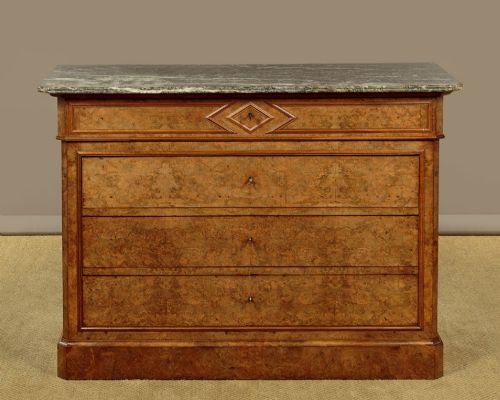
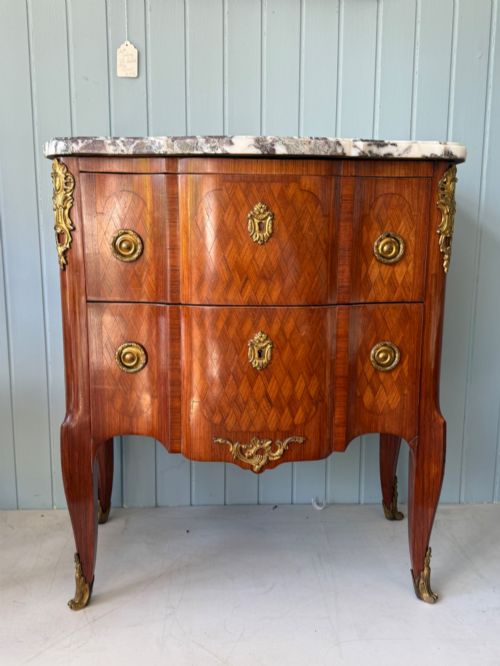
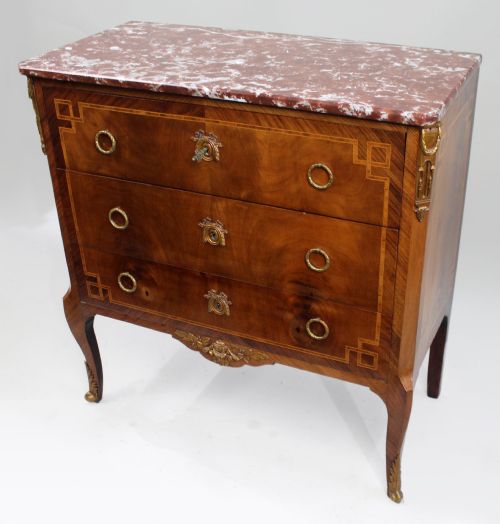
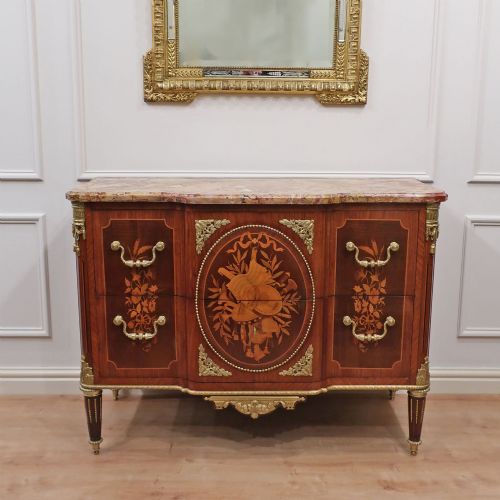
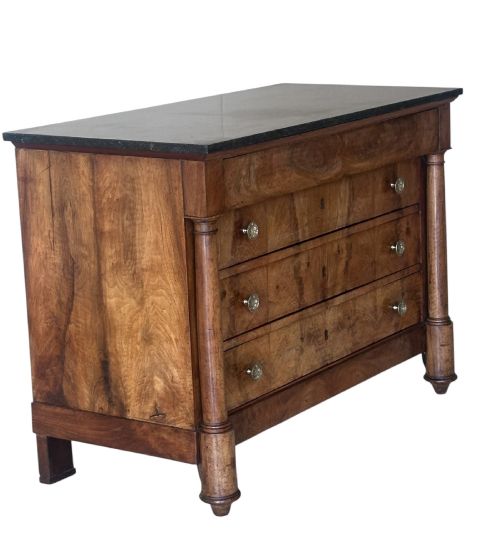
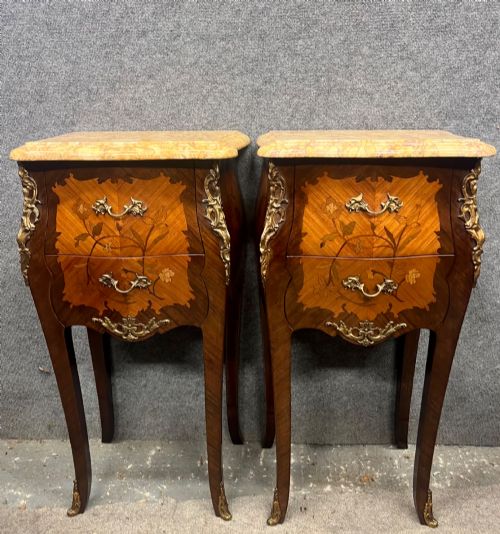
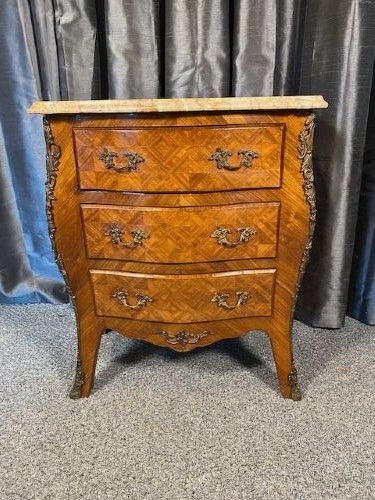
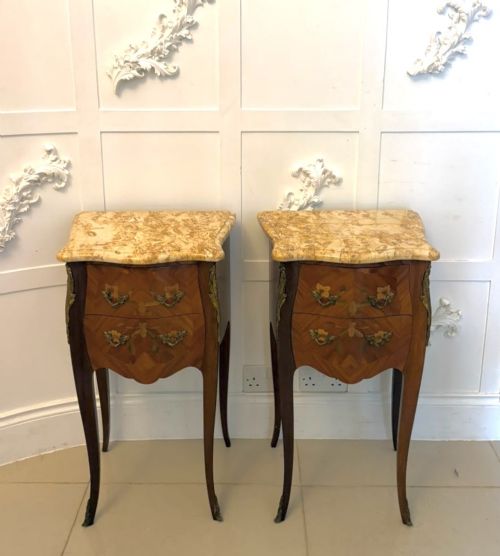
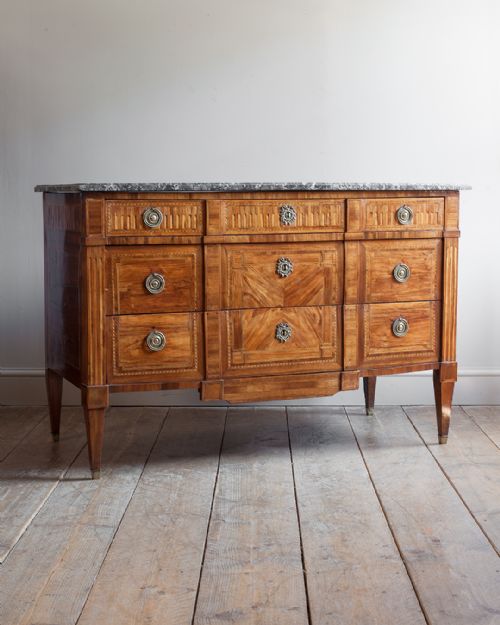
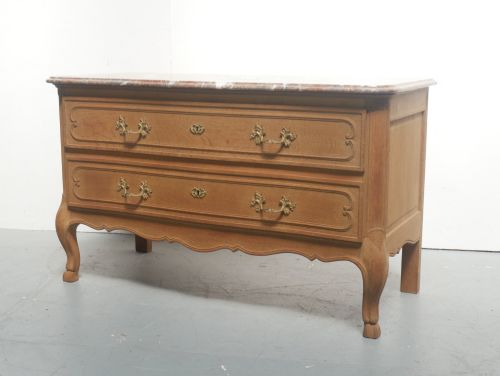
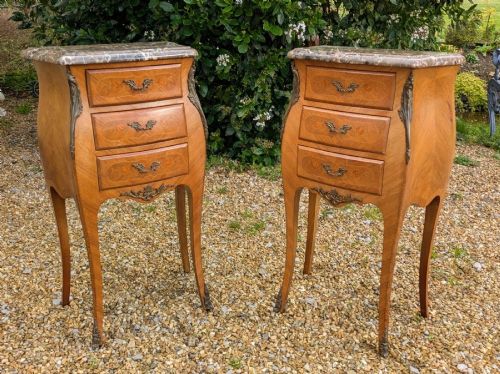
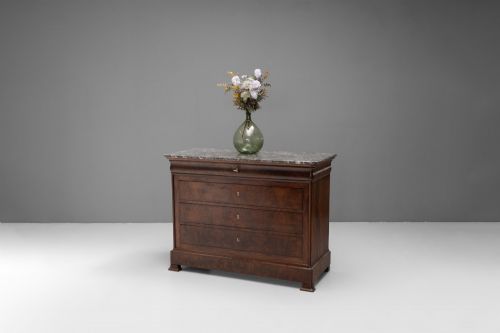
A vintage marble chest typically takes the form of a commode, a bedside cabinet, or a low drawer unit designed for a bedroom or parlour. When searching for a vintage marble chest, buyers generally encounter French pieces featuring stone slabs fitted precisely to timber carcases.
The materials span walnut, mahogany, oak, kingwood, and rosewood, often paired with contrasting grey, white, or rouge marble tops. These items arrive from various periods, stretching from eighteenth-century designs through nineteenth-century revivals and into early twentieth-century interpretations.
Materials and construction methods
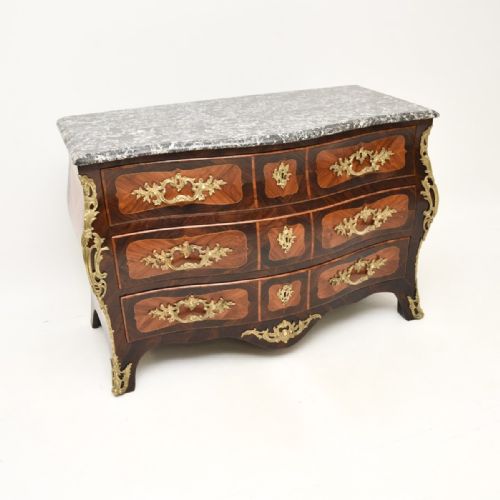
Cabinetmakers built the carcases using solid or veneered hardwoods such as mahogany, walnut, and oak, applying marquetry, brass inlay, or ormolu mounts for decoration. The heavy stone tops were cut, shaped, and polished to follow the contours of the timber base, whether serpentine, bombe, or straight-fronted.
Joinery methods relied on traditional dovetails for drawers and mortise and tenon frames for stability, supporting the substantial weight of the fitted marble slab above.
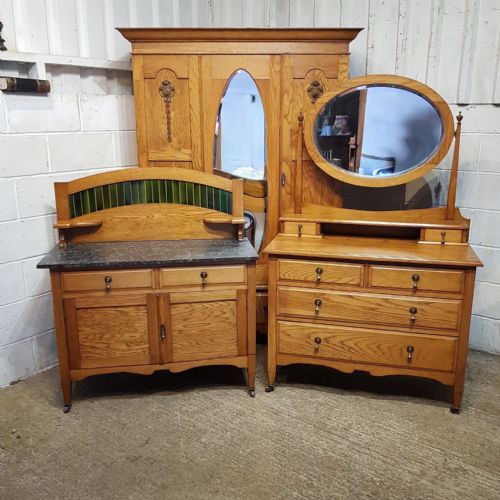
Common forms on this page range from bedside cabinets and commodes to dressing tables and multi-piece bedroom suites.
Factors that define the standard
Quality rests upon the precision of the timber work and the selection of the stone. A well-made piece shows tight joints, crisp marquetry or inlay, and a marble top that sits flush without excessive filler or crude repairs.
The choice of secondary woods, the weight of the bronze or brass mounts, and the fluency of carved details such as French Rococo or Louis XV revival motifs separate standard production items from finer workshop pieces.
Jacques Bircklé
The Vintage Marble Chest Glossary
- Commode
- A low chest of drawers, often standing on relatively high legs. These pieces frequently feature decorative wood veneers and stone tops.
- Bombe
- A swelling, outward-curving contour found on the front and sides of certain cabinets. This curved form requires advanced woodworking skill to match the marble top correctly.
- Marquetry
- Patterns created by fitting small pieces of veneer into a prepared ground. Craftsmen utilise different timber colours to form floral or geometric designs.
- Ormolu
- Gilded bronze used for decorative mounts and handles. This material adds metallic contrast to the dark timber surfaces.
Vintage Marble Chest: Frequently Asked Questions
How do I clean the marble top?
Use a soft cloth dampened with warm water and mild soap to wipe down the stone surface. Avoid acidic cleaners or harsh chemicals that can etch or dull the polished finish.
Dry the marble thoroughly afterwards to prevent water marks. A neutral stone soap works well for regular maintenance without harming the natural material.
Are the marble tops fixed in place?
Most marble tops simply rest on top of the wooden carcase under their own heavy weight. This allows the stone to be lifted off during transport to make moving the cabinet easier.
Some pieces secure the stone with small wooden blocks or plaster underneath, but many remain unattached. Check the edges carefully before attempting to lift or shift the chest.
How do I date a piece?
Examine the construction methods inside the drawers, such as hand-cut dovetails, timber shrinkage, and tool marks. These interior details reveal the period of manufacture more reliably than exterior decoration.
Compare the style, such as Louis Philippe or Arts and Crafts, with known design timelines. Wood types like kingwood or rosewood also point towards specific eras of production.
Can I place these in a bathroom?
High humidity and moisture can damage antique wood veneers and cause warping in the timber carcase. It is better to keep these pieces in dry living areas or bedrooms.
Temperature fluctuations also affect old glues and finishes. Placing the chest away from direct heat sources helps preserve the wood and the stone.