


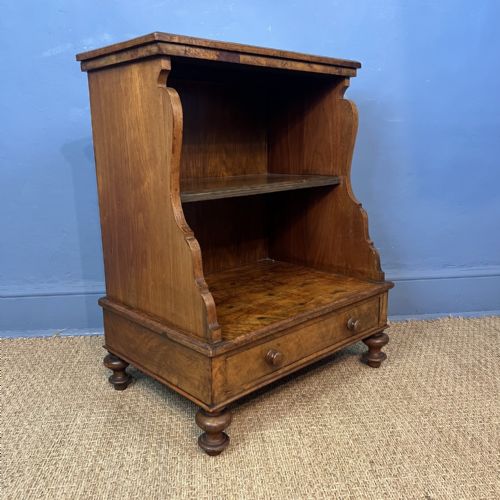
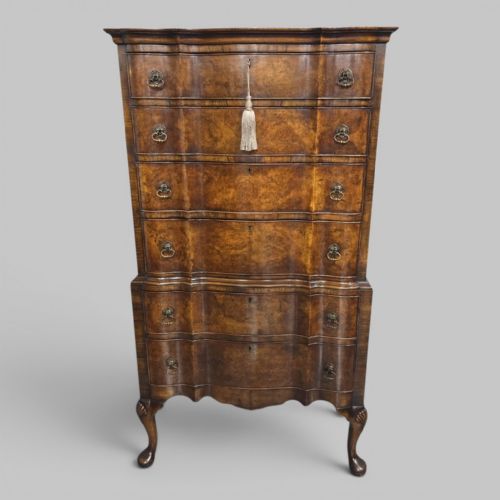


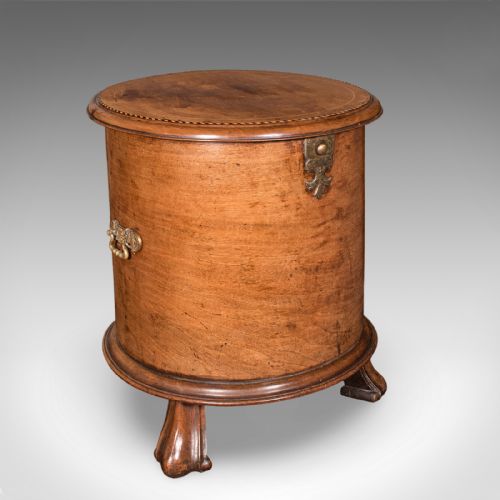

Brown Walnut Chest Stand
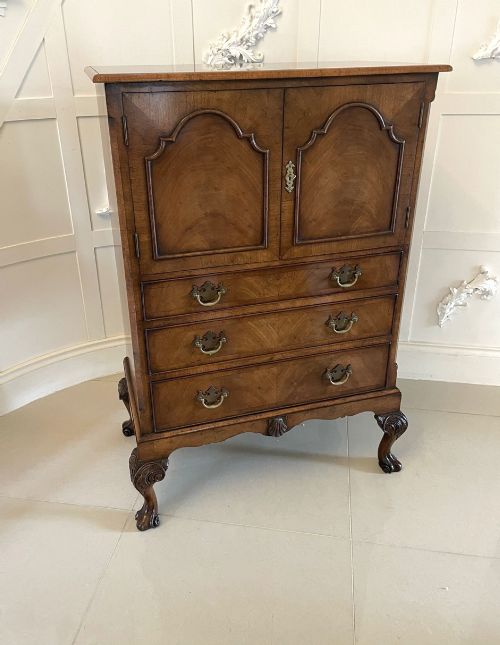
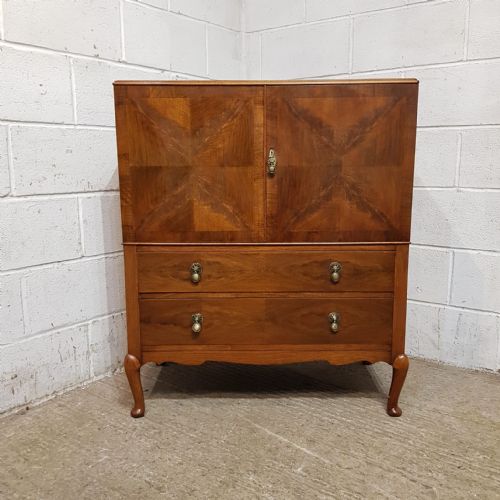
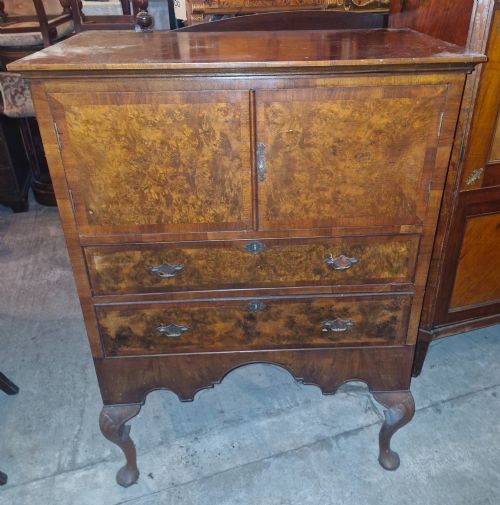
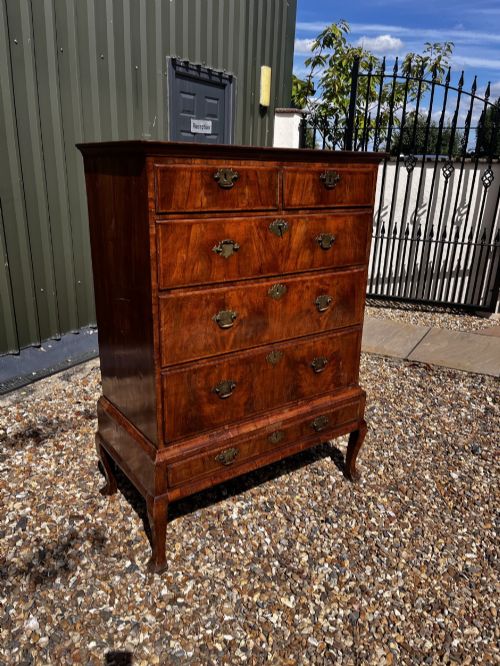
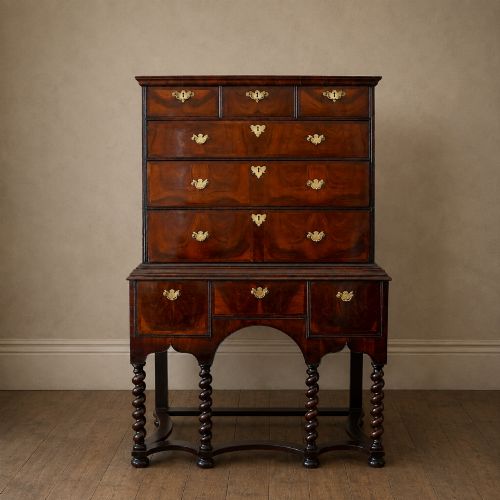
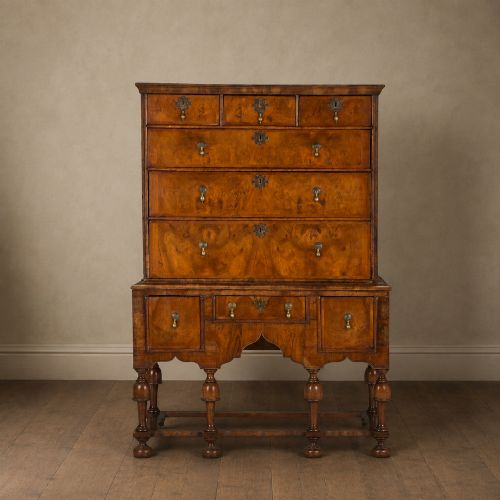
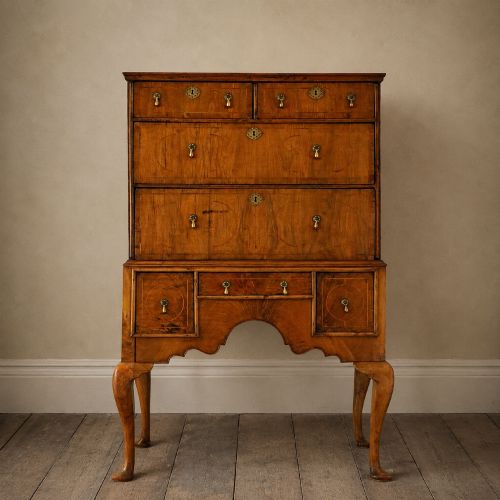
A brown walnut chest stand brings together two distinct furniture forms to create a raised storage piece with significant presence.
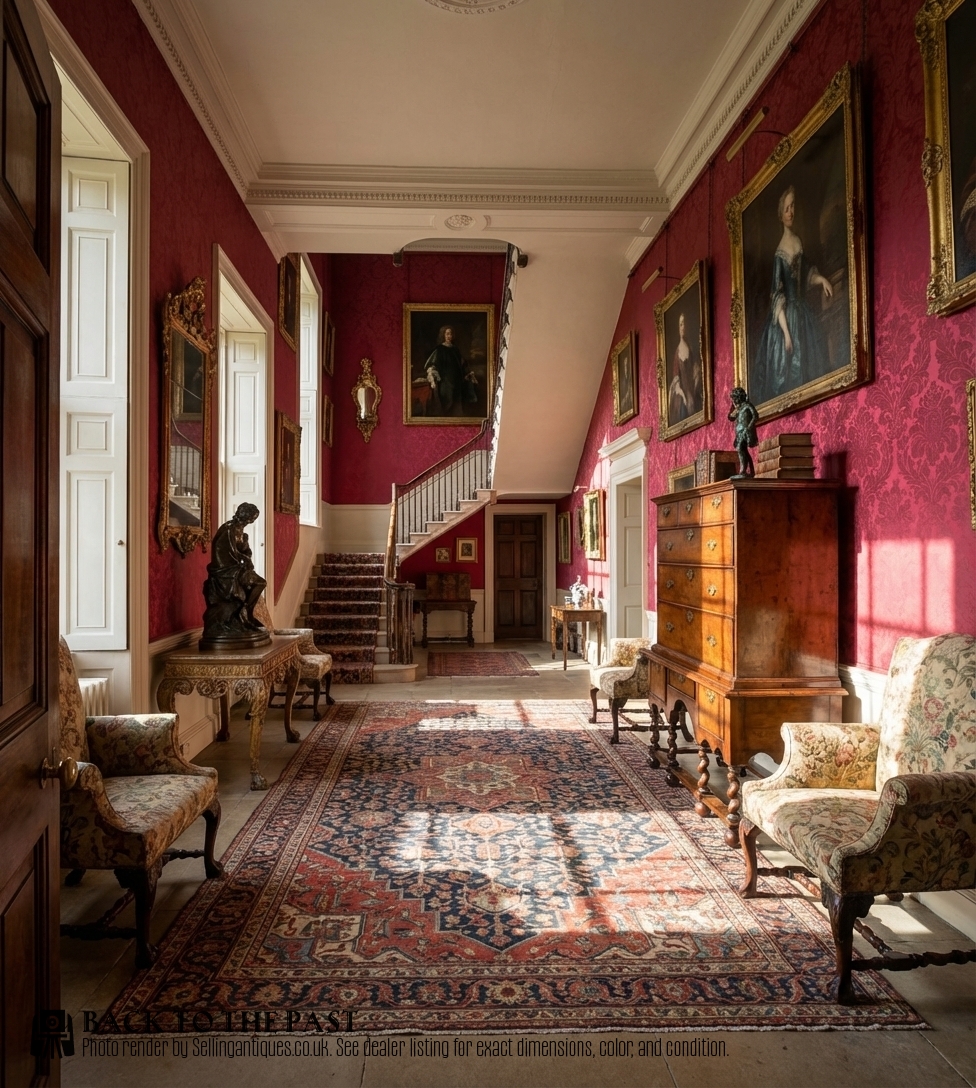
Brown Walnut Chest Stand
A brown walnut chest stand combines an upper section of drawers or a cabinet with a lower supporting frame, elevating the storage off the floor on legs. Buyers searching for a brown walnut chest stand encounter examples spanning the seventeenth, eighteenth, and early twentieth centuries, including pieces built in the William and Mary, Queen Anne, and George I styles.
The form typically splits into two constituent parts: the main chest body and the stand, which can be original to the piece or subsequently associated. Many listings feature burr walnut veneers, crossbanding, and oyster veneers arranged to highlight the natural figure of the timber.
While eighteenth-century originals from the Georgian period appear alongside revival pieces from the Edwardian era and the nineteen-twenties, the fundamental silhouette remains a multi-drawer chest raised on slender legs connected by stretchers.
Materials and construction
Cabinetmakers constructed these pieces using solid walnut and oak for internal carcases and drawer linings, applying fine veneers of walnut and burr walnut to the primary exterior surfaces. Decorative techniques such as crossbanding and seaweed marquetry defined the outer appearance, utilising contrasting grain directions to create geometric patterns.
Brass hardware, including drop handles and escutcheons, was fitted to the drawer fronts, while stands frequently employed shaped aprons, cabriole legs, or turned legs joined by stretchers for structural stability.
Several examples incorporate secret compartments hidden within the frieze drawers of the stand.
Judging quality and proportion
Quality rests heavily on the selection and matching of the walnut veneers, where symmetrical grain patterns and rich figuring distinguish superior examples from plain surfaces. The harmony between the upper chest and the lower stand dictates the visual success of the piece, as original stands maintain precise proportions with their corresponding chests.
Fine craftsmanship shows in the crispness of the crossbanding, the neatness of the dovetail joints within the drawers, and the integrity of the secondary timbers such as oak used inside the construction.
The Brown Walnut Chest Stand Glossary
- Chest on stand
- A form of furniture comprising a drawer-fitted upper carcase raised upon a separate or integrated low frame with legs. This design elevates storage off the ground and lightens the overall visual weight.
- Burr walnut
- A specialised timber veneer harvested from the wart-like growths on walnut trees, prized for its swirling, highly figured grain patterns. Cabinetmakers utilised this material on principal display surfaces.
- Crossbanding
- A decorative technique where narrow strips of veneer are applied to the borders of a panel so the grain runs perpendicular to the central section. This frames the primary timber and adds visual contrast.
- Oyster veneer
- Thin circular slices cut across small branches or roots of walnut, laid side by side to create an oyster-shell pattern. It appears on seventeenth and early eighteenth-century pieces.
- Cabriole leg
- A furniture leg that curves outward in a convex arc and tapers inward in a concave arc, terminating in a foot. It became a defining feature of Queen Anne and George I furniture.
Brown Walnut Chest Stand: Frequently Asked Questions
How do I date an antique walnut chest?
Dating relies on examining the timber species, construction methods, hardware types, and stylistic details such as leg shape and veneer patterns. Earlier pieces from the seventeenth and eighteenth centuries display hand-cut dovetails and native walnut or oak timbers.
Later revival pieces from the Edwardian era or the nineteen-twenties often utilise machine-cut elements and different internal woods while imitating earlier styles.
Are the stand and chest always original together?
Not all stands are original to the chests placed upon them, as components from different periods were sometimes paired together by makers or later restorers. Scholars and buyers describe stands that were united with chests later in their lifespan as associated.
Matching timber patination, construction joints, and proportionate scale help determine whether a chest and its stand started life together.
How do I care for antique walnut furniture?
Antique walnut requires stable indoor humidity levels and protection from direct sunlight to prevent the timber and veneers from drying out or fading. Gentle dusting with a dry, soft cloth maintains the surface without wearing down the polish.
Application of traditional wax polish helps nourish the wood and preserve the natural lustre of the walnut figure over time.