
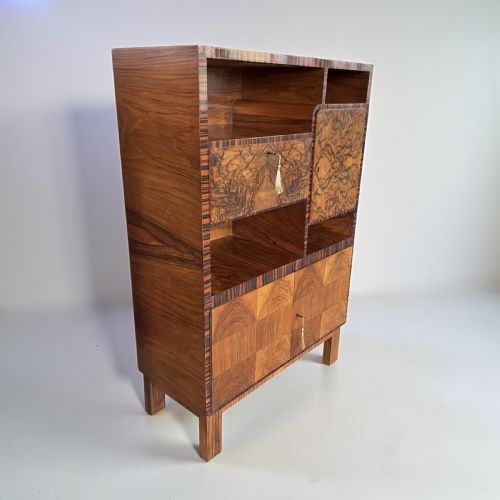
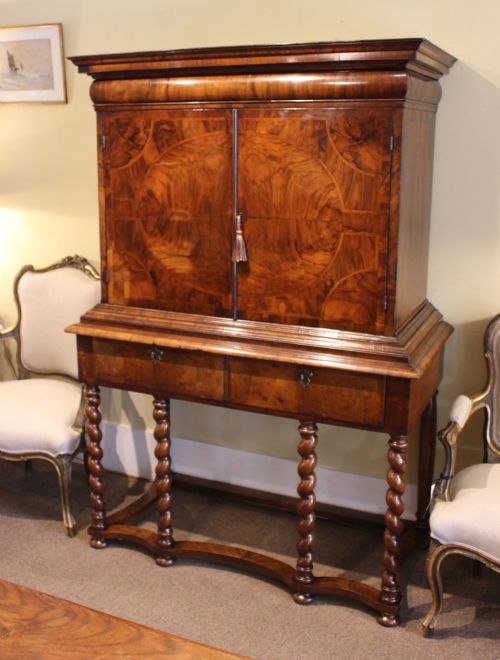


Walnut Tallboy on Stand
A walnut tallboy on stand unites upright drawer storage with a raised base, offering rich timber figuring for the collector.
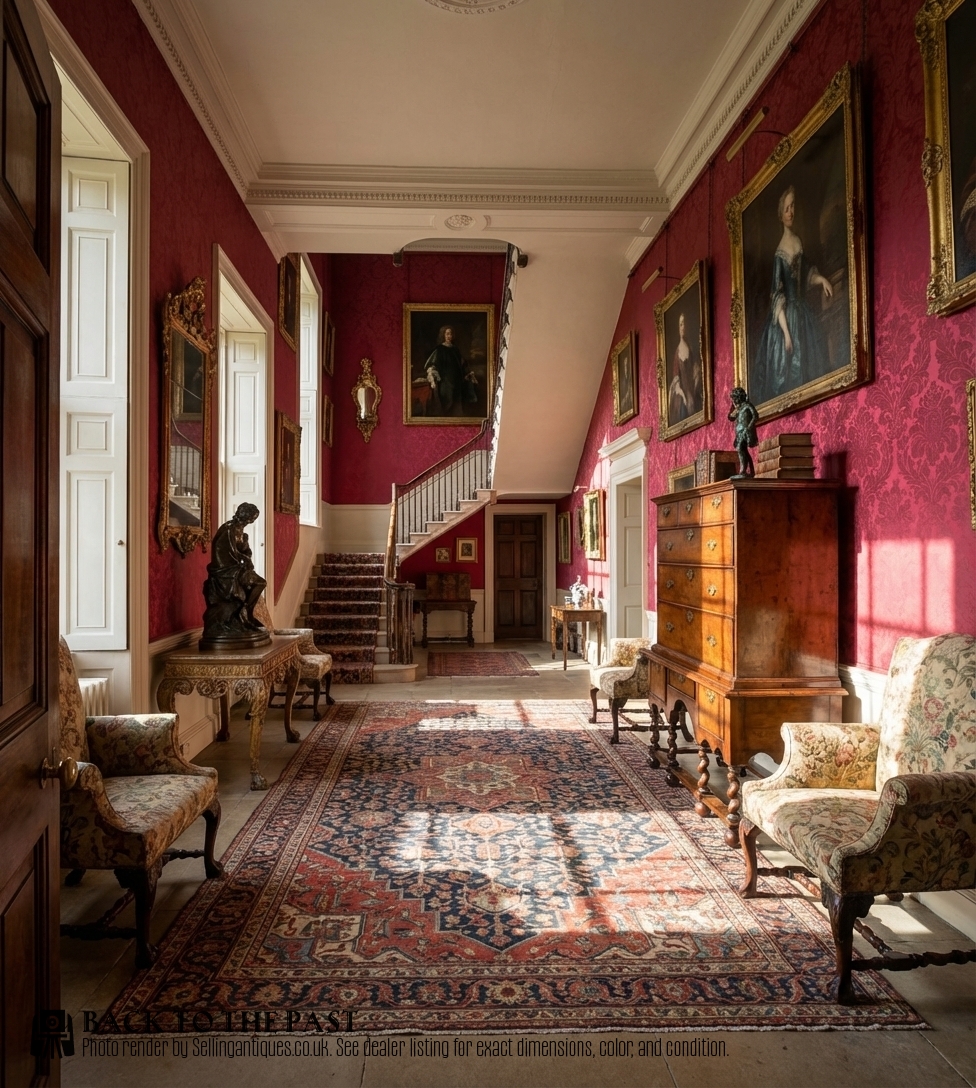
Walnut Tallboy on Stand
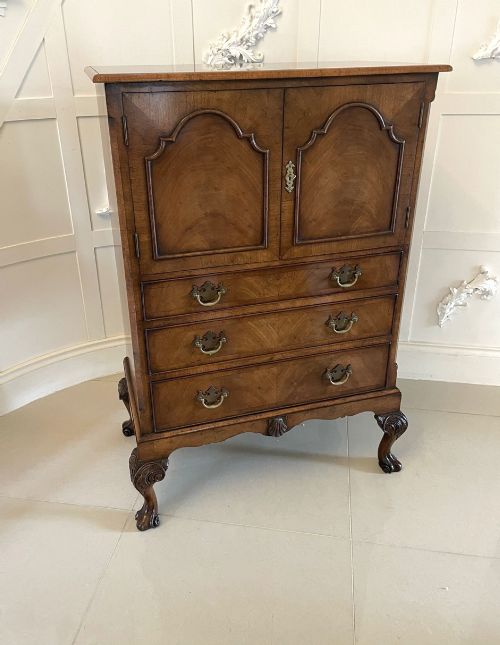
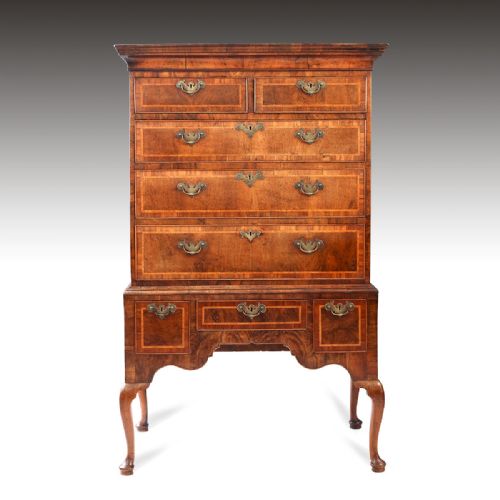
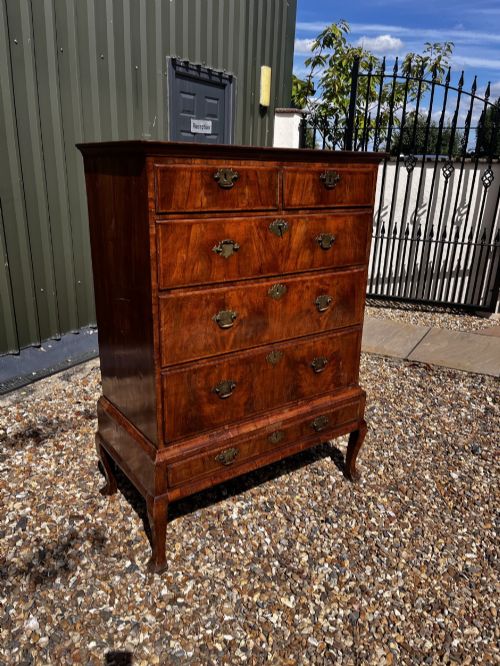
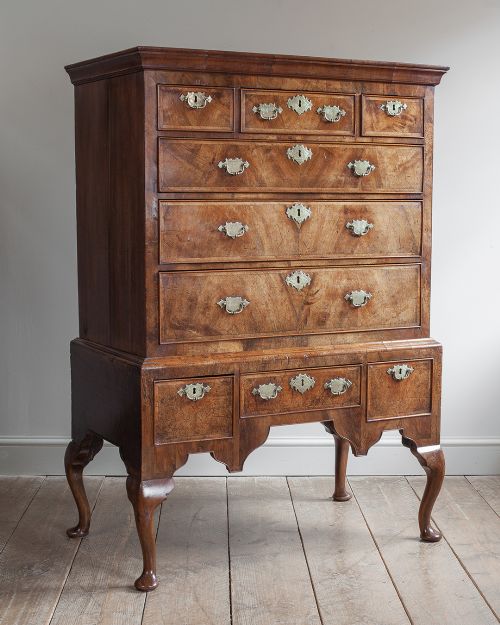
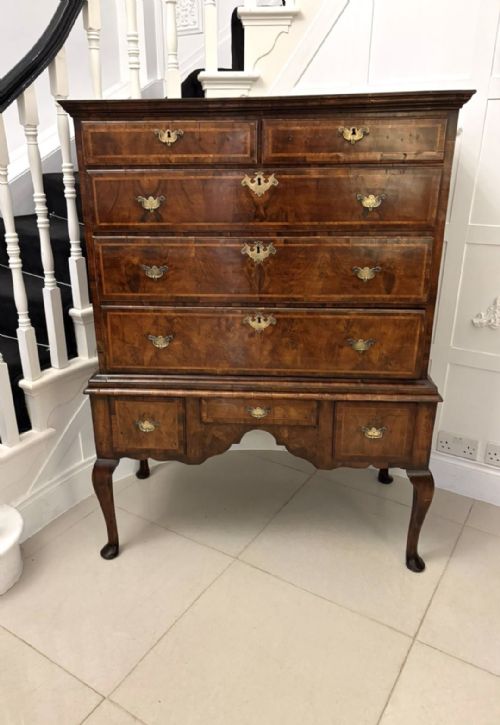
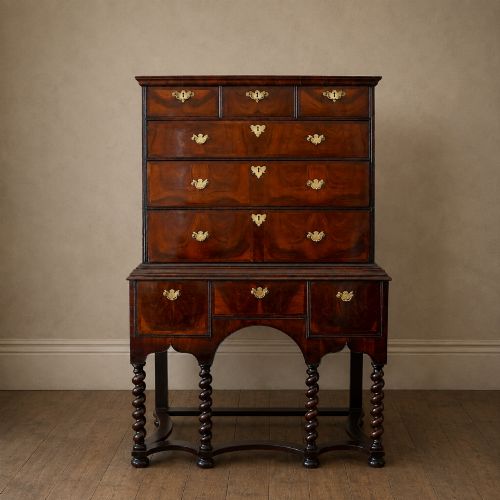
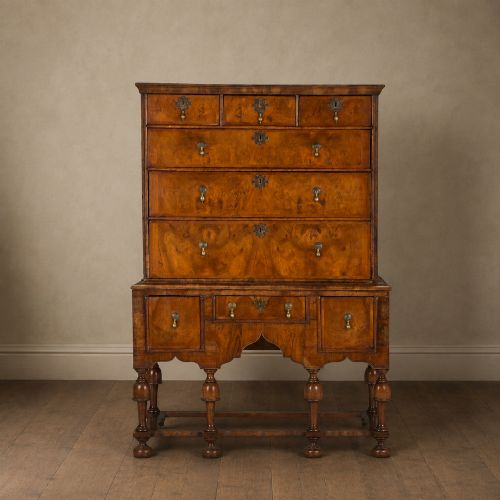
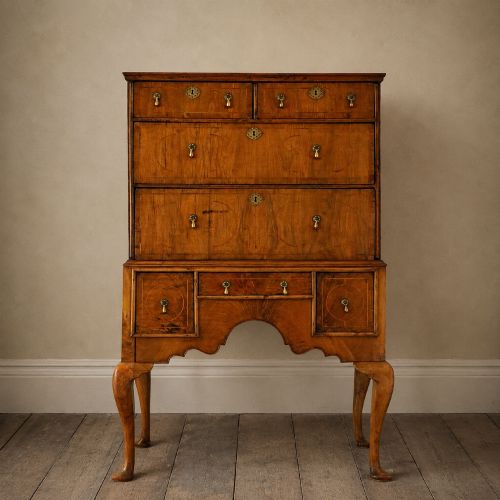
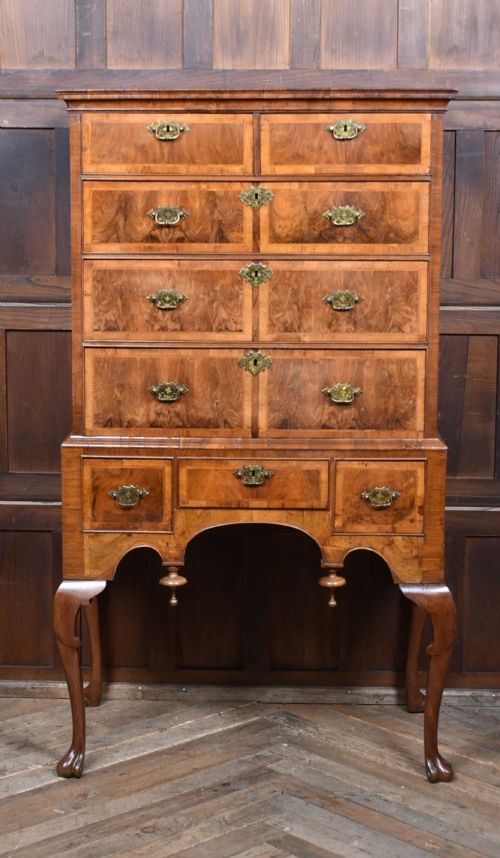
When you search for a walnut tallboy on stand, you encounter elevated case furniture designed to keep garments and valuables away from damp floors. These pieces combine a multi-drawer upper section with a supportive stand fitted with legs and sometimes a low drawer.
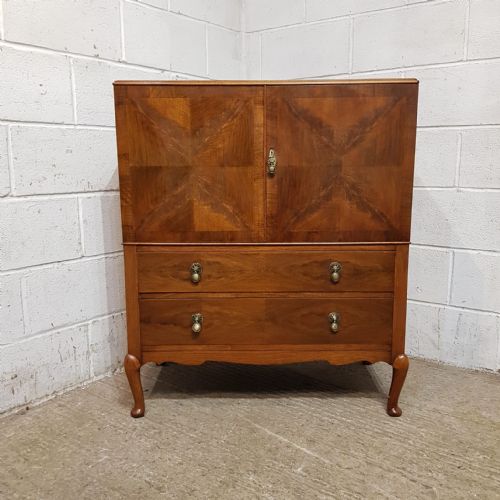
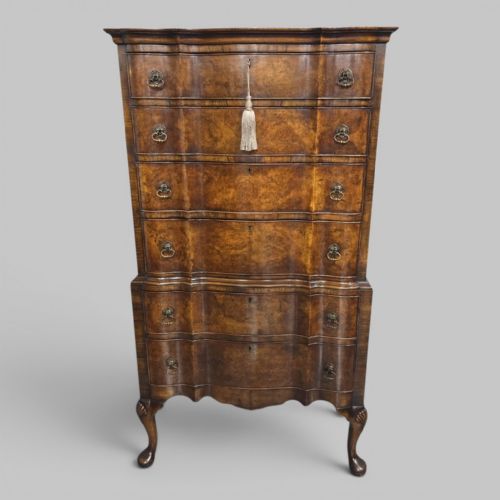
You are most likely to meet two distinct chronological groups on this page. The first comprises 18th-century originals from the William and Mary, Queen Anne, and Georgian periods. The second includes revival interpretations produced during the early 20th century.
How They Were Made
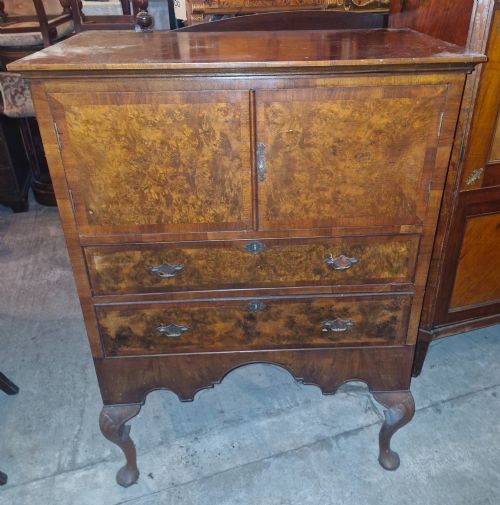
Cabinet makers utilised solid oak or pine for internal carcases, applying finely figured walnut veneers and burr walnut across the visible surfaces. Crossbanding in contrasting timber frames the drawer fronts and top boards, while boxwood stringing adds linear detail.
Construction techniques involve dovetailing drawer boxes and mounting doors or drawers within moulded frames. Stands employ turned trumpet or cabriole legs linked by stretchers, supporting the upper chest with brass drop handles and escutcheons.
Materials recorded across the available pieces include burr walnut veneer, solid oak, brass hardware, boxwood, and rosewood.
What Varies in Quality
The sophistication of the timber figuring dictates the visual appeal of a walnut tallboy on stand. Dense burr veneers and matched oyster cuts demonstrate superior selection by the original maker compared to plain grain.
Proportion and the integrity of the base separate standard examples from finer works. Stands that retain their original configuration without alteration or replacement legs command greater interest from traditional collectors.
The Walnut Tallboy on Stand Glossary
- Tallboy
- A tall chest of drawers made in two sections, often placed upon a separate stand or low table base. It maximises vertical storage space in domestic chambers.
- Burr walnut
- Timber taken from the warted growths of a walnut tree, yielding intricate swirling patterns. Cabinet makers prized this veneer for principal facades.
- Oyster veneering
- The practice of slicing small branches horizontally to produce circular patterns resembling oyster shells. This technique flourished during the late 17th century.
- Crossbanding
- A narrow band of veneer laid around the border of a panel or drawer front with the grain running at right angles to the centre. It creates a neat visual frame.
- Cabriole leg
- A furniture leg that curves outward at the knee and tapers inward toward the foot. It appears frequently on 18th-century stands.
Walnut Tallboy on Stand: Frequently Asked Questions
What is a walnut tallboy on stand?
A walnut tallboy on stand is a dual-part storage item featuring a chest of drawers elevated upon a table-like base with legs. It evolved to provide ample drawer space while maintaining a lighter footprint than a full-length wardrobe.
The form bridges the gap between a chest of drawers and a cabinet, using rich walnut timbers and sophisticated veneer work to suit formal rooms.
How do I date a walnut tallboy?
Dating relies upon examining construction methods, timber choices, and leg styles. Early examples from the William and Mary or Queen Anne periods often feature oyster veneers and trumpet legs.
Later 20th-century revival pieces display different internal secondary woods and machine-cut dovetails, distinguishing them from 18th-century originals.
Were these used in bedrooms?
These pieces served primarily in private bedchambers and dressing rooms for storing linens, garments, and personal valuables. Their raised height kept contents away from cold ground floors.
Over time, owners also placed them in drawing rooms and parlours as decorative case furniture to display wealth through figured wood.
How should I care for antique walnut furniture?
Maintain stable indoor humidity and keep walnut pieces away from direct heat sources and strong sunlight. Sudden temperature shifts cause timber veneers to crack or lift.
Apply traditional beeswax occasionally to nourish the surface and preserve the natural lustre of the walnut polish.