



Burr Walnut Chest on Stand
A burr walnut chest on stand brings together rich timber figuring and raised storage, offering a commanding yet balanced profile for a traditional interior.
Burr Walnut Chest on Stand
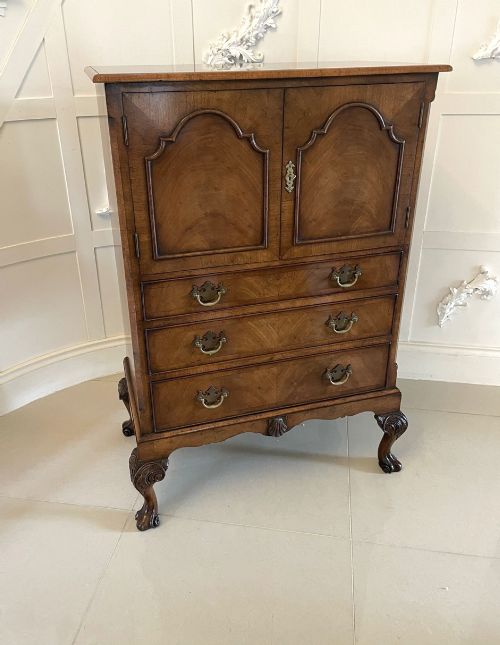
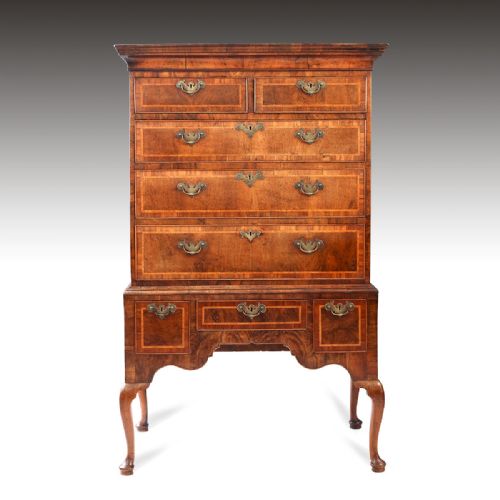
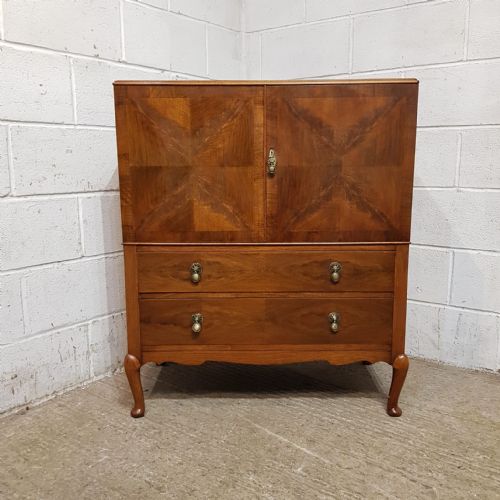
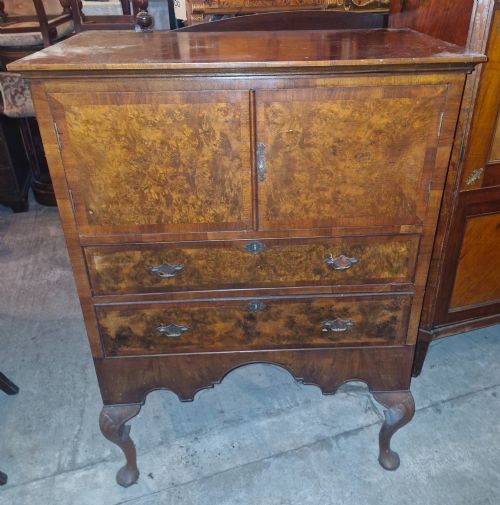
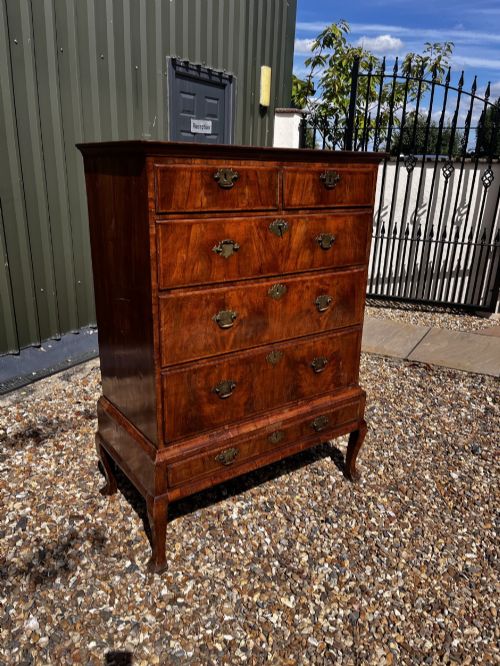
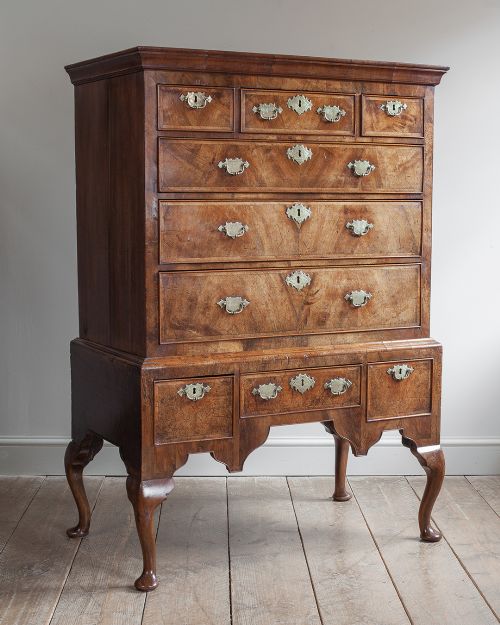
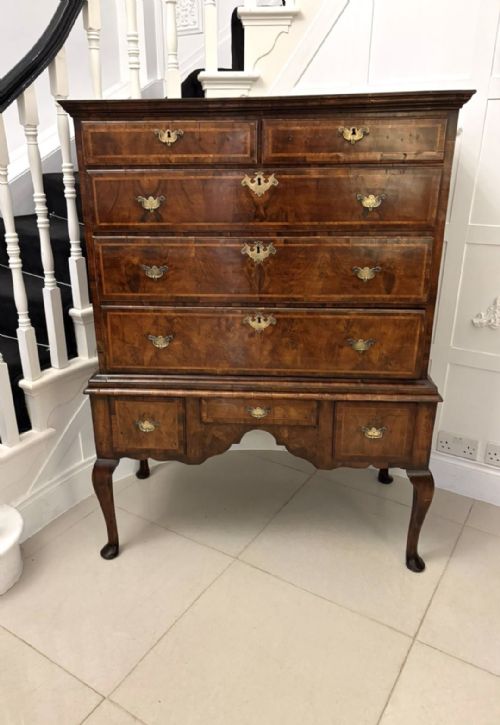
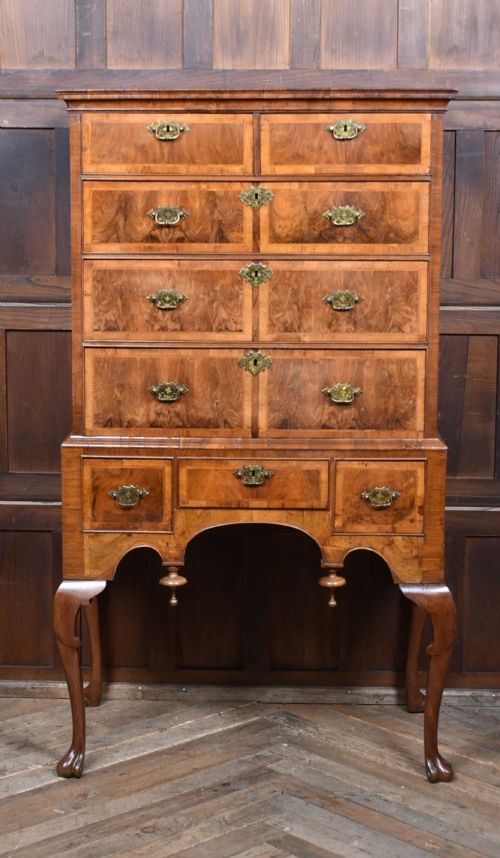
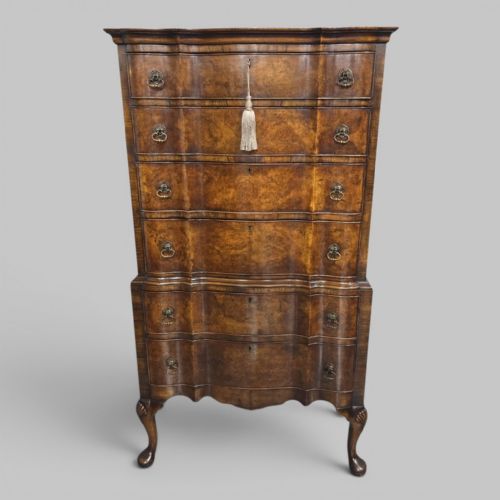
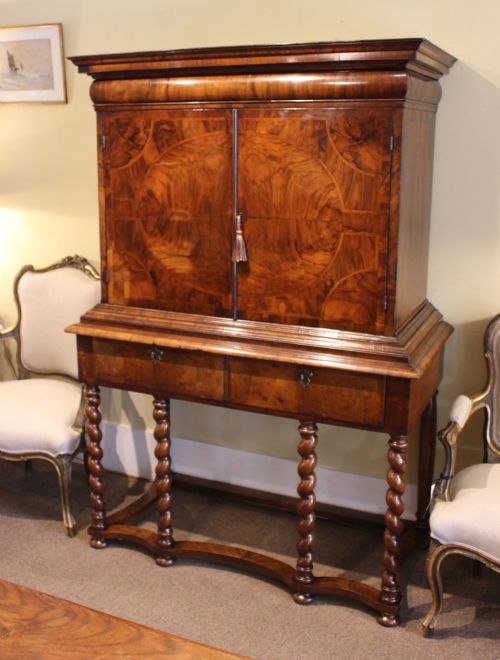
A burr walnut chest on stand combines an upper section of stacked drawers with a lower supporting table frame, designed to hold textiles and valuables above the floor. These pieces span multiple eras, with genuine 18th-century examples sitting alongside later 20th-century revival interpretations.
The most common format encountered here pairs a rectangular upper cabinet containing multiple small drawers with a sturdy stand resting on cabriole or turned legs. Walnut and burr walnut veneer dominate the primary surfaces, often complemented by secondary timbers like oak and pine.
Makers drew on Queen Anne, George I, and Georgian design idioms, resulting in silhouettes that balance imposing storage capacity with elevated proportions. Buyers also encounter William and Mary periods alongside Edwardian and later reproductions.
How They Were Made
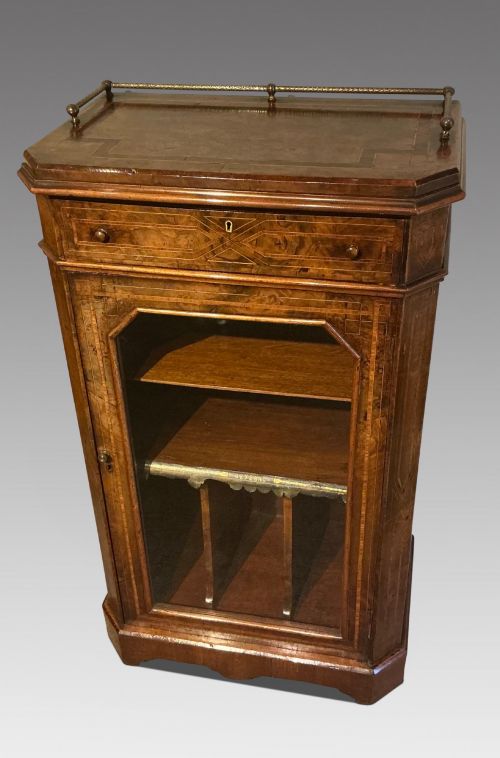
Cabinetmakers applied thin slices of burr walnut veneer to primary carcases of oak or pine, arranging the swirling grain patterns symmetrically to create decorative drawer fronts and top panels. Crossbanding and stringing lines frequently border these veneered sections to define the geometric layouts.
The lower stands employ solid walnut or oak for the structural legs and stretchers, utilising mortise and tenon joints to bear the weight of the upper chest. Brass drop handles and escutcheons secure the drawer openings, fixed with traditional pins or threaded posts.
Secret compartments hidden within the upper cornices occasionally reward those who explore beyond the main drawers.
What Varies in Quality
The distinction between tiers rests primarily in the choice and matching of the burr walnut veneer, where tightly swirled grain patterns command greater visual depth than plain timber surfaces. Uniformity in the book-matching across drawer fronts indicates a more deliberate hand in the workshop.
Structural integrity also separates examples, seen in the retention of original brass hardware, stable leg joinery, and minimal shrinkage in the secondary pine or oak carcases. Pieces retaining their original stands without extensive timber replacement sit at the upper end of the scale.
The Burr Walnut Chest on Stand Glossary
- Burr Walnut
- Slices taken from the knotted growth of a walnut tree, yielding a highly figured, swirling grain pattern prized for decorative furniture facades.
- Chest on Stand
- A case piece consisting of a multi-drawer upper cabinet raised on a separate table-like base with legs.
- Cabriole Leg
- A furniture leg that curves outward at the knee and tapers inward to an ankle, frequently terminating in a pad or hoof foot.
- Veneer
- Thin sheets of desirable wood applied over a secondary timber carcase to provide a decorative exterior without heavy structural weight.
- Crossbanding
- A narrow strip of veneer laid perpendicularly to the main grain direction, typically framing the perimeter of a drawer front.
Burr Walnut Chest on Stand: Frequently Asked Questions
How do I date a burr walnut chest on stand?
Dating relies on examining the secondary timbers, construction joints, and hardware styles alongside the overall silhouette. Earlier pieces from the 18th century often display hand-cut dovetails and oak linings, while 20th-century revivals reveal different machine tolerances and internal framing.
Changes in leg design, from William and Mary turned supports to George II cabriole shapes, also provide clear chronological markers for attribution.
Where should I place a chest on stand at home?
These pieces suit entrance halls, living rooms, or bedrooms where their height and decorative drawer fronts can be viewed without obstruction. Placing them away from direct sunlight and heat sources protects the fragile burr walnut veneer from drying and splitting.
Ensure the floor is level so the stand's legs distribute the weight of the upper drawers evenly.
Are all these pieces from the 18th century?
No, while the form originates in the late 17th and 18th centuries during the reigns of William and Mary and Queen Anne, many examples date from early 20th-century revival periods. Cabinetmakers in the 1900s to 1930s frequently recreated these classic walnut forms for contemporary homes.
Checking the listed dates helps distinguish original period pieces from later interpretations.