



Brown Tapestry Footstool
A brown tapestry footstool brings warmth and useful low seating to a room, drawing on centuries of woodwork and needlework traditions.
Brown Tapestry Footstool
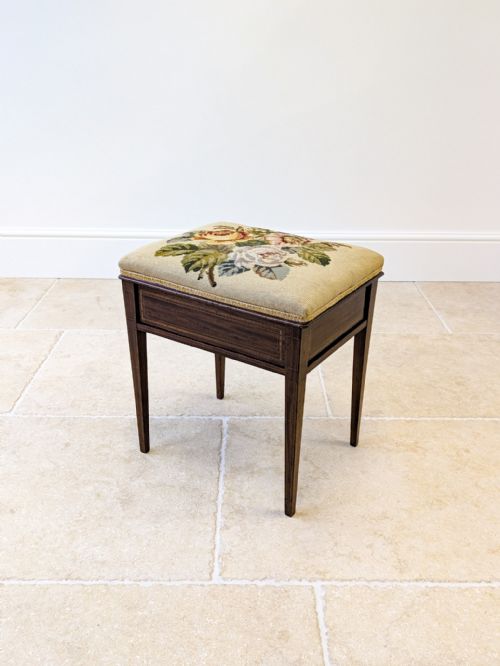
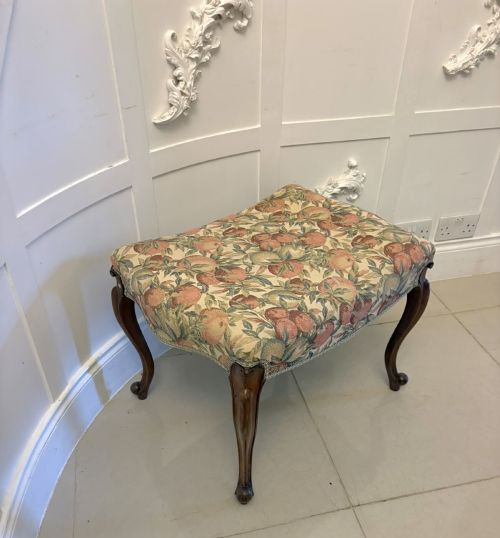
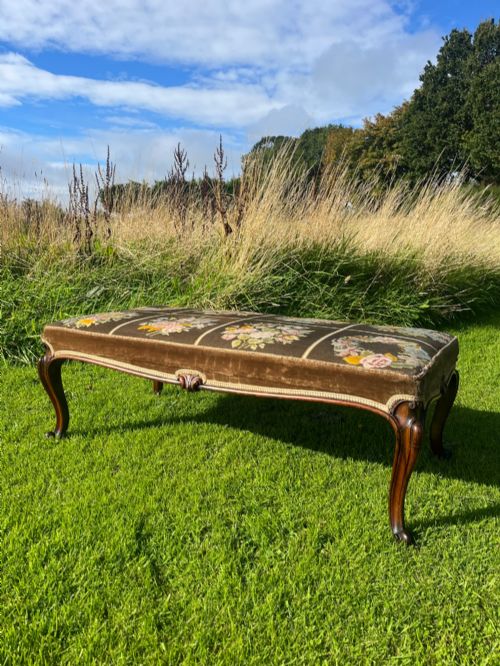
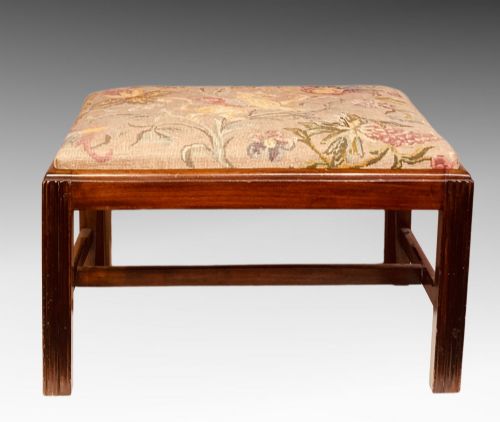
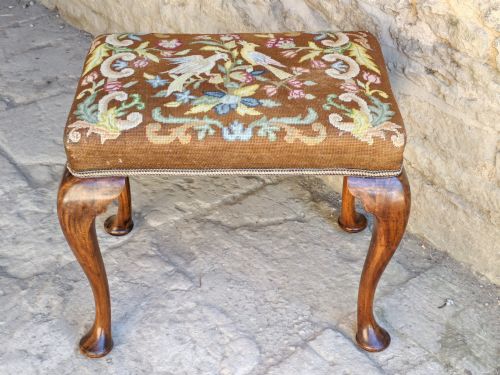
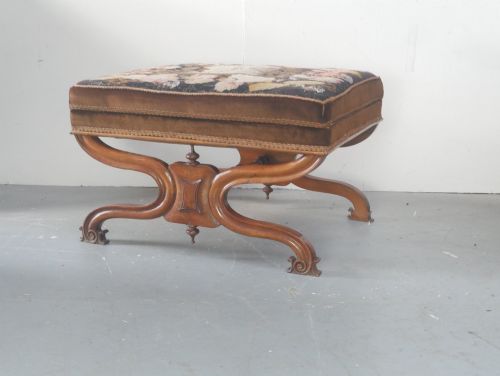
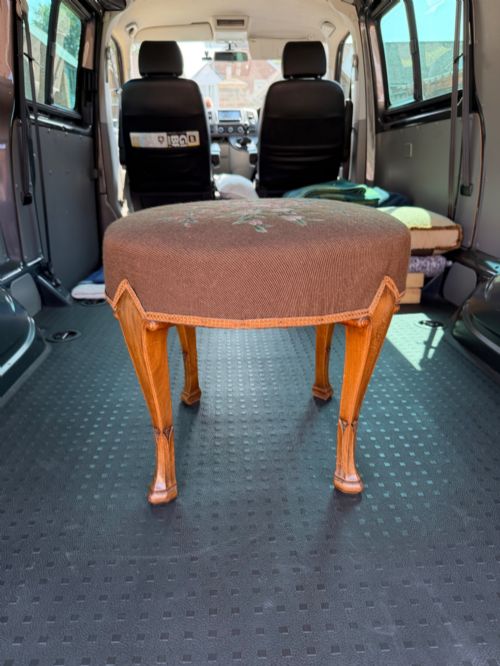
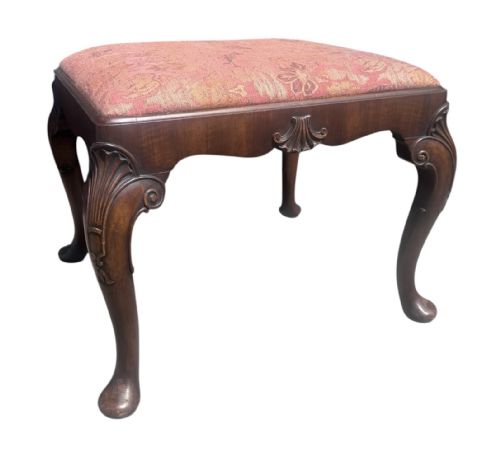
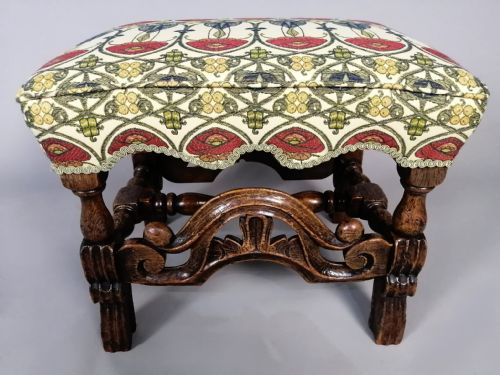
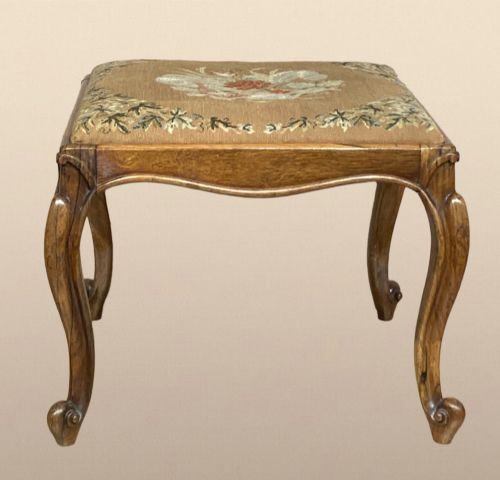
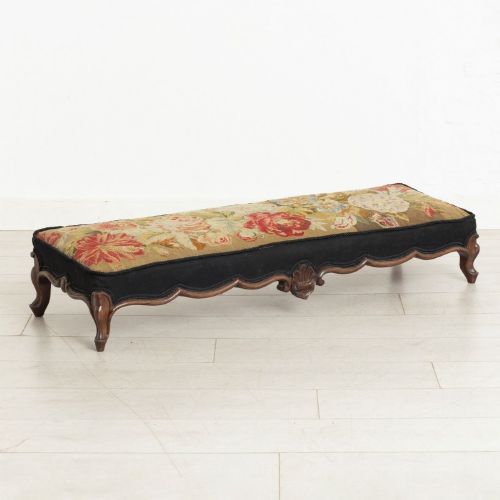
A brown tapestry footstool typically appears as a low seat or rest, drawing from periods ranging from the seventeenth century through to the Victorian era and the nineteen-twenties. The selection spans compact low footstools, dressing stools, and larger ottomans, often framed in dark timbers and topped with patterned textiles.
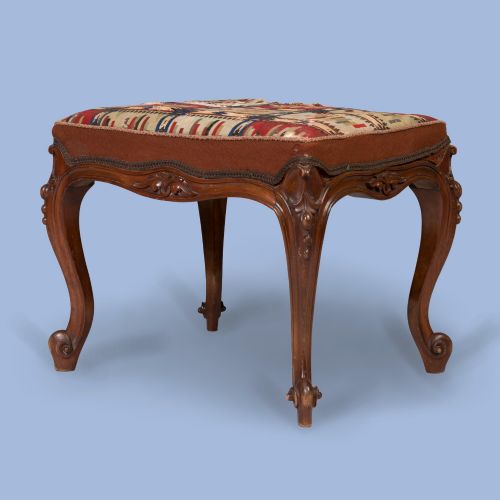
Victorian examples dominate the selection alongside pieces executed in Georgian, Queen Anne, and Carolean revival styles. Buyers encounter circular, oval, and rectangular silhouettes, occasionally featuring cabriole legs, cross frames, or carved details such as hunting dog heads.
The materials combine structural timber frameworks with upholstered textile seats, ranging from needlepoint to tapestry covers. These versatile furnishings function equally as foot rests or independent dressing seats.
Timbers and textiles
Framings rely predominantly on hardwoods such as walnut, mahogany, and rosewood, shaped with turning, carving, or cabriole shaping. Oak appears in earlier pieces, demonstrating robust joinery appropriate for domestic daily use.
Upholstery forms the visual centrepiece, utilising woven tapestry, needlepoint, and textile fabrics stretched over padded foundations. Brass details occasionally supplement the timber and fabric construction.
Brown Tapestry Footstool Retail Price Guide 2026
Typical asking prices for brown tapestry footstool among the pieces listed under this phrase on Sellingantiques today, from the lower quarter to the upper quarter. They describe what is for sale here now, not the wider market.
Certain Victorian window seats feature carved hunting dog heads peering out from the timber framework.
Design and execution
The distinction between standard and superior pieces rests in the ambition of the timber carving and the complexity of the needlework. Elaborate frames featuring cabriole legs, cross stretchers, or carved animal motifs demand greater artisan skill than plain turnings.
The integrity of the original fabric cover and the crispness of the wood moulding determine the visual appeal. Richly detailed needlepoint and tapestry tops elevate the overall character of the piece.
Whytock and Reid
The Brown Tapestry Footstool Glossary
- Cabriole leg
- A furniture leg that curves outward at the knee and tapers inward at the ankle, ending in a foot. This form derives from ancient motifs and gained prominence in eighteenth-century design.
- Needlepoint
- A type of canvas work embroidery executed with a yarn threaded through a stiff open-weave mesh. It provides durable and highly decorative surfaces for footstool seats.
- Tapestry
- A form of textile art traditionally woven on a vertical loom, featuring pictorial or geometric designs. In footstools, it serves as the primary upholstered cover.
- Cross stretcher
- A pair of diagonal wooden braces connecting the legs of a stool to provide structural stability. They often intersect at a central point beneath the seat.
- Ottoman
- A low upholstered seat or footstool lacking a back or arms. Larger examples provide substantial surface area for resting feet or sitting.
Brown Tapestry Footstool: Frequently Asked Questions
Are the tapestry covers original?
Many listings specify original fabric or needlepoint covers, while others feature period-appropriate or later textile upholstery. The condition and age of the textile depend on the specific history of each piece.
Examining the weave and wear helps determine whether a tapestry top belongs to the original construction date of the wooden frame.
What woods are used for the frames?
Walnut and mahogany are the predominant timbers, alongside rosewood and oak in earlier or revival pieces. These dense hardwoods provided the structural strength needed for daily seating and foot rests.
Dark finishes and polished surfaces highlight the natural grain and carving details of the timber.
How do I choose the right size?
Stools range from small low footstools designed for pairing with armchairs to large dressing stools and long ottomans. Consider the intended function, whether as a dedicated foot rest or an occasional dressing seat.
Checking the dimensions in each listing ensures the height and width suit your existing furniture layout.