

Brown Rush Seated Chairs
Brown rush seated chairs bring tactile warmth to a room through woven natural fibres and honest timber construction.
Brown Rush Seated Chairs
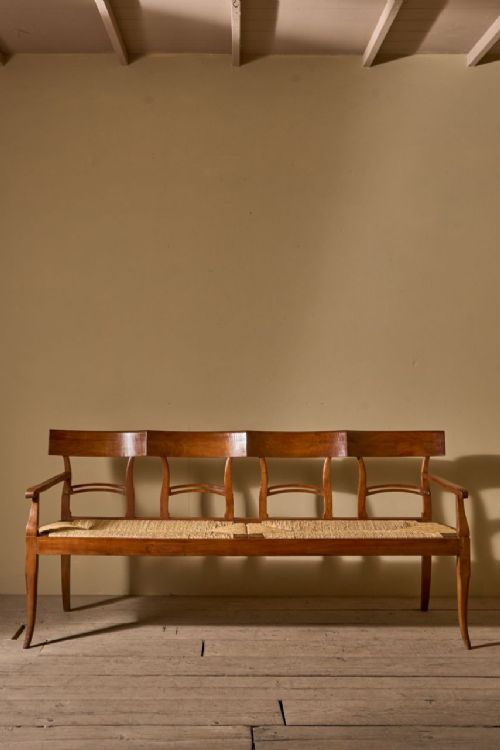
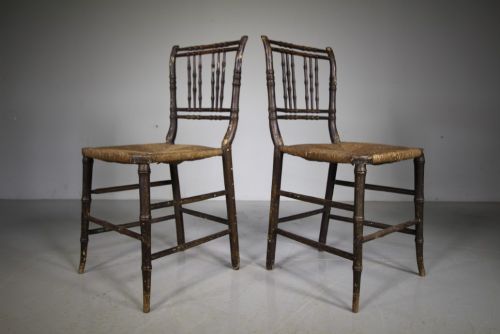
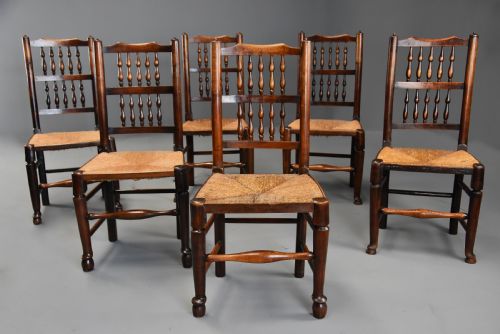
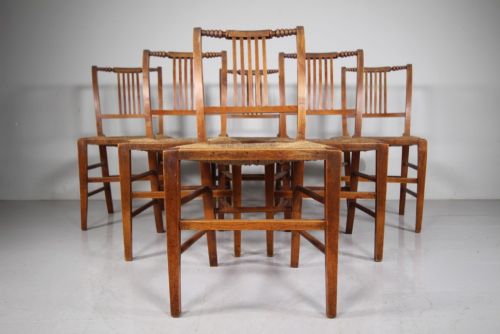
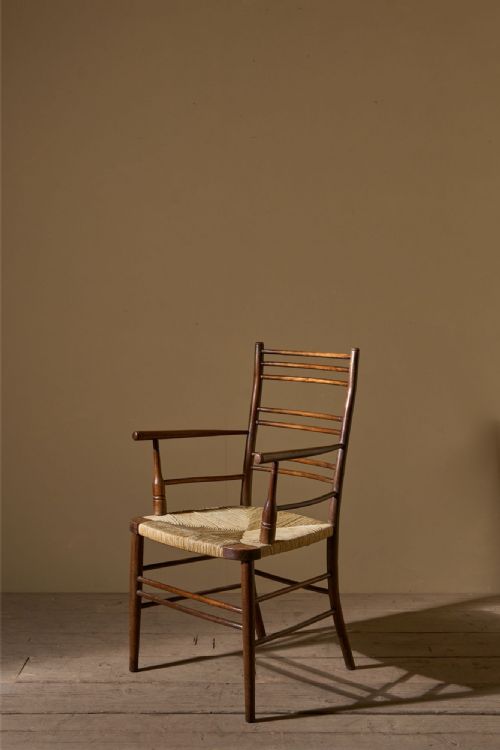
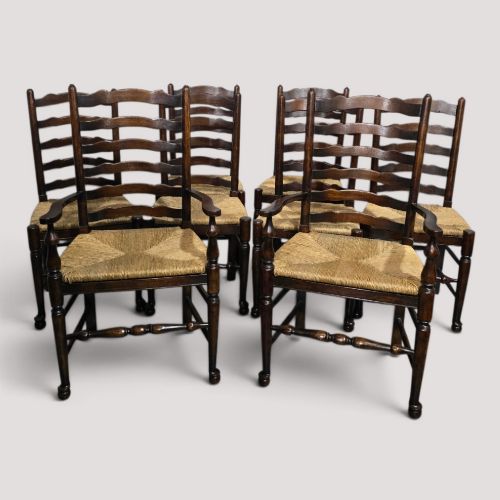
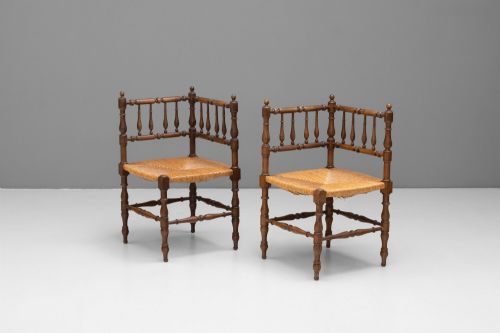
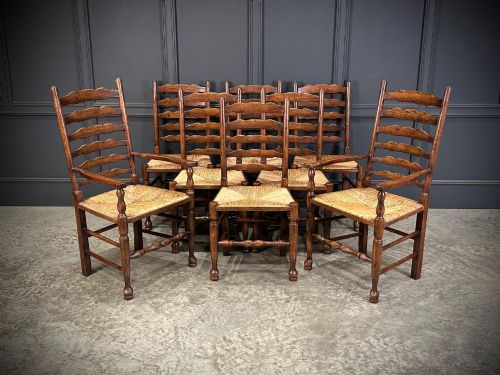
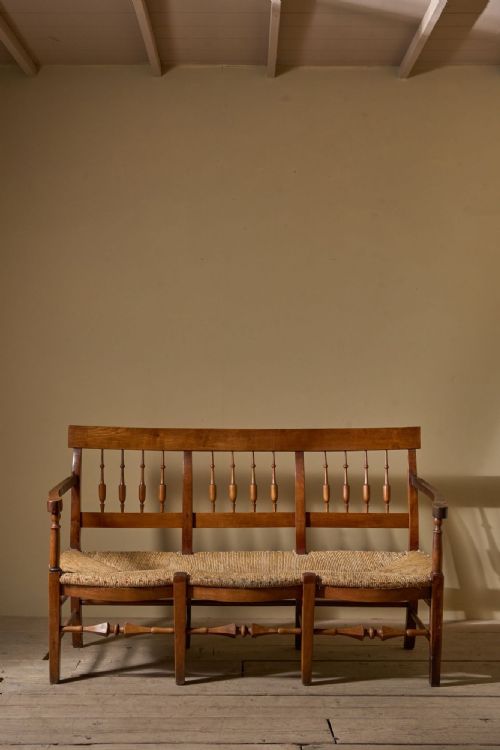
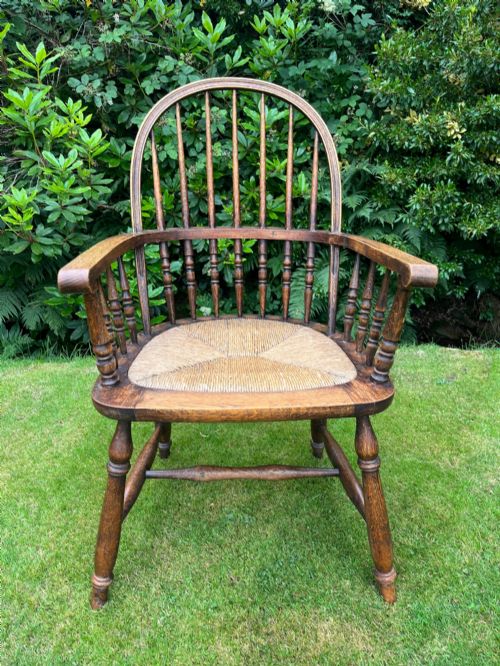
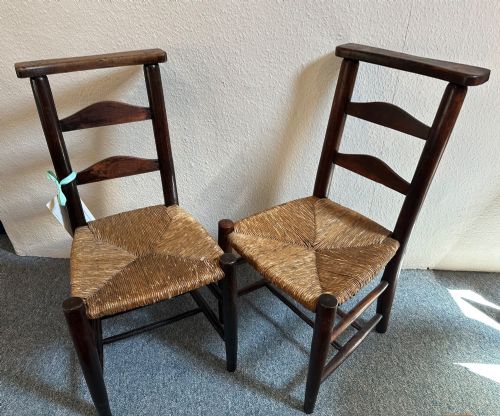
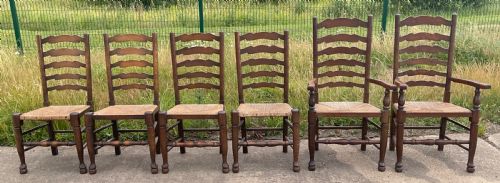
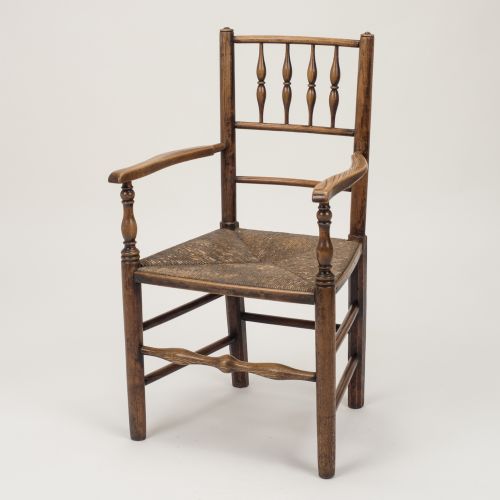
Brown rush seated chairs encompass traditional seating forms built from solid woods and fitted with woven seats. When you browse brown rush seated chairs, you encounter regional variations including ladder backs, spindle backs, and Windsor designs.
The listings span centuries of domestic production, reaching from eighteenth-century country workshops into the twentieth century. These pieces serve ordinary households, churches, and grander establishments alike.
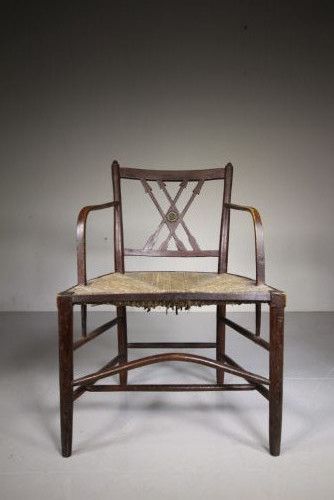
Common formats range from single side chairs to large dining sets, alongside armchairs, benches, and children's seating. Their enduring utility stems from sturdy construction suited to daily use.
What varies in quality
Quality rests in the integrity of the timber frame and the tightness of the rush weave. Heavier woods and robust joinery distinguish sturdy examples from lighter utilitarian output.
The precision of the turning work on ladder backs and spindle backs indicates workshop skill. Original paint finishes and well-preserved woven surfaces elevate the standing of an individual piece.
Listings feature oak, elm, ash, and fruitwood alongside painted finishes across centuries of chair production.
Morris & Co·E W Godwin
The Brown Rush Seated Chairs Glossary
- Rush
- Dried marsh plant material twisted into cords for weaving chair seats. This traditional seating medium offers natural flexibility and durability.
- Ladder back
- A chair frame featuring horizontal slats resembling a ladder between the rear uprights. This regional form appears frequently in English country furniture.
- Spindle back
- A chair back filled with numerous thin turned wooden rods. These uprights provide structural support while maintaining a lighter visual profile.
- Orkney chair
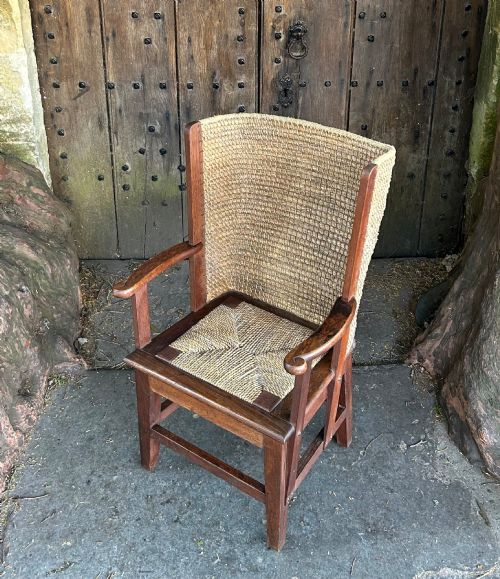
- A distinct regional armchair style featuring a low seat and a high woven straw back. These pieces originated to protect sitters from drafts in coastal dwellings.
Brown Rush Seated Chairs: Frequently Asked Questions
How do I clean a rush seat?
Dust the woven surface regularly with a soft brush to remove debris trapped between the fibres. Avoid using excess water, which can cause the natural plant material to become brittle or rot.
Treat occasional spills by blotting gently with a slightly damp cloth rather than scrubbing. Keep the furniture away from direct heat sources to prevent the rush from drying out.
Can broken rush seats be repaired?
Traditional rush seats can be entirely re-woven by skilled craftspeople using matching natural materials. A professional restorer replaces the damaged cordage by hand following historical patterns.
Sound timber frames make complete reseating a worthwhile investment that extends the functional life of the furniture for decades.
Are these chairs suitable for daily dining?
Solid timber frames and supportive woven seats make these chairs practical for everyday use around a dining table. Their construction handled generations of domestic life in country houses and farmhouses.
Placing felt pads beneath the legs helps protect hard flooring surfaces from wear during daily movement.
How do I date a ladder back chair?
Examining the turning style, wood species, and assembly methods helps narrow down the production period of vernacular seating. Hand-carved components and pegged joints often point towards earlier craftsmanship.
Wear patterns on the feet and seat edges reflect the genuine age accumulated through continuous domestic service.