





Brown Oak Swivel Chair
A brown oak swivel chair is a sturdy working seat built for the Victorian or Edwardian study, offering both mobility and deep-grained timber character.

Brown Oak Swivel Chair
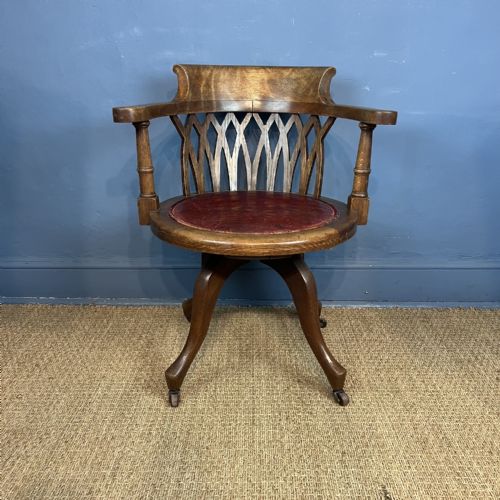
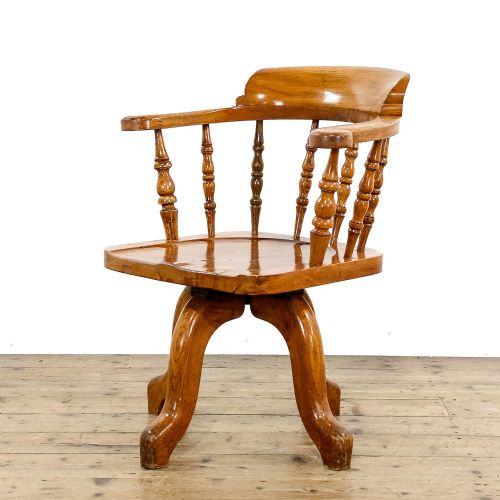
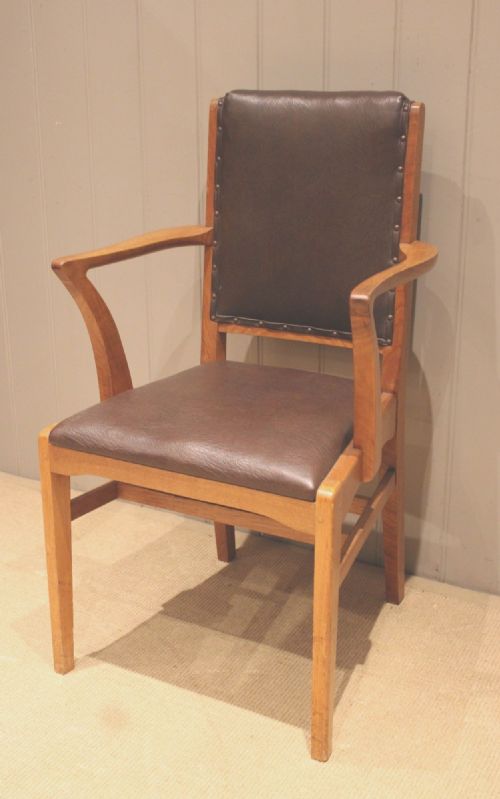
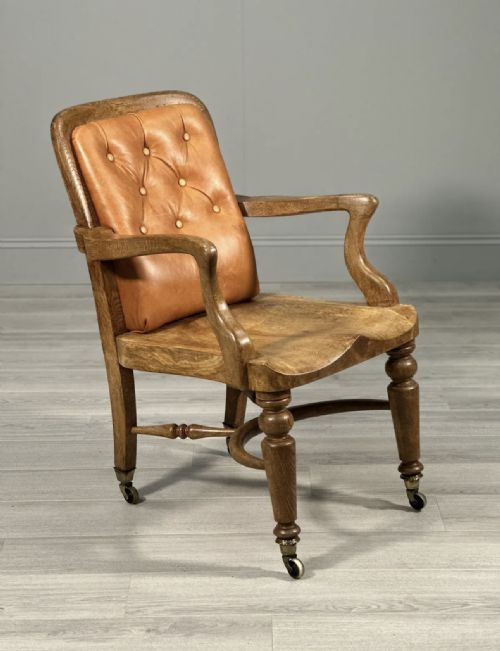
A brown oak swivel chair brings practical nineteenth and early twentieth-century seating to a desk or workspace, appearing most often as a revolving office desk chair or a heavily carved ship's chair. When searching this phrase, buyers encounter examples spanning from the late Victorian period through the Edwardian era up to the 1930s. The selection on this page centres heavily on office and desk chairs, alongside occasional bar stools and library armchairs.
The forms range from simple captain's chairs to sophisticated revolving designs with adjustable height mechanisms. Many pieces incorporate supportive leather or calico seats, while others feature bergere panels or elaborate carving. These items originated as functional furniture for offices, ships, and libraries, retaining their mechanical movement and sturdy timber frames.
How they were made
Makers utilised solid oak for the primary framework, sometimes combining it with beech components or incorporating cast iron and brass for the swivel and height-adjustment mechanisms. The structural parts rely on traditional joinery, steam-bending for components like bentwood backs, and detailed hand-carving on ship's chairs.
Upholstered elements typically feature inset leather or calico secured with metal tacks. The metal components - ranging from iron mechanisms to brass fittings - allow the chairs to rotate fully and adjust vertically.
Listings span from the 1880s through the 1930s, uniting Victorian, Edwardian, Arts and Crafts, and Art Deco styles under the office chair category.
What varies in quality
The sophistication of the revolving mechanism and the complexity of the timber carving set the standard for these chairs. Heavier, deeply carved examples and those with smooth, original adjustable height systems represent the more accomplished end of the spectrum.
Material combination also plays a role, with integrated leather upholstery and robust cast iron hardware elevating a piece beyond simpler utilitarian models. The crispness of the oak grain and the integrity of the rotating frame determine the overall calibre.
Kendrick & Jefferson
The Brown Oak Swivel Chair Glossary
- Bergere
- A type of chair featuring woven cane panels in the back or sides. This technique lightens the visual weight of the oak frame.
- Captain's chair
- A low-backed wooden armchair designed for comfort during long hours at a desk. These typically feature a rounded top rail supported by vertical spindles.
- Ship's chair
- A sturdy seating form featuring heavy wood construction designed for maritime use. Examples often include deep carvings and secure anchor points.
- Revolving mechanism
- The internal hardware allowing the seat to turn fully. These systems utilise metal components concealed beneath the wooden seat base.
- Calico
- A plain-woven unbleached textile used as an upholstery foundation or covering. It provides a neutral, durable surface on period desk seats.
Brown Oak Swivel Chair: Frequently Asked Questions
How do I adjust the height?
Many of these chairs utilise a threaded metal spindle or screw mechanism beneath the seat. Turning the seat clockwise or counter-clockwise raises or lowers the wooden platform.
Ensure any release levers or locking pins are disengaged before attempting to rotate the threaded column.
Were these used in offices?
These seats served professional clerks, managers, and officials in nineteenth and early twentieth-century workspaces. The revolving design allowed workers to reach different parts of a large desk without standing.
They appear in both domestic libraries and commercial offices from the Victorian period onward.
How do I care for the leather?
The inset leather seats benefit from gentle cleaning with a damp cloth and occasional application of appropriate leather dressing. Avoid harsh chemical cleaners that can dry out the historic hide.
Keep the timber frames polished with traditional wax to maintain the grain and colour of the oak.
How do I identify an Edwardian piece?
Edwardian examples tend to display lighter oak tones and slightly more restrained ornamentation compared to heavily carved Victorian predecessors. They frequently incorporate functional height-adjustment screws and standard office swivel bases.
Construction techniques from this era balance domestic comfort with robust commercial utility.