


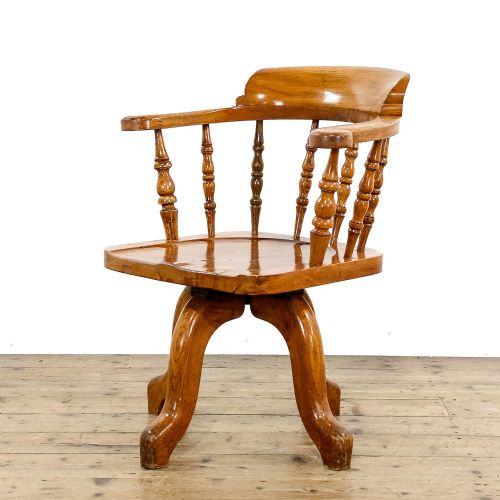


Solid Oak Office Chair
A solid oak office chair brings heavy timber structure and swivel mechanics together for daily work.
Solid Oak Office Chair
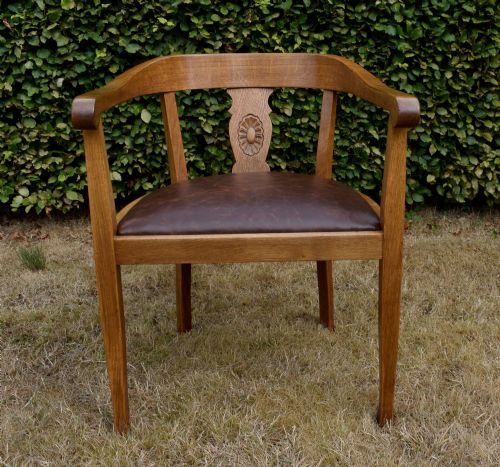
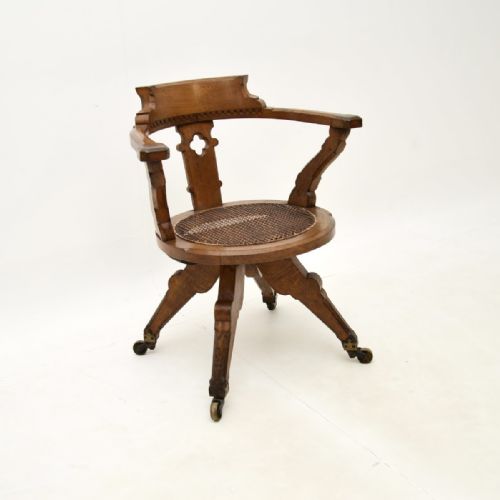
A solid oak office chair provides a sturdy timber seat for working at a desk, drawing upon Victorian and Edwardian design traditions. These heavy seating forms range from static armchairs and captain's chairs to complex revolving desk chairs with height-adjustable mechanisms.
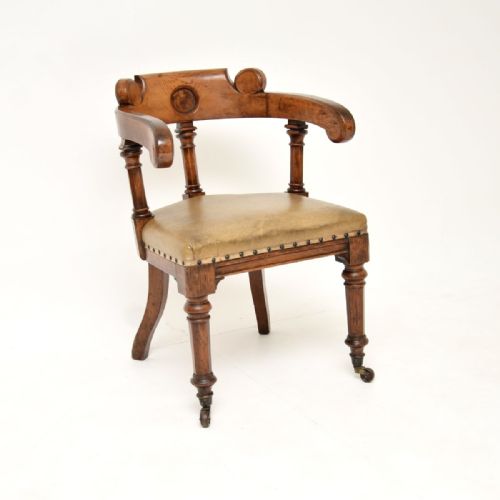
The most common versions met on this page date from the Edwardian period and the late nineteenth century, often featuring turned spindles or upholstered leather pads. Many incorporate robust wooden frames built to withstand daily use in domestic studies and commercial offices.
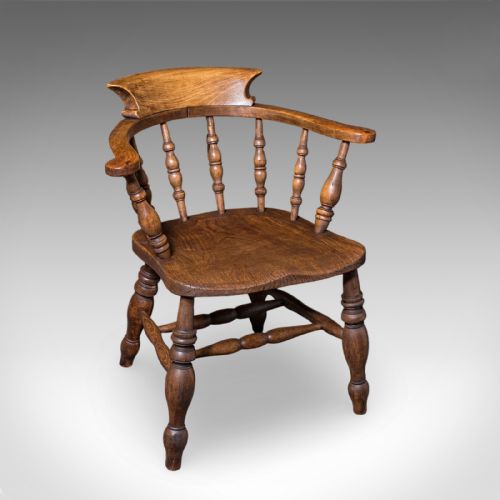
Originating primarily from English workshops, these pieces bridge the gap between traditional woodworking and ergonomic office development. Buyers encounter variations including low-backed smoker's bows, high-backed swivel chairs, and heavy carver armchairs.
Quality and construction differences
The sophistication of the revolving mechanism dictates much of the distinction across the range, with heavier iron and brass swivel actions showing superior engineering. Simpler static models rely on the calibre of the timber selection and the retention of tight joinery.
The presence of original leather upholstery and matching brass hardware elevates an example above stripped frames or replaced components. Carved details, golden oak grain patterns, and robust steam-bent arm rails mark out the more accomplished workshop output.
The listings span the Victorian, Edwardian, and George V periods, featuring solid oak alongside secondary woods like ash, elm, and beech.
William Angus and Co
The Solid Oak Office Chair Glossary
- Swivel chair
- A chair with a seat that rotates around a central vertical axis, usually mounted on an iron or wooden pedestal base. This mechanism allowed office workers to reach different parts of a desk without moving the entire base.
- Smoker's bow
- A low-backed wooden armchair with a continuous bentwood rail forming the arms and back, frequently fitted with a solid saddle seat. These vernacular forms share close construction ties with Windsor chairs.
- Carver armchair
- An armchair designed to match a set of dining or office chairs, typically featuring more substantial arms and structural support. They provide a wider seat than standard side chairs.
- Gothic Revival
- A nineteenth-century architectural and decorative style that utilised medieval pointed arches, trefoils, and heavy structural proportions. Office furniture in this style displays dark finishes and ecclesiastical motifs.
- Revolving mechanism
- The internal iron and brass hardware that enables height adjustment and rotation on office seating. Early versions used threaded wooden screws or heavy iron spindles.
Solid Oak Office Chair: Frequently Asked Questions
How do I adjust the height on these chairs?
Many Edwardian and Victorian revolving chairs utilise a central threaded iron screw or spindle beneath the seat. Turning the seat clockwise or anticlockwise raises or lowers the sitting position.
Other models rely on a fixed height set during manufacture, while spring-loaded tilt mechanisms appeared in later Edwardian iterations to allow slight movement.
Are these chairs suitable for daily computer work?
These pieces were originally engineered for nineteenth-century writing desks and ledgers, offering upright posture support and robust lumbar curves. Their heavy oak frames and solid wooden or leather-padded seats handle modern daily use reliably.
Buyers should note that vintage swivel actions lack the pneumatic dampening and recline locks found in contemporary office furniture.
How do I care for the leather upholstery?
Original leather seat pads benefit from occasional application of neutral leather balm to maintain suppleness and prevent cracking. Avoid harsh chemical cleaners that can strip the historic dye.
Solid oak frames require only dusting with a dry cloth and occasional treatment with natural beeswax to preserve the grain and finish.