

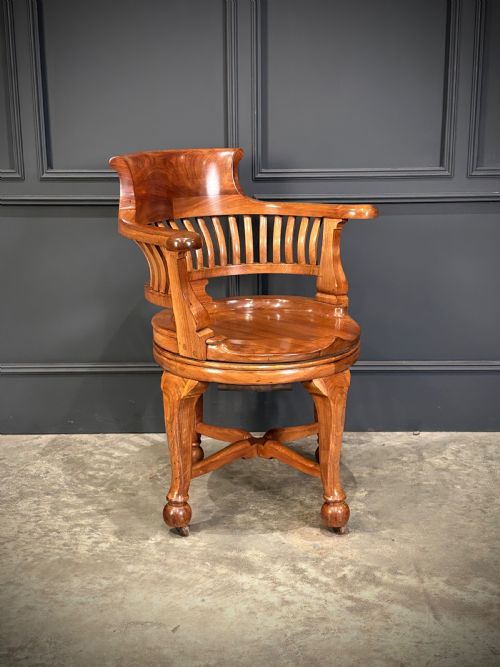


Revolving Study Chair
A revolving study chair brings practical comfort and period character to a workspace, offering sturdy swivel movement wrapped in traditional timber and leather.

Revolving Study Chair
A revolving study chair is a functional seating form designed for a desk or office, combining a swivelling mechanism with supportive timber framing. When searching for a revolving study chair, you encounter examples ranging from the Victorian period through to the Edwardian era and the early twentieth century.
Makers recorded in the evidence include Kendrick & Jefferson, Shoolbred, and Edward William Godwin, alongside pieces attributed to George Bartholomew & Co.
What varies in quality
Quality in these chairs lies in the timber selection, such as golden mahogany or figured walnut, and the sophistication of the carved or turned wooden framing. The integrity of the revolving mechanism and the depth of the timber grain determine the standing of an individual piece.
Design ambition separates standard office seating from notable examples influenced by the Aesthetic Movement or Arts and Crafts ideals. Maker attribution and the retention of original leather upholstery further distinguish the finer pieces.
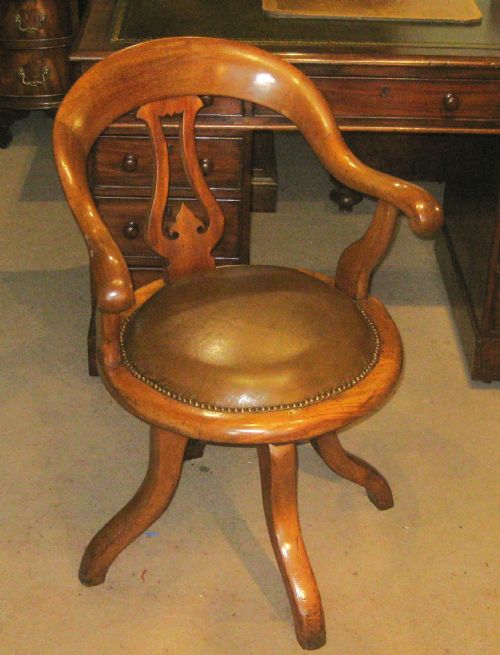
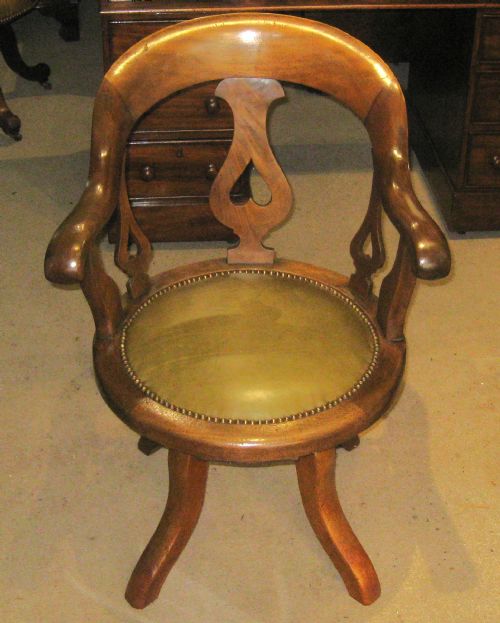
Listings feature revolving study chairs from the Victorian, Edwardian, and George V periods, constructed in mahogany, oak, walnut, and beech.
Kendrick & Jefferson·Shoolbred·Edward William Godwin·George Bartholomew & Co.
The Revolving Study Chair Glossary
- Swivel
- A mechanism allowing the upper portion of the chair to rotate fully on its base. This rotation aids movement around a desk.
- Bentwood
- Wood softened by steam and bent into curved structural forms. It provides durable and graceful lines on office chair backs.
- Gothic Revival
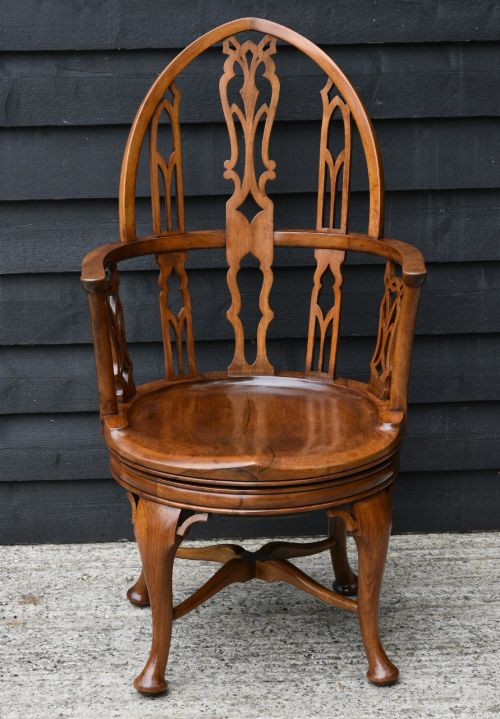
- A nineteenth-century style drawing on medieval architectural motifs. Examples display pointed arches, tracery, and heavy mouldings.
- Aesthetic Movement
- A late nineteenth-century design approach prioritising visual beauty over strict historical revival. It produced clean, artistic furniture forms.
- Bergere
- A panelled cane or wickerwork seat insert framed in wood. It adds textural lightness to Edwardian and turn-of-the-century chairs.
Revolving Study Chair: Frequently Asked Questions
How do I adjust the height?
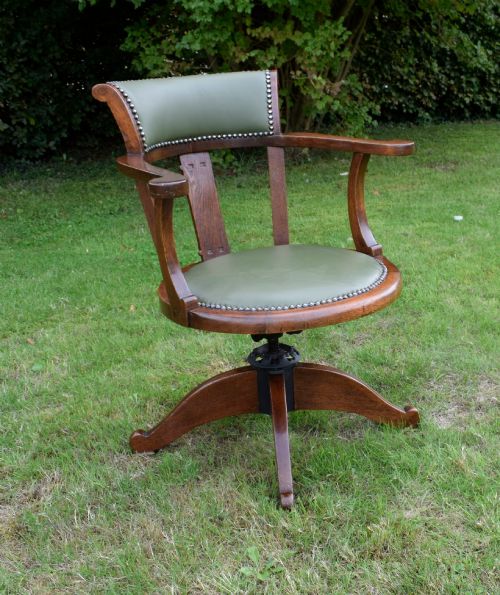
Many period revolving study chairs utilise a threaded metal spindle beneath the seat. Turning the chair body raises or lowers the seating height relative to the desk.
Other models rely on mechanical screw assemblies housed within the wooden underframe. Checking the mechanism reveals how the original maker intended the adjustment to function.
Were these chairs used in offices?
These pieces served as functional seating for professionals, clerks, and scholars in Victorian and Edwardian studies, libraries, and offices. The swivel action allowed workers to reach different parts of a large desk without standing.
Their robust construction ensured they could endure long hours of administrative work. Today they continue to function in modern home offices.
How do I tell Victorian from Edwardian examples?
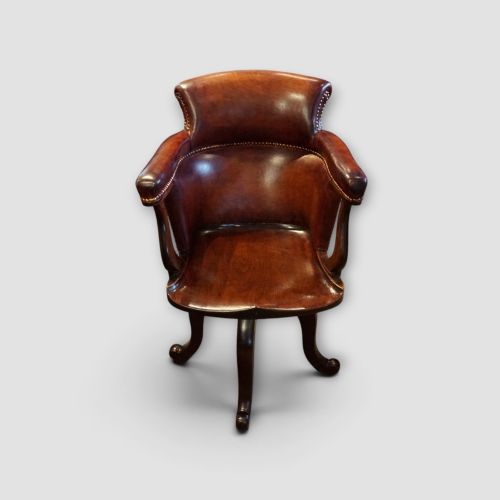
Victorian revolving chairs frequently employ dense mahogany or walnut with darker finishes, deep buttoned leather, and robust carved details. Gothic Revival influences also appear strongly in this period.
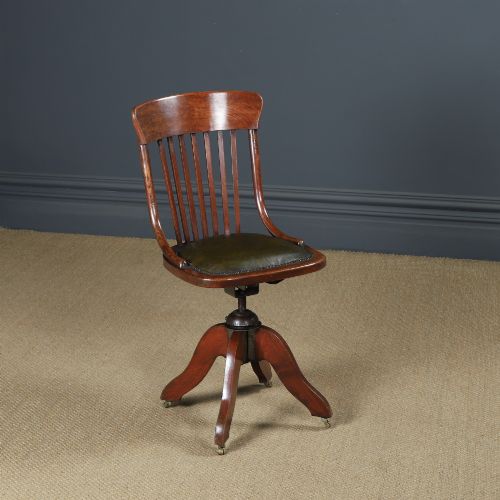
Edwardian pieces often feature lighter oak or mahogany timbers, simpler lines, and connections to the Arts and Crafts movement. The overall proportion tends towards lighter domestic study use.
Are all these chairs upholstered?
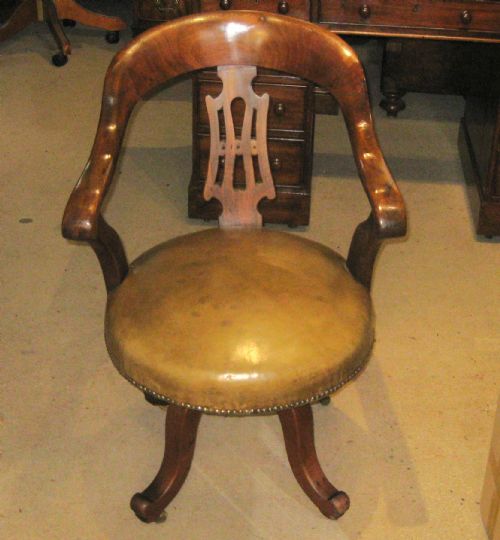
Many examples feature leather upholstery on the seat or backrest for comfort during extended periods of sitting. Green and brown tones predominate on the surviving leather surfaces.
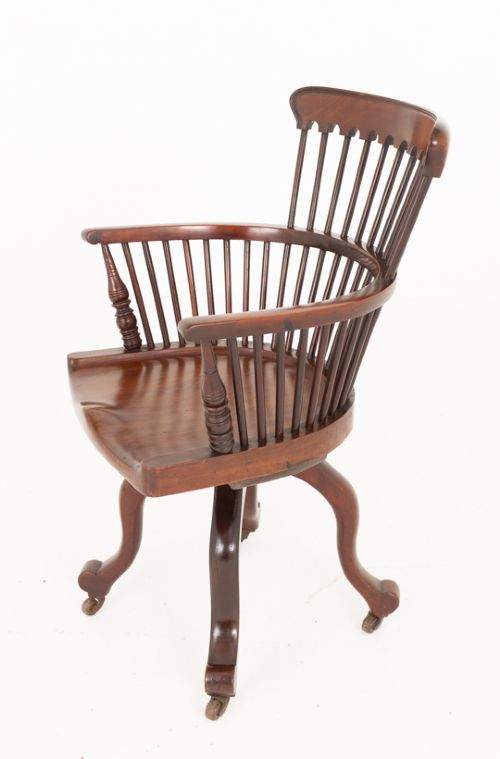
Alternative versions utilise solid wooden seats or bentwood panels without padding. Both upholstered and timber-seated variations were produced concurrently across the periods.