



Studded Leather Office Chair
A studded leather office chair brings substance to a working room through rich hides and solid timber frames.

Studded Leather Office Chair
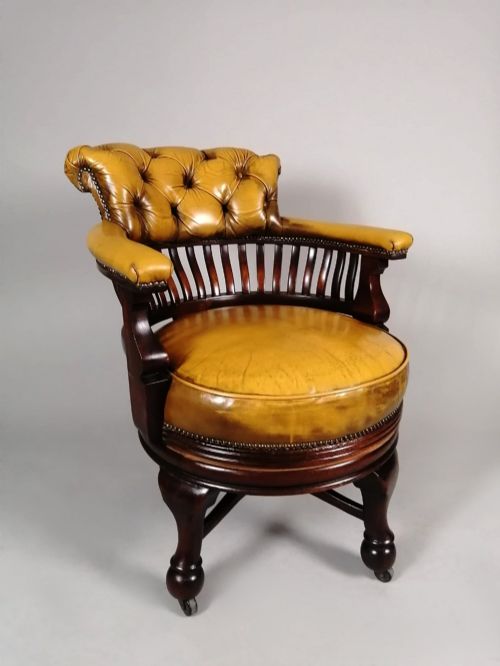
A studded leather office chair combines functional seating with period craftsmanship, originating primarily in the nineteenth and early twentieth centuries. These pieces encompass desk chairs, armchairs, and revolving office variants tailored for professional use.
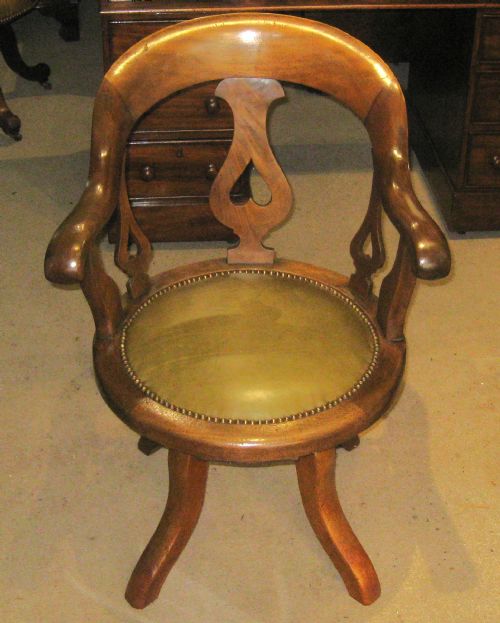
Victorian and Edwardian examples dominate the selection, often taking the form of captain's chairs or swivel models built for utility. Workshops from the late nineteenth century onward adapted traditional library forms into adjustable desk seating.
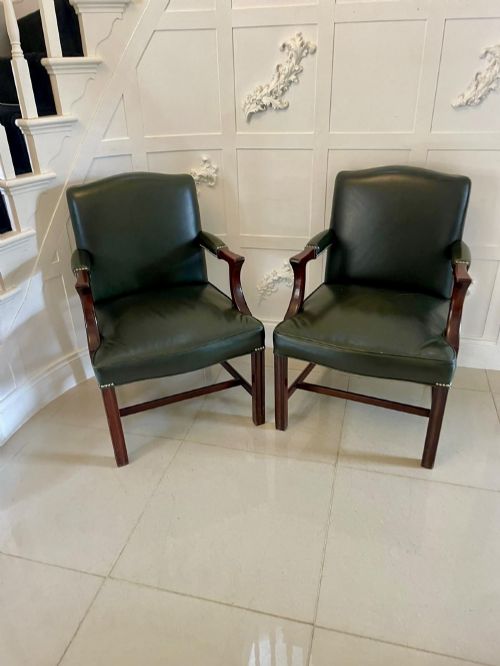
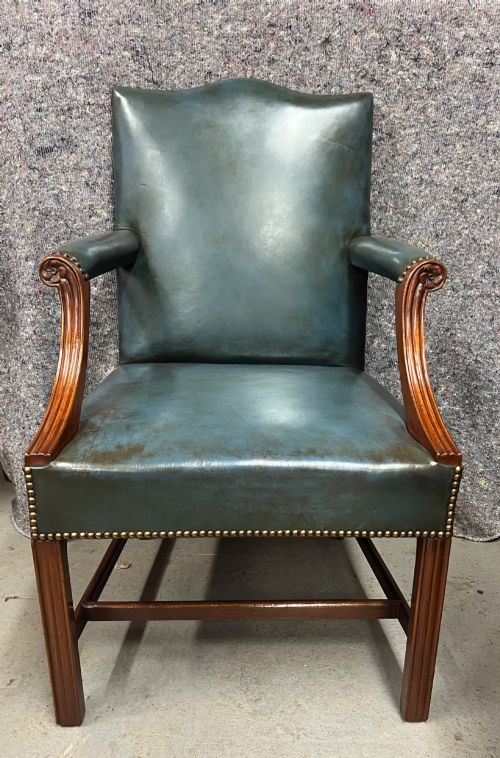
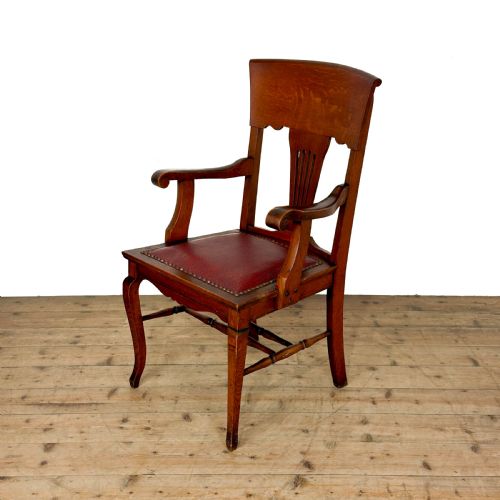
Makers utilised mahogany, oak, and walnut for the primary frames, pairing the timber with durable leather upholstery fastened by brass or iron studs. Styles range from plain utilitarian oak frames to elaborate Gainsborough and Georgian revival designs.
Materials and construction methods
Frames rely on sturdy hardwoods such as mahogany, oak, walnut, and beech, joined to withstand daily office use. Metal components like cast iron and brass appear in swivel mechanisms, tilt actions, and the decorative studding securing the upholstery.
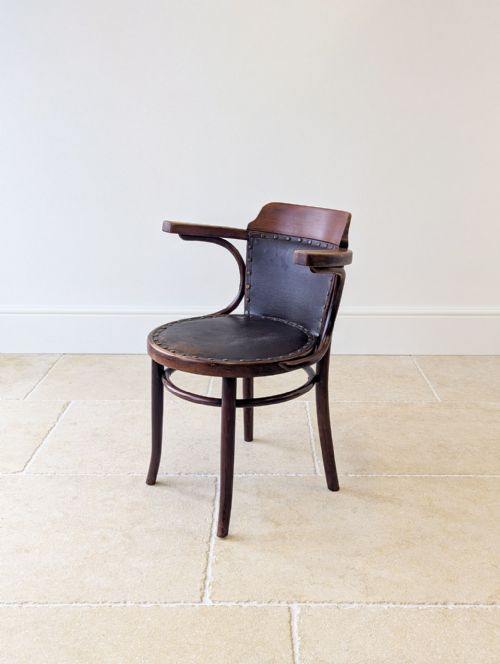
Upholstery involves fitting leather hides over padded seats and backs, held firmly in place with individual brass or metal studs driven into the wooden framework. Bentwood techniques also appear in select Edwardian variants, offering curved structural elements.
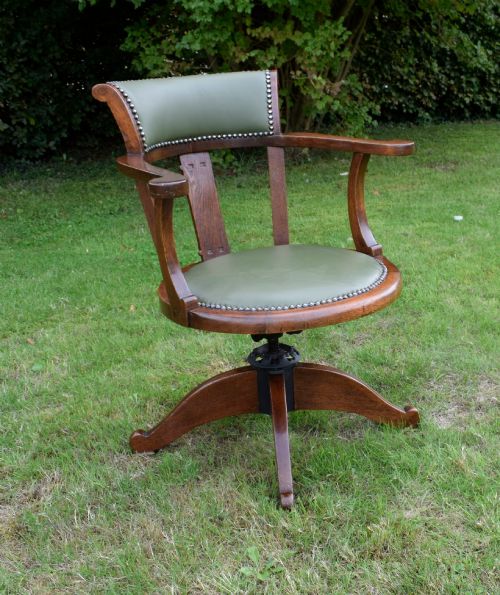
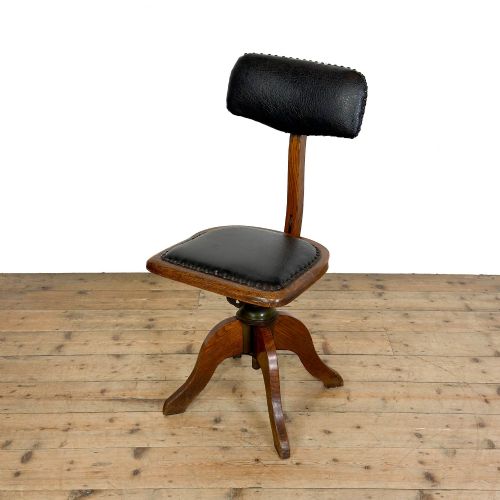
Revolving and tilt mechanisms incorporate iron and steel engineering beneath the wooden seat, allowing movement without compromising the stability of the mahogany or oak base.
Studded Leather Office Chair Retail Price Guide 2026
Typical asking prices for studded leather office chair among the pieces listed under this phrase on Sellingantiques today, from the lower quarter to the upper quarter. They describe what is for sale here now, not the wider market.
Listings feature oak, mahogany, walnut, and beech frames paired with leather upholstery across Victorian and Edwardian periods.
Quality factors in period seating
The choice of primary timber dictates the baseline quality, with dense golden mahogany, burr elm, and quarter-sawn oak representing superior cabinetmaking. Lesser pieces employ beech or mixed secondary woods beneath simpler finishes.
The execution of the swivel and tilt mechanism separates standard office seating from finer library chairs. Smooth rotation and robust iron undercarriages indicate higher manufacturing standards during the Victorian and Edwardian periods.
The grade of the leather and the neatness of the brass studding reflect the original workshop's attention to detail. Hand-applied individual studs and heavy hide upholstery denote a higher tier of production than mass-fastened alternatives.
Kendrick and Jefferson
The Studded Leather Office Chair Glossary
- Captain's Chair
- A sturdy revolving or stationary armchair with a low, curved back rail supported by spindles. These chairs provide compact support suitable for traditional desks.
- Gainsborough Chair
- An upholstered armchair with an open-framed mahogany or walnut structure dating back to the eighteenth century and revived later. They feature padded armrests and studded leather upholstery.
- Bentwood
- Wood softened by steam and bent into curved shapes, utilised extensively by makers like Thonet. This technique creates resilient, lightweight frames for chairs.
- Swivel Desk Chair
- A seat mounted on a central pivot mechanism allowing rotation. Many period examples also incorporate tilt actions controlled by under-seat iron hardware.
- Horseshoe Desk Chair
- An armchair featuring a continuous curved backrest shaped like a horseshoe. This design cradles the sitter and typically incorporates leather padding with stud work.
Studded Leather Office Chair: Frequently Asked Questions
What periods do these office chairs date from?
The available selection spans the nineteenth and early twentieth centuries, encompassing Victorian, Edwardian, and Arts and Crafts eras. Most pieces date between eighteen-eighty and nineteen-twenty.
Earlier examples from the nineteenth century often feature solid mahogany frames, while Edwardian pieces frequently utilise oak or bentwood with swivel mechanisms.
How do I identify a swivel desk chair?
A swivel desk chair incorporates an iron or wooden spindle beneath the seat allowing rotation. Many period variants also include a tilt mechanism.
These functional additions were designed for office environments, letting workers turn between desks and filing areas without standing.
What woods were used for these frames?
Cabinetmakers utilised sturdy hardwoods including mahogany, oak, walnut, burr elm, and beech. The choice of timber often reflects the manufacturing period and the intended formality of the room.
Mahogany and walnut tend to appear in grander library settings, whereas oak and beech were chosen for utilitarian office and machinist chairs.
Are these chairs suitable for daily modern desk use?
Many period models function well at modern desks, provided the seat height matches your workspace. Revolving and tilt designs offer practical mobility.
Consider checking the mechanical action and seat dimensions to ensure comfort during extended working hours.